Why Your Go-To exercise for shoulder muscle spasm Is Making It Worse
I was halfway through a 185-lb overhead press when my right side decided it was done for the month. It wasn't a tear, but it felt like my rear delt was trying to swallow my scapula. Naturally, I did what every meathead does: I grabbed a lacrosse ball and tried to grind the pain away. Bad move. If you're hunting for a specific exercise for shoulder muscle spasm, you need to stop trying to 'fix' it with force.
Quick Takeaways
- Stop stretching: Pulling on a locked-up muscle triggers the stretch reflex, making the spasm tighter.
- Isometrics are key: Use 10-15% tension to trick the nervous system into letting go.
- Floor-based movements: Remove gravity to allow the rotator cuff to move without guarding.
- Slow re-entry: Don't touch a barbell until you've cleared basic stability tests with bands.
The Day My Delt Locked Up (And Why I Ignored It)
I ignored the warning signs for three days. You know that dull ache that feels like a stubborn knot? I pushed through it, thinking a few extra sets of face pulls would clear it up. By the time I stripped the bar during that OHP session, my arm was stuck at a 45-degree angle. I didn't recognize the muscle spasm in shoulder symptoms until I literally couldn't reach for my gym bag without a sharp, stabbing reminder that my body had pulled the emergency brake.
A real spasm isn't just 'tightness.' It's your brain deciding that your shoulder joint is under threat. It clamps down every surrounding muscle to create a biological splint. When I tried to force my arm into a doorway stretch, the pain didn't just increase—it radiated. My body was fighting me because I was trying to override a safety mechanism with brute force.
Why Stretching a Spasm is a Terrible Idea
When your shoulder locks up, your nervous system is in high-alert mode. If you grab a rack and lean into a deep pec stretch, you're just pulling on a locked door. Your brain senses that tension and, through the stretch reflex, tells the muscle to pull back even harder to 'protect' the joint. It’s a losing battle.
The same goes for those high-intensity massage guns. If you've ever tried to jackhammer a spasm into submission, you know the relief lasts about five minutes before the muscle rebounds and feels twice as hard. You're basically punching a bruise. To get a spasm to release, you have to stop attacking it and start negotiating with your brain. You need to convince the nervous system that it’s safe to move again.
The Counter-Intuitive exercise for shoulder muscle spasm
The goal isn't to lengthen the muscle; it's to fatigue the spasm's signal. We do this with low-threshold isometrics. By creating a tiny amount of tension without actually moving the joint, you signal the brain that the muscle can contract and relax without the world ending. This is the most effective exercise for shoulder muscle spasm because it works on the software (your brain), not just the hardware (the muscle).
Movement 1: The Gentle Wall Lean
Stand sideways next to a wall. Tuck your elbow to your side at a 90-degree angle. Gently press the back of your wrist into the wall, as if you were trying to do a lateral raise. Here is the secret: don't go hard. This shoulder spasm exercise only requires about 10% of your max effort. If you're shaking or gritting your teeth, you've already lost. Hold that light pressure for 10 seconds, breathe deep into your belly, and slowly release. Repeat this 5 times. You're teaching the delt that it can hold tension without seizing.
Movement 2: The Gravity-Free Floor Slide
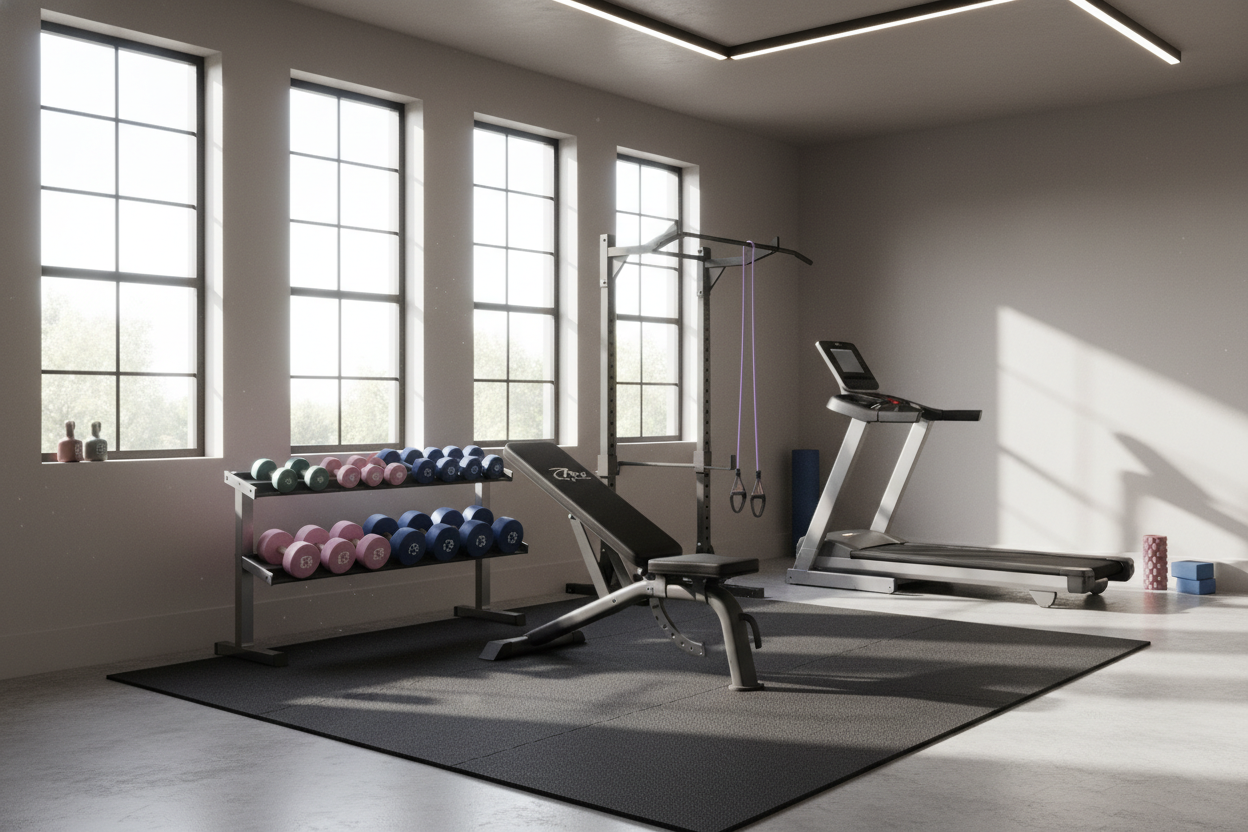
Taking gravity out of the equation is a total cheat code for recovery. When you stand up, your shoulder has to work just to keep your arm in the socket. I usually lay out my 6X8Ft Exercise Mat so I have plenty of room to sprawl without my spine fighting for position on a cold hard floor. Lie on your back with your knees bent and feet flat.
These shoulder muscle spasm exercises involve sliding your arms along the floor like you're making a snow angel. Keep the backs of your hands in contact with the mat. If you feel a 'catch' or the muscle starts to jump, stop right there. Don't push through it. Breathe, let the arm relax at that height, and then slide back down. The goal is to find a path of motion that doesn't trigger the guarding reflex. The support of the mat allows your shoulder blade to move freely without the weight of the limb dragging it down.
Rebuilding the Foundation (Once the Spasm Clears)
Once the 'grip' of the spasm finally releases—usually after a day or two of these low-intensity movements—don't go running back to the squat rack. I made that mistake once and ended up right back on the floor within ten minutes. Your nervous system is still 'twitchy.' You need to re-introduce load with movements that don't put the joint in a vulnerable, end-range position.
When I'm looking for the right exercise for shoulder muscles during this rehab phase, I stick to high-rep, low-weight stability work. Think band pull-aparts or very light kettlebell halos. These movements pump blood into the area and reinforce the idea that the joint is stable. If you jump straight back into a 1-rep max attempt, your brain will likely freak out and lock the shoulder down again as a precaution. Take the slow win; your lifting longevity depends on it.
FAQ
Can I use heat on a shoulder spasm?
Yes, but don't overdo it. Heat helps increase blood flow and can relax the 'guarding' reflex, but it won't fix the underlying movement issue. Use a heating pad for 15 minutes before doing your isometric wall leans to prime the muscle.
How long do shoulder spasms usually last?
If you treat them right (no aggressive stretching!), they usually calm down in 48 to 72 hours. If you keep smashing them with a lacrosse ball, you can easily drag that recovery out to two weeks.
Should I stop lifting entirely?
Stop doing anything that hurts or causes the muscle to 'catch.' You can usually still do lower body work or light pulling, but stay away from heavy overhead or bench pressing until you have full, pain-free range of motion back.