Why Your Go-To Deltoideus Exercises Aren't Building Real Width
I remember staring at my 50-lb dumbbells a few years back, wondering why my shoulders looked like flat tennis balls instead of cannonballs. I was hitting 'shoulder day' twice a week, grinding through heavy presses and swinging weights like a pendulum. The truth is, I was just moving weight—I wasn't actually training. If you want real width, you have to stop ego-lifting and start choosing deltoideus exercises that actually isolate the muscle fibers rather than just stressing your joints.
Quick Takeaways
- Isolation and tempo matter more than the number on the dumbbell.
- The lateral head is the key to shoulder width, but it's the easiest to 'cheat' on.
- Rear delts are usually the missing link for that 3D look.
- Stable footing is the secret to removing 'body english' from your raises.
Are Delts and Shoulders the Same Thing? (And Why It Matters)
People use the terms interchangeably, but there is a difference. The shoulder is the entire complex joint—the glenohumeral joint, the rotator cuff, and the surrounding connective tissue. The deltoid is the specific three-headed muscle that sits on top. When you ask what works deltoids, you are looking for movements that target the anterior (front), lateral (side), and posterior (rear) heads.
Understanding this anatomy helps you realize why a standard bench press isn't a great workout for deltoid muscles. It hits the front, sure, but ignores the side and rear. To get that capped look, you need a deltoid workout that hits all three angles with surgical precision.
The Real Reason You Can't Get Deltoid Definition
The biggest mistake I see in my own garage gym—and in every commercial gym I’ve visited—is momentum. Most guys grab the 35s for lateral raises and use their hips to kick the weight up. All that does is shift the load to your upper traps and lower back. If you want to know how to get deltoid definition, you have to drop the weight by 50% and slow down the eccentric phase.
Your traps are massive, strong muscles that love to take over. To keep the tension on the delts, you have to realize that picking the right shoulder workout exercise is more important than the amount of weight you lift. If you can't hold the weight at the top for a split second, it's too heavy. Period.
My 4 Go-To Deltoideus Exercises for Stubborn Shoulders
After years of trial and error, these four movements form the backbone of my deltoid training exercises. They focus on tension over ego.
- Strict Lateral Raises: Lean slightly forward, lead with your elbows, and think about pushing the weights 'out' to the walls rather than 'up.' This is the king of deltoid building exercises for width.
- Chest-Supported Rear Sweeps: Lay face down on an incline bench. This eliminates all momentum and forces the rear delts to do the work. This is how to build the deltoid muscle in the back where most people are hollow.
- Seated Overhead Press: Use a barbell or dumbbells. I prefer seated because it prevents you from using your legs to 'cheat' the weight up, making it a pure workout for deltoid strength.
- The Deltoid Hold Exercise: Grab a light pair of dumbbells, raise them to the side, and hold for 30-45 seconds. The isometric tension is a brutal way to finish a session and forces new growth through time under tension.
Putting It Together: A Good Deltoid Workout You Can Do at Home
You don't need a massive cable crossover machine to get strong delts. If you have a set of dumbbells and a bench, you have everything you need for a complete workout for deltoid muscles. Here is the routine I run when I'm short on time but want maximum pump:
- Seated Dumbbell Press: 3 sets of 8-10 reps (2-minute rest).
- Strict Lateral Raises: 4 sets of 15 reps (Focus on a 3-second descent).
- Chest-Supported Rear Delt Flyes: 3 sets of 20 reps (Light weight, high burn).
- Dumbbell Hold: 2 sets to failure (Hold at 90 degrees until your arms drop).
The Ground-Up Setup: Why Your Stance Dictates Your Shoulder Growth
One thing I learned the hard way: if your feet are slipping, your shoulders aren't growing. When you perform standing delt shoulder exercises, you need a rock-solid base to prevent your body from swaying. I used to train on a slick concrete garage floor, and my form was garbage because I was constantly subconsciously adjusting my balance.
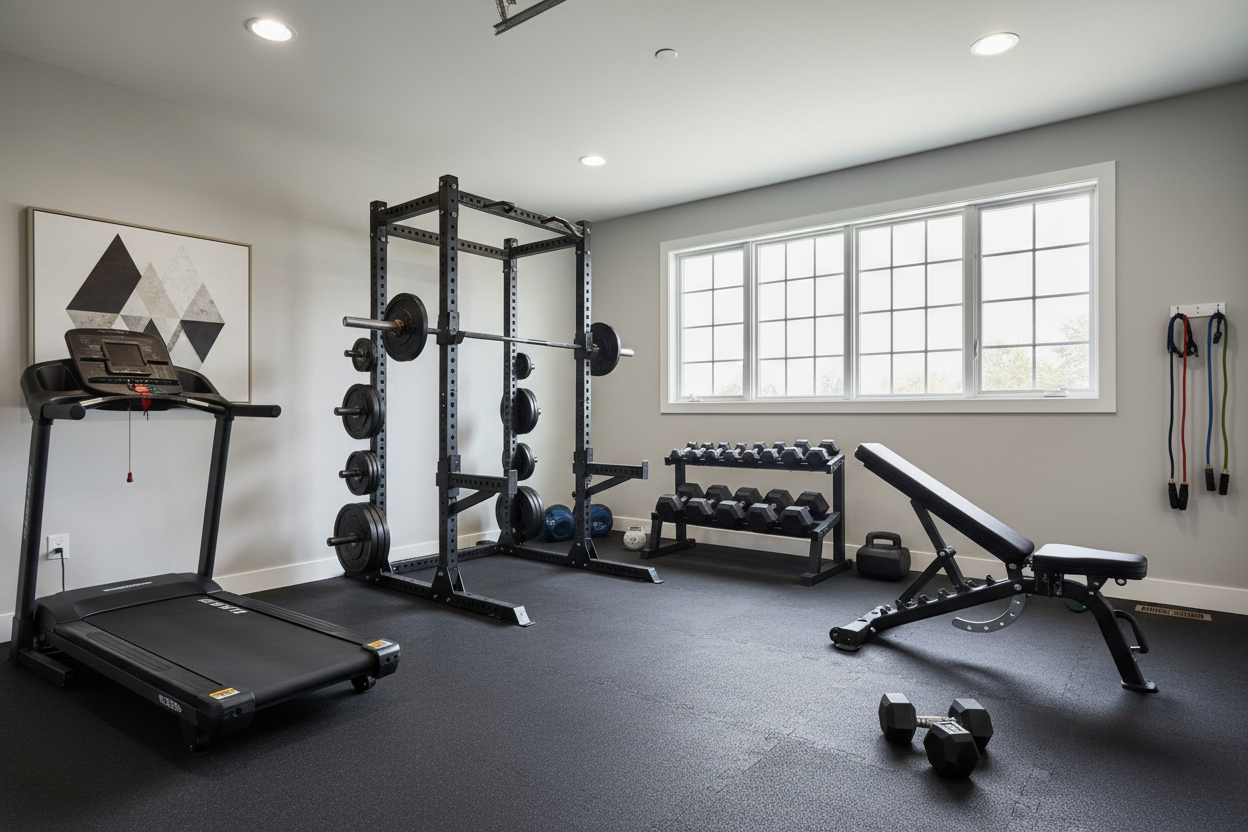
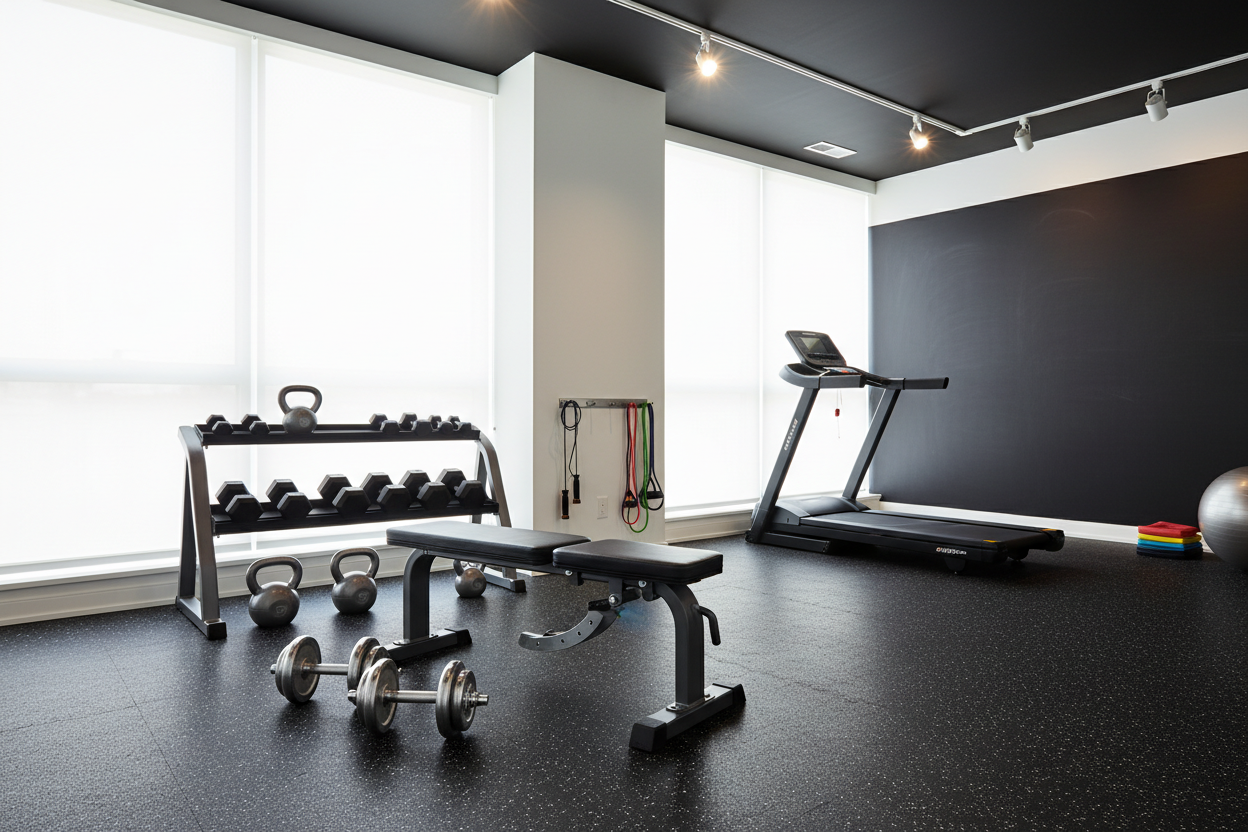
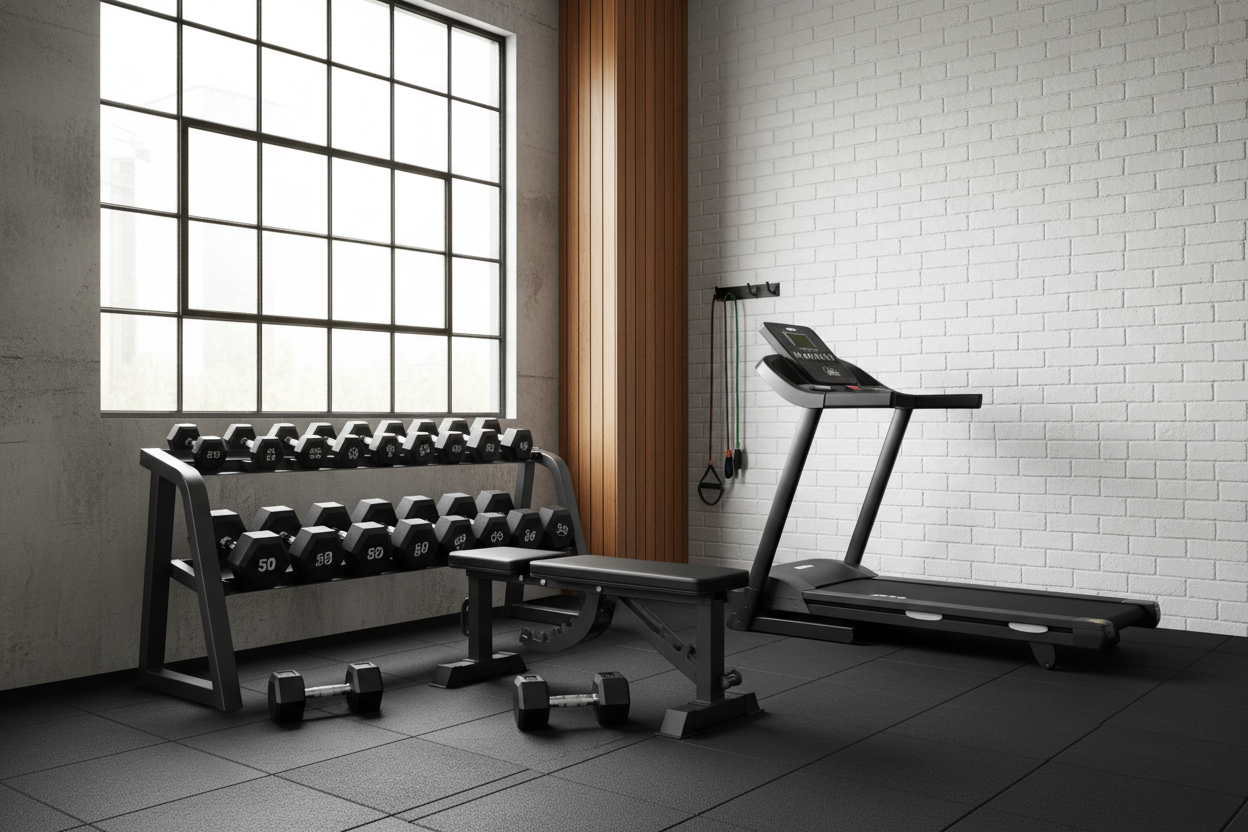
I eventually invested in a large exercise mat for home gym use, and it changed the game. Having a non-slip, stable surface allows you to root your feet and focus 100% of your mental energy on the muscle contraction rather than not falling over. Whether you're lifting in socks or lifters, that stability is the foundation of weight lifting for deltoids.
My Honest Mistake
For the first two years of my training, I completely ignored rear delts. I thought heavy rows were enough. They weren't. My shoulders looked 'hunched' forward because my front delts were overdeveloped and my rear delts were non-existent. Once I started doing 100 reps of rear delt work every week, my shoulder pain vanished and the '3D' look finally showed up. Don't be the guy with 'caveman' posture—hit your rear delts.
FAQ
What works deltoids the fastest?
Consistency and high volume. Delts recover quickly and can handle a lot of frequency. Hit them 2-3 times a week with a mix of heavy presses and high-rep isolation work.
How to workout the deltoid without heavy weights?
Focus on isometrics and tempo. The deltoid hold exercise and slow negatives (4-5 seconds down) will make 10-lb dumbbells feel like 50s.
How to build deltoid width?
Spam lateral raises. It sounds simple because it is. Most people don't do enough lateral head volume. Aim for 10-15 sets per week specifically for the lateral head.