Why Your Glutes Matter More Than You Think (And How to Wake Them Up)
Let’s cut straight to the chase because there is often confusion regarding gym terminology versus anatomical terms. If you have ever found yourself Googling "is glutes your bum" or wondering if you are targeting the right area, the answer is a resounding yes. The gluteal muscles are the scientific powerhouse behind what we casually call the butt. When you train your glutes, you are training your bum. These muscles are not just there to fill out a pair of jeans; they are the primary engine for human movement, responsible for keeping you upright, propelling you forward, and protecting your lower back from injury.
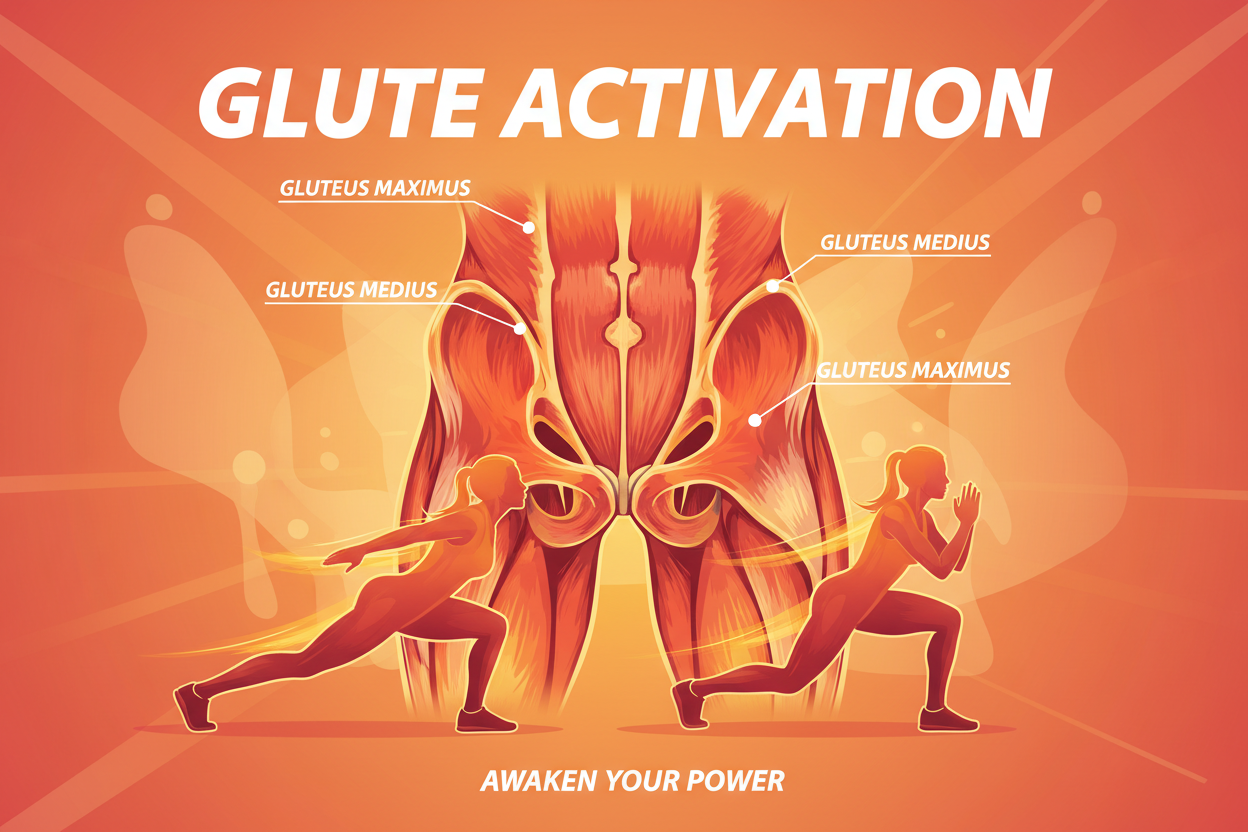
Understanding the anatomy of your backside muscles changes how you train them. Many people mindlessly go through the motions of leg day without ever actually engaging the target area. The glutes buttocks complex is actually made up of three distinct muscles: the gluteus maximus (the large main muscle), the gluteus medius, and the gluteus minimus. The maximus creates the shape and power, while the smaller two, located on the sides, handle stability and hip rotation. Neglecting any of these means you are leaving performance and aesthetics on the table.
The Real Function of Your Rear End Muscles
It is easy to categorize glute training as purely cosmetic, but that ignores the massive role these muscles play in athleticism and daily health. Your rear end muscles are essentially the bridge between your upper and lower body. When they are weak, your lower back often has to take over the load, leading to strain and chronic pain. Conversely, strong glutes stabilize the pelvis and keep the knees tracking correctly during movement.
You might wonder, are glutes your bum in a functional sense, or is there more to it? While they are the meat of the buttocks, they work in concert with your hamstrings and lower back. Think of them as the body's counterweight. Every time you stand up from a chair, climb a flight of stairs, or pick a heavy box off the floor, that power should be coming from your hips. If your glutes are dormant, your body compensates, usually in ways that lead to injury down the road.
My Battle with "Sleepy" Glutes
I learned this the hard way a few years back. I was squatting regularly, convinced I was doing everything right, yet my numbers weren't moving and my lower back felt like it was constantly on fire. I assumed I just had a bad back. It wasn't until I worked with a physical therapist that I realized I had zero connection to my booty muscles. My quads and spinal erectors were doing all the work while my glutes were effectively "asleep"—a condition often called gluteal amnesia.
This happens frequently to people who work desk jobs. Sitting on your buttocks glutes all day restricts blood flow and neural connection to the area. I had to regress my training significantly, focusing on small, isolation movements to "find" the muscle before I could load the bar again. The difference was night and day. Once I learned how to actually fire the muscle, my back pain vanished, and my squat form cleaned up almost instantly.
How to Effectively "Glute Up" Your Routine
To overcome the effects of sitting and build a strong posterior, you need to be intentional. You cannot just rely on running or casual walking. You need to glute up—a phrase often used in coaching to describe the act of consciously squeezing and activating the hips—before and during your big lifts. This starts with activation exercises. Before touching a heavy weight, try performing glute bridges, clam shells, or banded walks. These movements wake up the nervous system and prime the area for heavier loads.
Once you are primed, compound movements are essential. The hip thrust is arguably the best exercise for isolating the gluteus maximus because it keeps tension on the muscle at its shortest length (full contraction). Deep squats and Romanian deadlifts stretch the muscle under load, which causes significant tissue breakdown and subsequent growth. A well-rounded program hits the muscle from all angles: a vertical push (squat), a horizontal push (hip thrust), and a hinge movement (deadlift).
Is Glutes Booty Training the Same as Leg Training?
There is a nuance here. Is glutes booty training identical to general leg training? Not exactly. You can have strong legs and weak glutes. Quad-dominant exercises like leg presses or lunges with an upright torso will build your thighs but might leave your backside trailing behind. To shift the focus to the posterior, you often need to adjust your mechanics. For example, leaning your torso forward slightly during a lunge or stepping further back increases the stretch on the glute. Similarly, taking a wider stance on the leg press helps engage the hips more than a narrow stance.
Nutrition and Recovery for Growth
Training provides the stimulus, but food provides the building blocks. You cannot build significant muscle tissue without adequate protein and calories. The glutes buttocks area is a large muscle group, meaning it requires significant energy to repair. If you are constantly dieting or in a severe caloric deficit, you will struggle to see shape changes. Prioritize protein intake around your workout window to support muscle synthesis.
Rest is equally vital. Because these muscles are large and used in almost every movement we make, they can take a beating. However, they also recover relatively quickly compared to the lower back. Listen to your body. If you are sore to the point where your movement patterns are compromised, take a rest day or focus on mobility work. Tight hip flexors (the muscles on the front of your hip) can inhibit your glutes from firing, so stretching the front of your hips is actually a key part of glute training.
Consistency Over Intensity
Building a strong rear end does not happen overnight. It is the result of months and years of progressive overload. Don't get discouraged if you don't see immediate changes in the mirror. Focus on the feeling of the muscle working. If you finish a set of hip thrusts and feel it in your quads or lower back, drop the weight and adjust your form. The connection is more important than the load on the bar. Treat your glute training with the same respect as chest or arm day, and your body will thank you for it in both performance and posture.
Frequently Asked Questions
How often should I train my glutes for maximum growth?
Most people see the best results training glutes 2 to 3 times per week. Since the glutes are a large muscle group that recovers relatively fast, hitting them with different exercises (heavy compounds one day, lighter isolation work another) allows for high volume without overtraining.
Can I build glutes without using heavy weights?
Yes, but only to a certain point. You can build initial strength and activation with bodyweight exercises and high repetitions, but to see significant muscle growth (hypertrophy), you generally need to add resistance over time, whether through weights, bands, or machines.
Why do I feel my lower back taking over during glute exercises?
This usually indicates that your core is weak or your glutes are not activating properly. Try lowering the weight and focusing on a "posterior pelvic tilt" (tucking your tailbone slightly) to disengage the lower back and force the glutes to do the work.