Why Your Garage Gym Is Basically Useless Without a Power Rack
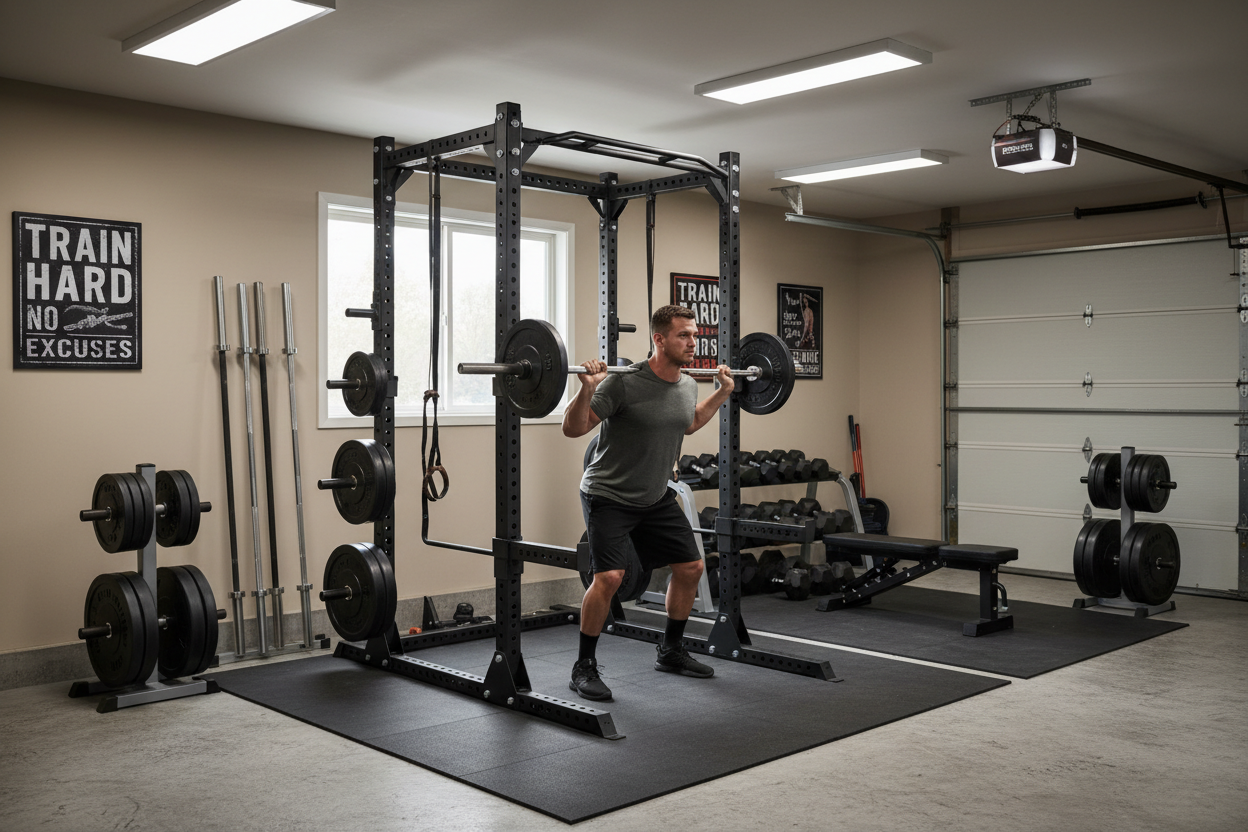
If you are serious about getting strong, the centerpiece of your training space cannot be a treadmill or a set of adjustable dumbbells. It has to be a cage. A quality power rack is the only piece of equipment that allows you to safely lift heavy weights without a spotter while providing the versatility to hit every muscle group effectively. It transforms a spare room from a storage area into a legitimate training facility.
Many beginners shy away from these metal behemoths because they look intimidating or take up floor space. This is a mistake. The rack is actually the great equalizer. It removes the fear of being crushed under a barbell, allowing you to push your limits on squats and bench presses. Without one, you are constantly holding back, leaving gains on the table because you are afraid of failing a rep. Investing in a proper setup is less about buying metal and more about buying the confidence to train with intensity.
The Incident That Changed My Training
I didn't always prioritize safety. Years ago, I set up a modest home gym with just a bench and independent squat stands. They were wobbly, but they worked—until they didn't. I was attempting a personal best on the bench press, alone in my garage on a Tuesday night. The weight went down fine, but halfway up, my triceps quit. I didn't have safety bars. I didn't have a spotter.
I ended up doing the "roll of shame," sliding a heavy loaded barbell from my chest down to my hips to sit up. It left massive bruises and a bruised ego, but I was lucky I didn't crack a rib or crush my throat. That weekend, I sold the stands and bought a full fitness rack with heavy-duty safety pins. The difference was immediate. Knowing those safety bars were there meant I could grind through that last rep without visualizing a trip to the emergency room. My bench press numbers shot up 20 pounds in two months simply because I stopped lifting with fear.
Understanding the Hardware
When you start shopping, the terminology can get muddy. You will see terms like power cage, squat stand, and half rack. A true power rack is a four-post cage that you step inside. This design offers the highest level of safety because if you fall forward or backward, the barbell stays within the perimeter of the uprights.
The construction quality varies wildly. You generally want to look for 11-gauge steel or thicker. The lower the gauge number, the thicker the metal. A 2x2 inch steel upright is standard for budget models, but 3x3 inch uprights have become the gold standard for modern home gyms. They offer superior stability and compatibility with a wider range of attachments. If the rack wobbles when you rack the bar, it isn't doing its job. You need a structure that feels like it is bolted to the earth, even if you haven't actually bolted it to the concrete (though you probably should).
Hole Spacing Matters
One specific feature often overlooked is hole spacing. You want a fitness rack that offers "Westside" spacing through the bench zone. This means the holes are spaced 1 inch apart rather than the standard 2 inches. This granular adjustment allows you to set the safety pins exactly where you need them—just below your chest arch but above your face. With 2-inch spacing, you often find yourself in a dilemma where one setting is too high and restricts your range of motion, while the next setting down is too low to save you if you fail.
The Philosophy of Rack Fitness
Owning the gear is one thing; utilizing it is another. There is a concept I like to call rack fitness, which centers your entire athletic development around this single station. Rather than moving from machine to machine like you would in a commercial gym, you perform 90% of your work inside the cage.
Consider the versatility. With the right attachments, your rack becomes a pull-up station, a dip station, and a heavy bag stand. You can attach landmines for rotational core work or band pegs to accommodate resistance training. This approach streamlines your workout. You aren't wasting time walking across the gym or waiting for equipment. You strip the workout down to the most effective compound movements: the squat, the deadlift, the overhead press, and the bench press.
This method forces you to focus on movement patterns rather than isolated muscles. You aren't doing "leg extensions"; you are squatting. You aren't doing "pec flys"; you are benching. This is the most efficient way to build functional strength that translates to real-world activities.
Safety Is the Ultimate Performance Enhancer
The primary function of the rack remains safety, but we need to reframe safety as a performance tool. When you train alone, your perceived limit is often lower than your actual limit because your brain tries to protect you. If you know that failing a squat means the bar crashes onto safety straps and not your spine, you are willing to attempt that weight you've been scared of for weeks.
Sturdy safety straps are generally preferred over steel pin safeties these days. They protect your barbell's knurling and are quieter if you do have to dump the weight. The loud clang of metal on metal can be jarring, whereas nylon straps absorb the impact. This small detail can make the difference in whether you feel comfortable testing your 1-rep max.
Space and Budget Considerations
Not everyone has a two-car garage to dedicate to iron. Fortunately, the market has adapted. Folding racks have become incredibly robust. These units mount to the wall and fold inward to stick out only a few inches when not in use. When you are ready to train, you swing the arms out, drop the pull-up bar in to lock it, and you have a stable squat rack. This innovation has made rack fitness accessible to people living in apartments or needing to park a car in the garage after the workout.
Regarding budget, buy the best uprights you can afford and skimp on the accessories initially. You can always add a fancy multi-grip pull-up bar or monolift attachments later. You cannot upgrade the structural integrity of the frame once you bought it. Treat the rack as a lifetime purchase. A good one will literally outlast you.
Making the Decision
Stop trying to patch together a workout routine with resistance bands and unstable stands. If you have the space and the means, a power rack is the single best investment you can make for your physical health. It provides the environment necessary for progressive overload. It keeps you safe. It offers endless variety. Once you step inside the cage and realize you can push yourself to absolute failure without consequence, your training will never be the same.
Frequently Asked Questions
Do I really need to bolt my rack to the floor?
Ideally, yes, especially if you plan on doing kipping pull-ups or using heavy bands. However, many modern racks with a "flat foot" base are stable enough for strict lifting without bolting. If you lift very heavy or notice wobble, weighing down the back posts with plate storage pegs is a good alternative to drilling into concrete.
What is the difference between a half rack and a full power rack?
A full power rack has four (or six) posts and you stand inside the cage, offering safety from all sides. A half rack usually has two uprights and you lift in front of them using spotter arms. Full racks are generally safer for solo heavy lifting, while half racks save space and are often easier to load.
Can I put a fitness rack on a second floor or in an apartment?
Yes, but you need to consider the load capacity of your floor and use a platform to disperse the weight. A standard rack plus weights and a lifter can exceed 500-1000 lbs. Using a lifting platform or horse stall mats helps spread the pressure and dampen noise for neighbors below.