Complete Chest Workout That Targets Every Muscle Area
The chest is one of the most visually dominant muscle groups, and for many fitness enthusiasts, achieving a well-balanced chest involves understanding its anatomy and tailoring exercises to hit every part. Far too often, people limit their chest workouts to a couple of exercises, which can leave certain areas underdeveloped. By learning how to work each part—including the upper, middle, and lower chest—you can build a fuller, more symmetrical look while also boosting functional strength.
Understanding Chest Muscle Anatomy
The chest, or pectoral muscles, is primarily composed of the pectoralis major and pectoralis minor. The pectoralis major itself has two main sections: the clavicular head (upper chest) and the sternal head (middle and lower chest). The pectoralis minor sits underneath and plays a role in shoulder movement and stability. Understanding these divisions is crucial because different exercises emphasize certain fibers over others, allowing you to target areas more effectively.
Chest Workouts for All Parts of the Chest
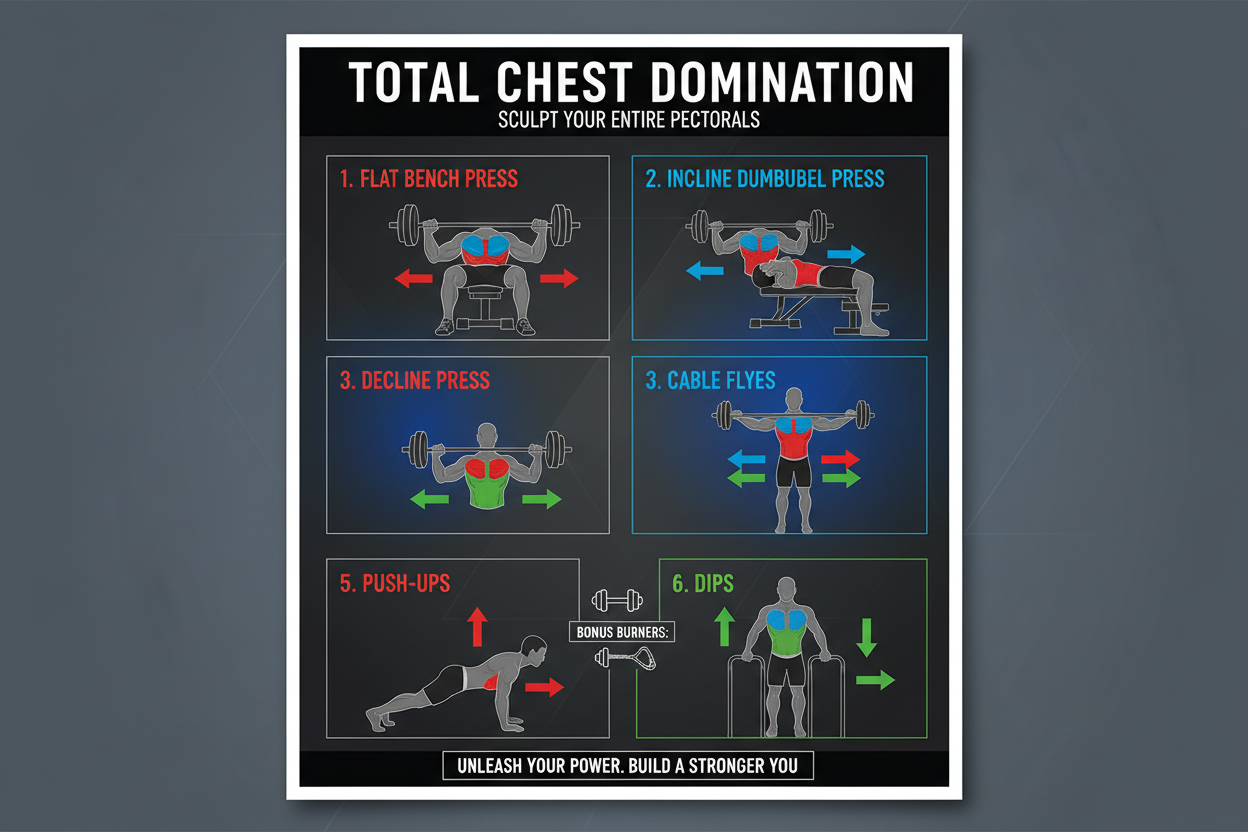
To hit all areas of the chest, you’ll need a combination of incline, flat, and decline movements—both pressing and fly variations. Here’s a breakdown:
Upper Chest Focus
Incline Barbell Press: By adjusting the bench to about 30–45 degrees, you place greater emphasis on the clavicular head. This exercise builds upper chest thickness and contributes to an elevated aesthetic shape.
Incline Dumbbell Flyes: A stretching movement that isolates the upper chest fibers, improving separation and definition.
Middle Chest Development
Flat Barbell Bench Press: Often considered the king of chest exercises, this movement recruits the sternal head and provides overall mass and strength gains.
Flat Dumbbell Press: Allows a deeper range of motion and more natural wrist rotation compared to barbell presses, which can help recruit stabilizing muscles.
Lower Chest Enhancement
Decline Barbell Press: Targets the lower portion of the chest while also easing shoulder strain in some individuals.
Decline Dumbbell Flyes: Improves lower chest definition, complementing the fullness created by pressing exercises.
Chest Workout to Hit All Areas in One Routine
Here’s an example of a balanced chest workout session:
- Incline Barbell Press – 4 sets x 6-8 reps
- Flat Dumbbell Press – 3 sets x 8-10 reps
- Incline Dumbbell Flyes – 3 sets x 10-12 reps
- Decline Barbell Press – 3 sets x 8-10 reps
- Cable Crossover – 3 sets x 12-15 reps focusing on upper or lower line depending on pulley height
Additional Tips for Targeted Chest Training
Mind-muscle connection is crucial—focus on contracting the chest through each rep rather than letting other muscle groups take over. Adjust your bench angles for specific emphasis: slight changes can shift the workload between different regions of the chest. Also, vary your grip width; a medium grip generally offers balanced activation, while a wider grip can recruit more of the outer chest fibers.
My Personal Experience in Shaping the Chest
When I first started weight training, I relied exclusively on the flat barbell bench press. While it improved my strength, I noticed my upper chest was lagging, creating an imbalanced look. Incorporating incline presses and targeted flyes transformed the way my chest developed. Over time, this approach gave me rounder, fuller pectorals and improved overall aesthetics. It also boosted my pressing power in functional movements like dips and push-ups.
Incorporating Functional Movements
Weighted dips, push-ups with varying hand placements, and stability ball presses can supplement traditional lifts. These not only strengthen the chest in multiple ranges but also engage supporting muscles, making your gains more functional outside the gym.
Recovery and Growth Considerations
Rest is essential for muscle repair and growth. Allow at least 48 hours between intense chest sessions to avoid overtraining and promote hypertrophy. Nutrition also plays a huge role—adequate protein intake and overall caloric support help the muscle fibers rebuild stronger.
Conclusion
A chest workout that hits all areas must be strategically designed, incorporating incline, flat, and decline exercises alongside effective isolation movements. Understanding chest anatomy guides targeted training, ensuring balanced development and improved performance. By following a structured plan and making adjustments based on your body’s response, you can build a chest that is strong, functional, and aesthetically pleasing.