Why Your First Weight Workout Should Be Embarrassingly Simple
I remember scrolling through Instagram at 2 AM, watching a guy do a backflip into a Bulgarian split squat while holding a kettlebell in his teeth. It made me want to throw my phone out the window. If you are looking for your first weight workout, the last thing you need is a circus act. Most people quit because they make things too complicated before they even own a pair of lifting shoes.
Quick Takeaways
- Complexity is the enemy of consistency; start with three basic movements.
- Master the eccentric (lowering) phase to prevent injury and build muscle.
- Invest in a rack and bench before buying gimmicky accessories.
- Free weights build more stability than fixed machines.
The Influencer Trap (And Why You Are Paralyzed)
Social media has absolutely ruined the concept of beginners weights. You see people performing 'functional' flows that look more like interpretive dance than strength training. It creates this false idea that how to work out with weights requires a PhD in biomechanics and the agility of a cat. It is nonsense.
This 'fitness entertainment' causes massive analysis paralysis. You spend three weeks researching the optimal angle for a lateral raise instead of just picking up a heavy object and moving it. If you want to know how to work out weights effectively, you have to ignore the noise. Real progress happens in the boring stuff—the squats, the presses, and the rows. You do not need a 50-exercise circuit to see your reflection change in the mirror.
How to Use Free Weights Without Feeling Stupid
Learning how to use free weights is really about one thing: tension. I see too many people at the gym 'ego lifting'—swinging 50-lb dumbbells like they are trying to fly away. To truly learn how to lift free weights, you have to own the eccentric. That is the lowering phase of the lift. If you cannot control the weight on the way down for a three-second count, the weight is too heavy for you.
Unlike weight lifting machines, which lock you into a fixed, robotic path, free weights require your stabilizer muscles to fire constantly. It is significantly harder, but it is how you build real-world strength that transfers to carrying groceries or moving a couch. Focus on bracing your core like someone is about to punch you in the gut. That internal pressure protects your spine and gives you a solid platform to push from.
The Bare-Bones Setup for Weights at Home
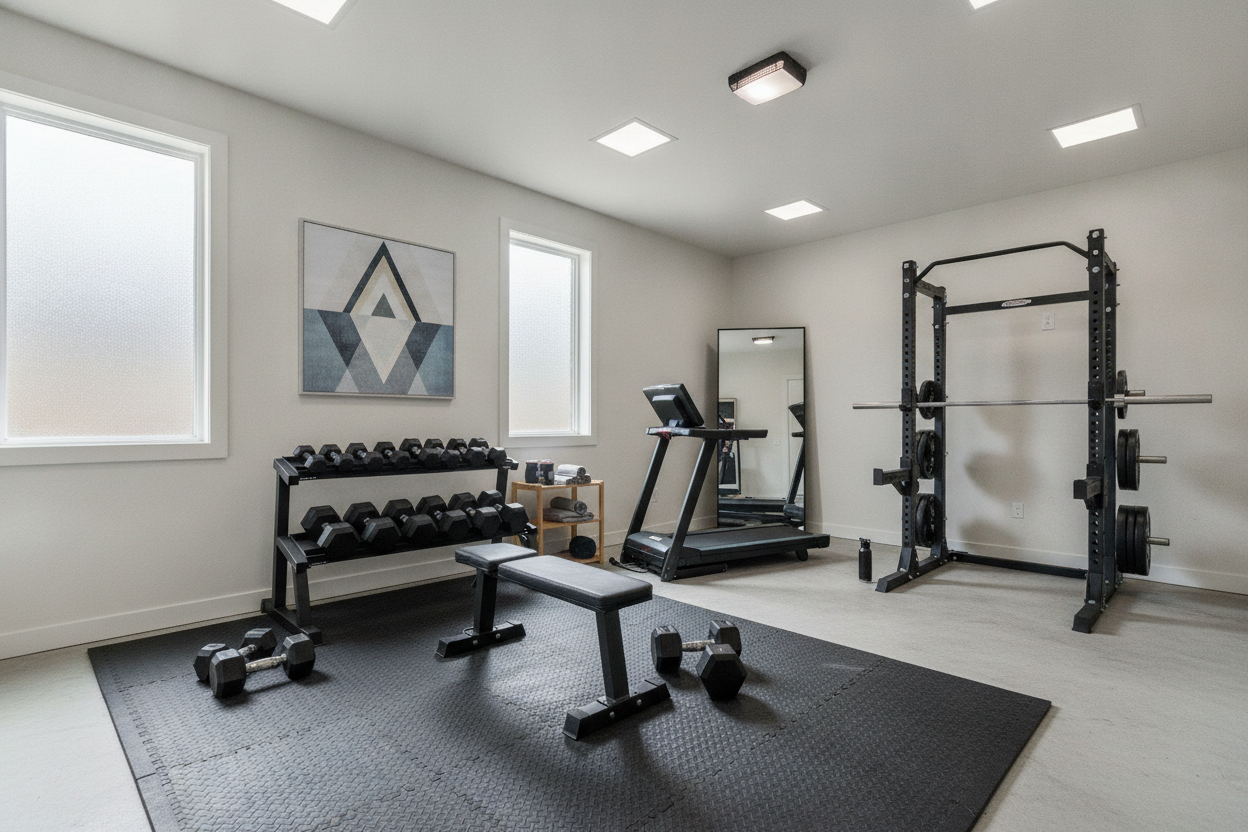
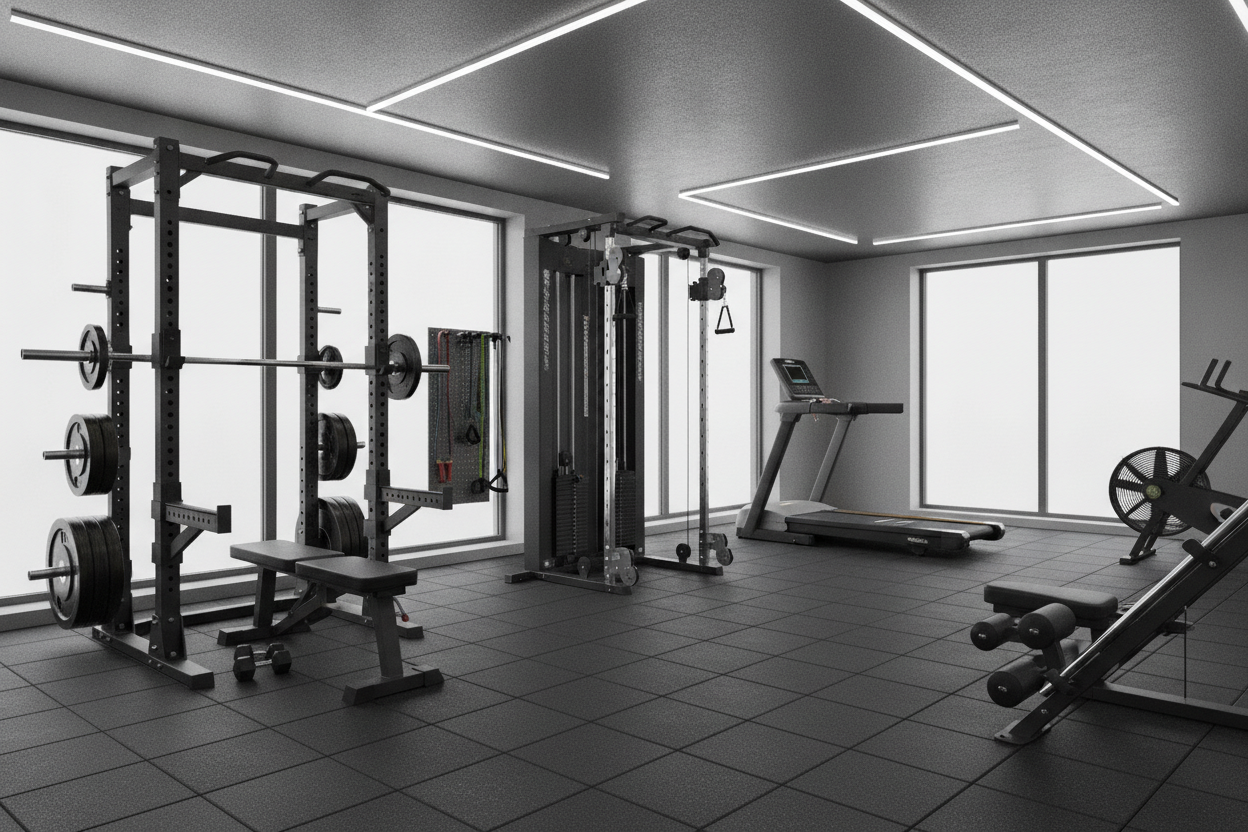
You do not need a 2,000-square-foot commercial space to get strong. My first real setup was in a 6x8 ft corner of a damp garage. If you want to do weights at home for beginners the right way, you need a foundation that won't collapse under you. I always recommend starting with a power rack weight bench package. This gives you a safety cage—essential if you are training solo—and a place to perform the big lifts.
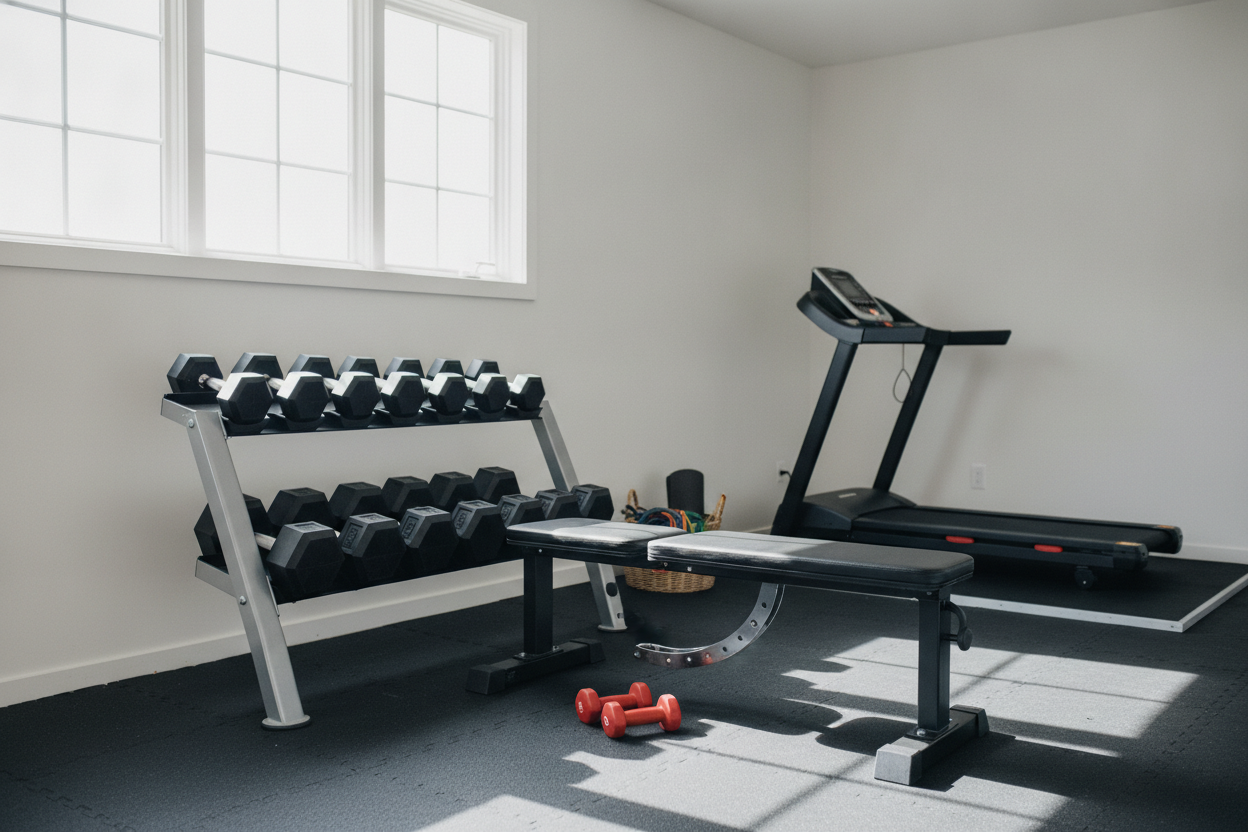
A heavy-duty adjustable weight bench is your next priority. It allows you to hit inclines for your chest and shoulders, which adds variety without needing ten different machines. Don't waste money on 'smart' mirrors or vibrating platforms. Buy iron, buy a rack, and buy a bench that doesn't wobble when you sit on it. That is all you need for the first two years of your training.
The 3-Movement Weight Workout Template
Stop trying to figure out how to use weights like a professional athlete on day one. You should not try to copy a pro bodybuilders workout for free weights because their recovery capacity and 'supplement' protocols are on another planet. For a beginner, high frequency on basic movements is the king of all strategies.
Stick to this simple framework: Push, Pull, and Legs. Perform a dumbbell press (Push), a bent-over row (Pull), and a goblet squat (Legs). That covers every major muscle group in your body. Do this three times a week. This is the gold standard for how to workout with weights without burning out or getting injured. Once you can do 12 clean reps with a specific weight, move up. It is not flashy, but it works every single time.
When to Actually Add More Plates
People often ask me how to work out with weights heavier every week. This is called progressive overload. In a perfect world, you add 2.5 to 5 lbs to the bar every session. But at home, you might run out of plates or dumbbells quickly. If you find yourself following home workout plans bodybuilding style and you hit a ceiling with your equipment, you have to get creative.
Instead of adding weight, increase the 'time under tension.' Slow down your reps. Make a 20-lb dumbbell feel like 40 lbs by taking five seconds to lower it. You can also decrease your rest periods between sets. Strength isn't just about the number on the side of the plate; it's about how much work you can force your muscles to do in a set amount of time.
Personal Experience: The 'Roll of Shame'
I once tried to max out my bench press on a cheap, $50 folding bench I bought at a garage sale. The welds literally started creaking mid-rep. I didn't have a rack, so when I got stuck, I had to perform the 'roll of shame'—rolling a heavy barbell down my chest and stomach to get out from under it. I ended up with a massive bruise and a lot of lost pride. Don't cheap out on the equipment that holds your body weight. Buy once, cry once.
FAQ
How long should a beginner weight workout last?
Between 30 to 45 minutes is the sweet spot. Anything longer and you are likely just 'scrapping'—doing junk volume that doesn't actually help you grow.
Can I get results with just dumbbells?
Absolutely. Dumbbells are actually better for beginners because they force each side of your body to work independently, fixing imbalances before they become major problems.
Is it okay to be sore every day?
Some soreness (DOMS) is normal, but it shouldn't be debilitating. If you can't sit down on the toilet without screaming, you did too much. Scale it back and focus on recovery.