Why Your Exercise Home Routine Shouldn't Leave You Gasping
I remember the day I finally cancelled my $80-a-month commercial gym membership. I bought a set of adjustable dumbbells and a folding bench, convinced I had cracked the code to the perfect exercise home setup. But three weeks in, I found myself doing 50-rep sets of air squats and endless burpees just to feel like I had actually worked out. I was drenched in sweat, but I wasn't getting any stronger.
The problem wasn't my gear; it was my mindset. I was treating my living room like a HIIT class instead of a weight room. I thought if I wasn't gasping for air, the workout was a waste of time. I was wrong.
- Sweat is a byproduct of heat, not a metric of muscle hypertrophy.
- High-rep circuits often lead to cardiovascular fatigue before muscular failure.
- Separating strength and conditioning prevents 'junk volume' burnout.
- A dedicated floor space is the most underrated psychological tool in a home gym.
The 'Sweaty Equals Good' Illusion
Most people fall into the trap of metabolic conditioning because they lack a 500-lb power rack. They assume that because they are training in a smaller space, they have to move faster to make it 'count.' This is the primary pitfall of home training exercise. You end up in a middle ground where you aren't lifting heavy enough to build real muscle, but you aren't doing focused enough cardio to build real endurance.
When you equate being out of breath with progress, you stop focusing on the quality of the contraction. I spent months doing frantic house exercise routines that left me exhausted but didn't add a single pound to my overhead press. You have to realize that your heart rate is a poor indicator of whether your biceps or glutes actually did enough work to grow.
Why High-Rep Household Exercises Aren't Strength Training
Physiologically, there is a massive difference between your lungs giving out and your muscles reaching failure. If you are doing 40 reps of household exercises like goblet squats with a light kettlebell, you'll likely stop because your heart is pounding, not because your quads can't physically move the weight. That is a cardio workout, not a strength workout.
To see real changes in body composition, you need mechanical tension. This means slowing down. To get better exercise home sessions, you should focus on a structured split that prioritizes time under tension. If the weight is light, use a 4-second eccentric (lowering) phase. This forces the muscle to work without requiring you to turn the session into a frantic circuit.
The Case for a Dedicated Cardio Setup
If you want to get your heart rate up, do it properly. Don't ruin your lifting form by rushing through sets. I found that my strength stayed high and my body fat dropped when I finally isolated my conditioning. Having a dedicated machine allows you to focus entirely on heavy tension during your lifting days.
Putting your cardio on exercise bike days ensures that when you pick up the dumbbells, you aren't worried about your heart rate. You can rest for 2 minutes between sets, let your ATP stores replenish, and actually lift a challenging weight. This separation of concerns is how you build a physique that is both strong and capable.
Creating a Physical Boundary for Heavy Lifting
Mental friction is the biggest killer of a house exercise habit. If you are lifting on the same carpet where you watch Netflix, your brain never fully 'switches on' for the work. You need a physical anchor that signals it is time for serious, heavy lifting rather than just moving around.
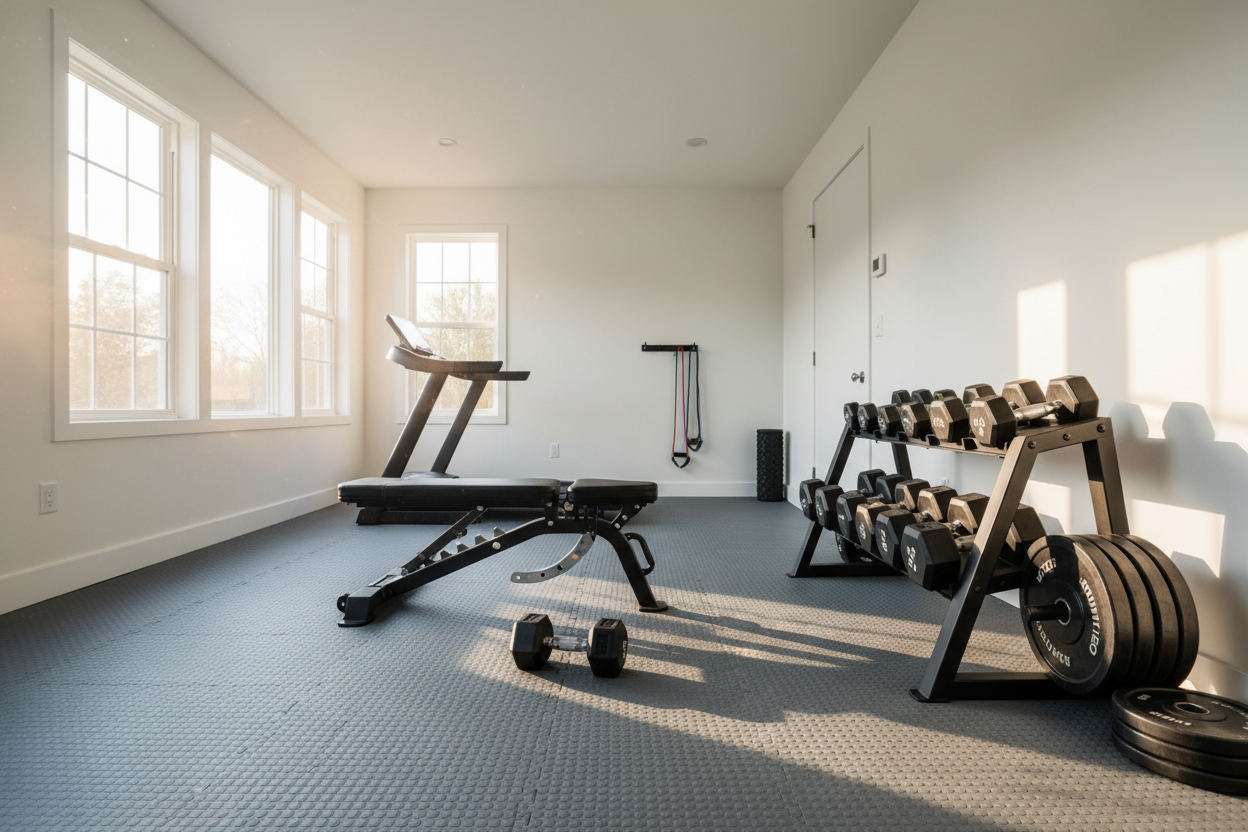
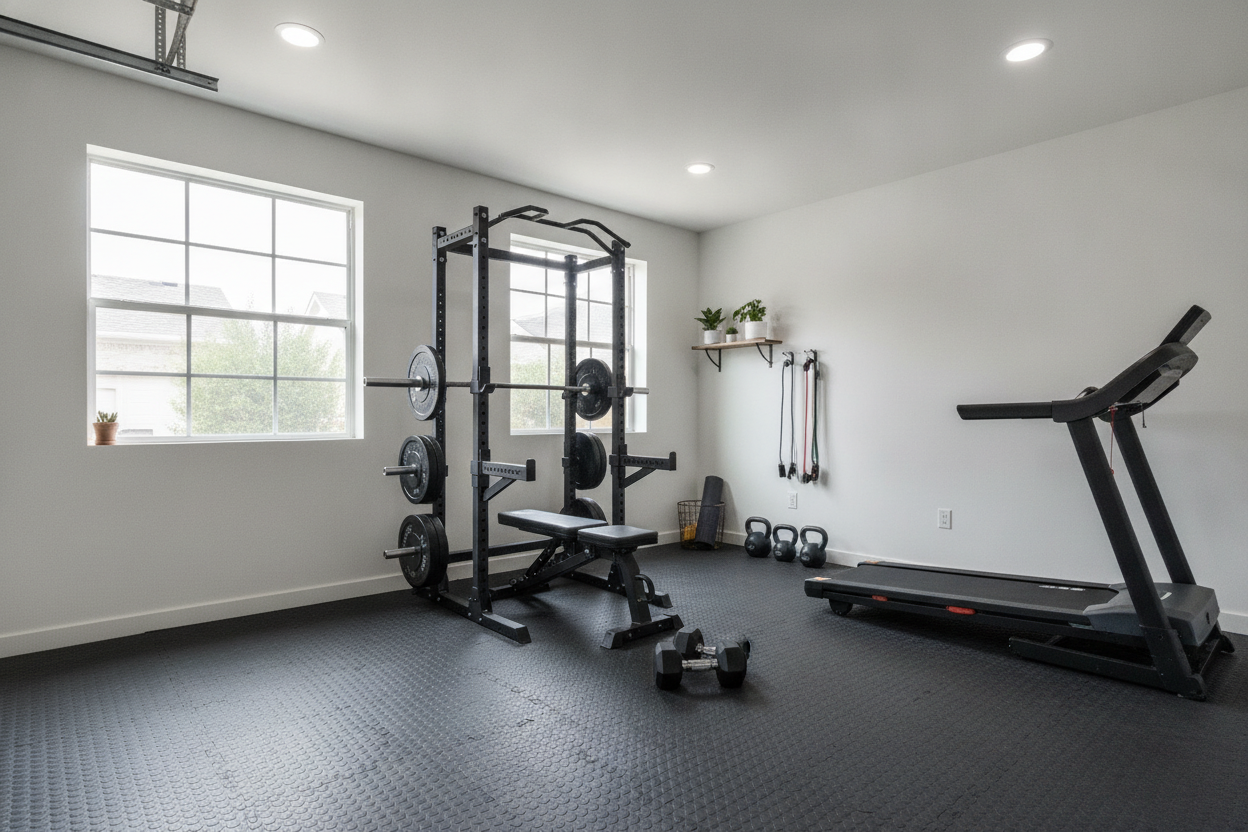
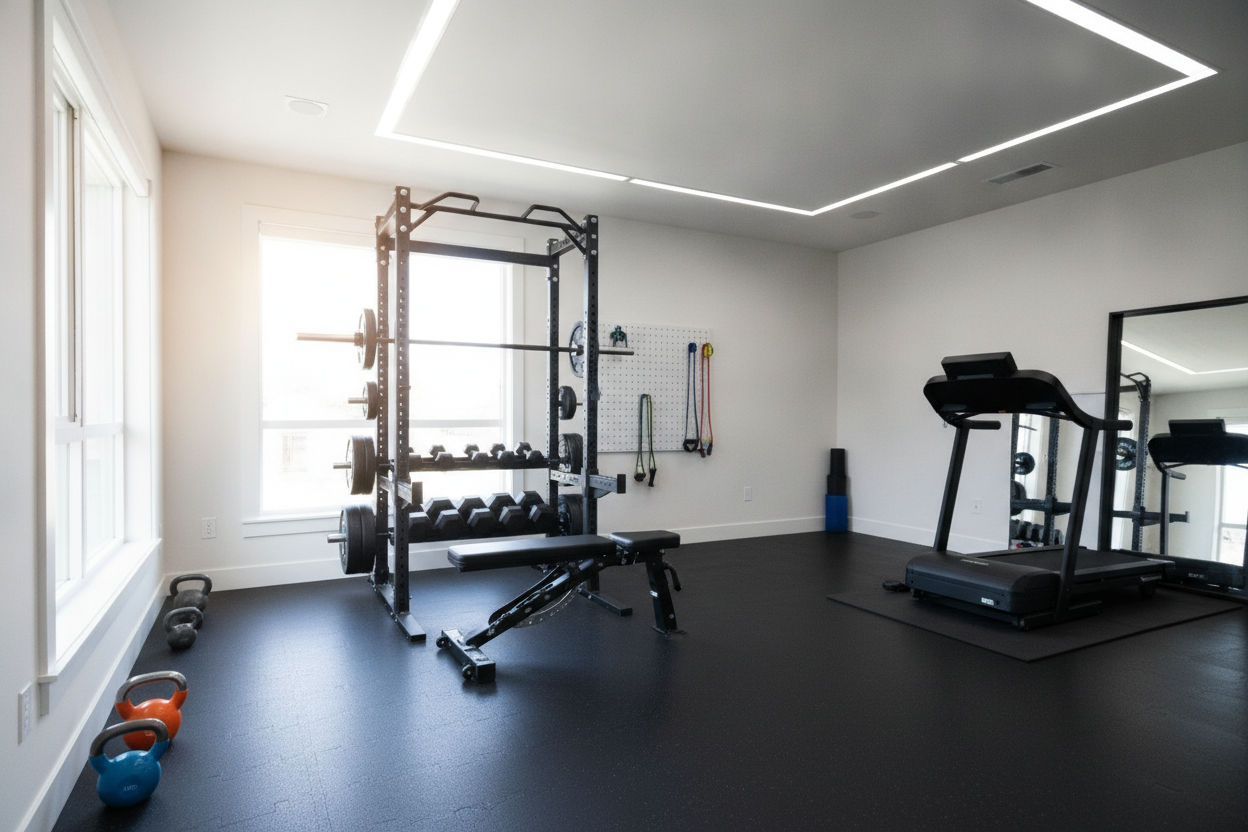
For me, that was laying down a high-quality rubber surface. Rolling out a 6x8ft exercise mat creates a 'zone' where the rules are different. It protects your subfloor from dropped 50-lb dumbbells and gives you the grip you need for heavy split squats. It turns a corner of a room into a legitimate training facility.
A Sample Home-Based Exercise Split That Works
Here is how I structure a home-based exercise week that actually yields results. We stop the endless circuits and start training with intent. You need a clear space, ideally defined by a large exercise mat, to keep things organized.
- Monday: Heavy Upper Body (Push/Pull focus, 8-12 rep range).
- Tuesday: 30-45 minutes Zone 2 Cardio (Steady state).
- Wednesday: Heavy Lower Body (Hinge/Squat focus, 8-12 rep range).
- Thursday: Active Recovery or Mobility.
- Friday: Full Body Hypertrophy (Slow tempos, 12-15 rep range).
- Saturday: High-Intensity Conditioning (The only day you should be gasping).
Personal Experience: My 'Intensity' Mistake
A few years ago, I tried to run a high-intensity 'WOD' style program in my garage during a July heatwave. I was doing power cleans and burpees in 95-degree humidity. I ended up so burnt out and dehydrated that I couldn't train for two weeks. I realized then that 'intensity' is a tool, not a lifestyle. Once I separated my heavy lifting from my cardio, my numbers finally started moving again.
FAQ
Do I need a lot of space for this?
Not really. A 6x8 foot area is enough for a bench and a set of dumbbells. The key is how you use that space, not how big it is.
Can I just do cardio and skip the weights?
You can, but you'll lose muscle mass over time. Strength training is the 'armor' that protects your joints as you age.
Is bodyweight training enough?
It can be, but you have to make the movements harder (like one-arm pushups) rather than just doing more reps of the easy version.