Why Your Daily Workout Isn't Actual Strength Training
I remember the exact moment I realized my fitness routine was a lie. I was three years into a 'consistent' habit, dripping sweat every morning, yet I looked exactly the same and couldn't bench my own body weight. I had fallen into the trap of thinking that fatigue equals progress. In reality, I was just really good at getting tired, not at strength training.
We have been sold the idea that 'moving more' is the ultimate goal. While moving more is great for your heart, it does very little for your force production. If you are tired of spinning your wheels and want to actually change your physical capability, you have to stop exercising and start training.
- Exercise is for today: It burns calories and clears your head.
- Training is for tomorrow: It follows a specific plan to force a physical adaptation.
- Progressive Overload: If the weight doesn't go up, your strength won't either.
- Hardware Matters: You cannot build a 400-lb deadlift with 20-lb plastic dumbbells.
You Are Exercising, But You Aren't Training
The fitness industry loves to keep things vague. They want you to believe that any 'exercise and strength' movement is essentially the same thing. It isn't. Exercise is what you do to feel good in the moment. It is random, it is reactionary, and it is usually focused on the calorie burn. There is nothing wrong with that, but don't confuse it with a structured program designed to make you more powerful.
When you show up at the gym without a logbook, you are just exercising. Real getting sweaty isn't strength exercise training; it is just metabolic stress. True training requires intent. It means knowing exactly what you lifted last week and ensuring that this week, you add five pounds or perform one more rep. Without that specific trajectory, you are just a hamster on a wheel—working hard but going nowhere.
So, Does Working Out Make You Stronger Anymore?
The short answer is: only at first. When you first start lifting, your central nervous system is so inefficient that almost anything works. This is the 'novice effect.' You could pick up a heavy rock every day and get stronger for about three weeks. But eventually, your body adapts. It gets efficient. At that point, the question of does working out make you stronger
becomes a resounding 'no' unless you change the stimulus.
This is where most people hit a plateau that lasts for years. They do the same three sets of ten with the same 35-lb dumbbells because that's what feels 'hard.' But 'hard' isn't the metric—overload is. To keep getting stronger, you have to systematically increase the stress on your muscles. This is why exercise and strength training must be viewed through the lens of long-term progression rather than daily exhaustion.
The Non-Negotiable Hardware for Real Adaptation
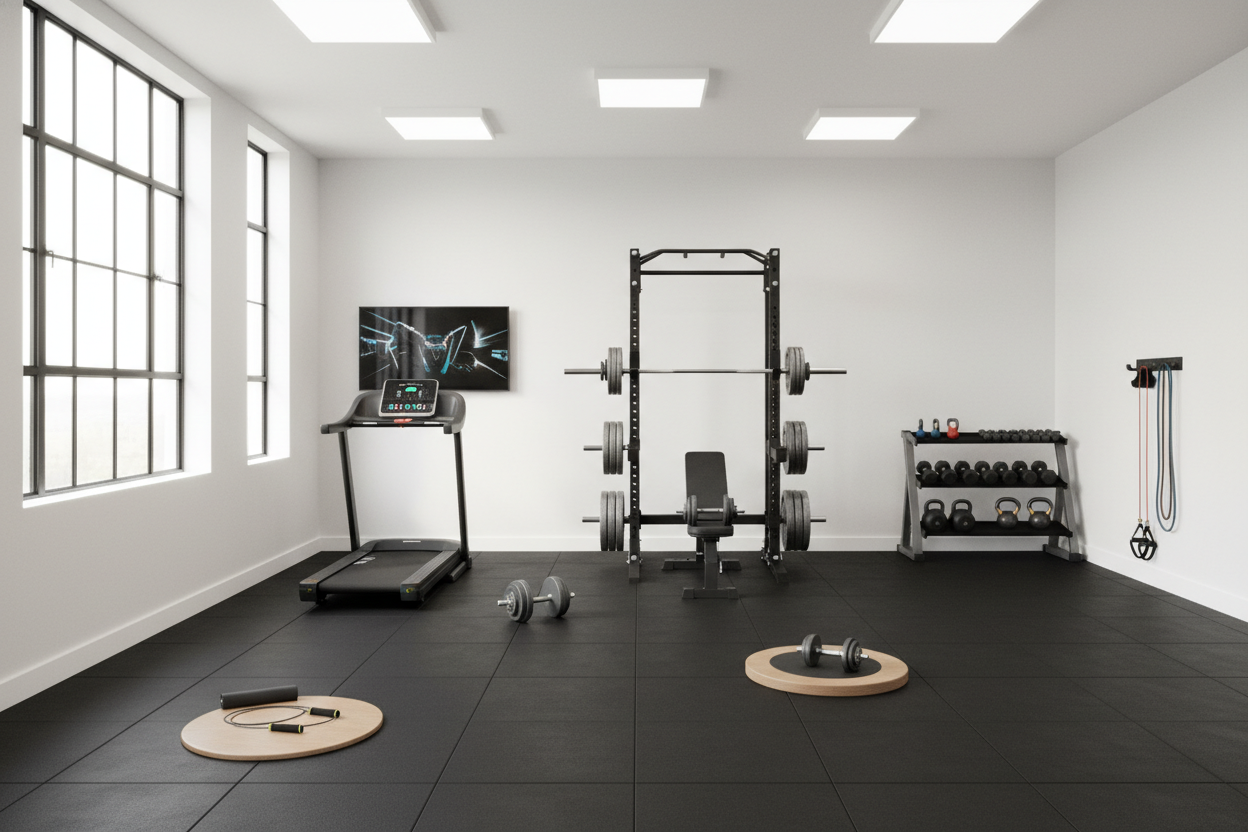
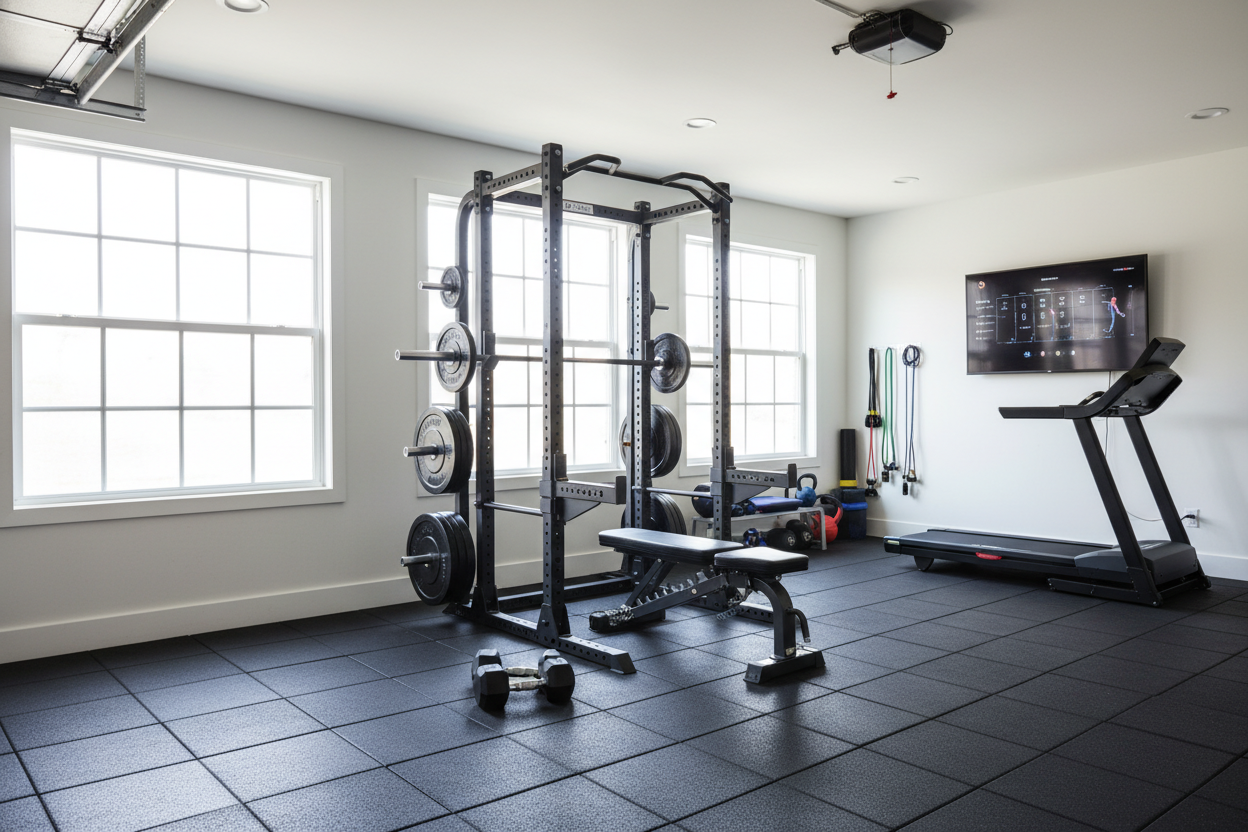
You can't build a skyscraper on a foundation of sand, and you can't build real power with flimsy gear. If you are serious about training strength, you need tools that allow for incremental loading. This means a solid power rack, an Olympic barbell, and iron plates. Those adjustable dumbbells that max out at 24 lbs are fine for accessory work, but they won't cut it for your primary lifts.
I recommend investing in serious home gym strength equipment that can grow with you. Look for a rack with 11-gauge steel and at least a 1,000-lb static weight capacity. You also need reliable strength training accessories like a 10mm or 13mm leather lifting belt. A belt isn't a crutch; it is a tool that allows you to create more intra-abdominal pressure, which protects your spine and lets you move more weight. More weight equals more stimulus, which equals more strength.
How to Protect Your Joints While Going Heavy
A common fear is that lifting heavy will wreck your joints. The truth is that healthy strength training is actually protective. It increases bone density and strengthens the connective tissues around your knees and shoulders. Most injuries don't happen because the weight was 'too heavy'; they happen because the environment was unstable or the form was sloppy.
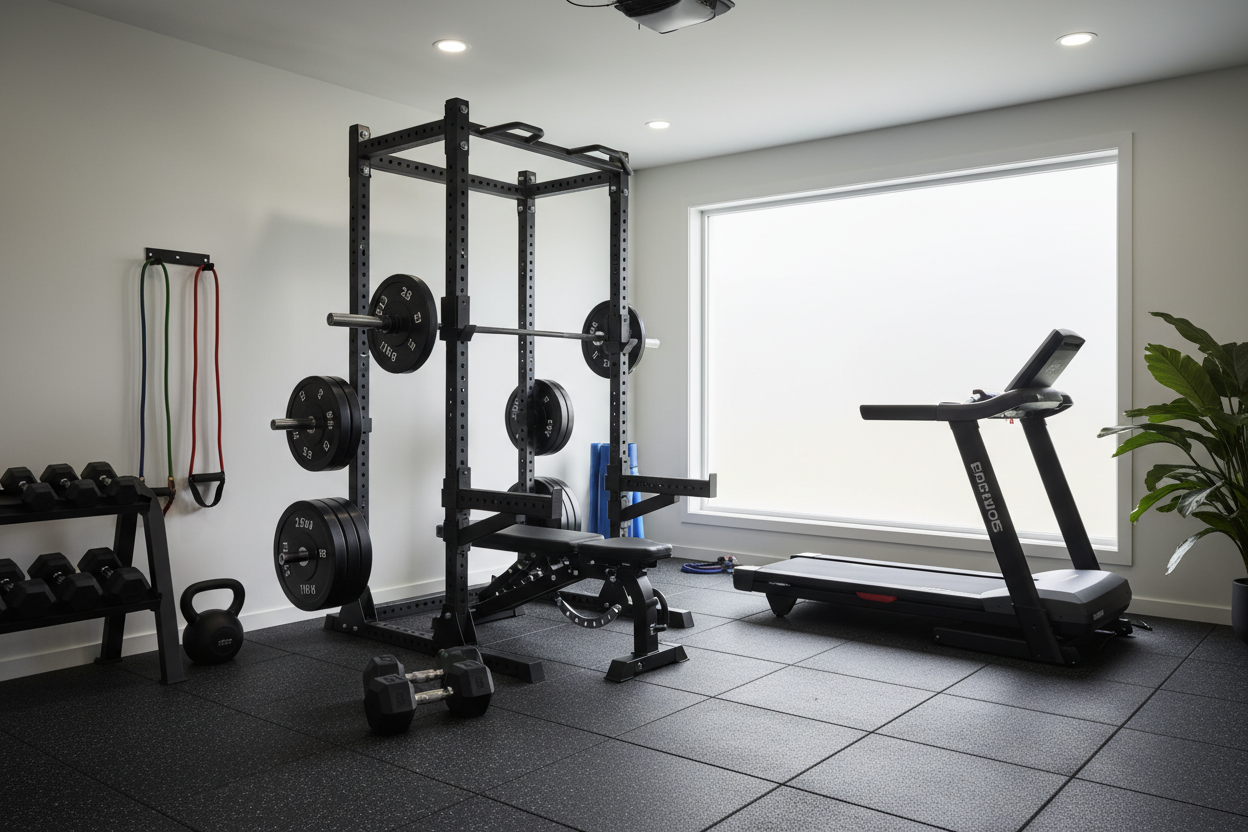
Safety starts from the ground up. If you are lifting on a squishy carpet or thin foam tiles, your ankles are constantly fighting for stability. I always suggest installing heavy-duty gym flooring for home workouts to create a non-slip, high-density surface. When your feet are planted on a 3/4-inch rubber stall mat, your force transfer is direct and your joints stay aligned. Stability is the precursor to intensity.
Your Blueprint for Tomorrow's Session
Ready to stop 'working out' and start training? It starts with a simple three-day split. Focus on the big four: Squat, Bench Press, Deadlift, and Overhead Press. Forget the fancy machines and the 'muscle confusion' workouts you see on Instagram. Your body doesn't need to be confused; it needs to be challenged with basic, heavy movements.
Track every single set. If you did 185 lbs for 5 reps last Monday, you do 190 lbs this Monday. It is that simple, and it is that boring. But boring is what builds exercise training results that actually show up in the mirror and on the platform. If your current setup is holding you back, focus on choosing the best strength and weight training equipment that allows for this kind of linear growth. Stop chasing the sweat and start chasing the numbers.
Is 30 minutes enough for strength training?
Yes, if you cut the fluff. If you spend 30 minutes focused on two big compound lifts with 3-5 minute rest periods, you can make incredible gains. If you spend that 30 minutes doing 'circuit training' with light weights, you're just doing cardio with props.
How many days a week should I train for strength?
For most people, three to four days is the sweet spot. Strength isn't built in the gym; it's built while you sleep. You need those recovery days to allow your muscle fibers to repair and grow back stronger than before.
Can I get strong using just bodyweight?
You can get stronger than a sedentary person, but you will hit a ceiling quickly. Once you can do 20 perfect pushups, adding a 21st doesn't make you much stronger—it just increases your endurance. To keep building strength, you need external resistance.