Stop Paying Coaches for What a Free Bodybuilding Program Can Do
I remember staring at a PayPal invoice for a 'bespoke' hypertrophy plan that cost more than the 300-lb weight set I’d just bought for my garage. I paid it, opened the PDF, and realized I had just bought a standard upper/lower split I could have found on a forum in five minutes. If you have a barbell, a rack, and a pulse, a free bodybuilding program is usually all you need to pack on serious mass without draining your bank account.
Quick Takeaways
- Most 'custom' online coaching is just a repackaged version of a standard 4-day split.
- Execution, intensity, and progressive overload are the only variables that actually drive growth.
- Free templates work perfectly if you know how to swap machine exercises for free weights.
- Safety gear like spotter arms and stable flooring is more important than a fancy spreadsheet.
The $200-a-Month Custom Coaching Illusion
Let’s be real: most online fitness coaches are running a volume business. They have fifty clients all running the same push/pull/legs split with maybe one or two exercise swaps to make it feel 'personal.' You aren't paying for secret Russian sports science; you're paying for an expensive accountability buddy. If you are the type of person who can get under a bar when it is 40 degrees in your garage, you don't need to pay someone to tell you to do three sets of ten.
The reality is that hypertrophy isn't that complicated. You need to hit a muscle group with enough volume to stimulate growth, then eat and sleep enough to recover. A standard free body building program covers these bases just as well as a 'custom' plan. Save that coaching money and put it toward a better barbell or a set of high-quality plates.
Why Free Templates Beat Overthinking
Decision fatigue is the silent killer of gains. When you spend weeks 'researching' the perfect program or paying a coach to tweak your RPE targets, you’re wasting mental energy that should be spent on the platform. Grabbing a proven, no-cost template forces you to stop overthinking and start lifting. You can actually get big on a free bodybuilding program as long as you aren't sandbagging your sets.
The beauty of a basic template is its rigidity. It tells you what to do, and your only job is to beat your previous session’s numbers. Whether it is adding 2.5 lbs to the bar or grinding out one extra rep, that's the only 'optimization' that matters. Most guys who fail on free programs don't fail because the program was bad; they fail because they didn't bring enough intensity to the movements.
The 3 Things Missing From Every Downloaded PDF
When you go the DIY route, you have to be your own head coach. A PDF won't tell you to back off when your elbows start screaming from too many skull crushers. You have to master auto-regulation—learning the difference between 'this is heavy' and 'this is going to tear a muscle.' You also need to keep an eye on your rest times. Without a coach timing you, it's easy to turn a 60-minute hypertrophy session into a two-hour social media scrolling marathon.
The biggest hurdle is knowing why the free body build program you downloaded stopped working after a few months. Usually, it's because you've hit a plateau that requires a deload or a slight change in exercise selection. A coach would spot this immediately, but as a garage gym athlete, you have to be honest with your logbook and recognize when the stimulus has gone stale.
Swapping Machines for Garage Gym Gear
Most bodybuilding workout program templates are written for commercial gyms with a sea of Hammer Strength machines. In a home gym, you have to get creative. If a program calls for a Leg Press, you might need to do high-rep Goblet Squats or Bulgarian Split Squats. If you’re tired of the 'barbell only' life, investing in a specialized lower body strength machine like a compact leg press or a belt squat can give you those isolation gains without the commercial gym membership.
Setting Up Your Space for Unsupervised Failure
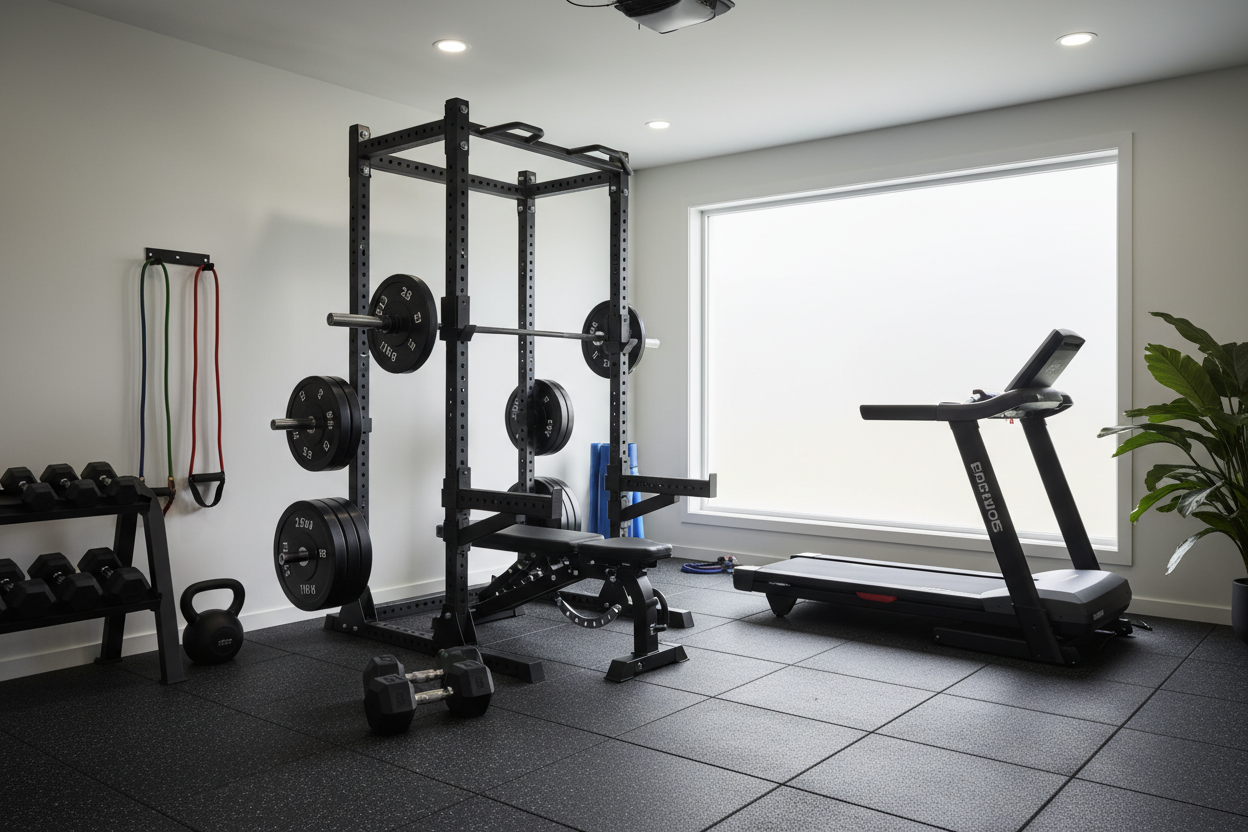
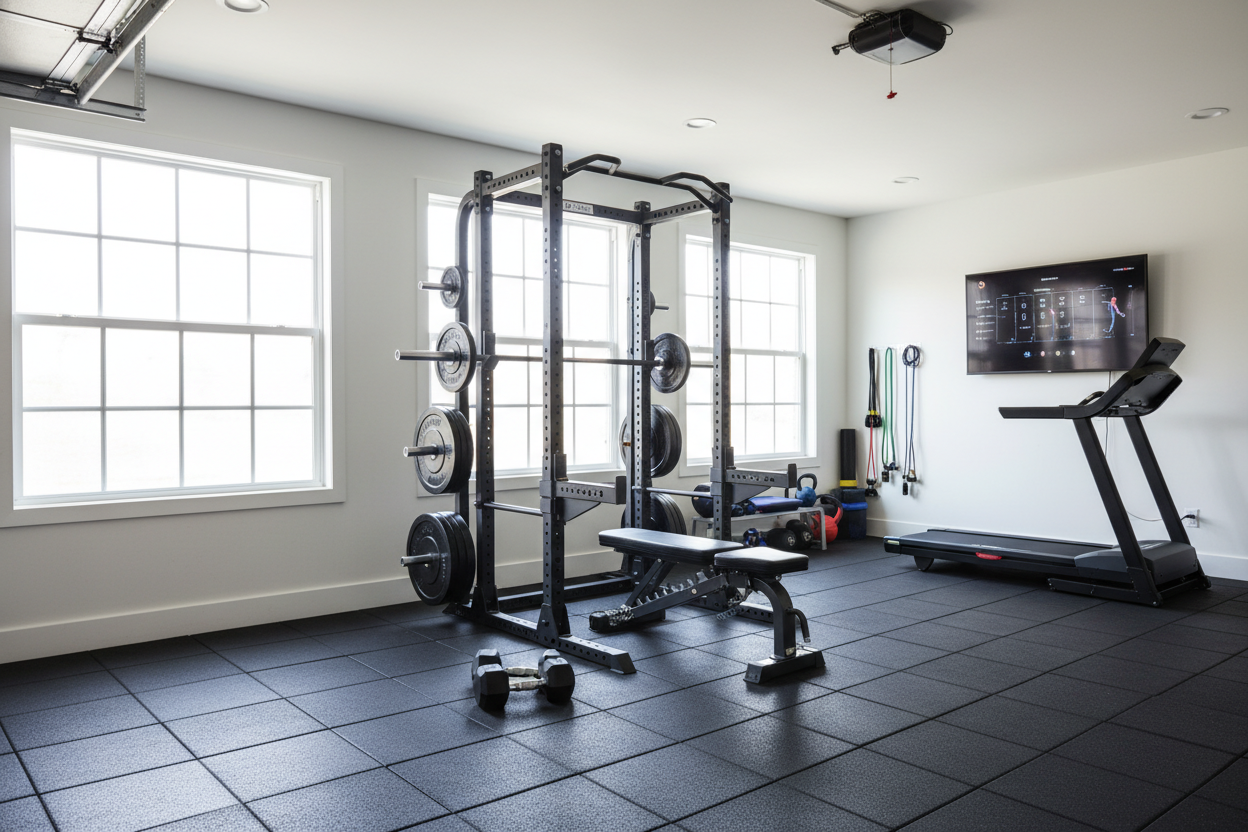
Bodybuilding requires training close to muscular failure. In a commercial gym, you have the safety of machines or a random guy named Mike to spot you. In your garage, you are on your own. You need to make sure your rack is bolted down and your safety pins are set at the right height for every bench and squat set. Stability is also key—trying to grind out a heavy set of overhead presses on bare concrete is a recipe for a slip.
I always recommend investing in high-density gym flooring for home workout setups. It protects your foundation and gives your feet the grip they need when you're pushing for that final, ugly rep. When you aren't paying a coach, you have more budget to make your training environment actually safe for high-intensity lifting.
When You Actually Do Need to Hire a Pro
I’m not saying coaches are useless. If you are recovering from a major surgery or trying to work around a specific chronic injury, a physical therapist or a highly qualified coach is worth every penny. The same goes for competitive bodybuilders. If you're planning to step on stage in a pair of posing trunks, you need an objective set of eyes to manage your peak week and nutrition. But for the 95% of us just trying to look better in a t-shirt? The free route is the smart route.
Personal Experience: My $500 Mistake
A few years back, I bought a 'pro-level' 12-week hypertrophy plan. It was basically 30 sets of chest per week and a lot of fluff. I ended up with a nagging shoulder impingement and didn't gain a single pound of muscle. I switched back to a basic, free upper/lower split, focused on heavy compound movements, and my bench press finally moved again. I realized then that I wasn't paying for results; I was paying for the ego boost of saying I had a coach. Don't make that mistake.
FAQ
Can I really build muscle without a coach?
Yes. If you track your lifts, increase the weight over time, and eat in a caloric surplus, you will grow. The 'secret' is consistency, not the person who wrote the spreadsheet.
How do I know if a free program is good?
Look for programs that prioritize compound movements (squats, presses, rows) and have a clear plan for progression. If it’s all isolation moves and 'muscle confusion,' skip it.
What if I don't have the specific machines listed?
Substitute with the closest free-weight equivalent. No lat pulldown? Do pull-ups. No cable flys? Do dumbbell flys or use resistance bands attached to your rack.