Why Your Beginner Gym Schedule Needs to Ignore the Calendar
I remember staring at my first gym membership contract like it was a sacred text, convinced that if I didn't hit the weights every Monday, Wednesday, and Friday, my muscles would simply refuse to grow. I spent more time stressing over the calendar than actually lifting. It's a trap that almost every novice falls into: the idea that a beginner gym schedule is a fixed contract with the days of the week.
Life doesn't care about your spreadsheet. Your boss calls a late meeting, your kid gets a fever, or you just flat-out sleep through your alarm. When your routine is tied to specific days, a missed Tuesday feels like a failed week. You think, 'Well, I messed up, I'll just start fresh next Monday.' That's how three days off turns into three months off.
- Stop tying workouts to specific days of the week.
- Use a 'Rolling' schedule to maintain momentum.
- Focus on compound movements to maximize efficiency.
- Build a low-friction home environment to kill excuses.
- Never double up on workouts to 'catch up.'
The Problem with the Monday-Wednesday-Friday Myth
The traditional three-day split is great on paper, but it’s fragile. For most people, a Do You Actually Need a Workout Plan for Beginners at Gym? depends on whether that plan can survive a Tuesday night flat tire. If your brain is hardwired to believe Monday is 'Chest Day,' and you miss Monday, you feel like you've already 'lost' the week.
This psychological hurdle is the primary reason beginners quit. We crave order, but the calendar is an arbitrary master. A gym programme for beginners should be a sequence, not a schedule. When you stop viewing the week as a seven-day box that resets on Sunday night, the pressure to be perfect vanishes.
Enter the 'Rolling' Schedule
Instead of a Monday-Wednesday-Friday routine, I advocate for a rolling block. Think of your training in terms of sessions: Workout A, Rest, Workout B, Rest. If you hit Workout A on Monday, great. If life gets in the way on Wednesday, you don't skip Workout B—you just do it on Thursday. The sequence never changes, only the date does.
This approach turns your gym workout plan for beginners into a resilient loop. It removes the 'all or nothing' mentality. You aren't 'behind' because there is no 'behind.' You are simply on the next step of the sequence. Once you've mastered this mindset, you can look at a more structured Workout Plan For Beginners At Gym Stop Guessing And Start Lifting to fill in the specific exercises.
Keep the Routine Stupidly Simple
A simple gym workout plan doesn't need twenty different machines. Stick to an A/B split. Workout A could be Squats, Overhead Press, and Lat Pulldowns. Workout B could be Deadlifts, Bench Press, and Rows. That is it. If you do those three moves with intensity, you're doing more for your physique than the guy spending two hours doing six types of bicep curls.
The goal of a starter workout routine at gym isn't to reach exhaustion; it's to build the habit of movement and technical proficiency. By alternating these two simple sessions, you hit every major muscle group frequently enough to see results without burning out your central nervous system by week three.
Reducing Friction for the 'Whenever' Workout
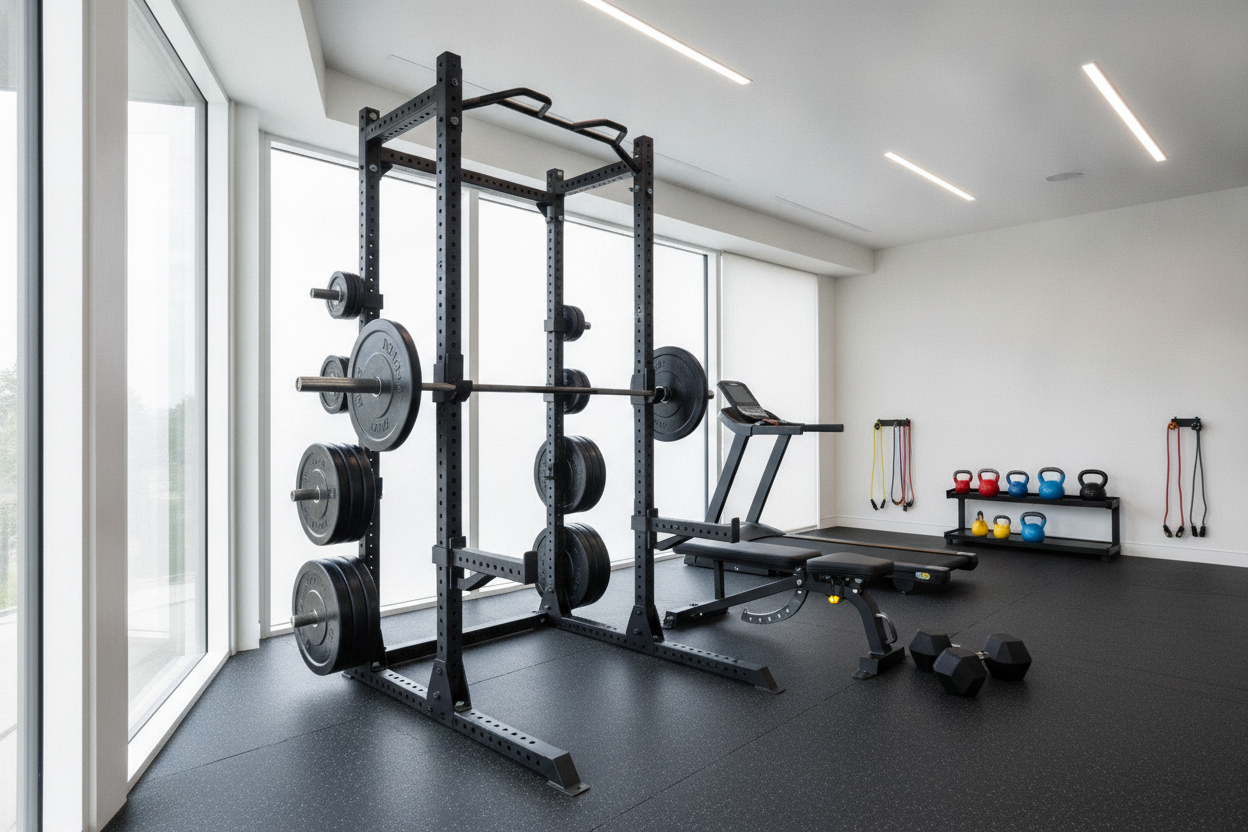
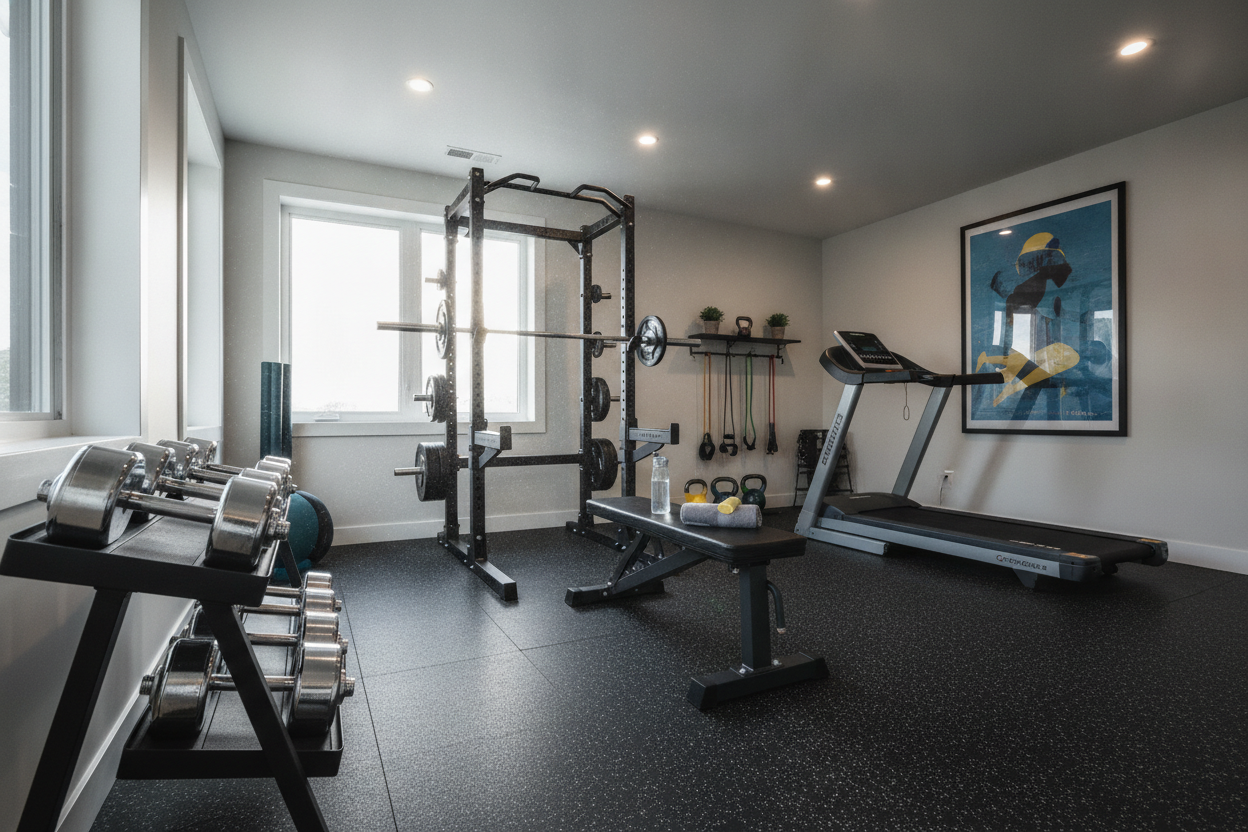
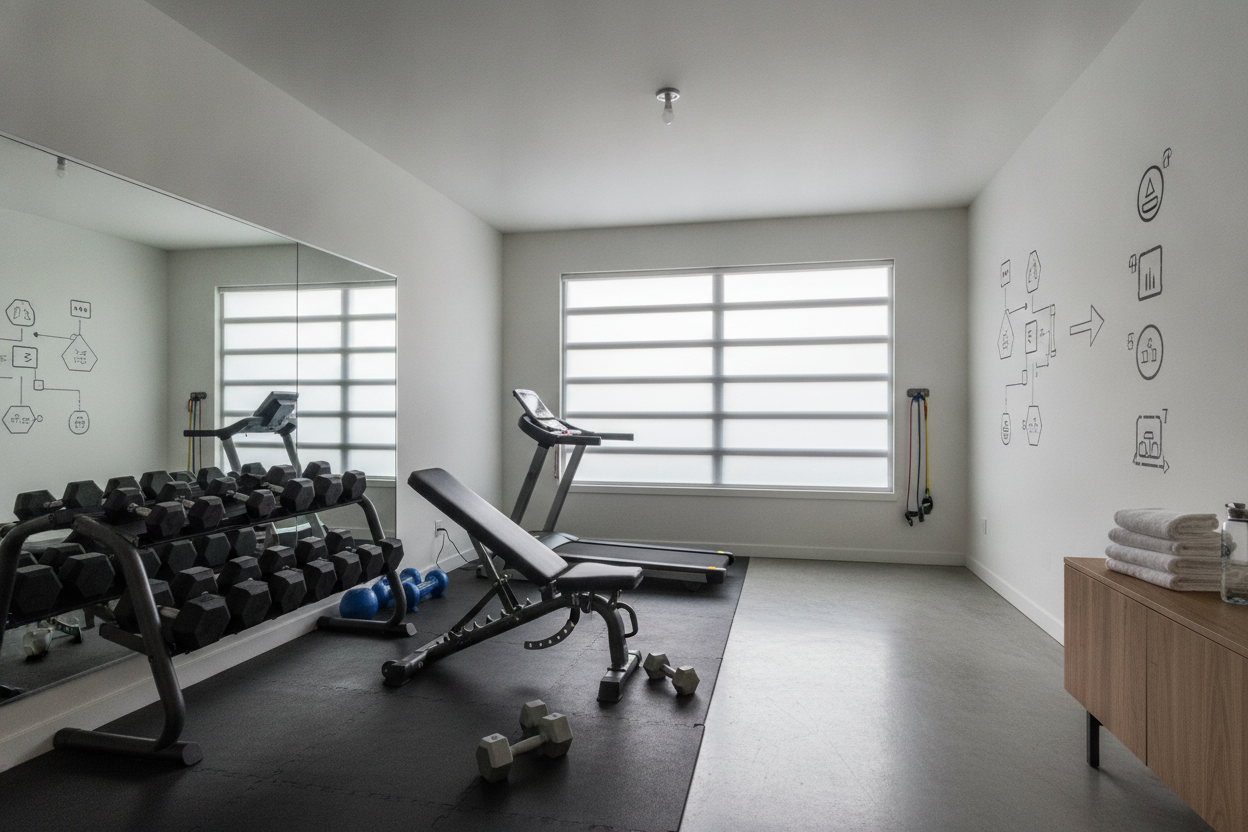
The rolling schedule works best when the barrier to entry is low. If you have to drive twenty minutes to a commercial gym, find a locker, and wait for a rack, you're going to skip the 'B' session when you're tired. This is why I'm a massive advocate for a dedicated home space, even if it's just a corner of the garage.
You don't need a $5,000 power rack to start. You need a foundation. I always tell people to start with a Large Exercise Mat For Home Gym. It defines the space. If you have a 6X8Ft Exercise Mat Yoga Mat Gym Flooring For Home Workout laid out, that is your gym. It’s always ready. There’s no setup time, no commute, and no excuses when you find a random 40-minute window on a Thursday evening.
What to Do When You Inevitably Skip a Day
Here is the golden rule: Never 'make up' for a missed session by doing a double workout. I’ve tried it. I once missed four days and tried to combine a heavy leg day with a heavy back day. I felt like I’d been hit by a truck, my form was garbage by the second hour, and I didn't want to look at a barbell for a week afterward.
When you miss a day, just pick up exactly where you left off in the sequence. If the last thing you did was Workout A, your next session is Workout B. It doesn't matter if it's been two days or ten days. The rolling schedule is a circle, not a race. Just get back on the mat and move.
FAQ
How many days a week should a beginner train?
Aim for three sessions every seven to nine days. Don't obsess over the weekly total; focus on the spacing between sessions to allow for recovery.
Can I do cardio on rest days?
Absolutely. A 20-minute walk or light cycle is great for blood flow, but don't let it get so intense that it ruins your next lifting session.
What if I only have 20 minutes?
Do one main lift. If you were supposed to do three exercises but only have time for squats, just do the squats. Doing something is always better than doing nothing.