Stop Doing Random Exercises: Workout At Home With An Actual Plan
I have spent the last decade in my garage, surrounded by the smell of stall mats and the sound of iron clanking. I have seen too many people start an exercises workout at home by scrolling through social media, picking a random video, and sweating for twenty minutes without any clear goal. That is not training; that is just moving around. If you want to actually change how you look and feel, you need to stop being a tourist in your own living room.
Quick Takeaways
- Stop chasing a 'sweat' and start chasing progressive overload.
- Your floor matters: get off the carpet to save your ankles and knees.
- Focus on four main movements: squat, hinge, push, and pull.
- Mobility is not optional, especially if you are training in a cold garage or basement.
- Consistency beats intensity; follow a 4-day split, not a daily random whim.
Why Your Living Room 'Sweat Sessions' Aren't Working
Most fitness exercise home routines fail because they lack progression. You do 50 air squats today, 50 tomorrow, and 50 next week. Your body is smart; it adapts quickly. Once it adapts, if you do not add weight, slow down the tempo, or change the leverage, you stop seeing results. You are just burning a few calories and getting tired, which is a terrible metric for success.
When you are doing exercise at home, the temptation is to keep things 'fresh' by changing movements every day. This is a mistake. You need to do the same movements for 4-6 weeks at a time. This allows you to actually get better at them. If you are constantly switching from burpees to mountain climbers because a video told you to, you never build the neurological efficiency required to move real weight.
Stop Slipping on the Rug (Set Up Your Space First)
I have tried lifting on high-pile carpet. It is a disaster. It is like trying to squat on a giant marshmallow. Not only does it kill your power transfer, but it is also incredibly unstable for your ankles. Before you worry about which workout exercises for home to pick, fix your foundation. You need a surface that offers traction and firm support.
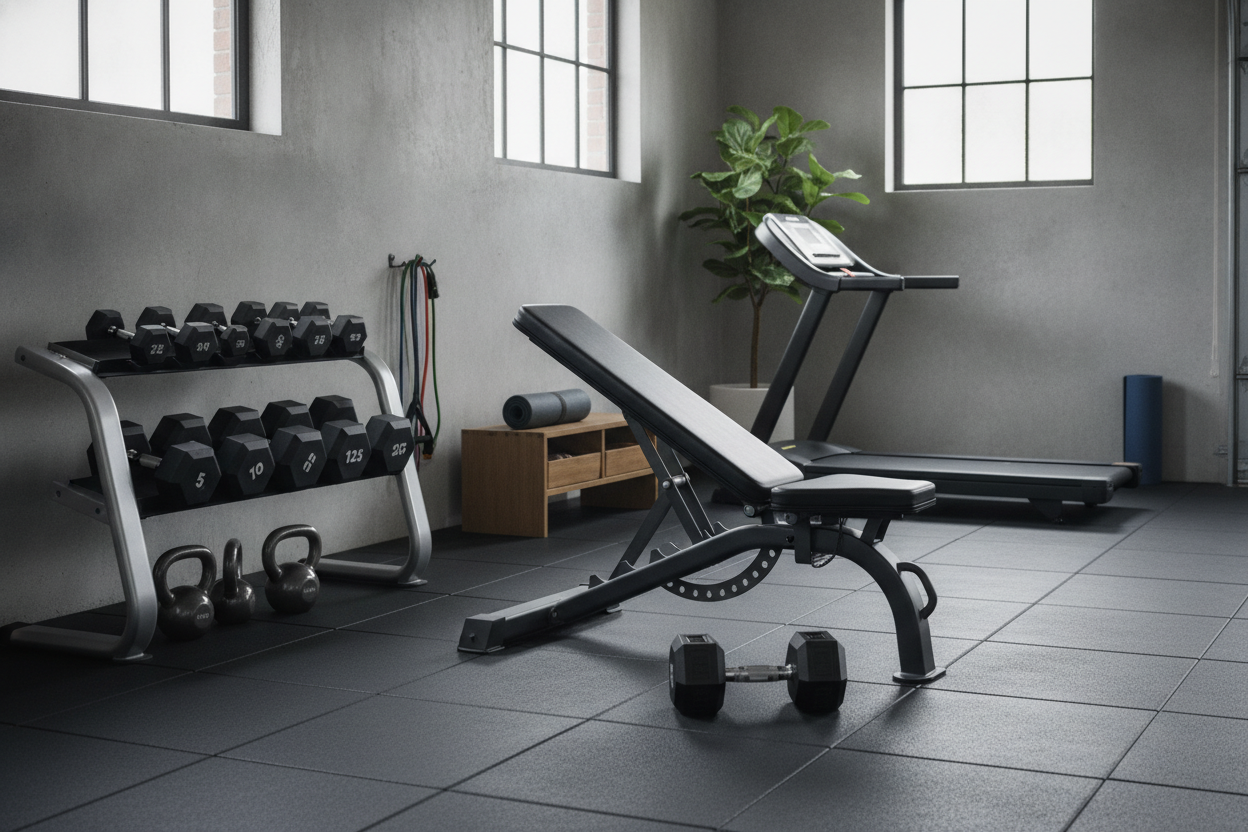
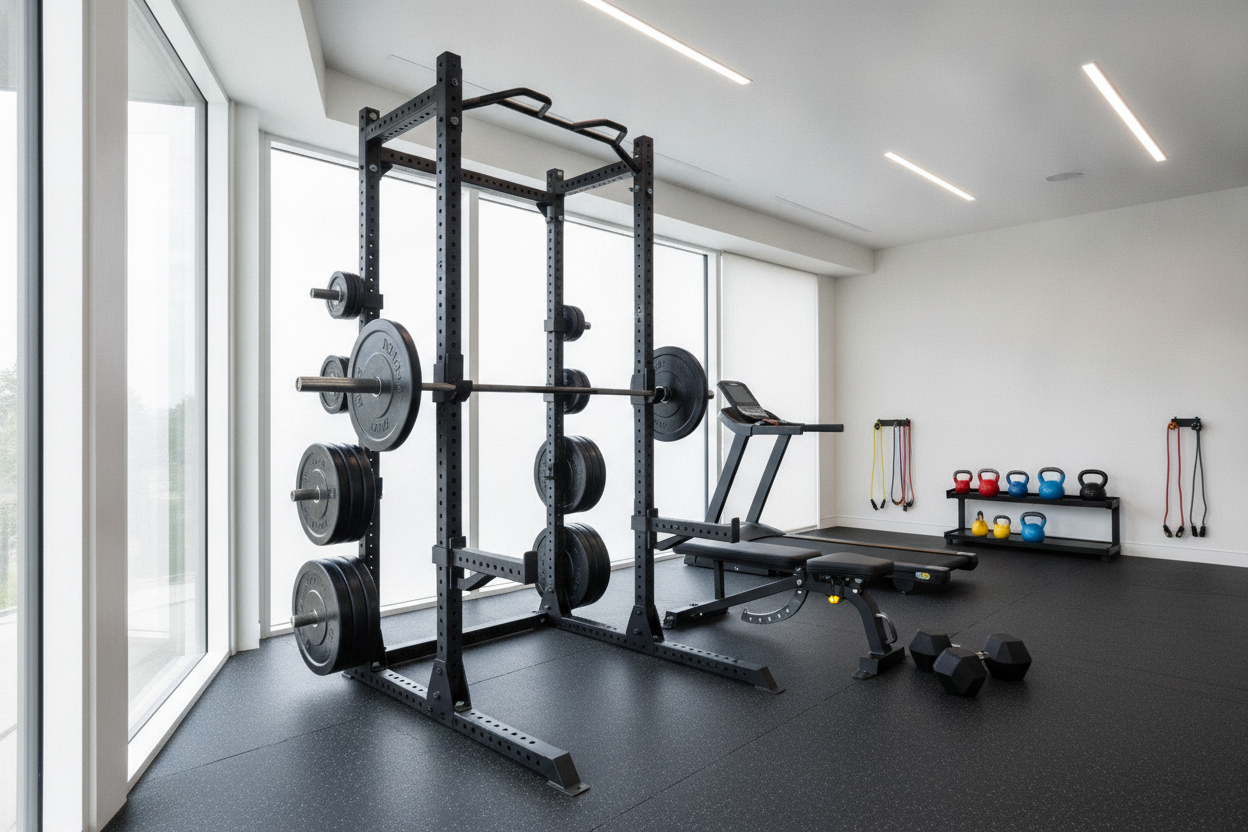
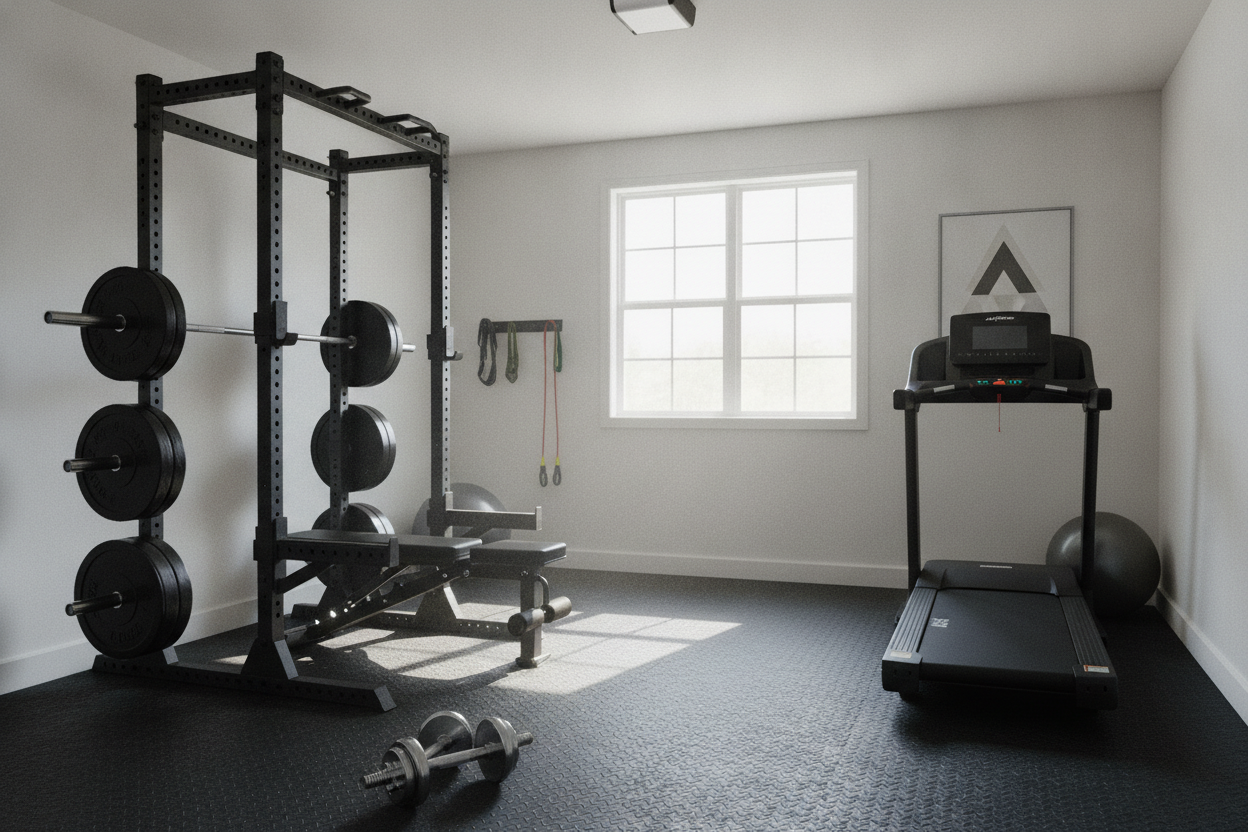
I eventually ripped up the old rug in my spare room and laid down a dedicated gym flooring for home workout. A solid 6x8 ft mat gives you enough space to move without feeling like you are going to slide into the coffee table. It protects your subfloor from dropped dumbbells and, more importantly, it protects your joints from the hard impact of concrete or hardwood.
The Only 4 Movements That Actually Matter
You do not need fifty different home exercise at home variations. You need four. First, the Squat (goblet squats, split squats). Second, the Hinge (deadlifts, swings, or bridges). Third, the Push (push-ups, overhead press). Fourth, the Pull (rows, pull-ups). If your workout does not have these, it is incomplete.
If you only have a pair of 25-lb dumbbells, you can make a squat harder by doing a 3-second descent. If you have no weights, you can turn a regular push-up into a decline push-up by putting your feet on the couch. It is about manipulating leverage to keep the intensity high enough to force your muscles to grow.
Mobility Isn't Optional When You Lift in Your Garage
Lifting in a home environment often means dealing with cold floors and tight spaces. I have learned the hard way that jumping straight into heavy sets without waking up my joints leads to a week of back pain. You do not need a 45-minute yoga session, but you do need to move.
I usually spend five minutes on a quick stretching workout at home specifically targeting my hips and ankles. If your hips are locked up from sitting at a desk all day, your lower back will try to compensate during your squats. Open the hips first, then earn the right to load the movement.
Do You Actually Need Machines for Cardio?
Bodyweight circuits are fine for a while, but eventually, you hit a ceiling. If your goal is true cardiovascular health, you might find that jumping jacks in front of the TV get boring fast. This is where you have to decide if you are a 'bodyweight only' person or if you are ready to invest in the long term.
If you find yourself plateauing or losing motivation, looking into the best at home exercise machines can be a smart move. A rowing machine or a stationary bike provides a level of consistent, measurable resistance that you just cannot get from doing burpees until you puke. It is about having the right tool for the job.
The Blueprint: How to Actually Program Your Week
Stop guessing. Here is a simple, effective 4-day split. Monday and Thursday are 'Lower Body' days (Squat and Hinge focus). Tuesday and Friday are 'Upper Body' days (Push and Pull focus). Wednesday and the weekend are for active recovery—walking, light stretching, or some low-intensity cardio.
In each session, pick one 'Big' movement and do 3-4 sets of 8-12 reps. Then pick two 'Accessory' movements and do 3 sets of 12-15 reps. Finish with some core work. That is it. No magic, no 'muscle confusion,' just basic physics and hard work. If you can do more reps this week than you did last week, you are winning.
Personal Experience: My Spare Room Disaster
A few years ago, I thought I could save money by using those cheap foam puzzle tiles from a big-box store. I was doing a heavy set of kettlebell swings and the tiles literally slid apart under my feet. I nearly went through my drywall. It was a wake-up call that your equipment—especially your flooring—is a safety feature, not just an aesthetic choice. Buy once, cry once. Get the heavy-duty mat and skip the cheap foam.
FAQ
Do I need a lot of weight to build muscle at home?
No, but you need tension. If you only have light weights, increase your reps or slow down your tempo. Your muscles don't know the number on the dumbbell; they only know how hard they are contracting.
How long should a home workout take?
If you are focused, you can get a brutal session done in 45 minutes. If you are spending two hours, you are probably spending too much time looking at your phone between sets.
Can I do these exercises every day?
You could, but you shouldn't. Muscle grows while you sleep and recover, not while you are training. Give yourself at least two days off a week to let your central nervous system reset.