Why Your Back Workout Needs the RDL Row Combo
Most lifters treat their body like a collection of spare parts. They hit hamstrings on leg day, lats on back day, and rarely consider how these muscles must cooperate during real-world movement. If you have ever felt your lower back tighten up before your lats fatigue during a bent-over row, you have experienced the disconnect firsthand. The solution lies in bridging the gap between the upper and lower posterior chain. This is where the single-leg RDL to row—often shorthand as a hamstring row in functional circles—becomes an indispensable tool in your arsenal.
The concept is simple but demanding. You combine a hip hinge, which loads the hamstrings and glutes, with a horizontal pull. This forces your body to stabilize a heavy load through your legs while generating force through your upper back. It is not just about saving time by doing two moves at once; it is about teaching your body to transfer force from the ground up without leaking energy through a unstable core.
The Anatomy of the Movement
To understand why this movement works, we have to look at the kinetic chain. When you perform a standard bent-over barbell row, your hamstrings act as dynamic stabilizers. They are under isometric tension, holding the pelvis in place so the spine remains neutral. If the hamstrings are weak or tight, the pelvis tilts, the lower back rounds, and the load shifts entirely to the lumbar spine. This is the primary reason many lifters abandon heavy rows.
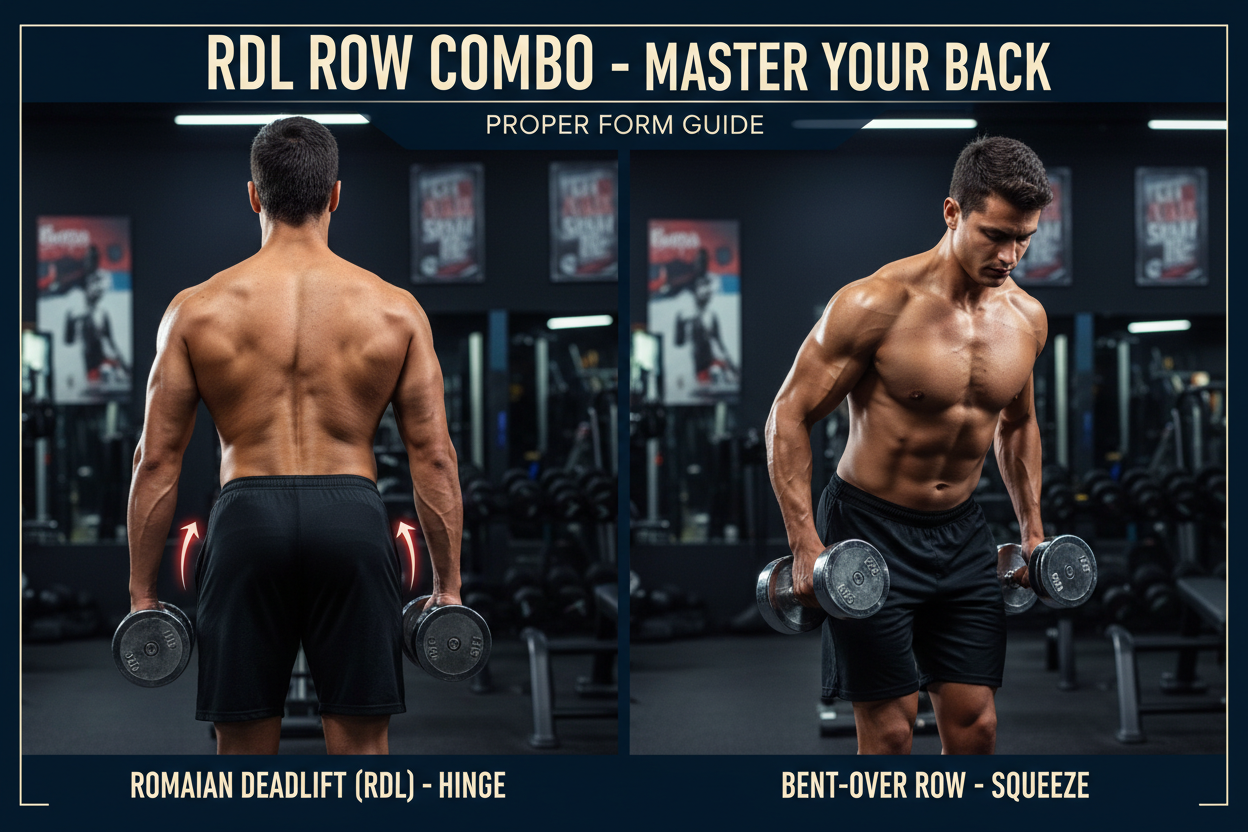
By explicitly combining a Romanian Deadlift (RDL) pattern with a row, you turn that stabilizer role into a primary mover. The hamstring row requires you to hinge at the hips until your torso is nearly parallel to the floor, stretching the hamstrings significantly. Holding this stretched position creates a solid platform. From there, the rowing motion engages the lats, rhomboids, and rear delts. You are essentially building a suspension bridge where your legs are the pylons and your back muscles are the cables.
A Lesson Learned the Hard Way
I spent years chasing heavy numbers on the barbell row, ignoring the shaking in my legs. I assumed my back was the weak link because that’s where I felt the fatigue. It wasn't until I started training for trail running—which requires immense single-leg stability—that I realized my error. I incorporated single-leg RDLs into my routine and eventually added the rowing component. The first time I tried it, I tipped over using a weight that was a fraction of what I usually rowed. It was humbling. The issue wasn't my lats; it was my inability to root my foot and engage my hamstring to support the pull. Once I mastered the stability aspect, my standard barbell row numbers shot up because my lower half stopped being the limiting factor.
Executing the Perfect Rep
Mastering this hybrid movement requires patience. You cannot rush the hinge or jerk the weight. Start with a dumbbell or kettlebell in the hand opposite to the working leg. If you are standing on your right leg, hold the weight in your left hand. This cross-body tension increases glute recruitment and fights rotational forces.
Soften your standing knee slightly but keep it rigid. Hinge at the hips, sending your free leg back behind you as if you are trying to close a car door with your heel. Keep your spine perfectly straight. Lower your torso until you feel a deep stretch in the standing hamstring. This is the critical loading phase. Pause here. Do not let your hips rotate open; keep them square to the floor.
From this stable, hinged position, perform a row. Drive your elbow back toward your hip pocket, squeezing your shoulder blade toward your spine. Lower the weight with control, then drive through your standing heel to return to the upright position. That is one rep. The hamstring row creates a massive metabolic demand because virtually every muscle on the backside of your body is firing to maintain balance.
Common Pitfalls to Avoid
Balance is usually the first thing to go. When people struggle to stay upright, they tend to round their shoulders or twist their torso to compensate. This defeats the purpose of the exercise. If you find yourself falling over, regress the movement. You can place the toes of your back foot lightly on the ground for a "kickstand" RDL. This provides just enough stability to let you focus on the hamstring stretch and the row without the high-wire act.
Another error is turning the row into a bicep curl. Because the focus is split between the leg and the back, the mind-muscle connection to the lats can suffer. gripping the weight too tight often leads to pulling with the arm rather than the back. Think of your hands as hooks and initiate the pull from the elbow.
Programming for Performance
This exercise does not belong at the very end of a workout when your core is exhausted, nor is it a 1-rep max lift. It fits best as a secondary compound movement. Place it after your heavy squats or deadlifts. Since it requires high neurological coordination, doing it while fresh ensures better form.
Aim for sets of 8 to 12 repetitions. The time under tension is naturally higher because you have to move slowly to maintain balance. You will likely find that your glutes and hamstrings are sore the next day in a way that isolated leg curls never achieve. By integrating the hamstring row into your weekly rotation, you build a posterior chain that looks good and functions as a cohesive unit, protecting your lower back and improving your athleticism across the board.
Frequently Asked Questions
Can I use a barbell for this exercise?
While possible, using a barbell for a single-leg RDL row is extremely difficult due to the balance required. It is generally better to use dumbbells or kettlebells, or perform a standard bilateral bent-over row if you strictly want to use a barbell.
Is this exercise better for back growth or leg growth?
It is primarily a functional stability and hypertrophy hybrid. You won't lift as heavy as a supported row (limiting absolute back growth) or an isolated deadlift (limiting leg load), but you will build superior coordination and stabilizer strength that enhances both areas.
What if my lower back hurts during the movement?
You are likely not engaging your core or your hamstrings are too tight, causing your spine to round. Reduce the range of motion—don't go down as far—and focus on bracing your abs as if you are about to take a punch before you start the hinge.