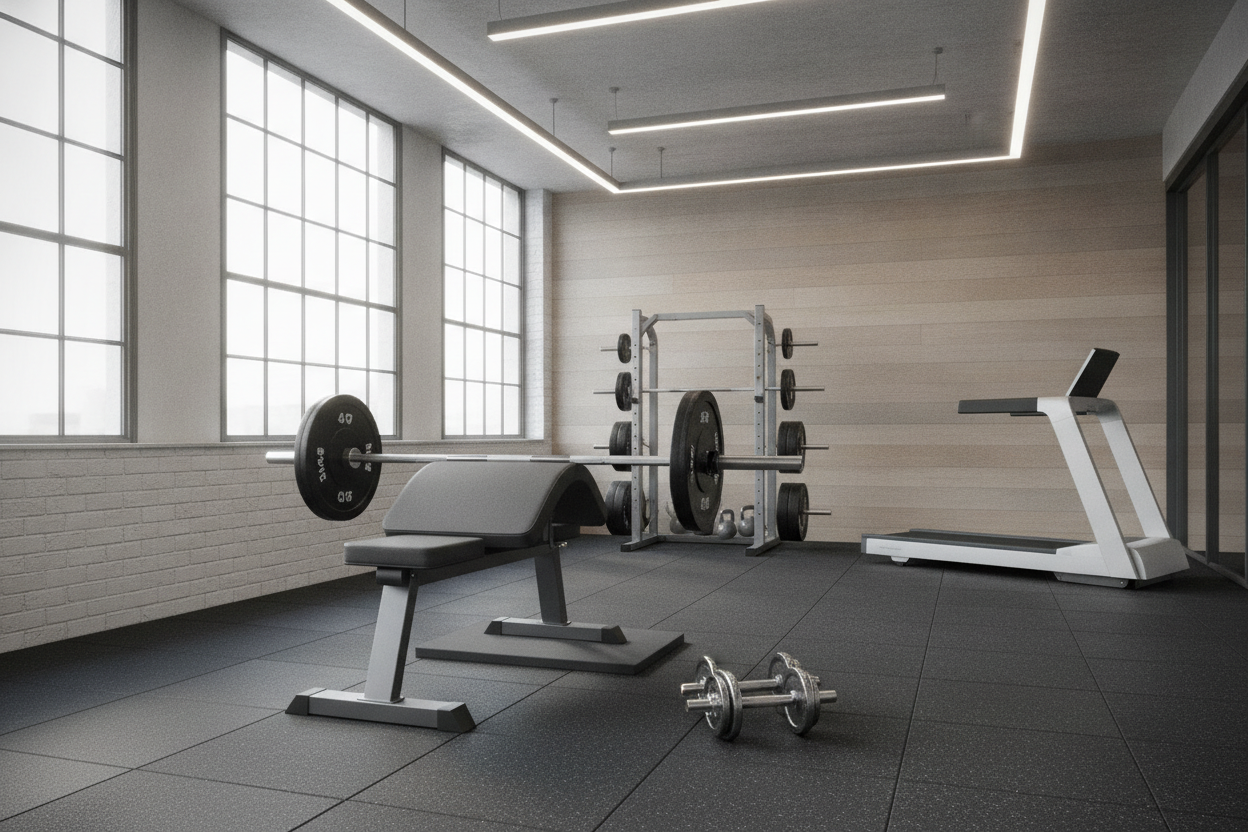
Why Your At-Home Workout for Women Legs Is Ruining Your Knees
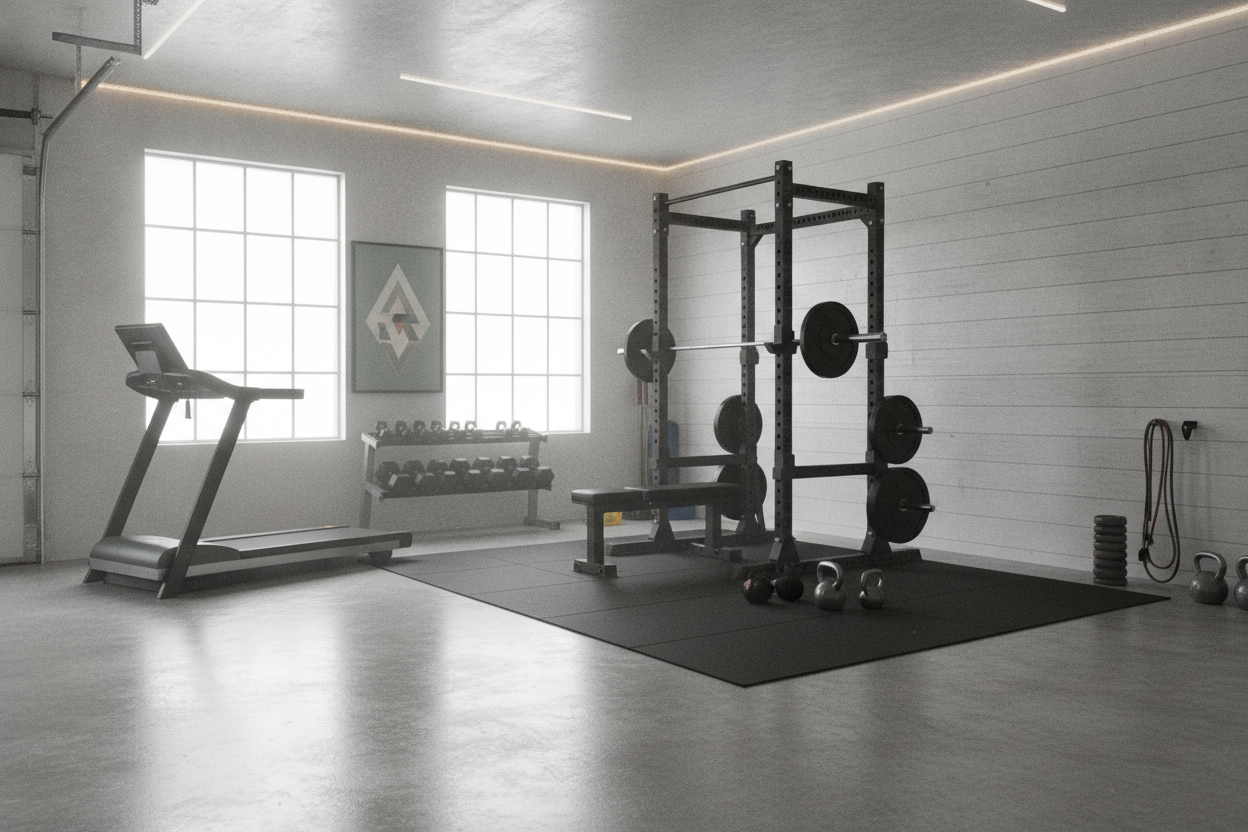
I remember the first time I tried a heavy workout for women legs in my garage. It was a cold Tuesday, and I didn't want to drive to the commercial gym. I figured the raw concrete floor was fine—it is just a floor, right? I was wrong. Three sets of heavy reverse lunges later, my patellar tendons were screaming, and I spent the next week hobbling around like I had aged thirty years overnight.
The reality is that your environment dictates your performance. If you are training on a surface that fights back, your body is going to lose. Here is the breakdown of why your current setup might be sabotaging your progress and how to fix it before you end up in physical therapy.
- Concrete has zero give, sending 100% of the impact force directly into your joints.
- Cheap foam puzzle mats are too squishy, causing dangerous ankle instability during heavy lifts.
- High-density rubber is the gold standard for heavy lifting and joint longevity.
- Focusing on slow eccentrics builds more muscle with significantly less joint stress than high-impact jumping.
The Concrete Floor Wake-Up Call
I used to think I was 'hardcore' for training on raw concrete. I would load up 50-pound dumbbells and go to town, thinking the grit of the garage made me tougher. But physics does not care about your ego. When you step down on a surface with zero shock absorption, that energy has to go somewhere. It travels up through your heel, into your ankle, and settles right in your knee.
After a month of this, I could not even walk down stairs without a sharp pinch in my kneecap. It was not that the workout was too hard; it was that the floor was too hard. Environment is not just about aesthetics; it is about mechanical safety. If you are serious about training at home, you have to stop treating your floor like an afterthought. I learned the hard way that a $1,000 squat rack is useless if you can't walk to it.
Why Your Joints Hate Cheap Puzzle Mats
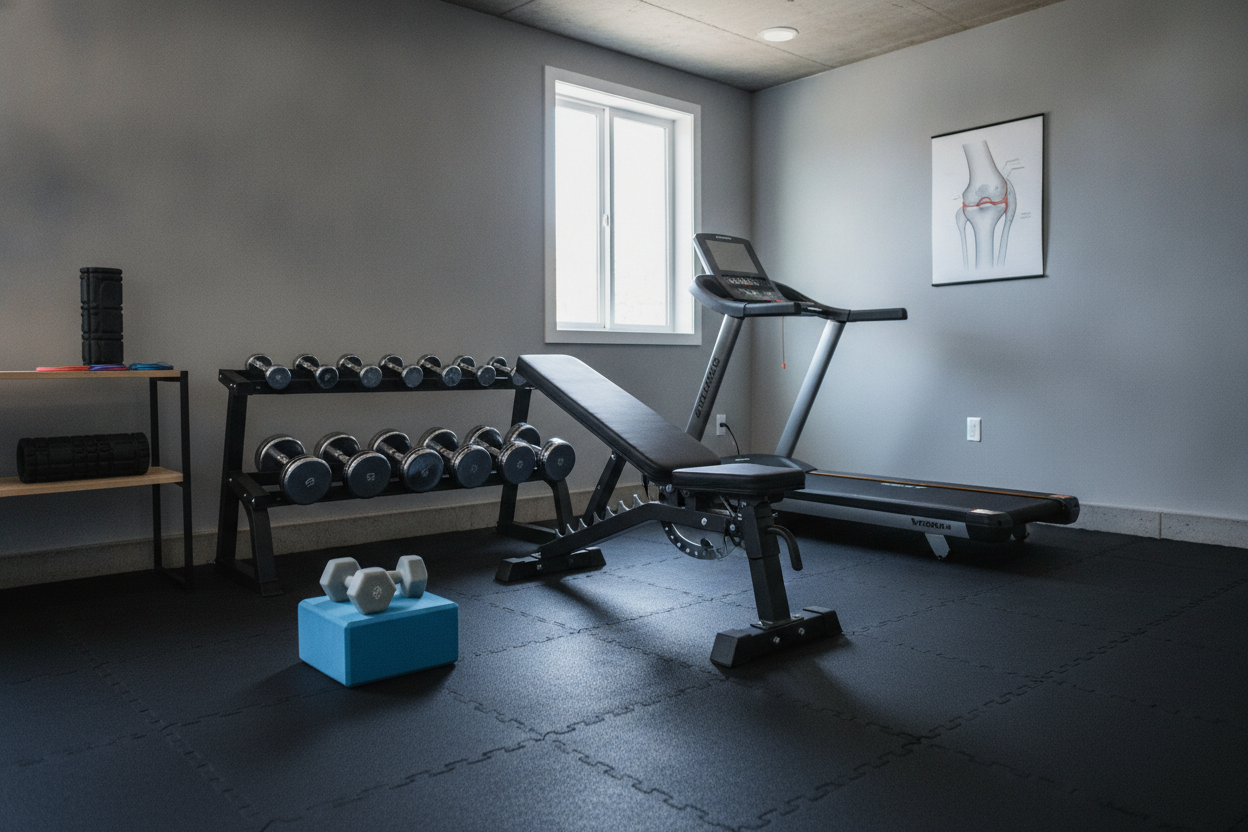
The most common mistake I see is people trying to fix the concrete issue with those cheap, colorful puzzle mats from big-box stores. Those mats are designed for playrooms, not heavy squats. Because they are low-density EVA foam, your foot sinks and shifts during the lift. This creates micro-shearing in the knee as your joint tries to stabilize on a moving target.
If you are moving heavy weights, you need a large home workout exercise mat that actually stays put. You want something high-density—around 7mm to 8mm thick—that offers a firm base but enough compression to save your cartilage. I have tested mats that felt like standing on a marshmallow; they are great for yoga, but they are a nightmare for heavy split squats where you need a predictable surface.
The Plyometric Trap in Female Fitness
Stop doing 100 jump squats on your kitchen tile because an influencer told you to. Plyometrics are great for power, but doing them on hard surfaces is a fast track to a meniscus tear. Most of the 'metabolic' routines you see online are just high-impact movements disguised as fitness. If you aren't training on a dedicated gym floor, keep your feet on the ground. The 'burn' you feel from high-rep jumping isn't always muscle growth; sometimes it is just systemic inflammation from joint trauma.
The Joint-Friendly Lower Body Routine
My current routine trades high-impact jumping for mechanical tension. I focus on heavy dumbbells and a 3-second lowering phase (the eccentric). Slowing down the movement forces the muscle to do the work instead of relying on momentum. This protects the connective tissue while maximizing hypertrophy. If you want to see how I pair this with other muscle groups, check out our complete home workout hub for more structured plans.
I typically stick to 3-4 sets of 8-12 reps. It is boring, it is basic, and it works. Most importantly, I do not need an ice pack afterward. When you control the weight instead of letting the weight control you, your knees will actually start to feel better over time, not worse. Stability is the foundation of strength.
Reverse Deficit Lunges (The Knee Savior)
The reverse deficit lunge is my personal favorite for building glutes without crushing the knees. Stand on a small plate or a sturdy block about 2-4 inches high. Step back and lower your knee until it almost touches the floor. This increased range of motion hits the glutes harder without needing the massive weights that usually crush your spine. It is a more efficient way to train.
If you are in a tight space like a spare bedroom or a small apartment corner, a compact 6x4ft gym flooring setup is perfect for this. It gives you just enough runway to step back safely without your foot slipping on hardwood. Just make sure the back knee lands on the padded mat, not the raw slab. I made the mistake of missing the mat once during a heavy set, and my kneecap hasn't forgotten it.
Protecting Your Lower Body Long-Term
Your floor is the most underrated piece of equipment you own. You wouldn't drive a performance car on a gravel road with no tires, so don't do a heavy leg day on a surface that hurts you. Invest in the foundation first. Consistency is the only thing that builds a physique, and you can't be consistent if you are constantly sidelined by 'mysterious' knee inflammation.
Take it from someone who has spent way too much money on physical therapy: buy the mat, slow down your reps, and stop jumping on concrete. Your 50-year-old self will thank you for the investment you made today.
Can I just wear thick sneakers?
Shoes help, but they do not replace a stable floor. Even the best cross-trainers cannot compensate for the lack of shock absorption in a concrete slab. You need a dual-layered approach: good shoes and a high-density mat.
How thick should my gym mat be?
Look for at least 6mm for general use, but 7mm-9mm is the sweet spot for heavy lifting and joint protection. Anything thinner is basically just a dust cover for your floor and won't save your joints.
Is carpet okay for leg day?
Carpet is a recipe for a rolled ankle. It is too unstable for heavy lunges or squats. If you have to train on carpet, place a firm, high-density mat over it to create a level, predictable surface that won't shift under load.