Why Your At Home Weightlifting Program Stopped Working
I remember the day I finally canceled my commercial gym membership. I was tired of the commute and the guy who spent twenty minutes scrolling on the only squat rack. I bought a decent set of dumbbells, a bench, and figured I was set. Three months later, I was staring at the same 25-lb weights, wondering why my progress had stalled harder than a cold engine. My at home weightlifting program wasn't actually a program—it was just a list of exercises I liked.
Quick Takeaways
- Stop following random daily workouts; consistency in movement selection is what builds muscle.
- Progressive overload is harder at home because weight jumps are often too large.
- Your floor matters—lifting on carpet or slippery tile kills your force production.
- Track your rest times and tempo, not just the numbers on the side of the dumbbell.
The Instagram Frankenstein Routine Trap
The biggest mistake I see people make with at home weight training programs is the 'Frankenstein' approach. You see a cool lunging movement on Instagram, a bicep finisher on TikTok, and a chest press variation from a random blog. You stitch them together and call it a workout. That is not a program; that is a circuit.
Muscles grow through repeated exposure to the same stimulus with increasing intensity. When you change your exercises every single week because you are 'bored,' you never get good enough at the movement to actually challenge the muscle. You spend all your energy learning the coordination instead of pushing the weight. Pick five or six foundational moves and stick to them for at least six weeks.
Why You Plateaued So Damn Fast
In a commercial gym, you have the luxury of adding 2.5-lb plates to a bar. At home, you are often limited by whatever gear is in your corner. Most people hit a wall by week three because they reach the max weight they own. If you find yourself stuck, you have to get creative with scaling past equipment limits by manipulating other variables.
If the weight isn't getting heavier, the set has to get harder. This means slowing down your eccentrics (the lowering phase) or adding pause reps at the bottom of a squat. I once spent an entire month using 35-lb dumbbells for everything, but I increased my time under tension so much that I actually felt more sore than when I was throwing around 50s.
The Dumbbell Micro-Load Illusion
Let’s look at the math. If you go from a 20-lb dumbbell to a 30-lb dumbbell, that is a 50% increase in load. You would never expect to go from a 200-lb bench press to a 300-lb bench press in one week, yet we expect our shoulders to handle that percentage jump at home. It’s a recipe for tendonitis and frustration.
Instead of making the jump immediately, increase your rep range. If your program says 8 to 12 reps, don't touch the 30s until you can comfortably do 15 clean reps with the 20s. That 'buffer' is what protects your joints when you finally move up to the heavier pair.
Fixing the Floor Before You Go Heavy
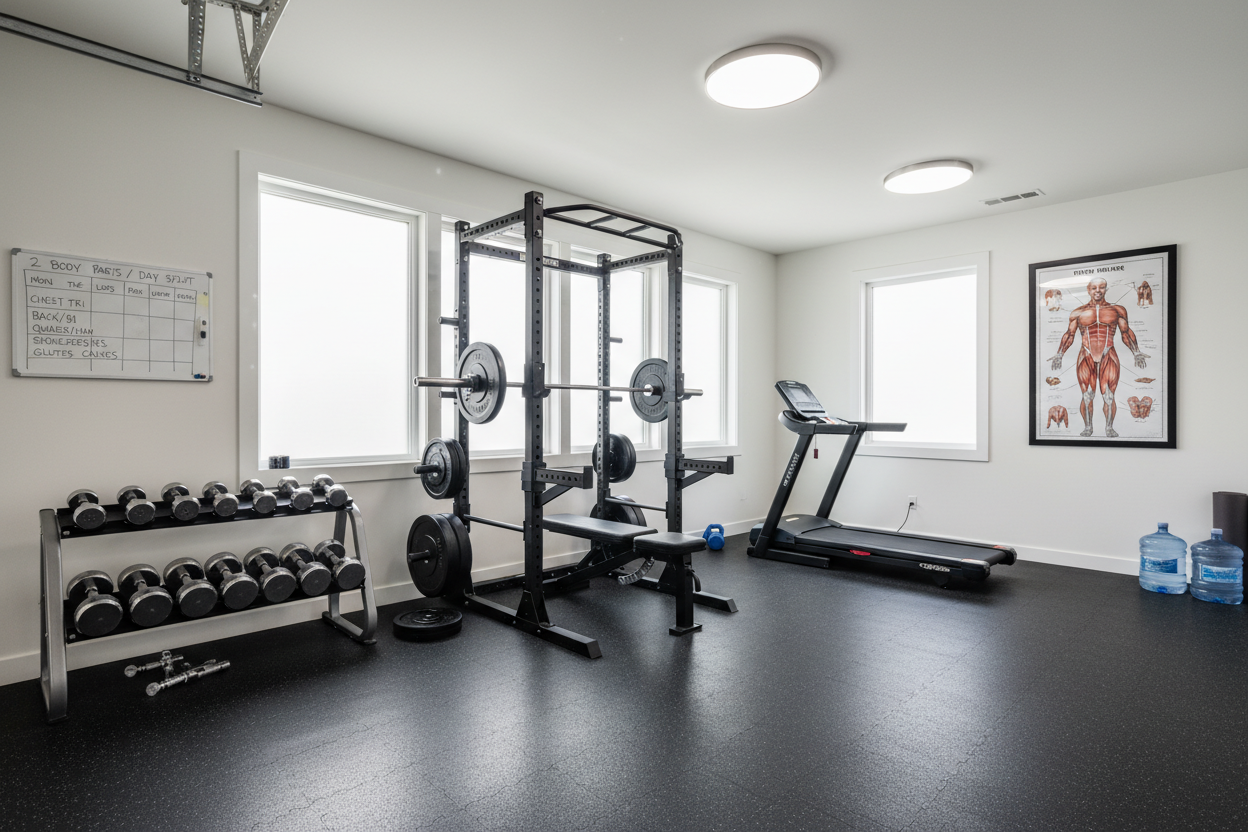
I learned this the hard way when I tried to do heavy Bulgarian split squats on a cheap rug. My back foot kept sliding, my front toes were gripping for dear life, and I ended up straining my groin. You cannot produce maximum force if your foundation is unstable. A home weight lifting program is only as good as the floor you're standing on.
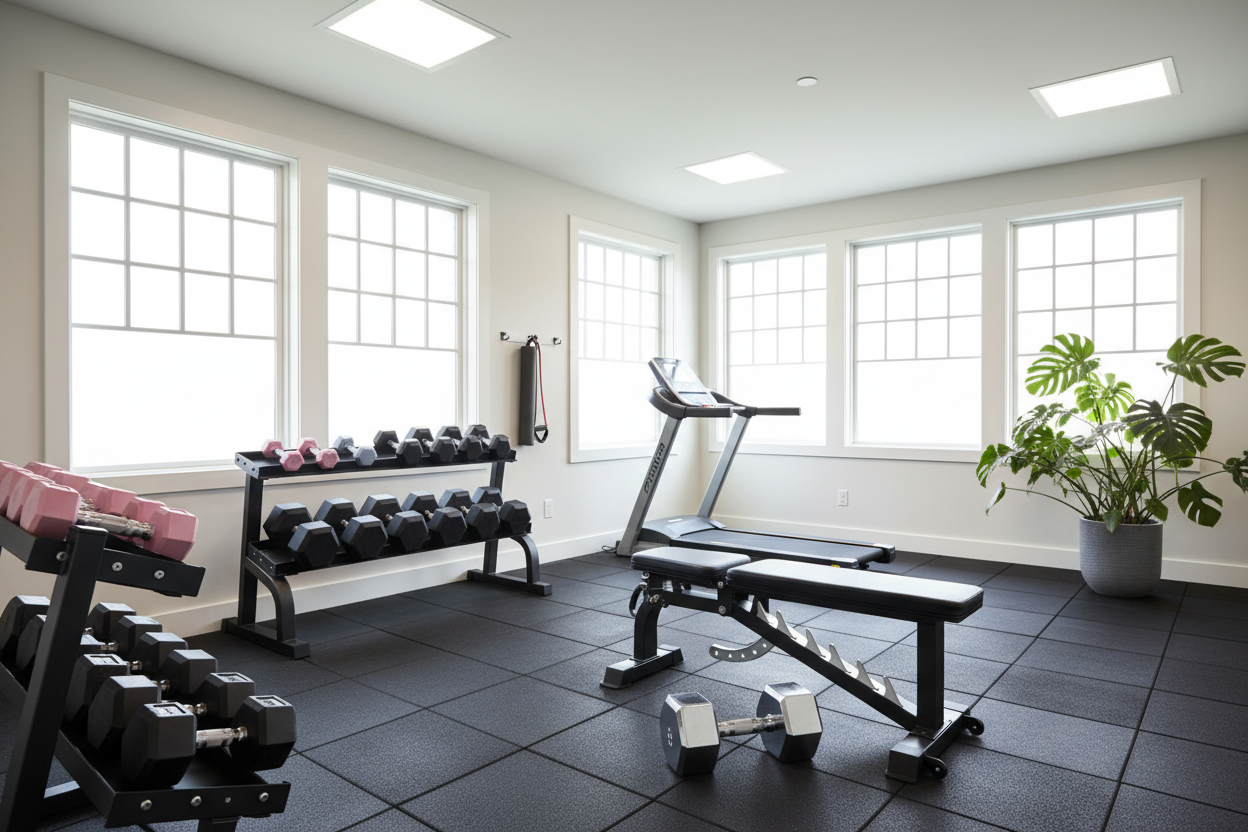
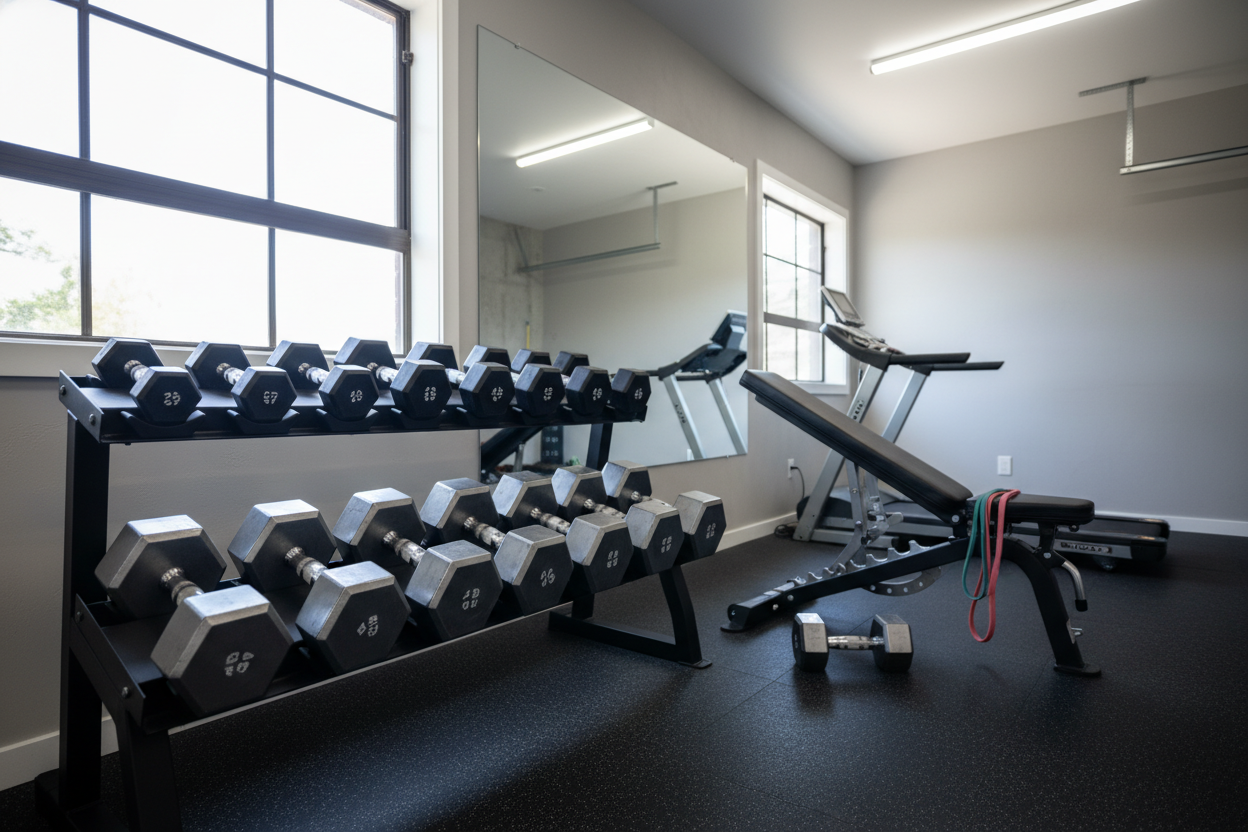
Ditch the yoga mat or the living room carpet. Investing in a large exercise mat for home gym use is probably the single best equipment upgrade you can make. You need a high-density surface that doesn't bunch up when you move. It allows you to actually drive through your heels during a press or a squat without worrying about the floor moving under you.
Structuring a Real Home Weight Lifting Program
Don't try to mimic a professional bodybuilder's six-day 'bro split' where you hit chest on Monday and don't touch it again for a week. Unless you have a full power rack and 500 lbs of plates, you need more frequency. I personally found that an Upper/Lower split or a three-day Full Body routine works best for home setups.
This structure allows you to hit every muscle group twice a week. Since you likely aren't using maximum-effort heavy triples at home, the extra frequency provides the volume you need for hypertrophy. Focus on compound movements—squats, hinges, pushes, and pulls. Leave the fancy lateral-raise-to-front-raise-hybrid-nonsense for the influencers.
How to Track Your Weight Training Home Program
If you don't write it down, it didn't happen. I use a simple notebook, but an app works too. For a weight training home program, you need to track three specific things: weight, reps, and rest periods. At home, we tend to get distracted—the laundry dings, the dog barks, or we check the fridge.
If your rest periods vary from 30 seconds to 3 minutes, your data is useless. Keep your rest consistent. If you can't add weight to the bar next week, try to shave 10 seconds off your rest time. That is still a form of progressive overload. It forces your body to recover faster and handle the same workload with less downtime.
FAQ
Do I need a bench for a home program?
You can do floor presses and glute bridges, but a bench opens up a huge range of motion for rows and chest work. If you have the space, get one. If not, focus on standing movements and floor-based variations.
Can I build muscle with just dumbbells?
Absolutely. Your muscles don't know if you're holding a $1,000 barbell or a $50 dumbbell. They only know tension. As long as you are getting close to failure within a reasonable rep range (6-20 reps), you will grow.
How long should a home workout last?
Between 45 and 60 minutes is the sweet spot. If you're going longer than 90 minutes, you're likely resting too much or doing too much 'junk volume' that isn't actually helping you get stronger.