I Finally Found a 2 Body Parts a Day Workout Plan That Makes Sense
I spent years trying to replicate the 'Chest and Back' day I used to do at the local Powerhouse. In a commercial gym, you just walk from the bench press to the lat pulldown. In my garage, that meant stripping 315 off the bar, dragging the bench out of the rack, and resetting the safety pins. By the time I started my second exercise, my heart rate had dropped and I was already checking my phone.
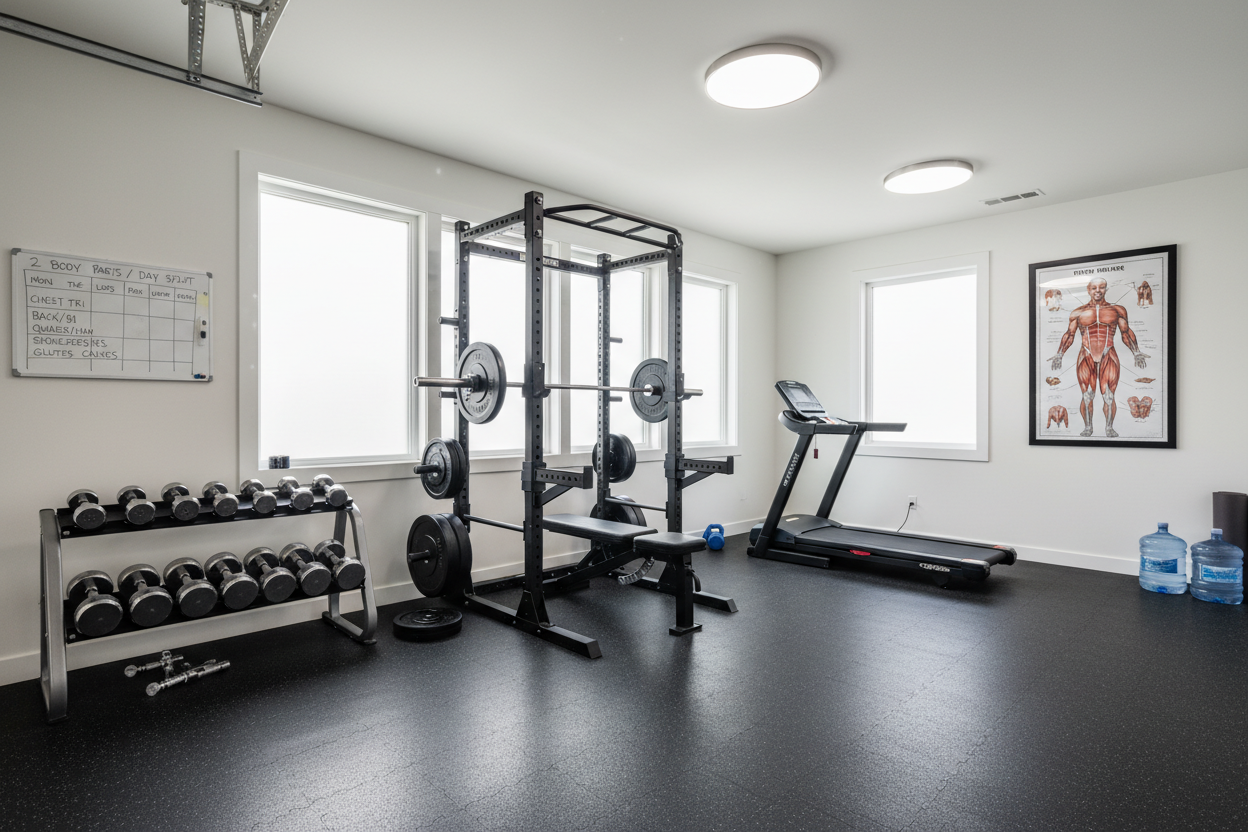
Most home lifters quit because the logistics are exhausting, not the lifting. This 2 body parts a day workout plan is designed for the person who has a barbell, a rack, and a set of dumbbells—but doesn't have a personal loader to change their plates. It is about efficiency and keeping your heart rate up while your neighbors think you are just making a racket.
- Pairs heavy barbell compounds with light dumbbell isolations.
- Zero 'Gym Tetris' required mid-session.
- Focuses on movements that share the same equipment footprint.
- Keeps the intensity high by eliminating 10-minute transition times.
The Hidden Trap of Splitting Muscles at Home
The standard 'bro-split' was born in gyms with 50,000 square feet of equipment. When you try to run a 2 muscle groups a day workout plan that involves three different machines, you end up spending more time moving gear than moving weight. If your 'Back and Shoulders' day requires you to set up a heavy barbell row and then immediately switch to an overhead press in the same rack, you are doing five minutes of plate math every single set.
I have seen guys lose their entire pump just trying to find where they left their 2.5-lb fractional plates in a messy garage. In a home gym, momentum is your most valuable asset. Once you get that barbell loaded to 225 or 315, you want to stay there as long as possible. Constantly stripping the bar to 'switch body parts' is a recipe for a 90-minute workout that only has 20 minutes of actual effort.
Then there is the floor space issue. If you are training in a 10x10 spare bedroom, you cannot have three different stations set up. You have one rack and maybe a small patch of floor. Trying to follow a commercial gym split here means you are constantly tripping over 45-lb plates and moving your bench just to have room to breathe. It is frustrating, and frustration is the fastest way to start skipping Monday sessions.
Why the 'One Heavy, One Light' Rule Saves Time
To successfully workout two muscle groups a day at home, you need to follow the 'One Heavy, One Light' rule. You pick one major muscle group for a heavy barbell movement—think squats, deadlifts, or rows. The second muscle group is hit with dumbbells, bands, or bodyweight. This keeps your rack dedicated to one setup for the entire hour while you use the 'dead space' during your rest periods or after your main sets.
This isn't just about laziness; it's about training density. If you are doing heavy barbell floor presses for chest, your triceps are already primed and blood is in the area. Instead of dragging over a second barbell for close-grip bench, you grab your dumbbells for extensions or skull crushers. You save the 'Setup-Fatigue' for your actual muscles, not your lower back from bending over to pick up plates.
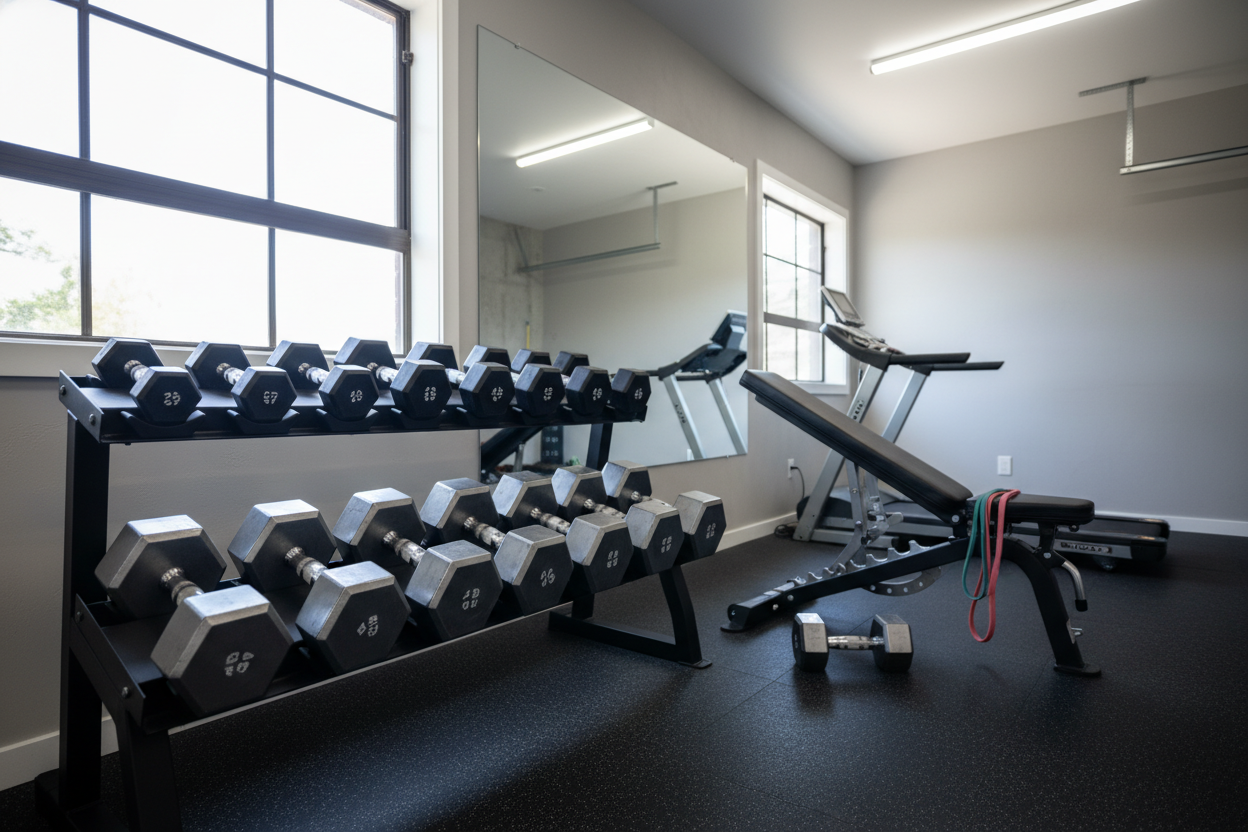
Think about the equipment logistics. A heavy barbell set usually stays in the rack. Your dumbbells live on a rack or in the corner. By pairing these, you never have to change your primary station. You finish your heavy sets, move two feet to the left, and finish the second body part. It turns a chaotic garage into a streamlined training facility. It also makes the 'plate math' much simpler—you only have to calculate one heavy lift per day.
The Garage-Proof 2 Muscle Groups a Day Workout Plan
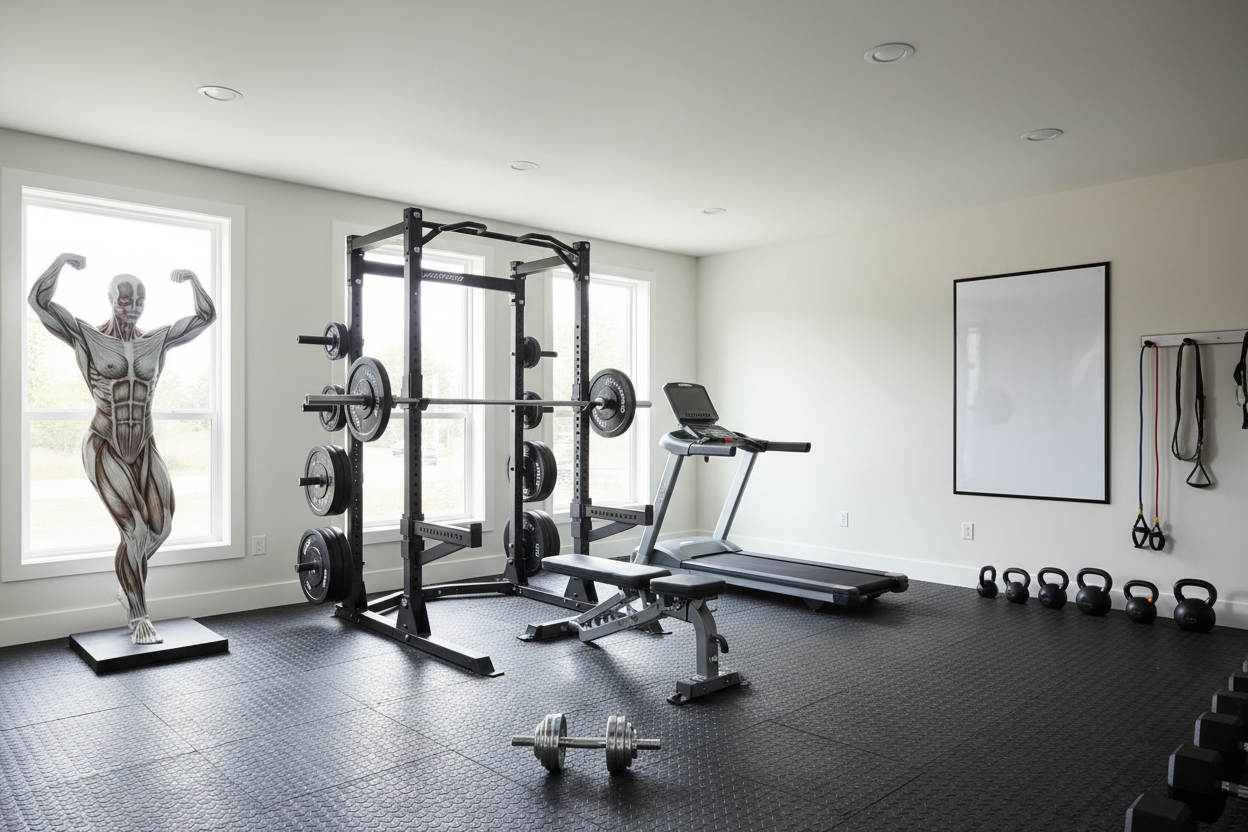
Here is how I structure this to maximize every square inch of a 6x8 ft corner. We focus on synergy—muscles that work together so the warmup for one serves the other, and the equipment needs remain static.
Day 1: Heavy Back + Dumbbell Biceps. Start with heavy Pendlay rows or rack pulls. Keep that barbell in the rack or on the floor. Once you finish your heavy sets, leave the bar loaded for the next session or strip it once. Then, grab your dumbbells for hammer curls or incline curls. You do not need to move a single rack pin to finish your arms.
Day 2: Heavy Chest + Bodyweight Triceps. I'm a big fan of the floor press if you don't have a spotter or a high-end rack with safeties. It's safer and builds massive lockout strength. Since you are already on the ground, lay down a dense 6x8ft exercise mat to protect your elbows from the cold concrete. Follow the press with diamond pushups or bench dips using your weight bench as the only extra piece of gear.
Day 3: Heavy Legs + Core. Squats are the king, but they take the most setup time with the safety bars and J-cups. Once the bar is loaded, stay there and do your work. Finish the session with hanging leg raises on your pull-up bar or weighted planks on your mat. No need for a second rack or a specialized leg extension machine that takes up half your floor space.
This rotation ensures you aren't constantly moving the 'big' equipment. The mat stays down, the rack stays in one configuration for the first 30 minutes, and the dumbbells are the only things moving around. It turns a 90-minute commercial gym slog into a 45-minute focused blast.
What If Your Dumbbells Max Out at 50 Pounds?
A common issue with a home-based 2 body parts a day workout plan is equipment limitations. You might have a 300-lb barbell set, but your adjustable dumbbells might max out at 50 lbs per handle. Eventually, those curls or lateral raises will feel too light. When that happens, don't just go out and drop $600 on a heavier set—change your physics first.
Use a 3-0-3-0 tempo (three seconds down, three seconds up). Add a two-second pause at the peak contraction where the muscle is shortest. If you are still cruising through sets of 15 with those 50s, you need a more structured progression model that doesn't rely on just adding more iron. Check out this 90 day workout plan to build muscle to see how to manipulate volume and rest intervals when your home equipment feels like toys.
I have used 40-lb dumbbells to get a better pump than 80-lb dumbbells just by slowing down the eccentric phase. It's about time under tension, especially for that second 'light' body part of the day. If you are doing biceps after heavy rows, they are already fatigued. You don't need 100-lb dumbbells to finish them off; you need perfect form and a brutal tempo.
Scheduling Your Week Without Losing Momentum
I usually run this on a '3 days on, 1 day off' rotation. This ensures you hit every muscle group twice every 8 days, which is the sweet spot for growth. Because the setups are so simple, you are less likely to skip a workout. There is no mental hurdle of 'Oh man, I have to clear out the lawnmower to set up the cable machine today.' Your rack is always ready.
If you find yourself with extra energy on off-days, don't just sit on the couch. I like to use 'active recovery' to keep the habit of moving alive. You can find a way to stay consistent with a 7 day muscle building workout plan that incorporates mobility or light isolation work without redlining your central nervous system. The goal is to keep the blood flowing without needing a 20-minute warmup.
Remember, the best plan is the one you actually do. If your garage is freezing in the winter, a 45-minute streamlined split is much more appealing than a two-hour marathon. Get in, hit the heavy compound, burn out the accessory, and get back inside.
Personal Experience: The Day I Quit 'Leg Day'
I remember trying to do a 'pro' leg day in my single-car garage. I had a barbell squat, then I wanted to do Romanian deadlifts, then lunges. By the time I stripped the squat weight to set up the RDLs, then moved the bar to the floor for lunges, I was 45 minutes in and had only done 6 actual sets. I felt busy, but I wasn't getting bigger. I was just a professional plate-mover. Switching to this 'One Heavy, One Light' style changed everything. I stopped playing warehouse manager and started being a lifter again.
FAQ
Can I do this with just a barbell?
Yes, but you will have to be creative with your 'light' muscle group. Use bodyweight movements like pull-ups or dips to avoid changing plates constantly. If you only have a bar, the setup-fatigue is your biggest enemy, so try to keep the bar at one height for the whole session.
Is 3 days a week enough for this split?
It is enough if the intensity is high. Because you aren't wasting energy on setup, you can put more into your top sets. If you want more frequency, just repeat the 3-day cycle with one rest day in between rather than sticking to a strict Monday-Wednesday-Friday calendar.
What if I don't have a rack?
Stick to floor presses, Zercher squats, and deadlifts. You can still run a 2 muscle groups a day workout plan by using the floor as your primary station. Just make sure your flooring is thick enough to handle the impact of a 45-lb plate so you don't crack the concrete.