Why Your At Home Strength Training Feels Like a Joke
I remember the day I finally quit my $120-a-month commercial gym. I was convinced I’d become a Spartan, training in my garage with nothing but grit and a few dumbbells. Instead, I spent the first month doing half-hearted air squats while waiting for my coffee to brew. Most at home strength training fails not because you lack the gear, but because your brain thinks your house is a place for Netflix and snacks, not for grinding out heavy sets.
- Traction is your foundation; if you are sliding, you are not building muscle.
- Stop substituting high-rep cardio for actual resistance training.
- Balance your volume or enjoy the shoulder impingement from too many pushups.
- Log your lifts or you are just exercising, not training.
The 'Living Room Trap' Most Lifters Fall Into
There is a psychological shift that happens the moment you try to start a home strength workout. When you're in a commercial gym, the environment forces intensity. At home, you’re three feet away from your couch and a bag of chips. Subconsciously, most people lower their RPE (Rate of Perceived Exertion) and turn what should be a heavy session into a sweaty, high-rep circuit.
I’ve seen it a thousand times. You start with the intention of building real power, but because you’re in your pajamas, you end up doing 50 mindless lunges. If you want results, you have to treat your living room like a weight room. That means no phone, no TV distractions, and a dedicated start time.
Physics 101: You Cannot Produce Force Without Friction
Here is the mechanical reality of home workouts strength training: if your feet are sliding on hardwood, tile, or cheap carpet, your central nervous system throttles your force output. Your brain is smarter than you; it won't let you push 100% effort if it thinks your legs are going to fly out from under you. You end up doing 'safe' movements instead of effective ones.
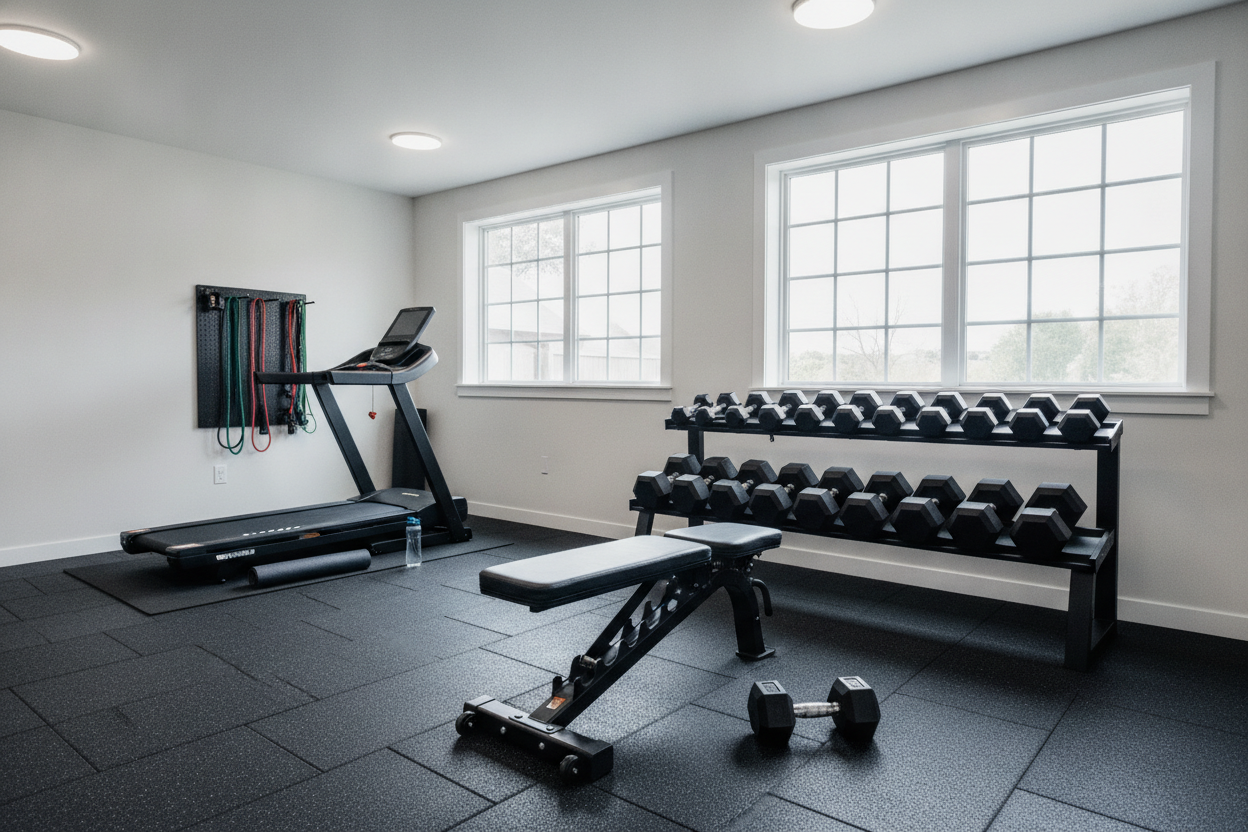
You need a high-traction base. I wasted months trying to squat on a yoga mat that bunched up every time I shifted my weight. Investing in a large exercise mat for home gym was the single biggest upgrade to my setup. It gave me the grip to actually drive through my heels, which is mandatory for any serious strength workouts to do at home.
The Push-Pull Crisis in Living Room Routines
Most body strengthening workouts are heavily biased toward the 'push'—pushups, dips, and squats. While these are great, ignoring your posterior chain is a fast track to rounded shoulders and a weak back. You cannot build a complete muscular strength exercise at home without some form of rowing or pulling.
If you don't have a pull-up bar or a heavy set of bells, you're likely neglecting 50% of your body. I learned this the hard way when my bench numbers went up but my shoulders started clicking every time I reached for a shelf. You need to balance the volume. For every set of pushups, you need a set of rows. Check out this at home upper body strength workout: the push-pull fix to see how to structure this without a cable machine.
Ditch the Fluff: Programming for Real Tension
Stop following influencer 'burnout' sessions that involve 40 minutes of jumping jacks and mountain climbers. That’s cardio, not a strength building workout at home. To grow, you need mechanical tension. That means slowing down your reps, focusing on the eccentric phase, and actually challenging your muscles.
Treat your home power workout with the same respect you'd give a 500-lb barbell session. If you only have 20-lb dumbbells, you shouldn't just do more reps until you're bored. You should do 1.5-reps, paused reps, or deficit movements. The goal is to make the weight feel heavier, not lighter.
Stop Treating Your House Like a Hotel Gym
The biggest mistake I ever made was thinking I didn't need to track my progress because I was 'just working out at home.' Strengthening workouts only work if there is progressive overload. If you did 10 reps last week, you better do 11 today or slow down the tempo. Your strength training at home workout needs a logbook.
Consistency is harder at home because the bed is right there. Set a non-negotiable appointment with yourself. Don't wait for motivation to strike in your kitchen; it won't. Create a space that demands respect, get a solid mat under your feet, and stop making excuses for why your living room isn't a 'real' gym.
FAQ
Do I need a squat rack to get strong at home?
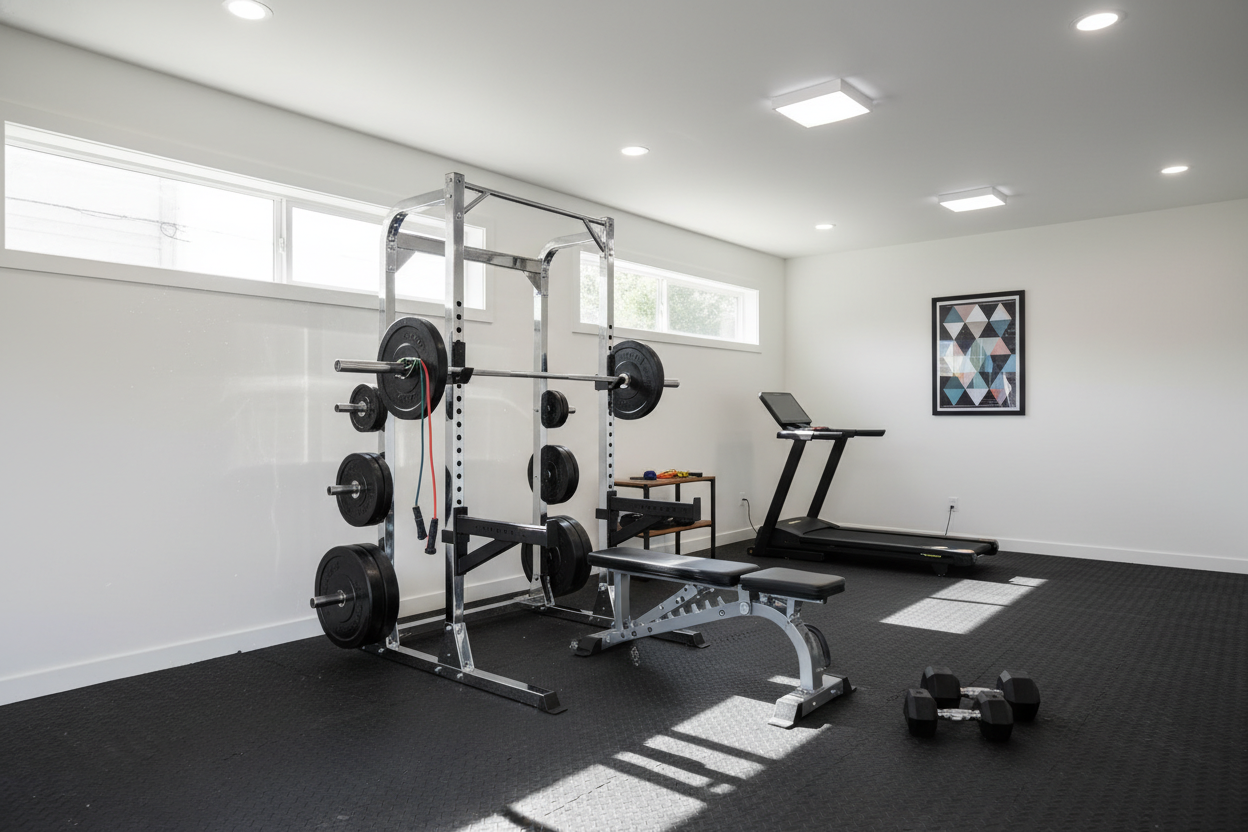
No, but you need a way to create tension. Bulgarian split squats and heavy goblet squats can build massive legs without a rack, provided you have enough weight or use advanced techniques like tempo work.
How often should I train strength at home?
3 to 5 days a week is the sweet spot. Recovery is just as important at home as it is in a pro facility. Don't fall into the trap of training every day just because the 'gym' is always open.
Can I build muscle with just bodyweight?
Yes, but it gets progressively harder as you get stronger. You eventually have to move to single-limb variations (like pistol squats or one-arm pushups) to keep the intensity high enough to trigger growth.