Why I Banned Chair Aerobics: Real Exercises for Seniors
I recently visited a local community center and watched a dozen people in their 70s sit in folding chairs, waving 1-lb plastic dumbbells like they were warding off flies. It made me angry. We have spent decades telling our elders that they are fragile, that they should 'take it easy,' and that exercises for seniors should never involve breaking a sweat or standing up. It is a lie that leads directly to the nursing home.
The truth is that aging is a process of losing what you don't use. If you don't load your bones, they get brittle. If you don't challenge your balance, you fall. If you don't lift something heavy, your muscles wither. I have spent years building home gyms for people of all ages, and the most successful 'senior' athletes I know are the ones who stopped acting like they were made of glass and started training like humans.
- Muscle mass is the best predictor of longevity; you cannot build it while sitting down.
- Bone density requires axial loading—putting weight on your frame.
- Balance is a 'use it or lose it' skill that requires standing on your own two feet.
- Strength training reduces the fear of falling, which is the leading cause of injury in older adults.
Why the Fitness Industry Treats Older Adults Like Glass
Most exercise workouts for seniors are designed by insurance companies and risk-averse corporate trainers. They focus on 'range of motion' while ignoring the fact that you need strength to move through that range. Waving a 2-lb weight while seated does nothing to stop sarcopenia—the age-related loss of muscle mass. It is a waste of time that provides a false sense of security.
To actually move the needle on seniors fitness exercises, we have to introduce a stimulus. That means your heart rate should go up, and your muscles should feel tired. Seniors workouts shouldn't be 'diet' versions of real training; they should be the same foundational movements everyone else does, just scaled to your current ability. I have seen 80-year-olds go from needing a walker to hiking trails simply because they stopped doing 'elderly fitness' and started lifting weights.
What is the Best Workout for Seniors? (Hint: It's Not Sitting Down)
If you ask me what is the best workout for seniors, I will always tell you it is the one that makes your daily life easier. Can you get off the toilet without using the handrails? Can you carry your own groceries? Can you get up if you trip in the yard? Seniors exercises must focus on three things: the hinge, the squat, and the carry.
Workouts for seniors must be performed standing up whenever possible. Standing engages your core, your stabilizer muscles, and your vestibular system (your balance center). When we sit to exercise, we turn all of those critical systems off. A senior workout should feel like a practice session for real life. We are training for independence, not just for the sake of moving.
The Box Squat: Reclaiming Your Leg Strength
The squat is the king of senior fitness, but most people are terrified of it. I start everyone with the box squat. You find a sturdy bench or a chair, stand in front of it, and sit back until your glutes touch the surface, then stand back up. It removes the fear of falling backward and teaches you to use your hips instead of just your knees.
While some people think the best home workout machines are the answer, I find that a simple free-weight box squat builds far more functional balance. A machine locks you into a fixed path; a box squat forces you to stabilize your own body weight. As you get stronger, you hold a small weight at your chest. This is how you maintain the power to walk up stairs well into your 90s.
Floor-Based Core Work: Rebuilding Fall Resilience
One of the biggest hurdles in fitness for seniors is the 'fear of the floor.' Many older adults haven't been on the ground in years because they are afraid they can't get back up. We change that by making the floor a part of the workout. Practicing the transition from standing to kneeling to lying down is the most 'functional' thing you can do.
I recommend setting up a dedicated space with a large exercise mat for home gym use. Having a thick, non-slip surface makes floor work much more comfortable on the knees and elbows. We do dead bugs, bird-dogs, and planks here. Building a core that can handle the floor means that if you do ever trip, you have the strength and the lack of panic to get yourself back up safely.
How to Set Up Your Space for Heavy, Safe Lifting
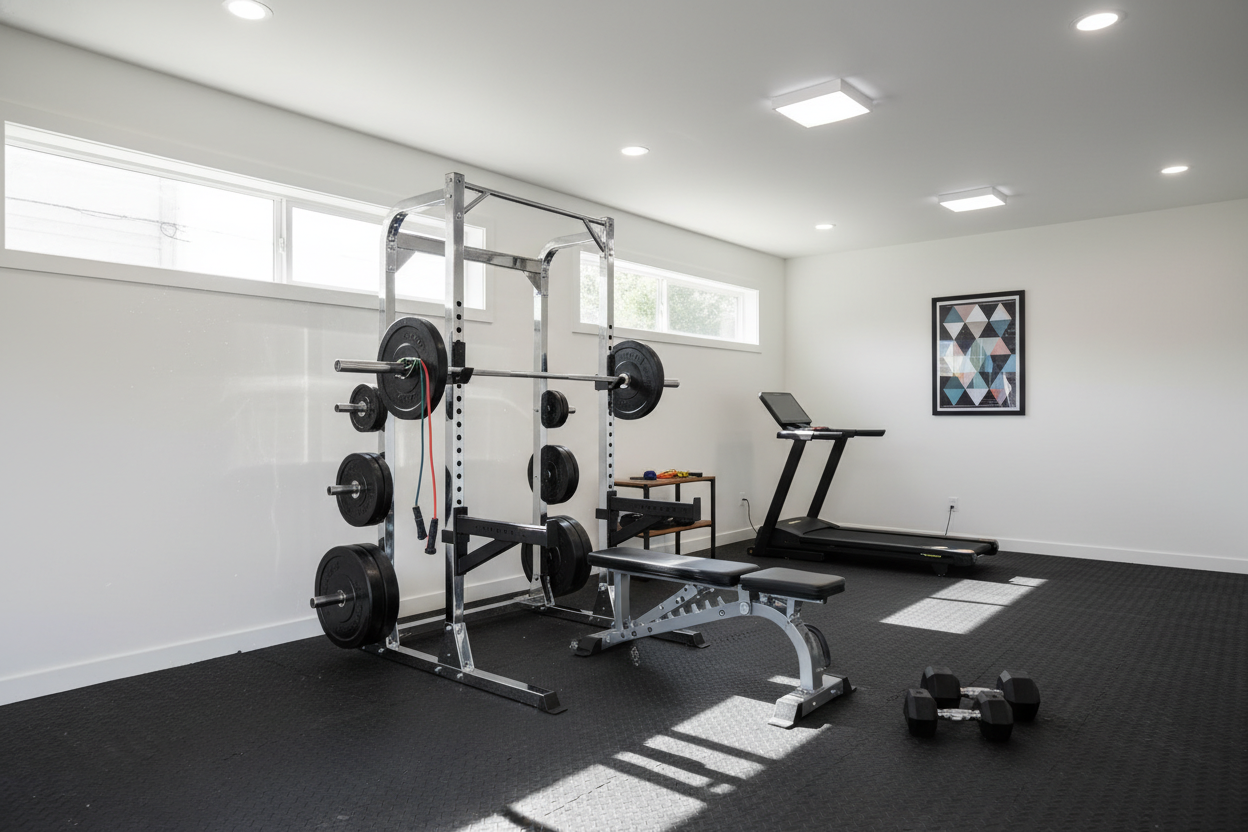
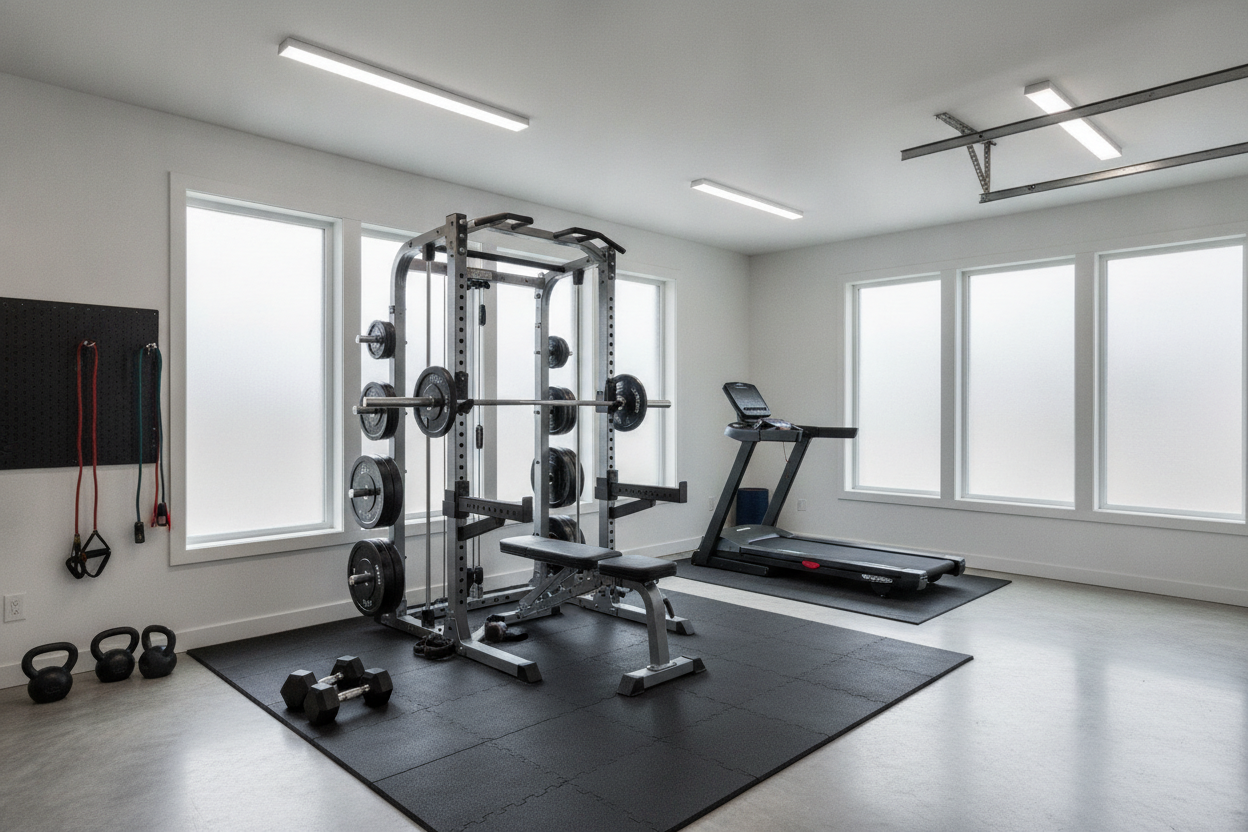
You don't need a commercial gym to get fit seniors-level results. You need a 6x6 foot space and a few key pieces of gear. Safety is the priority, so ditch the shag carpet or the slippery hardwood. You need a surface that bites back so your feet don't slide during a loaded carry or a squat.
Investing in high-quality gym flooring for home workout is non-negotiable. I have seen too many 'workout for elderly' videos filmed on slippery rugs. You want a dense rubber surface that stays put. Once the floor is set, add a pair of adjustable dumbbells and a sturdy bench. That is all you need to outperform any 'silver sneakers' class in the country.
A Simple Weekly Blueprint for Workouts for Seniors Over 70
For workouts for seniors over 70, consistency beats intensity every time. You don't need to train six days a week. Three days of focused strength work is the sweet spot. This allows for the recovery that older joints and muscles need to actually grow stronger. Here is a basic template I use for my older clients:
- Monday: Box Squats (3 sets of 10), Overhead Press (3 sets of 8), and 5 minutes of balance practice (standing on one leg).
- Wednesday: Kettlebell Deadlifts (3 sets of 10), Floor-based core work on your mat, and Farmer's Carries (walking with weights).
- Friday: Assisted Lunges (3 sets of 8), Incline Push-ups (against a counter or bench), and a 15-minute brisk walk.
Focus on 'perfect' reps. If your form breaks down, the set is over. We are building a resilient body, not trying to win a CrossFit competition. My own father started this routine at 72. At first, he couldn't do a single push-up. Six months later, he was doing sets of 10 from the floor. He didn't get 'younger,' he just stopped acting 'old.'
FAQ
Is lifting weights dangerous for my joints?
No, lifting weights with proper form actually strengthens the muscles around your joints, taking the pressure off them. It's 'taking it easy' that leads to joint decay and weakness.
What if I have bad balance?
That is exactly why you need to train. Start by holding onto a sturdy chair or a wall while you do your squats and lunges. As you get stronger, you'll find you need the support less and less.
How heavy should I lift?
Heavy enough that the last two reps of a set are difficult, but not so heavy that your form gets sloppy. If you can do 15 reps easily, the weight is too light to build muscle.