Why the Rotation Barbell Hip Thrust Fixed My Awkward Setup
I spent twenty minutes yesterday wrestling a 45-lb bar and three plates onto my hips, only to have the bench slide back mid-set. If you have ever felt like you are fighting the equipment more than the weight, you know the struggle. I finally ditched the traditional heavy setup for the rotation barbell hip thrust, and my glutes—and my garage floor—are better for it.
Standard hip thrusts are great for building a shelf, but the logistics are a nightmare in a tight home gym. The bar rolls, the plates clank, and you spend more time padding your pelvis than actually lifting. Adding a rotational element via a landmine attachment changed the math for me.
Quick Takeaways
- Eliminates the need for massive weight loads to achieve high muscle tension.
- Engages the obliques and glute medius through anti-rotation mechanics.
- Easier on the hips because the load follows a natural arc rather than a vertical line.
- Requires minimal floor space compared to a full barbell setup.
Wait, What Even Is a Rotational Hip Thrust?
The rotational barbell hip thrust is essentially a landmine variation of the classic glute bridge. Instead of the bar sitting across both hips, one end is anchored in a landmine swivel while the other end rests on a single hip. As you drive upward, the bar moves in an arc, forcing you to stabilize against the lateral pull.
This creates a unilateral movement that mimics how we actually move in sports. Think about sprinting or throwing a punch; you are rarely ever just moving straight up and down. By using the landmine, you turn a simple hinge into a complex, athletic movement that targets the glute maximus and the stabilizer muscles simultaneously.
Why I Stopped Thrusting Straight Up and Down
I reached a point where I was loading 400+ pounds for standard thrusts just to feel a burn. Setting that up in a 12x12 garage is a chore. It is loud, it is dangerous if you lose your balance, and it is honestly boring. I decided to try the 1-leg hip thrust as a way to cut the weight in half while keeping the intensity high.
The rotational version takes that a step further. Because the weight is offset, you cannot just muscle through it with raw force. You have to stay tight. I found that I could get a better contraction with 135 pounds on a landmine than I ever did with double that on a straight bar. Plus, my hip bones stopped looking like they had been in a car wreck from the bar pressure.
How to Set Up Without Trashing Your Garage Floor
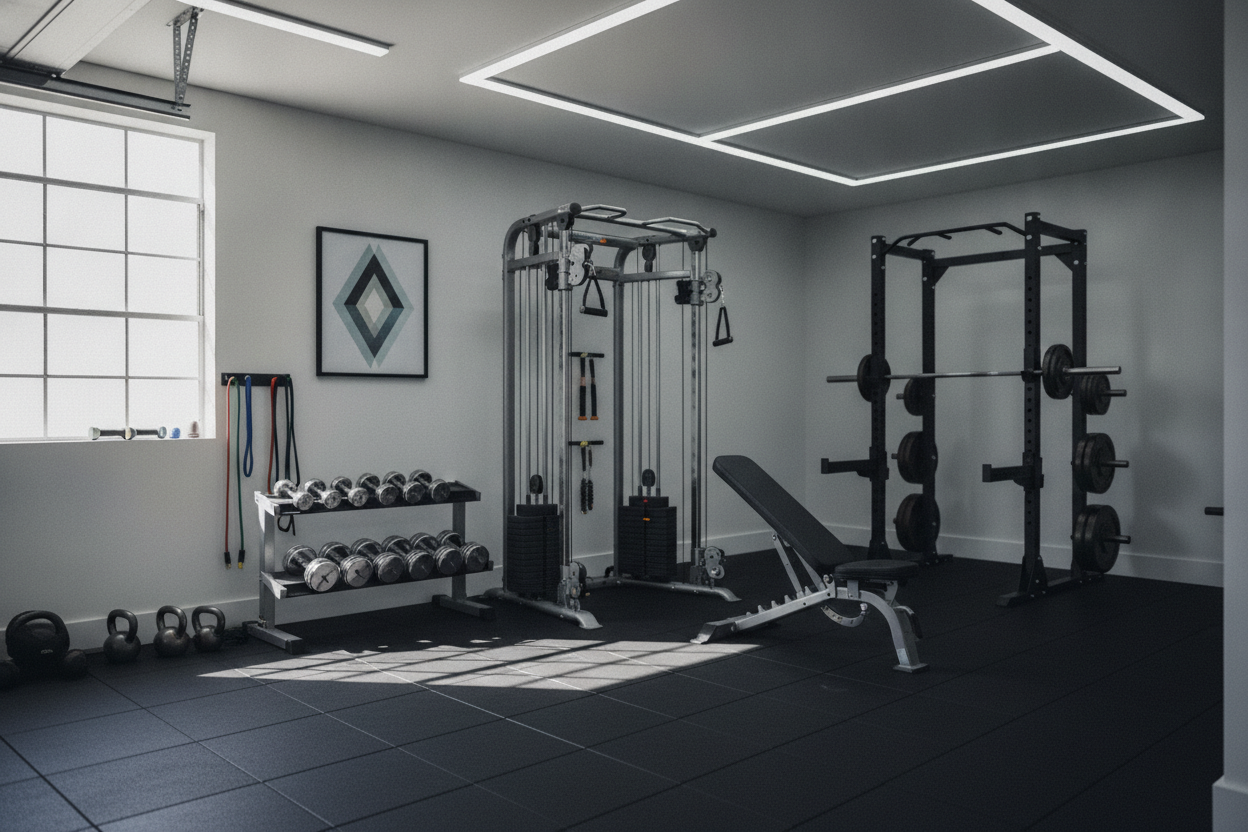
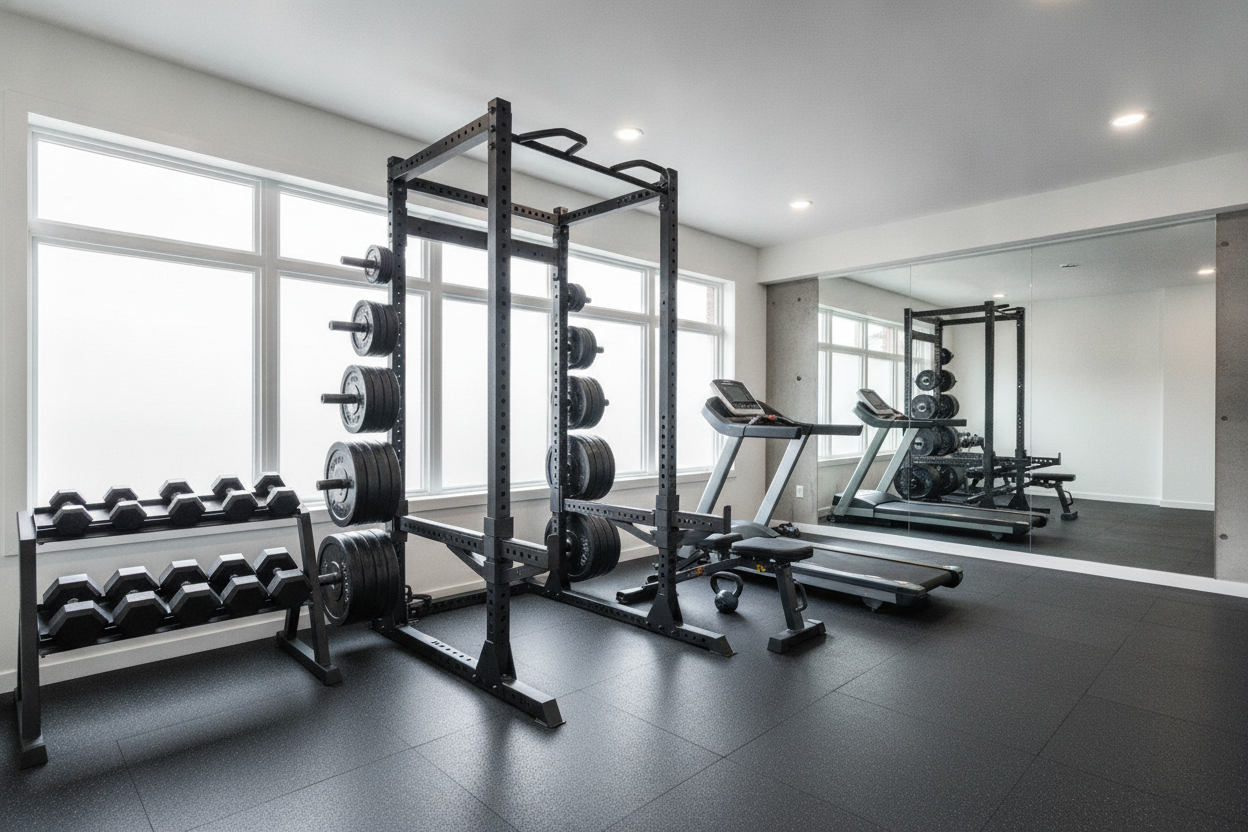
Setup is where most people mess this up. You need a solid anchor point. If you do not have a dedicated landmine, you can wedge the bar into a corner, but expect to lose some drywall. I prefer using a heavy-duty landmine attachment bolted to the base of a rack. To keep things from sliding, you should definitely invest in a bulletproof barbell hip thrust station by bracing your bench against a wall or the rack itself.
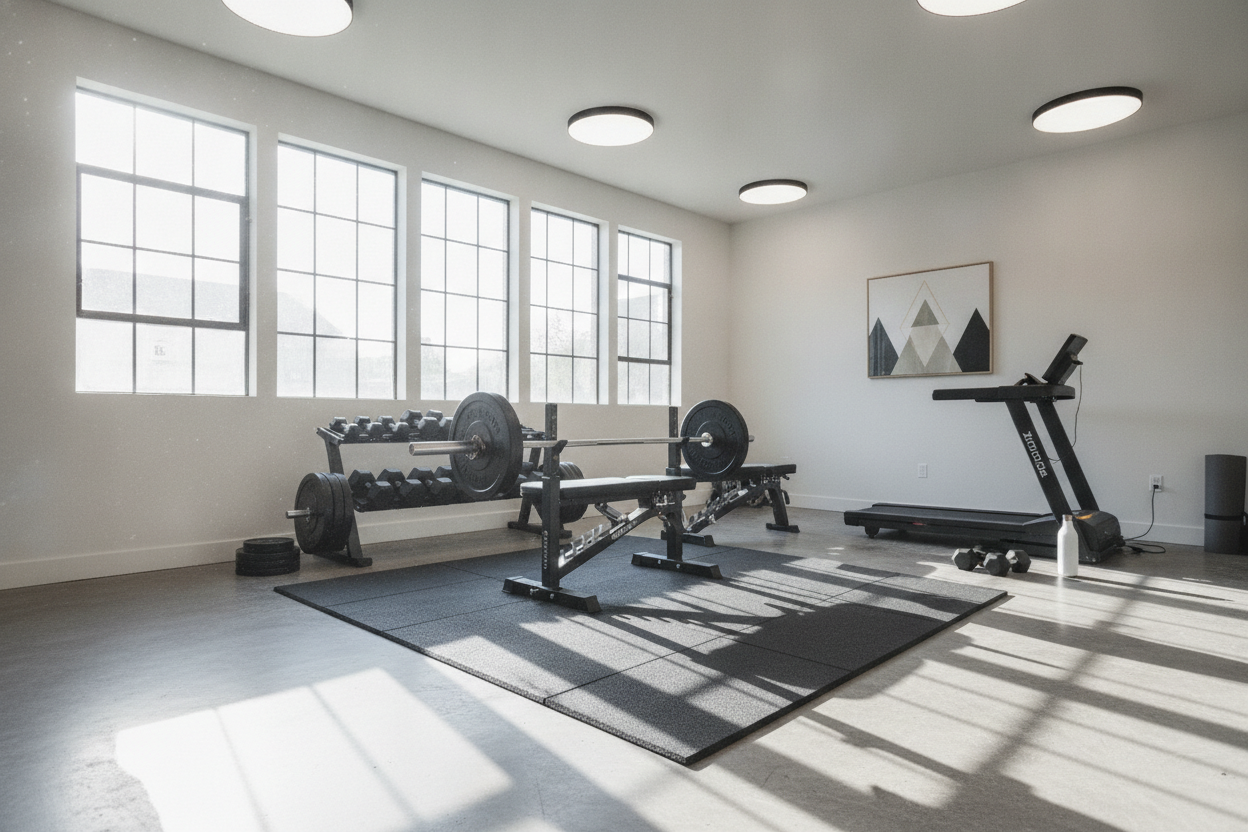
When it comes to the bar, use a standard 7-foot Olympic bar. Load it with a barbell bumper plate set rather than iron plates. Bumper plates have a wider diameter which provides a more stable starting height and they won't chew up your floor when you set the weight down between sets. Position yourself perpendicular to the bar, place the sleeve over one hip, and keep your non-working foot planted firmly to act as a pivot.
The Core Connection: Prepare Your Obliques
The secret sauce of the rotational barbell hip thrust is what happens in your midsection. In a standard thrust, your core just has to stay rigid. In the rotational version, the bar is actively trying to twist your torso toward the floor. This is 'anti-rotation' training at its finest.
Your obliques have to fire like crazy to keep your hips level as you drive up. You will feel a deep burn in the glute medius—that muscle on the side of your hip—that you simply cannot get with a bilateral bar. It turns a 'booty exercise' into a full-blown functional strength movement that carries over to your squats and deadlifts.
Programming the Move (Without Overcomplicating It)
Do not treat this like a max-effort lift. You aren't looking for a 1-rep max here. I usually slot this in as my second or third movement on leg day. Aim for 3 to 4 sets of 8 to 12 reps per side. The goal is controlled tempo—three seconds down, an explosive drive up, and a hard squeeze at the top.
If you find yourself wobbling, drop the weight. The effectiveness of the rotation barbell hip thrust lives in the quality of the movement. If you start twisting your spine to get the weight up, you have lost the plot. Keep your ribcage tucked and your chin down.
Personal Experience: My Bench Tipping Nightmare
I'll be the first to admit I tried to ego-lift this when I first started. I loaded up two 45s, didn't brace my bench against the wall, and started cranking out reps. On the third rep, the lateral force of the landmine arc actually caused my lightweight utility bench to tip sideways. I ended up on the floor with a barbell in my lap and a bruised ego. Now, I always make sure my bench is anchored and I start with a single 25-lb plate to find the groove before going heavy. Learn from my mistake: stability is more important than the number on the plate.
FAQ
Do I need a special bar for this?
No, any standard Olympic bar works. However, a bar with smooth sleeves makes it easier to slide the plates on and off when you are working on the floor. Just make sure your landmine attachment is secure.
Will this replace my heavy squats?
Probably not. It is an accessory movement. Think of it as a way to fix imbalances and build a core that can actually support those heavy squats. It is a supplement, not a replacement.
Is it better than a standard hip thrust?
It is different. If your goal is pure hypertrophy and you have a dedicated thrust machine, stick with that. If you want athletic carryover and a more efficient home gym setup, the rotational version wins every time.