Why the Pause Barbell Hip Thrust Is the Ultimate Glute Ego Killer
I used to be the guy loading four 45-lb plates on each side of the bar, grunting like a silverback, and wondering why my lower back felt like a pile of dry kindling while my glutes remained stubbornly flat. It is a classic ego trap. You think more weight equals more growth, but in reality, you are just using momentum to bypass the hardest part of the lift. The pause barbell hip thrust changed everything for me by forcing me to actually own the weight at the top of the rep.
Quick Takeaways
- Cuts your working weight by 20-30% while significantly increasing intensity.
- Protects the lumbar spine by eliminating momentum and hyperextension.
- Builds a massive mind-muscle connection at the point of peak contraction.
- Perfect for home gym owners who want to maximize results with fewer plates.
The Problem With Bouncing Your Heavy Reps
I have seen lifters in my local gym load up 500 pounds, perform a quarter-rep with a massive bounce, and then walk around like they just won the Olympia. It is embarrassing. Most lifters treat hip thrusts like they are on a trampoline. They drop the weight fast, let the plates clatter off the floor, and use that kinetic energy to heave the bar back up. If you are doing this, you are not training your glutes; you are training your ability to use physics to hide a weakness.
This 'bounce' usually leads to a massive arch in the lower back at the top because you are desperate to lock out a weight you cannot actually control. I remember waking up the day after a 'heavy' session and my L5-S1 felt like it was on fire, while my glutes felt absolutely nothing. That is the price of ego lifting. When you use momentum, you skip the most important part of the movement: the end-range hip extension. This is where the glutes are under the most tension. By bouncing, you are literally bypassing the growth zone and putting your discs at risk for no reason.
What Makes the Pause Barbell Hip Thrust Different?
The magic of an isometric hold at the top of a pause hip thrust is all about tension. When you hold that bar for three full seconds, you are killing the stretch reflex. Your muscles cannot rely on the 'spring' effect from the bottom of the rep. Instead, they have to dynamically stabilize the load while in a fully shortened position. This is incredibly taxing on the nervous system and the muscle fibers themselves. You are essentially turning an explosive movement into a surgical strike.
Biomechanically, the glutes are most active when the hips are fully extended. By forcing a pause, you are maximizing the time under tension exactly where it matters most. It also forces you to check your pelvic tilt. You cannot hold a heavy pause if your back is arched; you have to tuck your chin, flatten your ribs, and drive through your heels. It’s a different kind of pain. It is not the sharp joint pain of a bad squat; it’s a deep, muscular ache that tells you the fibers are actually breaking down. Your glutes become an anti-gravity engine, fighting to keep that bar from crashing back down to your hips.
Why This Is the Ultimate Home Gym Hack
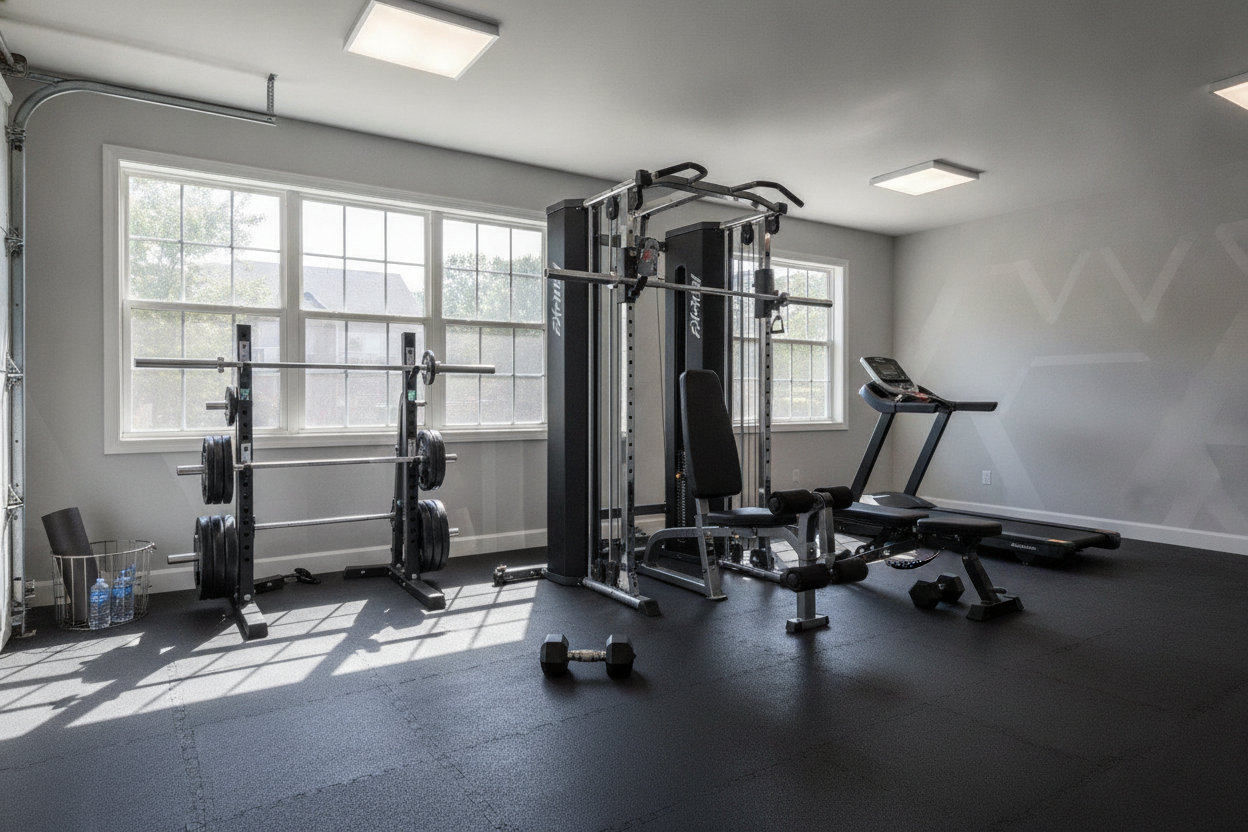
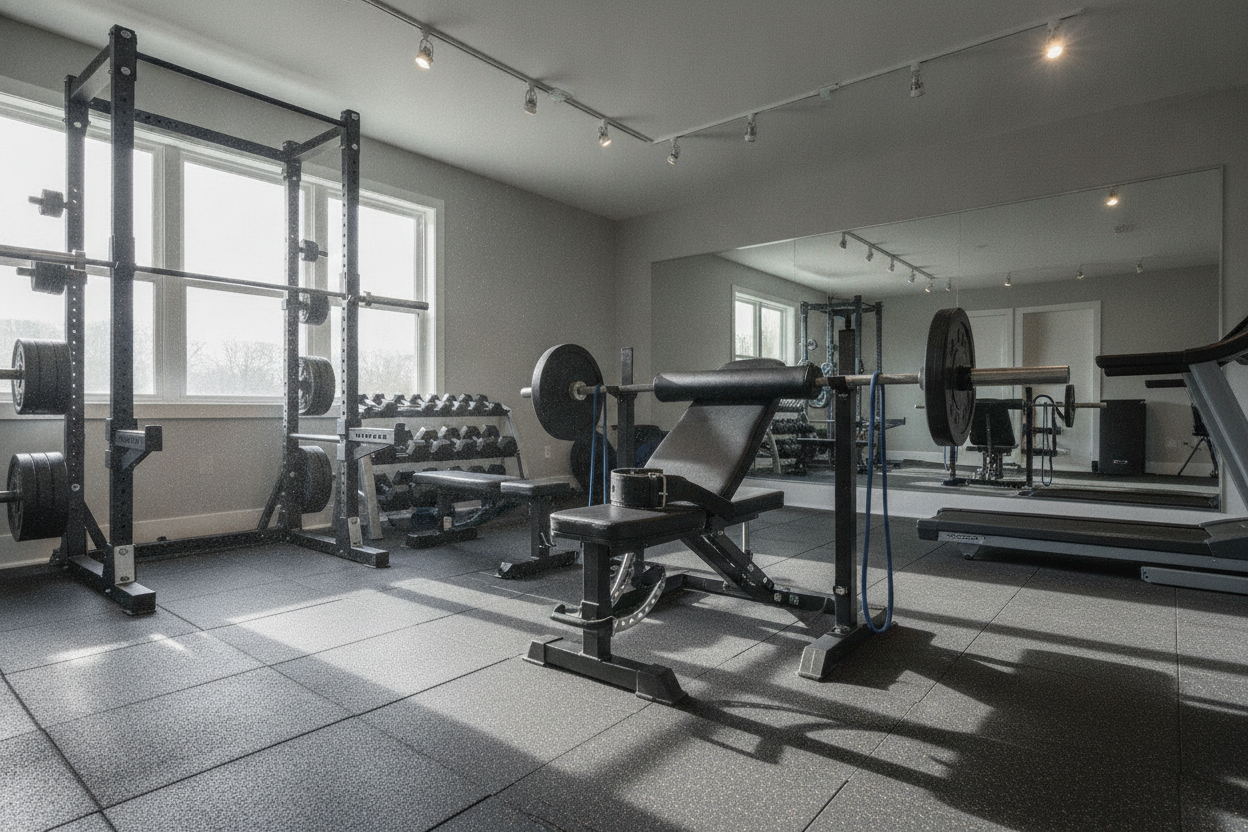
If you are training in a garage or a spare bedroom, you know that plates are expensive and take up a lot of room. You do not need a massive commercial machine to get world-class glute development. A solid power rack weight bench barbell package gives you every tool necessary to build a serious physique without cluttering your floor with specialized gear. The beauty of the pause is that it makes 225 pounds feel like 405 pounds.
By intentionally making the movement harder, you save money on extra weight and reduce the wear and tear on your equipment. I used to worry about the structural integrity of my concrete floor when dropping heavy thrusts. Now, because I am using less weight and controlling the eccentric, my platform stays intact and my neighbors do not think there is an earthquake every Tuesday morning. It is a smarter way to train when you are the one paying for the gear. Plus, loading two plates instead of five saves you ten minutes of 'junk time' every workout.
How to Actually Program the Pause Hip Thrust
Do not just count 'one-two-three' as fast as you can. That is the quickest way to cheat yourself. Use a real clock or a slow, deliberate cadence. I typically program these for 3 to 4 sets of 8 to 12 reps. If you can do more than 12 reps with a true 3-second hold, you are ready to add a small amount of weight. But be warned: that third second feels like an absolute eternity when your glutes are screaming. It is the point where most people quit, but it is also where the growth happens.
If you find that the barbell setup is still a total pain or you have a massive strength discrepancy between legs, you might want to pivot. Sometimes it is better to master the movement with a 1 leg hip thrust before going back to the heavy bar. Unilateral work ensures you aren't letting your dominant side take over during those brutal isometric holds. I often use the single-leg version as a finisher to ensure both glutes are equally fried before I call it a day.
Setting Up Your Station So You Do Not Slide Around
The biggest hurdle to a good pause is a sliding bench. If your back support shifts even half an inch during a 3-second hold, your leverage is shot and your lower back will take the hit. I spent months chasing my bench across the gym floor until I finally invested in a dedicated Gxmmat Hip Thrust Bench. Having a fixed, heavy pivot point that does not budge is a literal life-saver for your spine. It is lower to the ground than a standard flat bench, which is much better for keeping your ribs tucked.
If you are still using a standard weight bench, you need to lock it down. I recommend pushing the bench against a wall or wedging it against your power rack. You can find more tips on how to build a bulletproof barbell hip thrust station if you are dealing with a slippery floor. The goal is to create a rock-solid foundation so that 100% of your effort goes into the squeeze, not into staying upright. I once tried to pause 405 lbs on a bench that was not bolted down; it slid, the bar rolled toward my neck, and I nearly ended up as a gym fail video. Don't be that guy.
Three Mistakes That Ruin the Isometric Squeeze
The first mistake is looking at the ceiling. When your head goes back, your spine follows, leading to massive hyperextension. Keep your chin tucked to your chest like you are holding a tennis ball there. This keeps your spine neutral and forces the glutes to do the work. Second, stop counting at the speed of light. If you are not shaking by the end of the set, you are not holding it long enough. Use a metronome app if your internal clock is too generous.
Finally, watch your feet. Many lifters let their knees cave inward during the pause. This shuts down the glute medius and puts unnecessary stress on the ACL. Drive your knees outward and keep your shins vertical. If your feet are too far out, your hamstrings will take over; too far in, and it is all quads. Find that sweet spot where your glutes feel like they are about to explode. It usually takes a few sessions of micro-adjusting your foot placement to find the 'perfect' glute-dominant position.
FAQ
Do I need a special barbell pad?
Yes. Unless you enjoy having bruises on your hip bones that look like you survived a car wreck, get a thick foam pad. A rolled-up yoga mat works in a pinch, but a dedicated hip thrust pad with high-density foam is much better for heavy loads.
Can I do these every day?
I would not recommend it. The isometric hold is more taxing on the central nervous system than a standard rep. Twice a week is usually the sweet spot for most people to recover and actually see hypertrophy gains.
What if I feel it more in my hamstrings?
Move your feet closer to your body. If your feet are too far away, your hamstrings become the primary mover. Your shins should be almost perfectly vertical at the top of the movement when the pause occurs.