Why the latest fitness machines feel like expensive iPads
I recently walked onto the floor of a massive industry expo, and for a second, I thought I’d accidentally wandered into a Silicon Valley tech launch. There were more glowing pixels than knurled steel. The latest fitness machines are no longer just about moving weight from point A to point B; they are trying to be your coach, your DJ, and your data scientist all at once.
I’ve spent the last decade loading plates and testing cable ratios in my own garage, so I have a pretty high tolerance for gear hype. But standing in front of a row of machines that require a Wi-Fi connection just to perform a leg extension made me realize we’ve reached a weird crossroads in the home gym world. We are trading durability for 'smart' features that might be obsolete in three years.
Quick Takeaways
- Most touchscreens on new gear are just distraction machines that drive up the MSRP.
- Steel gauges are getting thinner as brands spend more of their budget on software developers.
- Digital resistance is actually useful for eccentric loading, but it lacks the 'soul' of iron.
- Subscription fees are becoming the hidden tax of modern strength training.
Why Does Every Piece of Gear Need a Touchscreen Now?
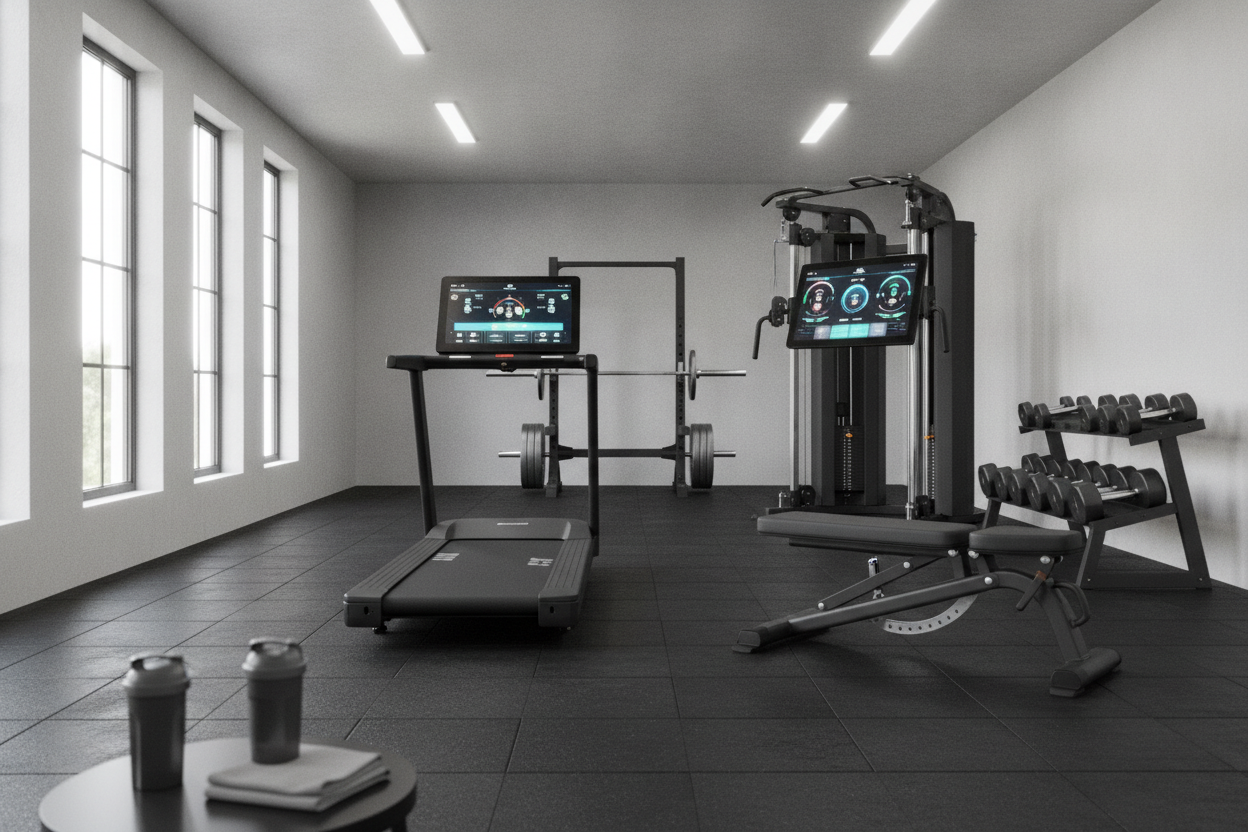
It’s getting harder to find machine fitness equipment that doesn’t come with a 22-inch tablet bolted to the frame. Brands are betting big on the idea that you can’t possibly finish a set of rows without a virtual trainer screaming at you from a high-def display. It feels less like a gym and more like an arcade.
The problem is that these screens aren't actually improving your biomechanics. A lat pulldown doesn't become more effective because it can stream Spotify. In fact, I find the constant notifications and data tracking a massive distraction. When I'm training, I want to feel the muscle, not check if my 'output score' is higher than some guy in Ohio. We’re paying a $1,000 premium for tech that will be laggy and outdated long before the cables snap.
Where Brands Are Cutting Corners on New Gym Machines
While everyone is staring at the flashy interfaces, I’m looking at the welds and the pulley wheels. It’s frustrating to see how new gym machines are being built lately. I’ve seen $3,000 smart units using plastic pulleys and thin 14-gauge steel that flexes under a heavy load. It’s a far cry from the industrial-grade stuff we used to see in the 90s.
I’ve scoured the fitness equipment New York market looking for used commercial gear, and honestly, an old-school Nautilus or MedX machine often feels more stable than these new tech-heavy rigs. The older stuff used heavy-duty 11-gauge steel and oversized bearings. Today, brands are betting that you’ll be so distracted by the workout library that you won’t notice the slight wobble in the frame when you’re pushing for a PR.
The Few Tech Upgrades That Actually Impressed Me
It’s not all bad news. There are a few new fitness machines that use technology to solve actual lifting problems. I’m talking about digital resistance that can add 20 pounds to the eccentric (lowering) phase of a lift or strip weight off instantly if you start to fail. That’s a legitimate training tool that you can't easily replicate with standard iron plates.
However, the feel is still different. When I put the cable machine Life Fitness built in my garage, I was reminded of how much I prefer the consistent, analog tension of a real weight stack. Some of the new digital motors feel 'jerky' as the computer tries to calculate the resistance in real-time. If you’re a purist who likes the smooth glide of a well-greased guide rod, some of these smart machines are going to feel like a step backward.
Should You Wait Before Upgrading Your Home Gym?
If you have a functioning rack and a solid set of pulleys, I wouldn't rush out to buy the latest connected machine just yet. We are in the 'first generation' phase of a lot of this tech. Software bugs are common, and if the company goes out of business, your expensive smart machine basically becomes a very heavy clothes rack because the screen won't boot up.
My advice? Stick to the basics for your heavy hitters—squats, presses, and pulls. If you really want a smart machine, look for one that offers a 'manual mode' that works without a subscription. Your gains shouldn't be dependent on a monthly credit card charge and a stable internet connection.
Personal Experience: The Day the Wi-Fi Died
I remember testing a high-end smart cable unit during a thunderstorm. The power flickered, the Wi-Fi dropped, and the machine literally locked up mid-set. I was stuck holding the handles with zero resistance because the magnets lost power. It was a wake-up call. I realized that my old-school plate-loaded machines don't care about the weather or the router settings. They just work. Since then, I've been a lot more selective about which 'smart' features I let into my space.
FAQ
Do smart fitness machines require a monthly subscription?
Almost always. Most brands lock their best tracking features and workout libraries behind a $30 to $50 monthly fee. Always check the 'fine print' before buying to see if the machine works in manual mode without a sub.
Is digital resistance as good as real weights?
It’s different. Digital resistance is great for constant tension and variable loading, but it lacks the inertia of real iron. Most experienced lifters find it feels a bit 'hollow' compared to a traditional weight stack.
How long do these touchscreens actually last?
Consumer electronics generally have a 3-5 year lifespan before they start feeling slow. Unlike a barbell that lasts a lifetime, you should expect to replace or upgrade the tablet portion of your machine eventually.