Why the Kneeling Hip Thrust With Band Will Humble Your Glute Day
I used to be the guy who thought if a barbell wasn't involved, it wasn't a real workout. I spent years loading up 405 lbs for hip thrusts, making a scene in my garage, only to realize my lower back was doing most of the heavy lifting at the top. When I finally stripped the weight away and tried a kneeling hip thrust with band, I realized I’d been cheating myself out of the best part of the rep for a long time.
- Constant tension that peaks exactly where your glutes are strongest.
- Zero spinal loading, making it a godsend for people with cranky lower backs.
- Requires minimal floor space—perfect for 8x10 garage gym corners.
- Forces a hard posterior pelvic tilt that's hard to replicate with iron.
The Problem With Barbell Glute Work
Gravity is a stubborn coach. When you use a barbell, the resistance is purely vertical. At the very top of a hip thrust, the weight is essentially resting on your skeletal structure rather than your muscles. This is where most people lose the contraction. By switching to a kneeling thrust exercise, you change the vector. The resistance becomes horizontal, pulling your hips backward.
This creates an inescapable peak contraction. When you compare the barbell vs. hip thrust with band, the band wins on the resistance curve every time. You aren't just fighting weight; you're fighting a material that wants to snap you back to the start position. It forces your glutes to stay 'on' for the entire duration of the set.
How to Rig the Setup Without Looking Foolish
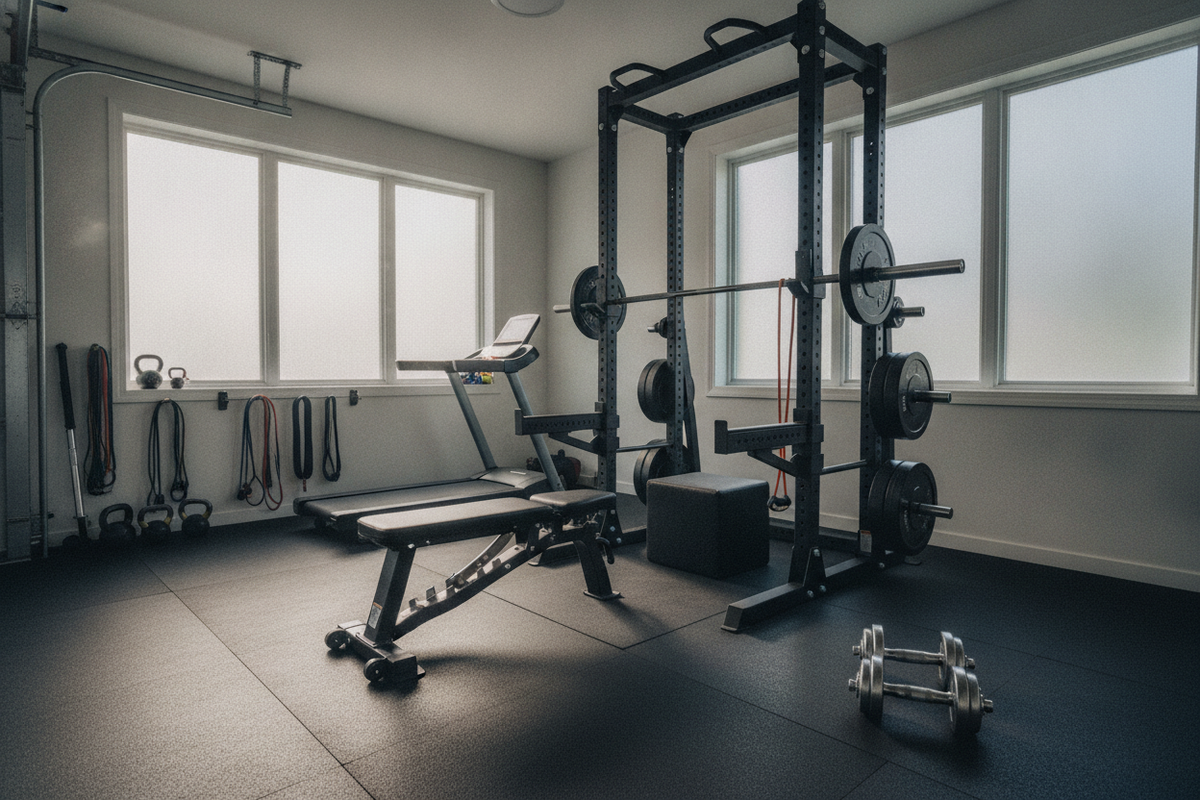
You don't need a fancy machine for this, but you do need a solid anchor. I’ve seen guys try to loop a band around a light bench only to have the bench slide across the floor and hit them in the heels. Use your power rack uprights or a heavy kettlebell (at least 70 lbs) as your anchor point. Loop the band around the base, step inside the loop, and place it right across your hip crease.
Walk out until the band is taut even when you’re sitting back on your heels. This ensures your kneeling band resisted hip thrusts have tension from the very first inch of movement. I prefer using a 1.75-inch 'heavy' band for this. If you’re using a thin 'light' band, you’re basically just doing a rhythmic dance; you need enough tension to actually struggle at the top.
Protecting Your Knees and Shins
The biggest deterrent to floor-based glute work is pain, but not the good kind. Kneeling on thin carpet or bare concrete will kill your motivation faster than a bad playlist. I’ve tried the 'tough guy' approach, and all I got were bruised kneecaps that made lunges impossible the next day. You need a high-density 6x4ft yoga mat exercise mat to create a stable, cushioned base.
If you have a larger setup or like to superset these with lateral walks, a large exercise mat for home gym is a better investment. It gives you the space to keep your anchor point, your band, and your body on a grippy surface. Trust me, if your knees are sliding or hurting, you won't be able to drive your hips forward with the intensity required for real growth.
The Biomechanics of a Perfect Rep
To get the most out of the kneeling hip thrust exercise, you have to master the 'scoop.' Don't just lean forward. Think about tucking your tailbone under your torso as you drive into the band. This posterior pelvic tilt is what fully shortens the glute fibers. Unlike the mini band hip thrust, which uses lateral tension to keep the knees from caving, this movement is all about that forward explosion.
Keep your chin tucked and your ribs down. If you look up at the ceiling, you’ll likely arch your lower back, which shifts the tension away from the glutes and onto your lumbar spine. Squeeze at the top like you’re trying to hold a hundred-dollar bill between your cheeks. Hold that squeeze for a full two-count before slowly controlling the descent.
Programming This Movement Into Your Routine
I don't use these as a primary strength movement. Instead, I slot kneeling thrusters at home into the 'finisher' category. After you’ve done your heavy squats or deadlifts, hit 3 to 4 sets of 20 to 30 reps. The pump is honestly borderline painful, but that metabolic stress is exactly what triggers hypertrophy.
Alternatively, use kneeling thrusters for glutes as a pre-exhaustion tool. If you have trouble 'feeling' your glutes during squats, do two sets of these before you ever touch the barbell. It wakes up the posterior chain and ensures your glutes are actually firing when you start moving heavy iron. It’s a simple fix for a common problem.
My Personal Experience
I once tried to do these using a cheap, thin band I found in a hotel gym. About ten reps in, the band snapped and caught me right across the lower back. I had a welt for a week. Now, I only use layered latex bands and I check them for nicks every single time I train. Also, don't ignore the padding—I once tried doing these on a thin towel on a hardwood floor, and my knees felt like they’d been hit with a hammer the next morning. Use a real mat.
FAQ
Can I use a cable machine instead of a band?
You can, but the band’s resistance increases as it stretches. This 'accommodating resistance' matches your strength curve perfectly, making the top of the rep much harder than a cable would.
Will this make my legs bulky?
This exercise specifically targets the glutes with very little quad involvement. It’s one of the best ways to build a backside without adding significant size to your thighs.
How far should I sit back?
Sit all the way back until your butt touches your heels. This full stretch under tension is what helps trigger muscle growth. Just make sure the band doesn't go slack at the bottom.