I Traded My Barbell for a Home Gym Station for 30 Days
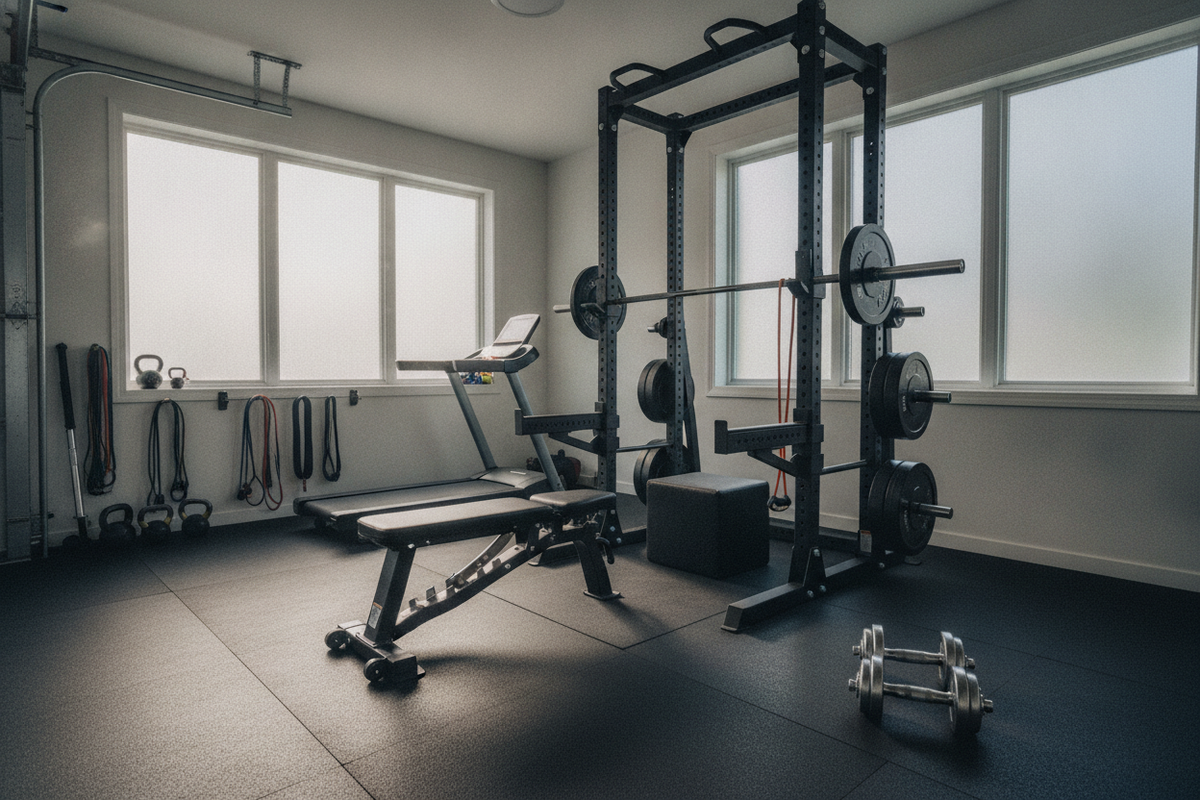
I stood in my garage last month, staring at my power rack like I was about to break up with a long-term partner. My barbell has been my therapist for a decade, but let's be real: my garage was starting to look like a scrap metal yard. I decided to lock the plates away and commit to a single home gym station for 30 days to see if I would actually lose my gains or if the convenience would win me over.
Quick Takeaways
- Cables provide superior constant tension that a barbell simply cannot match during isolation moves.
- The footprint of a single station is a massive win for anyone trying to fit a car and a gym in the same garage.
- Heavy compound movements like squats and deadlifts feel awkward and biomechanically 'off' on most pulley systems.
- Transitioning between exercises is incredibly fast, making high-volume hypertrophy work much more efficient.
The 30-Day Cable and Pulley Experiment
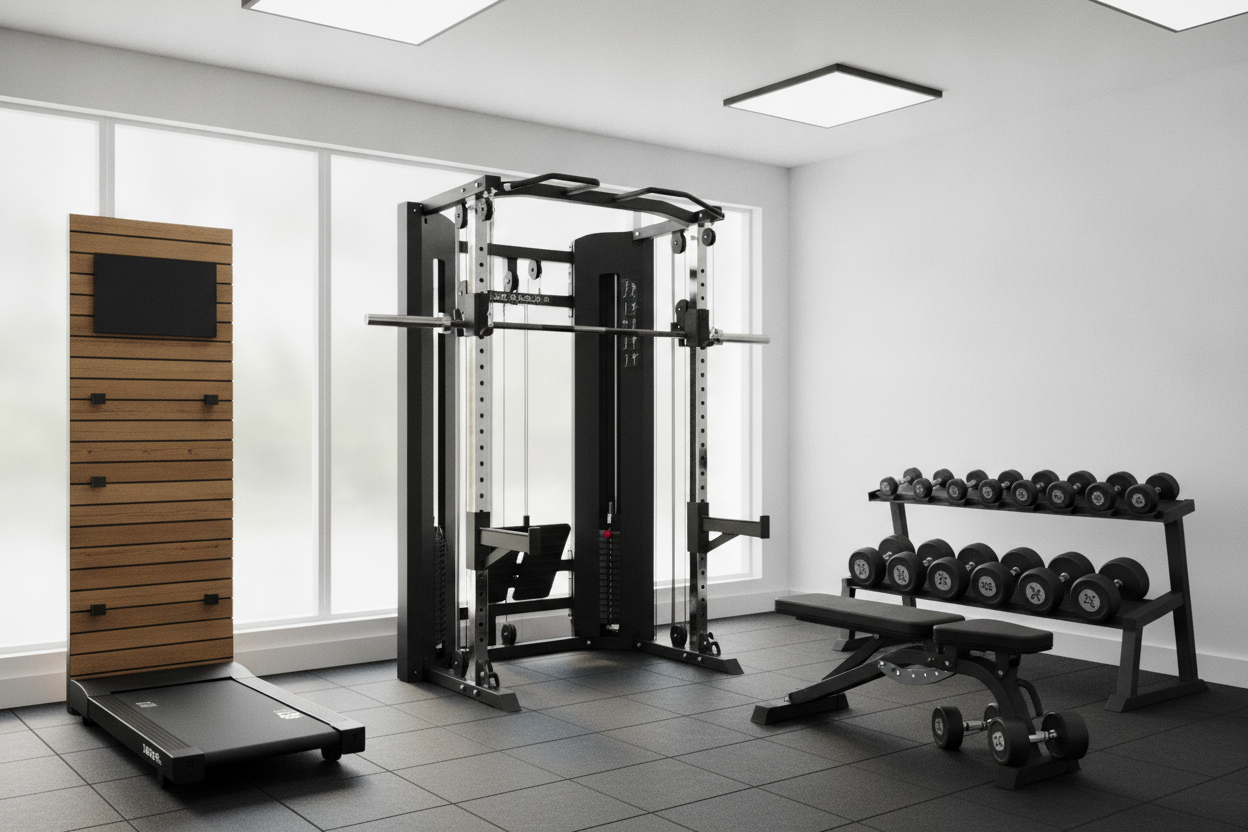
I have spent years telling anyone who would listen that if you do not have a barbell, you do not have a gym. But as my kids' bikes and the lawnmower started encroaching on my lifting platform, I had to face facts: my setup was a space hog. I bought a mid-range gym workout station with a 200-lb weight stack and a footprint of about 4 by 4 feet. I wanted to see if I could maintain my physique without the 'clink and clang' of iron plates.
The first week was a mental hurdle. There is something visceral about loading 45-lb plates that a selectorized pin just does not provide. However, I noticed something immediately: my joints stopped aching. The smooth path of the cables and the ability to micro-adjust my hand position meant I was hitting muscles, not grinding my rotator cuffs. I stopped worrying about a spotter and started worrying about the pump.
I committed to a five-day split, focusing entirely on the machine. No dumbbells, no kettlebells, just the pulleys and the various attachments that came in the box. I was skeptical that a 200-lb stack could challenge me on chest day, but the friction and constant resistance proved me wrong by the third set.
Where the Machine Actually Outperformed Free Weights
The biggest surprise was the intensity. When you use a multifunctional home gym equipment workout station, you can perform drop sets that are physically impossible with a barbell unless you have two interns standing by to strip plates. I could go from a heavy lat pulldown to a moderate row to a light face pull in about ten seconds.
This speed allowed me to experiment with efficient full body routines that used to take me ninety minutes with a rack. On this station, I was done in forty-five. The constant tension is the real hero here. With a barbell bench press, the load is heaviest at the bottom and almost non-existent at the lockout. With the cable chest press on this station, the weight was screaming at my pecs through the entire range of motion.
I also found that my lateral raises and tricep extensions felt 'cleaner.' There is no momentum to cheat with when a cable is pulling your arm back to the starting position. For hypertrophy, which is what most of us are actually after, the machine was actually doing a better job of isolating the target muscles than my old-school free weight setup.
The Lifts That Feel Terrible on a Gym Workout Station
It is not all sunshine and rainbows. If you try to do a traditional deadlift on a low pulley, you are going to have a bad time. The starting position is awkward, and the cable often rubs against your shins or knees. It is a poor imitation of the real thing. Biomechanics matter, and trying to force a cable to act like a 7-foot piece of steel is a losing battle.
Squats are another weak point. Even with a high-quality gym workout station, the 'squat' attachment usually feels more like a weird leg press or a hack squat. You lose the core stabilization and the balance required for a back squat. After two weeks, my legs felt like they were getting a workout, but my nervous system felt bored. The fixed path of the machine limits your natural movement arc, which can lead to some funky pressure in the lower back if you are not careful about your foot placement.
I also missed the 'bite' of a knurled bar. Most station handles are covered in cheap foam or smooth rubber. It sounds like a small gripe, but when your hands start sweating during a heavy row, you really miss that aggressive steel grip. I ended up buying my own metal attachments just to make it feel less like a piece of hotel equipment.
Did I Lose Strength Without the Iron?
After 30 days, I stepped back under a barbell for a test day. My bench press was actually up by five pounds—likely due to the extra tricep volume I was able to handle on the cables. My squat, however, felt heavy and shaky. I had not lost muscle mass, but I had lost the 'skill' of balancing a heavy load on my back. This is the trade-off you have to accept.
To keep the intensity high when the 200-lb stack started feeling light, I focused on manipulating your rep tempo. Instead of just cranking out reps, I went for a 3-second eccentric and a 2-second pause at the peak contraction. It turns out that 150 lbs on a pulley feels like 300 lbs if you move slow enough. I finished the month looking more 'full' in the shoulders and chest than I had in months of heavy barbell training.
The scale did not move much, but my body composition looked tighter. The ability to hit high-volume isolation work without the systemic fatigue of heavy triples and doubles meant I was recovering faster. I was less 'beat up' and more ready to train the next day. For a guy in his 30s, that is a huge factor in long-term consistency.
The Final Verdict: Who Should Actually Buy One?
If you are a competitive powerlifter or a weightlifter, a home gym station is a supplement, not a replacement. You need the specific stimulus of the bar. But for the average person who wants to look good, stay healthy, and save their garage floor from being pulverized by dropped plates, these machines are legit. They are no longer the flimsy 'as seen on TV' props from the 90s.
I would recommend a station to anyone with limited space or anyone coming back from an injury. The safety of a weight stack cannot be overstated—you can go to absolute failure on a chest press without the fear of a barbell crushing your windpipe. It is a tool for building muscle, and in that regard, it is just as effective as a rack if you know how to use it. I am keeping mine, though I might let the barbell out of its cage once or twice a week for old time's sake.
FAQ
Is a 150-lb weight stack enough for an experienced lifter?
It depends on the pulley ratio. A 2:1 ratio means you are only feeling 75 lbs. Always look for a 1:1 ratio if you want the full weight, or plan on using slow tempos and high reps to make the stack feel heavier.
How much space do I really need?
Most stations need a 4x6 foot area to be safe. You need enough room to fully extend your arms for flyes and enough height for the lat pulldown bar to clear your head.
Are they hard to assemble?
Yes. Set aside a full Saturday, get a socket wrench set, and maybe a friend. The instructions are usually 50 pages of 'where does this bolt go?' but once it is together, it is solid.