Why the Goblet Squat is Secretly the Best Exercise for Older People
I remember watching my dad struggle to get out of a low armchair after years of using the leg press at his local community center. He could push 200 pounds on that machine, but his knees wobbled like jelly the second he had to move his own body weight in space. It was a wake-up call for me as someone who spends my life testing gear. I realized that the best exercise for older people isn’t found on a chrome-plated machine with a weight stack.
It’s usually found on the floor, holding a single piece of iron against your chest. If you want to keep your independence and keep your joints from screaming every time you hit the stairs, you need to stop sitting down to train your legs. The goblet squat is the ultimate tool for rebuilding that lost resilience.
- Machines provide a false sense of security by removing the need for balance.
- Goblet squats naturally correct your posture and protect your lower back.
- You don't need a massive rack; a single dumbbell or kettlebell is enough.
- A stable, high-density floor is the most important piece of safety equipment.
- Progression is simple and doesn't require a spotter.
Why I Stopped Recommending Gym Machines for Seniors
Commercial gyms love machines because they are hard to break and easy to explain. But for someone over sixty, they can be a total trap. When you sit in a leg extension or a chest press, the machine dictates the path of motion. Your brain stops worrying about stability because the machine is doing that work for you. It’s a passive way to get strong, and that’s a problem.
In the real world, there are no rails. If you trip on a sidewalk crack, your core and stabilizer muscles have to fire instantly to keep you upright. Machines let those muscles go to sleep. I’ve seen guys who can max out the weight stack on a seated press but can’t stand on one leg for ten seconds. That lack of balance is what leads to falls, and in your sixties, a fall is more dangerous than any heavy weight.
Furthermore, these machines are often built for a 'standard' body type. If you have shorter limbs or pre-existing hip issues, a fixed-path machine might force your joints into angles they hate. I’ve spent years in my garage gym realizing that free weights allow your body to find its own natural path. That’s how you build strength that actually translates to carrying groceries or picking up a grandchild.
The Mechanics: Why the Goblet Squat Wins
The goblet squat is the undisputed best exercise for older adults because it is a self-correcting movement. You hold a weight—a dumbbell or a kettlebell—against your chest like a holy grail. This front-loading acts as a natural counterbalance. It allows you to sit back into your hips without feeling like you are going to fall over backward, which is the number one fear people have when they start squatting.
Most people struggle with squats because they lean too far forward, putting massive shear force on their lower back. The goblet position forces your elbows down and your chest up. It engages the upper back and the entire core. You aren't just training your quads; you're training your body to stay upright and rigid under load. It’s a full-body integration that a leg press could never replicate.
I’ve tested this with everything from a 10-lb dumbbell to a 100-lb kettlebell. The physics remain the same. Because the weight is in front of you, your spine stays in a more neutral, vertical position. This is a massive win for anyone with bulging discs or general lower back stiffness. You get all the leg-building benefits of a back squat without the crushing vertical compression on your vertebrae.
Another benefit is the simplicity of the equipment. You don't need a $1,000 power rack or a 7-foot barbell that takes up half the garage. If you have a pair of adjustable dumbbells—maybe something with a 52.5-lb max per handle—you have enough resistance to stay strong for the rest of your life. It’s about efficiency and safety, not just moving the heaviest weight possible.
Leg Press vs. Freestanding Squats
I get this question a lot: why not just use the leg press if I want to build leg strength? It feels safer because you’re locked in, right? But the reality is that the leg press vs. goblet squat: finding the best exercise for older woman debate is lopsided when you consider functional longevity. A leg press ignores your glute medius and your internal stabilizers. It’s a 'dumb' movement for a 'smart' body.
If you can't squat your own body weight with control, pressing a 400-pound sled won't help you get off a low sofa. The goblet squat teaches your brain how to coordinate your ankles, knees, and hips at the same time. That coordination is exactly what disappears as we age if we don't actively practice it. I’d rather see someone do five perfect goblet squats with a 15-lb weight than fifty reps on a leg press machine.
Setting Up a Safe Space to Squat at Home
If you're moving away from machines, you're moving toward free weights, and that means you need to respect your environment. I’ve made the mistake of trying to do goblet squats on a slippery kitchen floor in socks. I nearly ended up in the ER after my foot slid out during a rep. You need a dedicated space where your feet won't move an inch.
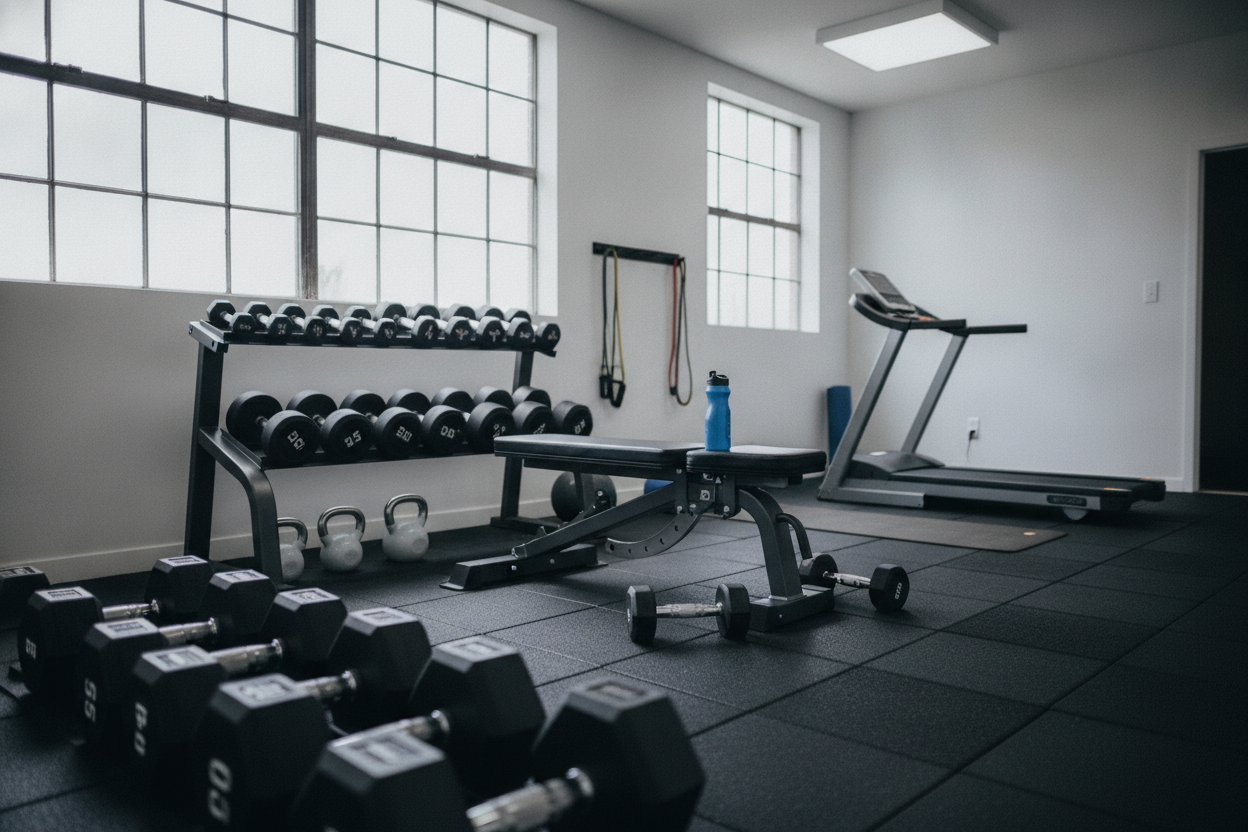
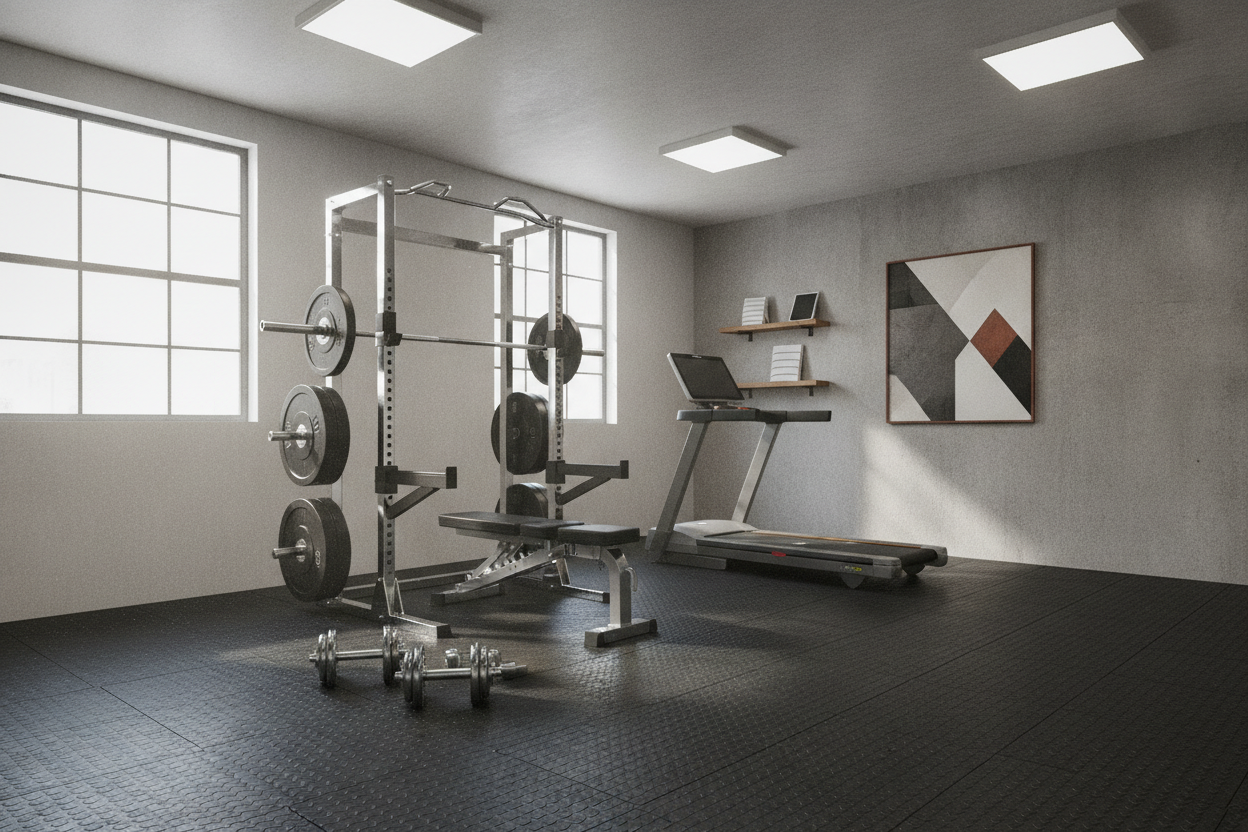
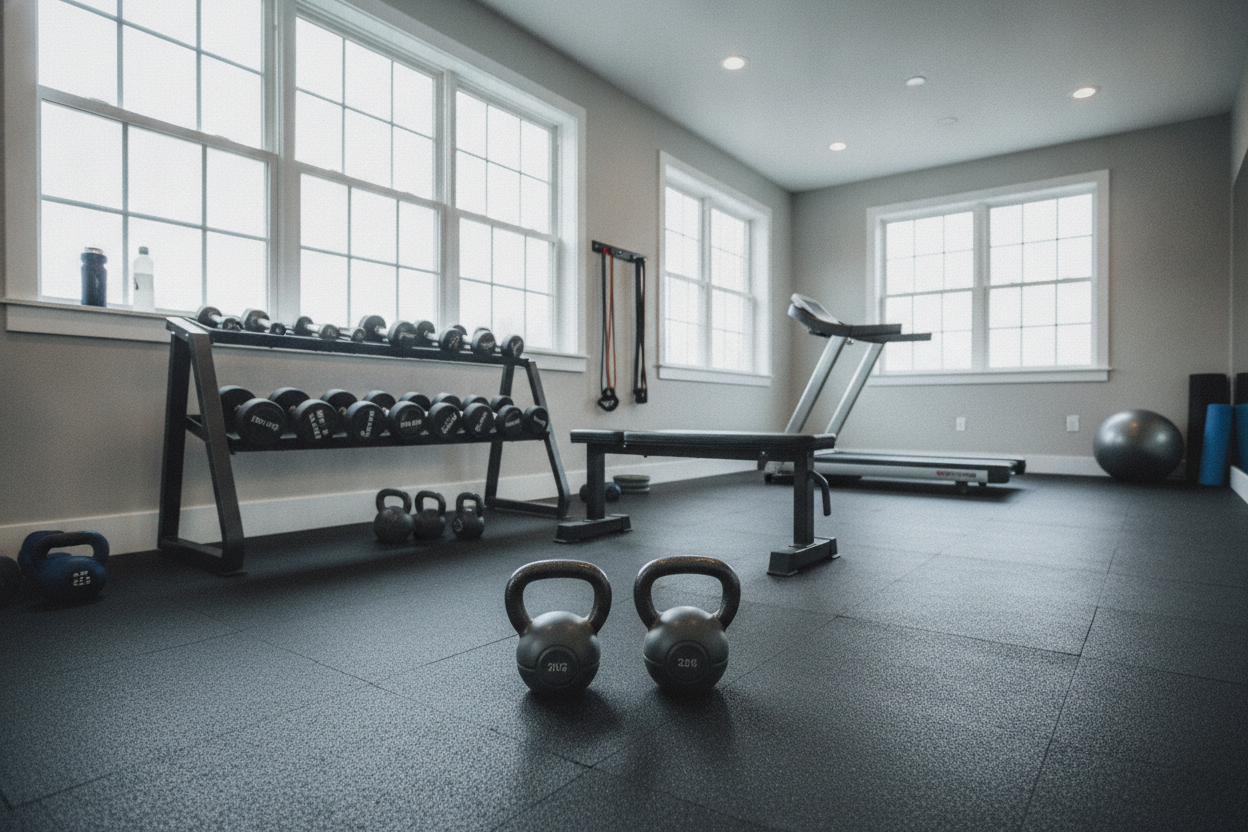
Before you even look at buying a set of weights, you need a large exercise mat for home gym use. This isn't just about protecting your hardwood or tile from a dropped dumbbell—though that's a $500 repair bill you definitely want to avoid. It's about creating a 'zone of safety' where you have 100% traction. A good mat provides the friction necessary to drive through your heels without the fear of a slip-and-fall.
I’ve seen people try to use those cheap, thin yoga mats for strength training. Don't do it. They bunch up, they slide on the subfloor, and they offer zero impact protection. When you’re holding a 25-lb weight, you want a surface that feels like an extension of the floor, not a piece of loose fabric. Your foundation is the most critical part of your home gym setup.
The Foundation Matters More Than the Weight
Don't settle for flimsy foam tiles that pull apart like a puzzle. For squats, you need something with high-density construction. A 6x8ft exercise mat gives you enough room to step out, find your stance, and even drop the weight if you lose your balance without cracking a foundation slab or waking up the neighbors.
I personally use a high-density 7mm mat in my own training space. It's firm enough that my heels don't sink—which is vital for power transfer and balance—but it has enough shock absorption to be kind to my joints. If you're training barefoot or in flat shoes, that extra bit of high-density padding makes a world of difference for your ankles and knees over a long session. It turns a cold garage floor into a professional-grade lifting zone.
How to Start If You Haven't Lifted in Years
If you haven't done a squat since Reagan was in office, don't just grab a 30-pound weight and start cranking out reps. You need to earn the right to load the movement. I recommend a simple 3-step progression that I’ve used with dozens of people. It starts with the 'Box Squat.' Place a sturdy chair or a weight bench behind you. Stand on your mat, feet shoulder-width apart, and sit back until your butt just grazes the seat. Stand back up. That’s your baseline.
Once you can do 15 bodyweight reps with perfect control, it’s time to add the 'goblet' element. Pick up a light weight—maybe a 5 or 10-pound dumbbell. Hold it against your sternum with both hands. Interestingly, the weight will actually make the movement feel more stable by balancing your center of gravity. It pulls you forward just enough to let you sit deeper into the squat without your heels lifting off the mat.
The final stage is the freestanding goblet squat. This is where you remove the chair and squat to your natural depth. By this point, your core is stronger, your hips are more mobile, and you’ve built the 'muscle memory' to stay upright. I’ve seen people in their seventies go from struggling with a chair to squatting a 35-lb kettlebell in just a few months. It’s not about bodybuilding; it’s about becoming 'hard to kill' and keeping your freedom of movement for as long as possible.
FAQ
Will goblet squats hurt my knees?
Actually, they usually help. Most knee pain comes from weak glutes and poor tracking. The goblet squat forces your knees to stay out and your glutes to fire, which takes the pressure off the joint itself. Just start with a shallow range of motion and increase it as you feel comfortable.
How heavy should the weight be?
Start much lighter than you think. If you can't hold the weight at your chest for 30 seconds without your back rounding or your shoulders burning, it's too heavy. Form is the only thing that matters for longevity. You can always add weight later, but you can't un-injure a back.
Do I need special shoes for this?
You don't need fancy lifting shoes, but you do need a flat, stable base. Squatting in running shoes with thick, squishy air cushions is like trying to lift weights on a marshmallow. I prefer training barefoot on a high-density mat or wearing a flat-soled shoe like a Chuck Taylor or a dedicated minimalist trainer.