Why 90% of Exercises for Gym Routines Are a Waste of Time
I remember standing in the middle of a commercial gym five years ago, staring at a screen that listed over 200 exercises for gym routines. I was paralyzed. I had been training for a decade, but the sheer volume of gym moves and workout movements made me feel like I was missing some secret sauce. I spent forty minutes trying to find the 'perfect' variations, only to realize I’d spent more time scrolling than sweating.
The reality is that most of those gym exercises are filler. They are designed to keep you subscribed to apps or buying magazines, not to make you stronger. If you are drowning in a list of workouts that looks more like a phone book than a training plan, it is time to strip things back to the movements that actually move the needle.
- Stop chasing novelty and start chasing progressive overload.
- Master human movement patterns, not machine names.
- Five solid gym moves are worth fifty 'flavor of the week' variations.
- Focus on compound lifts that use multiple joints simultaneously.
The Problem With the Endless Exercise Directory
Modern fitness apps love to boast about having an 'exercise catalog' with thousands of entries. They give you dozens of gym movement names for what is essentially the same bicep curl. This creates a massive problem: paralysis by analysis. When you have an infinite exercise names list, you never stay with one movement long enough to actually get good at it.
I have seen guys spend six months cycling through every workout exercise name they can find, never adding a single pound to their frame. They are doing 'all the exercise' but achieving none of the results. A bloated exercise directory distracts you from the fact that strength is built on repetition and intensity, not on finding 40 different exercises to hit your triceps from a slightly different angle.
Stop Memorizing Workout Names (Learn Patterns Instead)
You don't need a list of all workouts to be fit. You need to understand how your body moves. Instead of trying to memorize every fitness exercise name or hunting for the most popular exercises on Instagram, categorize your training into patterns: Push, Pull, Hinge, Squat, and Carry. That is it.
When I Cut My List of Strengthening Exercise Down to Just 6 Basic Moves, my total total total strength skyrocketed. I stopped worrying about 'workout moves names' and started focusing on how much weight I could move in a specific pattern. If a movement doesn't fit into a core pattern, it's likely just fluff taking up space in your gym workouts list.
The Only 'Pushing' and 'Pulling' Gym Moves You Need
Forget the names of fitness exercises that involve three different pulleys and a specialized handle. For pushing, you need a horizontal press (bench press or push-ups) and a vertical press (overhead press). For pulling, you need a horizontal row and a vertical pull (pull-ups or lat pulldowns). That covers 95% of your upper body needs.
I have tested high-end cable machines and $2,000 functional trainers, and while they are nice, they can't beat the basic gym moves names we have used for decades. If you can't do 10 strict pull-ups, you have no business looking for 'different exercise names' to fix your back development. Stick to the basics until the basics stop working—which, for most of us, is never.
Hinging and Squatting: The Lower Body Core
The lower body is where people get the most confused by the gym movement names. You do not need a list of exercise moves that involves standing on a bosu ball or using five different leg press machines. You need to squat and you need to hinge. The squat targets the quads; the hinge (like a deadlift or RDL) targets the posterior chain.
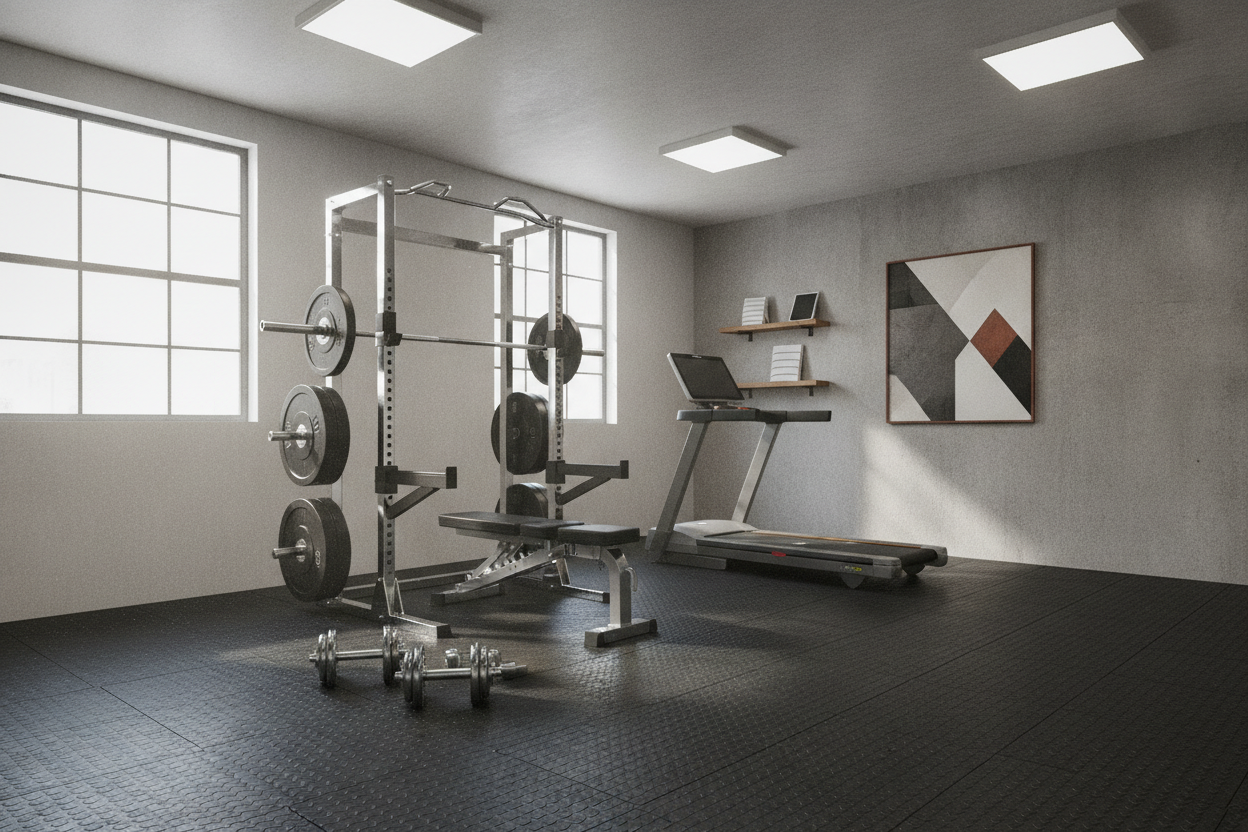
When you are doing heavy main workout exercises like these, your environment matters. I have tried squatting on cheap, slippery flooring and it is a recipe for a blown knee. Investing in a Large Exercise Mat For Home Gym provides the stable, high-traction base you need when you're moving meaningful weight. Don't let a 'body exercise list' convince you that variety is more important than a stable foot position.
Building Your Own BS-Free Exercise Workouts List
To build a routine that lasts, stop looking for a list of all exercises and start building a template. Pick one movement from each category. That is your workout. You don't need a workout directory or a complex exercise muscle directory to tell you that doing a heavy press and a heavy squat is effective. Consistency with five movements will always beat a 'workout name list' of twenty exercises done with zero intensity.
If you want a specific structure, follow an Exercise Gym Workout The Blueprint For Sustainable Gains. It focuses on the main exercises that build a foundation. Once you have that foundation, you can sprinkle in the 'fancy' gym moves list items as accessories, but they should never be the steak—just the seasoning.
My Experience With 'Exercise Overload'
Early in my training, I was obsessed with having the most 'all workout list' imaginable. I had a three-ring binder full of different workouts names and exercise descriptions. I thought that if I did every type of exercise names, I would cover every muscle fiber. I ended up with tendonitis in my elbows and a squat that hadn't moved in a year. I finally ditched the 'exercise moves list' and went back to a barbell, a rack, and a pull-up bar. My joints felt better, and I actually started looking like I lifted. Don't make my mistake of thinking 'more' equals 'better.'
FAQ
What are the 'main exercises' I should focus on?
Focus on the big five: Squat, Deadlift (Hinge), Overhead Press, Bench Press, and Row/Pull-up. These five gym movement names cover almost every muscle in your body with maximum efficiency.
Do I need to change my gym moves every few weeks?
No. 'Muscle confusion' is a myth. Your muscles don't get confused; they get stronger by adapting to a specific stress. Stick to the same exercise names for at least 8-12 weeks before even thinking about swapping them.
Is a machine-based list of gym exercise effective?
Machines are fine for isolation, but they shouldn't be the core of your list of workout moves. Free weights and bodyweight movements require more stability and recruit more muscle mass, giving you more bang for your buck.