Why the Best Workouts to Get Bigger Feel Like a Blue-Collar Job
I remember the Sunday nights spent dreading Monday morning. Not because of my job, but because Monday was 'Leg Day.' I’d spend ninety minutes trying to murder my quads, only to spend the next four days walking like a newborn giraffe. I thought that level of destruction was the only way to grow. I was wrong.
If you've ever scrolled through forums at 2 AM wondering why your progress stalled despite your 'hardcore' intensity, it’s time to rethink the best workouts to get bigger. Muscle growth isn't about a once-a-week explosion; it's about the steady, relentless accumulation of work. It’s about showing up, punching the clock, and leaving before you're broken.
Quick Takeaways
- Frequency beats intensity for natural lifters looking to maximize protein synthesis.
- Hitting a muscle 4-5 times a week with moderate volume prevents the 'recovery hangover.'
- Leaving 2-3 reps in the tank allows you to train more often without CNS burnout.
- High-frequency training requires a dedicated, low-friction home gym setup.
The 'Destroy and Recover' Myth
The traditional 'bro split'—chest Monday, back Tuesday, legs Wednesday—is a relic of a different era. It’s designed for people with elite genetics or those using 'extra-curricular' help. For the rest of us training in a garage, hitting a muscle group once every seven days is an inefficient way to find the best workout to get big.
When you annihilate your chest on Monday, protein synthesis spikes for about 24 to 48 hours. By Thursday, that muscle is no longer in an anabolic state; it’s just sitting there, waiting for next Monday. You’re spending half your week in a holding pattern. Plus, the sheer amount of damage you do in one 'annihilation' session often requires five days of recovery just to get back to baseline.
Enter the Blue-Collar Lifting Mentality
Think about a farmhand, a mechanic, or a carpenter. These guys often have thick, dense forearms and massive backs without ever touching a specialized isolation machine. They don't do 'back day.' They do back work every single day. Their bodies adapt to the frequent, sub-maximal load by building functional tissue that can handle the daily grind.
This is the secret to high-frequency training. You need to stop lifting to failure in your workout if you want to see real, sustainable growth. If a carpenter worked to absolute muscular failure on every nail he hammered, he’d be fired by noon. By staying a few reps away from failure, you avoid the neurological fatigue that keeps you out of the gym for days at a time.
Structuring the Best Workouts to Get Bigger at Home
To make this work in a home gym, you need to think in terms of total weekly volume. Instead of doing 20 sets of squats on Tuesday, you might do 4 sets of squats, 5 days a week. The total volume is the same, but the quality of every single rep is higher because you aren't exhausted. You’re fresh, your form is crisp, and you're stimulating growth more often.
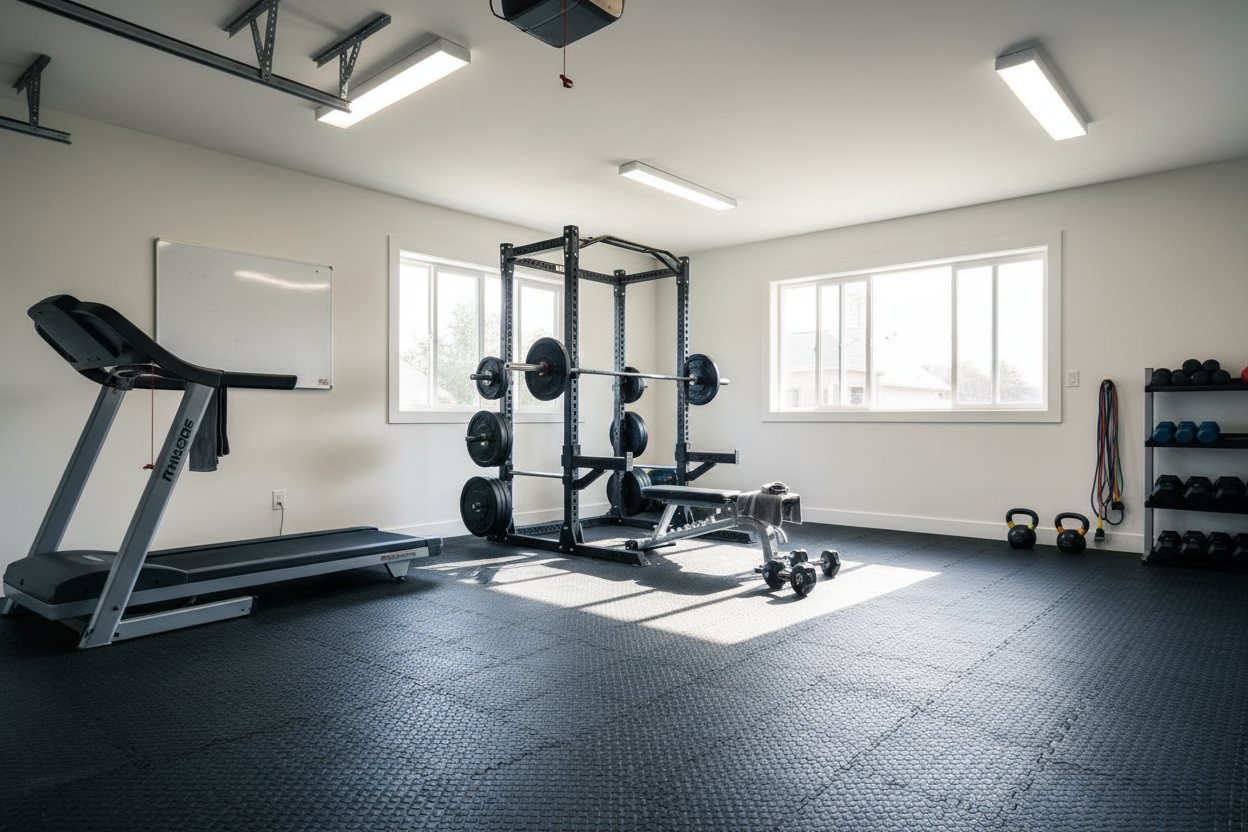
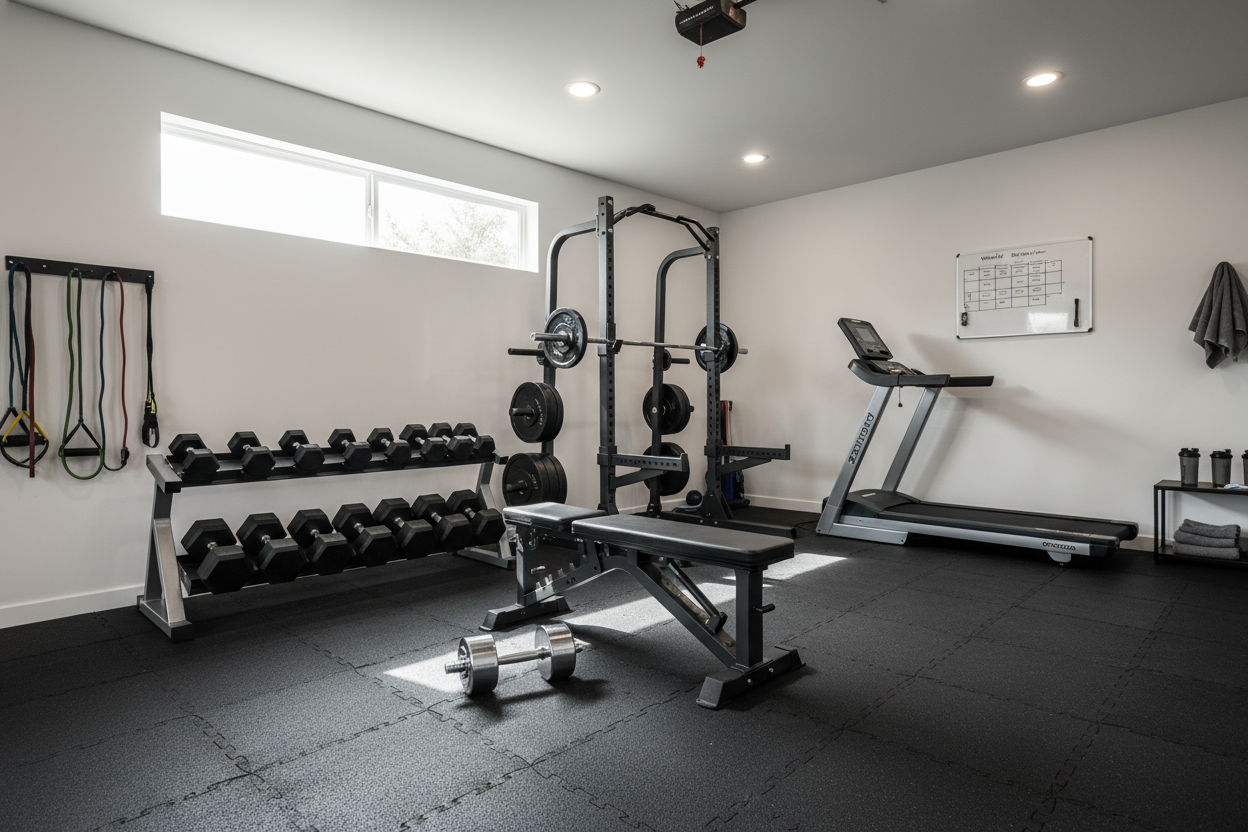
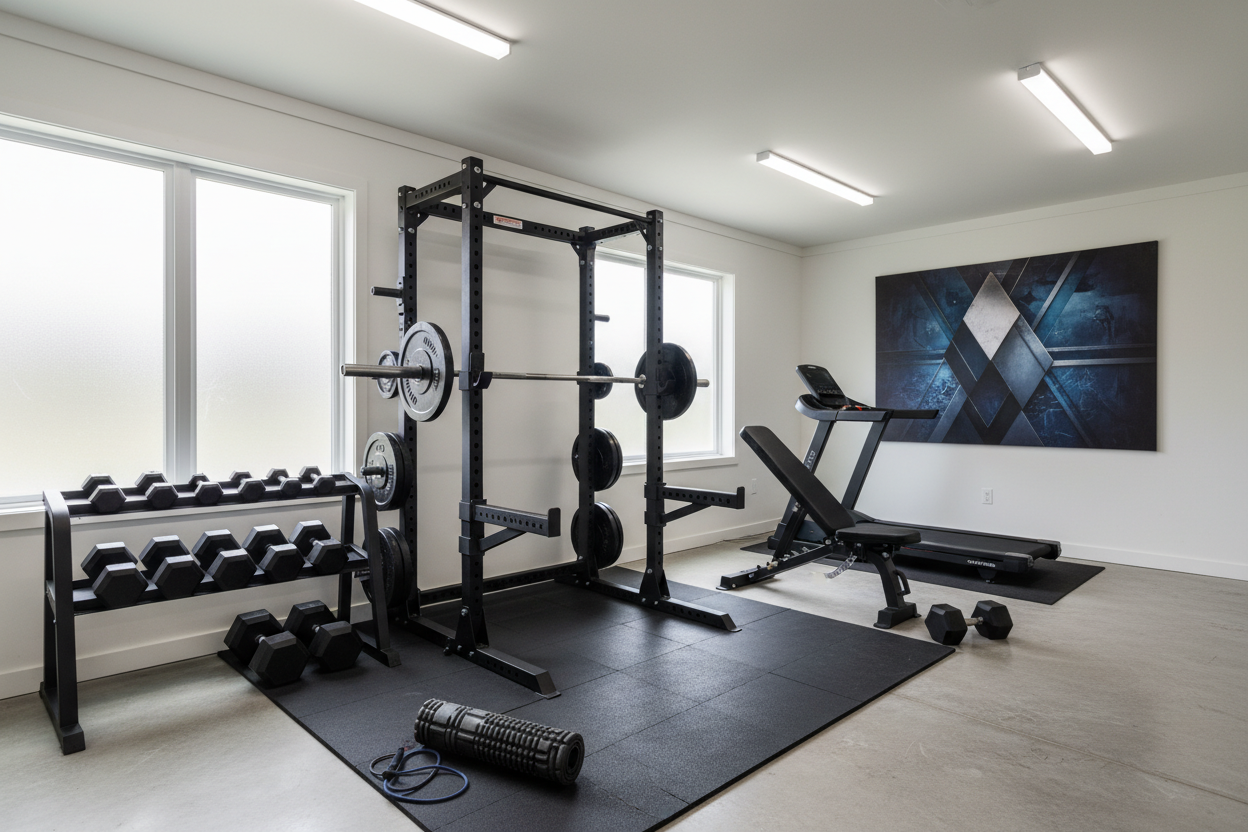
The biggest hurdle to high-frequency training is friction. If you have to move your car, haul out your rack, and set up your plates every time, you won't do it five days a week. You need a permanent setup. Investing in the best large exercise mat ensures you have a dedicated 'zone' that stays ready. When the floor is always prepped, you can walk in, punch the clock, and get your work done in 30-40 minutes.
The 'Punch the Clock' Exercise Selection
You can't do heavy deadlifts five days a week; your spine will eventually exit your body. The best workout to get big using this method relies on 'joint-friendly' staples. Think goblet squats instead of max-effort back squats, dumbbell rows instead of heavy T-bars, and weighted pushups instead of constant max benching. These movements provide the stimulus without the systemic inflammation that makes you feel like an old man on Friday morning.
Protecting Your Joints During Daily Training
Training 5 or 6 days a week puts a different kind of stress on your body. It’s not the 'I can't move' soreness of a leg day; it’s the repetitive impact on your knees, ankles, and lower back. If you’re lifting on bare concrete, you’re going to pay for it within a month. Your joints need a buffer.
I’ve found that upgrading to extra wide 7-feet exercise mats is the smartest move for high-frequency lifters. Having that extra shock absorption under your feet during lunges or even just while standing to press makes a massive difference in how your joints feel by the end of the week. If your environment is comfortable, you're more likely to stick to the schedule.
How to Measure Progress When You Aren't Sore
The hardest part of this transition is mental. We’ve been brainwashed to think that if we aren't limping, the workout didn't 'count.' You have to stop chasing the pain and start chasing the tonnage. Track your total reps and sets for the week. If you did 5,000 lbs of total volume last week and 5,200 lbs this week—and you feel great—you are winning.
Look at your reflection, not your soreness. High-frequency training produces a 'hard' look because the muscles are constantly under a state of mild tension and frequent glycogen replenishment. It’s a different kind of growth—the kind that lasts.
My Personal Experience
A few years ago, I fell into the trap of trying a high-volume 'Smolov' squat program on a thin, 1/4-inch yoga mat over a concrete garage floor. I was squatting four times a week. My legs grew, sure, but my knees felt like they were filled with crushed glass. I had to quit the program three weeks early because I couldn't even sit on the toilet without wincing. My mistake wasn't the frequency; it was the environment. Once I moved to a thick, 7mm high-density mat and swapped some of the barbell work for high-rep dumbbell movements, I hit my best physique ever without a single 'recovery' day spent on the couch.
FAQ
Is training 5 days a week too much?
Not if you manage intensity. If you go to failure every set, yes, you'll burn out. If you leave 2 reps in the tank, your body recovers remarkably fast.
Do I need a squat rack for this?
It helps, but you can do a 'blue-collar' routine with just dumbbells and a solid floor. Goblet squats and lunges are incredibly effective when done frequently.
How long should these sessions be?
Keep them short. 30 to 45 minutes is the sweet spot. You want to stimulate the muscle, not annihilate it. Get in, do the work, and get out.