Why the Best Workouts to Do With Dumbbells Are Brutally Simple
I remember standing in my garage three years ago, staring at a pair of dusty hex dumbbells and a stack of flooring I hadn't installed yet. My local gym had just hiked their rates for the third time in two years, and I was done with the commute and the crowds. I thought I needed a $5,000 rack to get a real session in, but I was dead wrong.
The truth is, the best workouts to do with dumbbells aren't the ones you see influencers doing while balancing on a Bosu ball. You don't need to turn every set into a choreographed dance. You need heavy weight, strict form, and enough intensity to make you want to quit by the third set. Let's talk about how to actually build muscle without the fluff.
- Stick to the big rocks: hinges, squats, pushes, and pulls.
- Progressive overload still applies; if the 50s get easy, do more reps or slow down the tempo.
- A solid bench is non-negotiable for chest and back development.
- Don't overcomplicate your split; Push/Pull/Legs is the gold standard for a reason.
Why We Need to Stop Inventing New Dumbbell Moves
Social media has poisoned the well of strength training. I see people performing a lunge-into-a-bicep-curl-into-an-overhead-press and calling it 'functional.' It isn't functional; it's just a way to ensure you aren't lifting heavy enough to stimulate any actual muscle growth in any of those three movements. If you want results, you have to treat gym exercises with dumbbells with the same respect you'd give a 400-pound barbell squat.
Stop trying to combine three moves into one. If it's leg day, crush your legs. If it's arm day, curl until your sleeves feel tight. The the best workout with dumbbells is usually the one that looks the most boring on paper but feels the most taxing in the mirror. Focus on high-quality exercises you can do with dumbbells like the flat press or the goblet squat, and leave the circus acts to the people who care more about views than gains.
The 'Push, Pull, Legs' Framework for Free Weights
When you're looking for workouts you can do with weights, the Push, Pull, Legs (PPL) split is your best friend. It organizes your training so you aren't hitting the same muscle groups two days in a row, allowing for maximum recovery. On 'Push' days, you're hitting chest, shoulders, and triceps. On 'Pull' days, it's back and biceps. 'Legs' is the day you'll want to skip, but shouldn't.
Even if you're working with a mismatched set of weights, you can make this work. An upper body workout with weight doesn't actually require a perfectly symmetrical pair of dumbbells if you're doing unilateral (one-arm) movements. In fact, training one side at a time is one of the best workouts to do with weights at home because it forces your core to stabilize the load, giving you extra bang for your buck while fixing muscle imbalances.
Building a Brutal Lower Body Session
Most people think they need a massive squat rack to build legs. That's a lie. If you grab a 70-pound dumbbell and do Bulgarian Split Squats until your quads scream, you'll see more growth than half the guys half-repping plates at the commercial gym. These are the foundational exercises you can do with weights that actually move the needle for lower body thickness.
Start with Goblet Squats to prime the hips, move into heavy Romanian Deadlifts (RDLs) for the hamstrings, and finish with weighted lunges. Keep your chest up and your core braced. If you aren't dreading your next set of split squats, you simply aren't going heavy enough. This is how you turn simple workouts to do with weights at home into professional-grade training sessions without a single barbell in sight.
Torching Your Shoulders and Back (The Right Way)
For the back, nothing beats the one-arm dumbbell row. It allows for a massive range of motion that you just can't get with a barbell because the bar doesn't hit your chest. When it comes to shoulders, strict overhead presses are the king. Don't use your legs to cheat the weight up; if you can't press it with a dead stop, it's too heavy for your current strength level.
If your home gym inventory is looking a bit thin, you can still get a massive pump. This shoulder workout with dumbbells is a great example of how to use higher volume and shorter rest periods to fatigue the deltoids when you don't have 100-pounders lying around. Focus on the eccentric—the three seconds it takes to lower the weight—to maximize time under tension.
Setting Up Your Space for Heavy Lifting
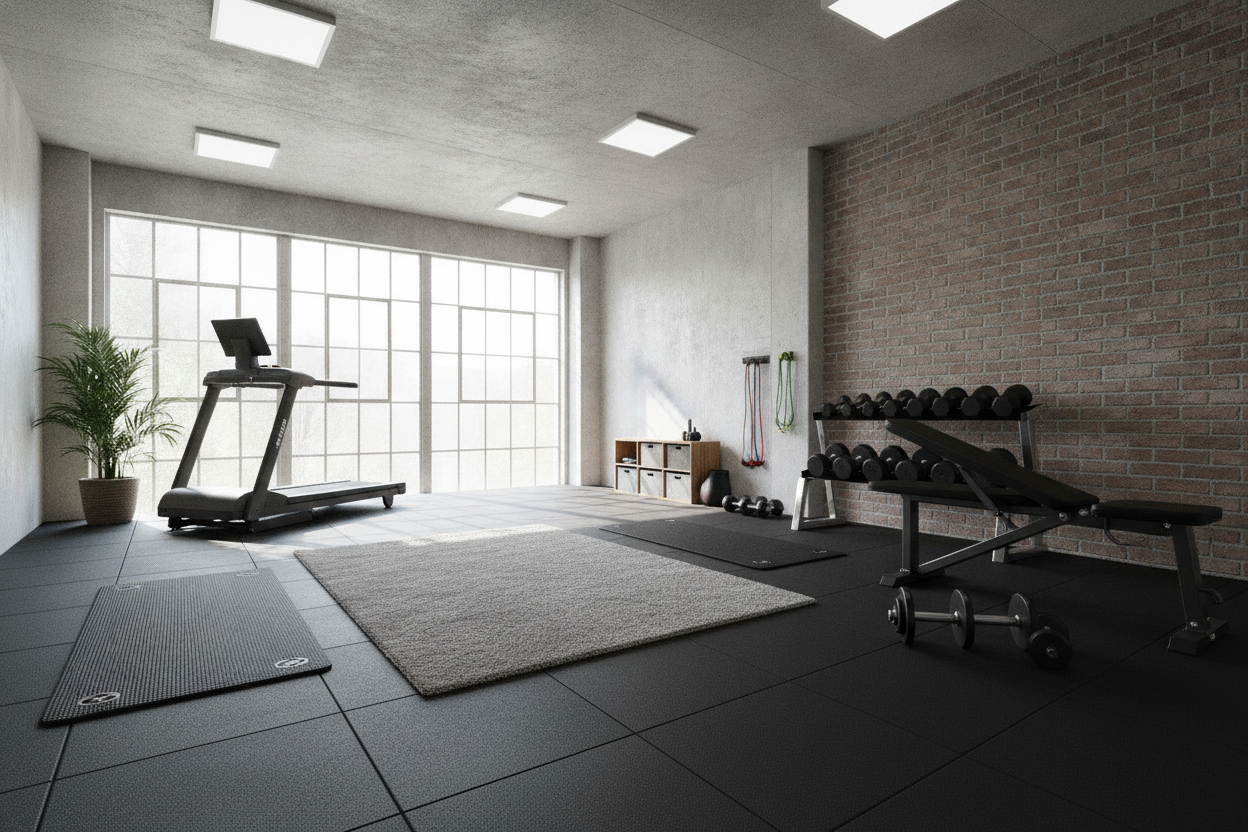
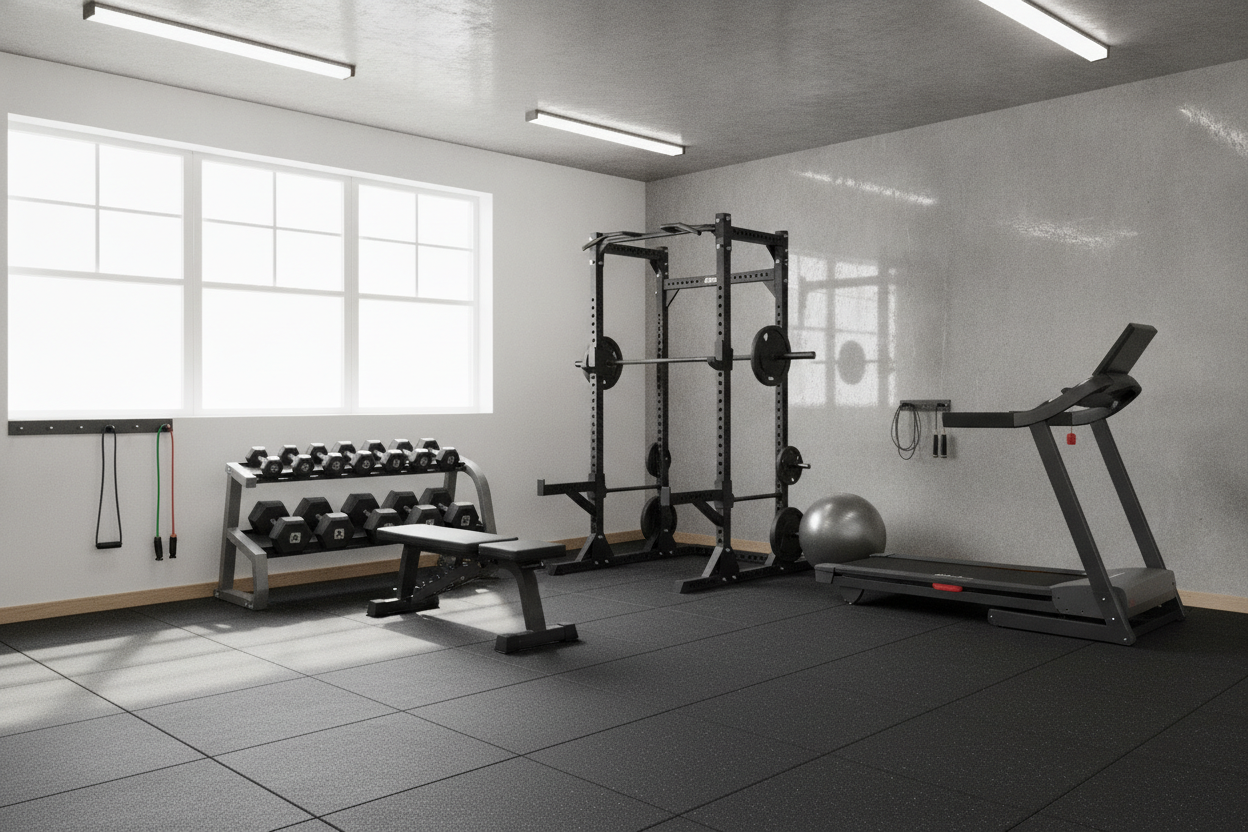
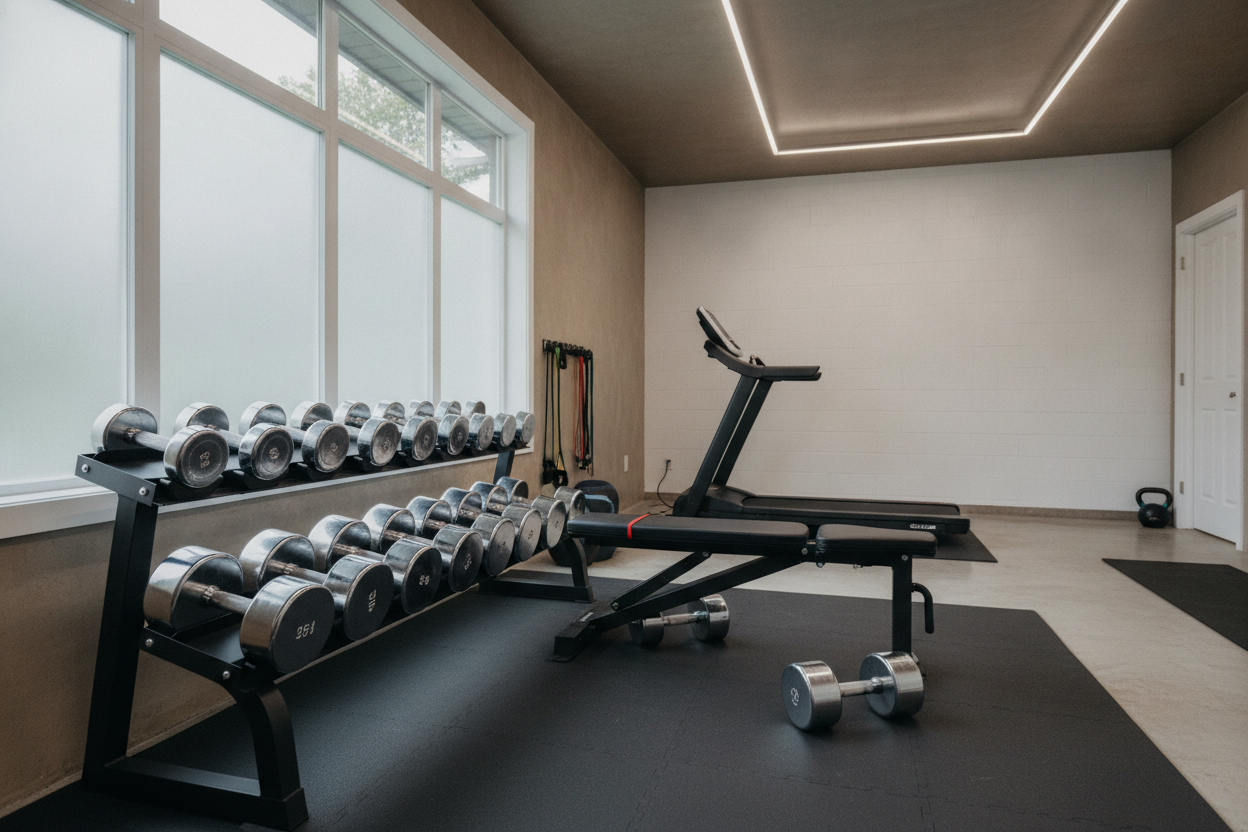
You don't need a 2,000-square-foot facility, but you do need the right foundation. If you're lifting on bare concrete, you're eventually going to crack your floor or your weights. Get some 3/4-inch rubber mats. Beyond that, the most critical piece of gear is a high-quality adjustable weight bench. It unlocks dozens of angles for presses and rows that you simply can't do effectively on the floor.
I've wasted money on cheap benches that wobbled the second I picked up anything over 50 pounds. It's terrifying to feel a frame flex while you have weights over your face. A bench with a 600-lb plus weight capacity is a safety requirement. Once you have a stable base, your confidence in the best workout with dumbbells will skyrocket because you aren't worried about the equipment collapsing under you.
When Should You Finally Graduate from Dumbbells?
Dumbbells are incredible, but they have a ceiling. Usually, that ceiling is around the 100-lb to 120-lb mark for most home gym owners. When you're effortlessly repping out the heaviest weights you own for sets of 15, it's time to look at other options. You've officially mastered the exercises you can do with weights in your current inventory and your central nervous system is ready for more.
This is when you might consider adding weight lifting machines or a dedicated barbell station to your setup. Machines allow you to push your muscles to absolute failure without the balance requirements of free weights, which is a massive advantage for pure hypertrophy. Don't ditch the dumbbells, but recognize when your strength has outpaced your current gear.
My Biggest Dumbbell Mistake
Early on, I bought a set of those cheap, plastic-coated cement dumbbells from a big-box store. Within two months, the plastic cracked and sand started leaking onto my floor. I tried to save $40 and ended up spending double to replace them with cast iron. Buy once, cry once. Now, I stick to solid steel or rubber hex. They've survived being dropped after heavy sets of RDLs for years without a scratch.
FAQ
Are adjustable dumbbells better than a full rack?
Adjustables save massive amounts of space, which is key for home gyms. However, they can be clunky for movements like cleans. If you have the room, a fixed rack is faster to use, but high-end adjustables are a perfectly fine substitute for 90% of lifters.
How heavy should my first set of dumbbells be?
If you're only buying one pair, go for a weight you can overhead press for about 8 reps. This is usually heavy enough for arm work and light enough to learn form on rows before you need to buy heavier pairs.
Can I really build a big chest with just dumbbells?
Absolutely. Many pro bodybuilders prefer dumbbells over barbells for chest because of the increased range of motion and the ability to bring the weights together at the top for a better contraction. You aren't missing out by skipping the bench press station.