Why I Teach the Basics of Exercise Barefoot on a Mat
I remember dropping $160 on fancy 'cross-trainers' thinking they would magically fix my wobbly squat. They didn't. Instead, they just made me feel like I was trying to lift weights while standing on a pair of marshmallows. Most people overcomplicate the basics of exercise by throwing money at high-tech gear before they even understand how their own feet interact with the floor.
- Barefoot training improves proprioception and balance immediately.
- Cushioned shoes often mask poor form and lack of mobility.
- A dedicated space, like a high-density mat, is the only 'equipment' a beginner truly needs.
- Mastering bodyweight tension is the prerequisite for adding heavy iron.
The Problem With Learning to Lift in Cushioned Running Shoes
Modern running shoes are engineering marvels for impact, but they are garbage for learning the exercise basics. When you have an inch of foam under your heel, your brain loses the connection to the ground. You can't feel if your weight is shifting too far forward or if your arches are collapsing.
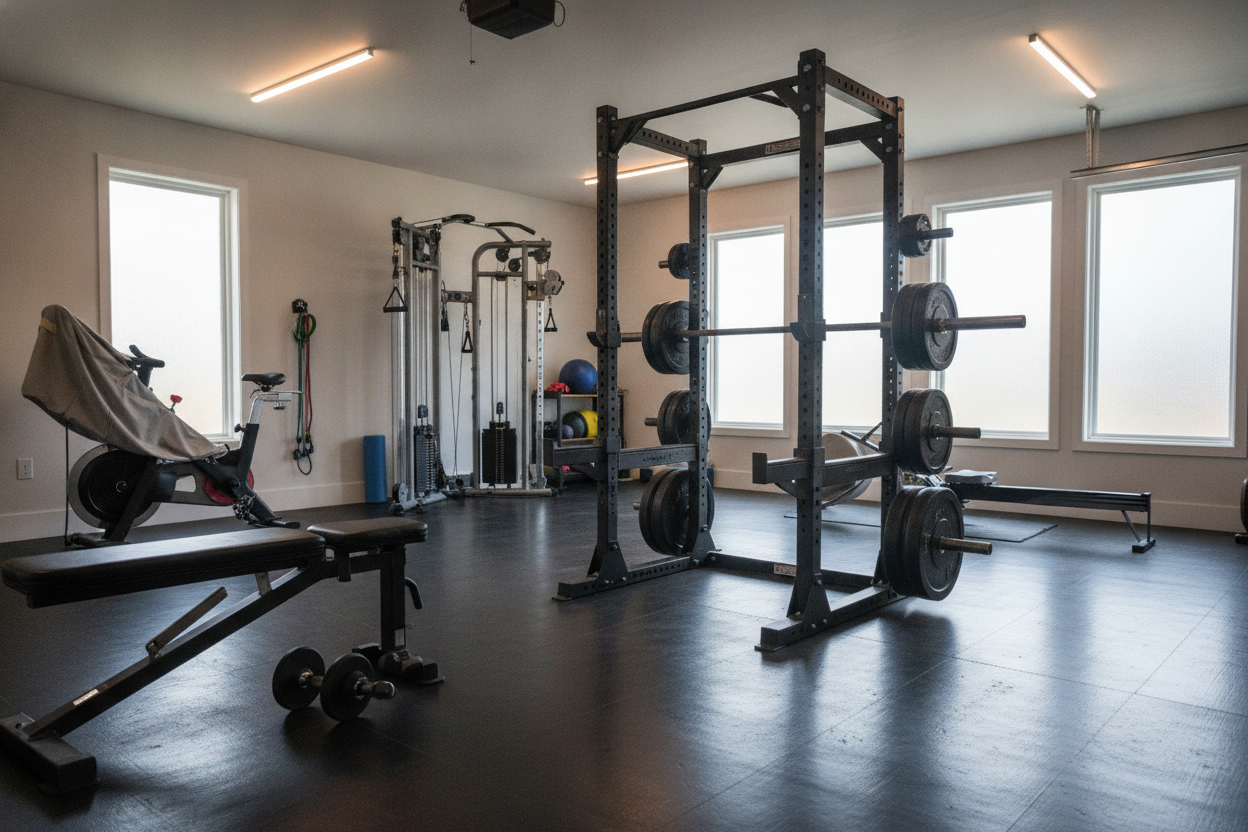
I see it in my garage gym every week. A newcomer tries to squat, their heels lift, and the foam compresses unevenly. This creates a 'leaky' foundation. You want a hard, stable surface to drive through. Physical fitness basics require a feedback loop from your nervous system that thick-soled shoes simply mute.
Reconnecting With the Ground: The True Fundamentals of Exercise
The fundamentals of fitness start at the ankles and work their way up. If your base is unstable, your knees and lower back will eventually pay the price. Stripping away the shoes forces your toes to splay and your muscles to engage in ways they never do inside a sneaker.
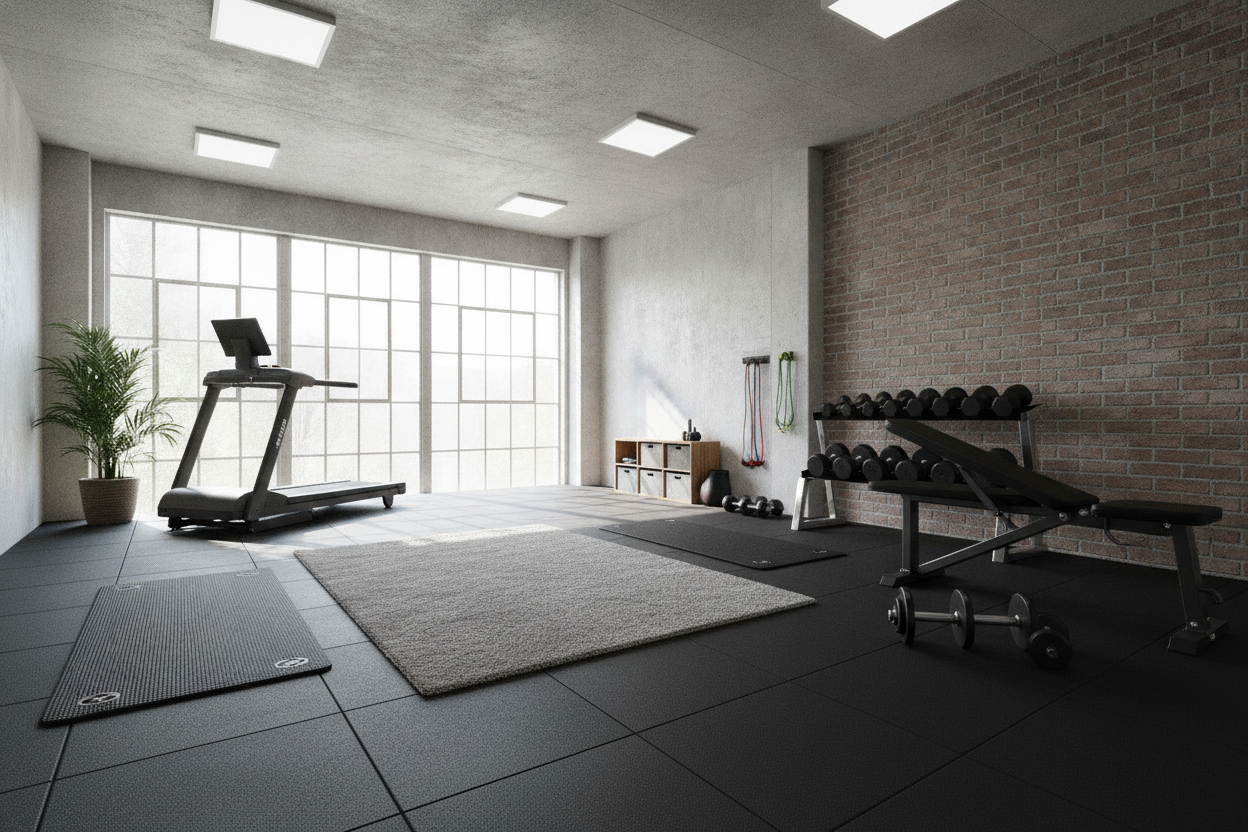
I always start my clients on a large exercise mat. It provides just enough grip and joint protection without the 'mush' of a treadmill shoe. This setup is the most honest way to practice the fundamentals of exercise because there is nowhere for bad form to hide. You either own the movement, or you don't.
4 Exercise Basics You Should Master Before Touching a Dumbbell
Don't touch a 45-lb bar until you can execute these four movements with total control. These are the pillars of any basics workout. Focus on high tension and slow eccentrics.
- The Hip Hinge: This is the deadlift's ancestor. Keep a flat back, push your hips toward the wall behind you, and feel the hamstrings load.
- The Air Squat: Feet shoulder-width apart, knees tracking over toes, and chest proud. If your heels lift, your calves are too tight.
- The Push-Up: This is a moving plank. Your elbows should tuck back at a 45-degree angle, not flare out like a T.
- The Bear Crawl: This is the ultimate test of coordination. It builds shoulder stability and core strength simultaneously.
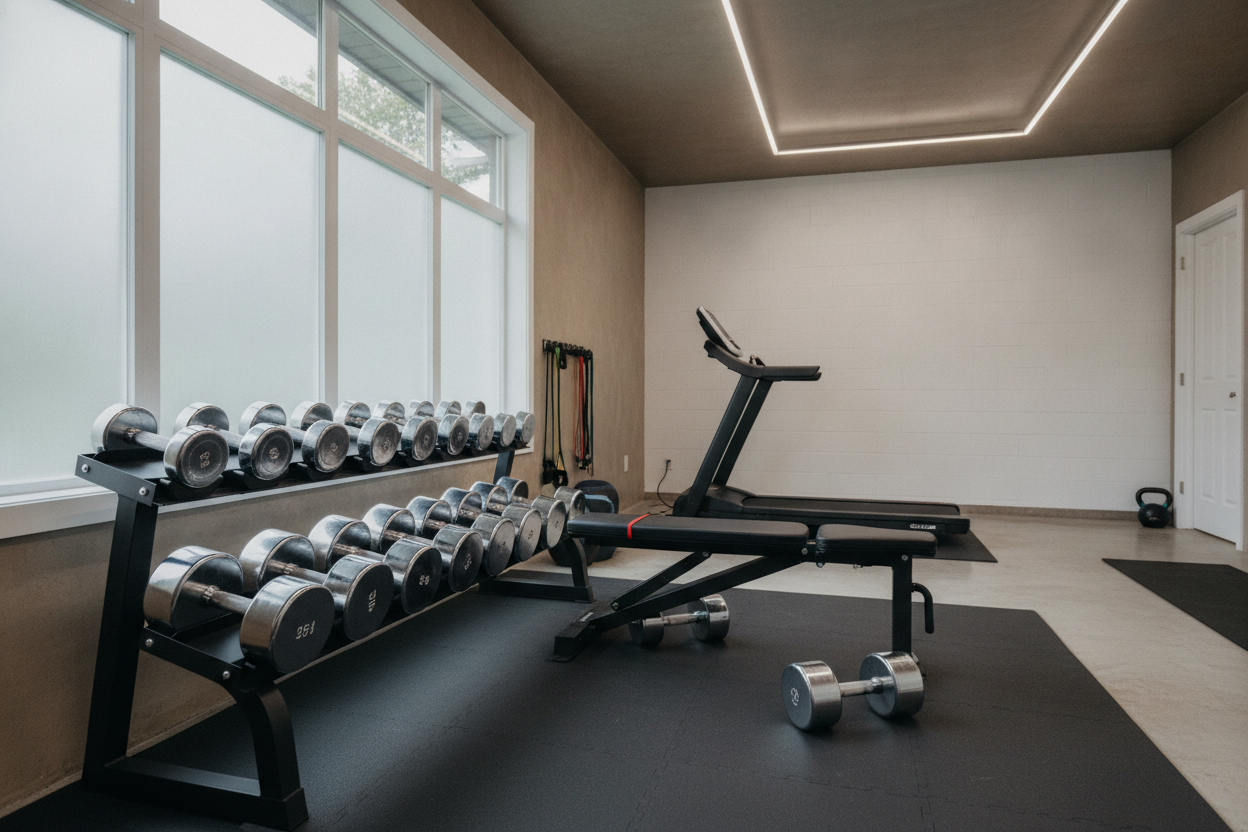
For movements like the bear crawl or lunges, you need room to move. A durable 6x8ft exercise mat gives you the real estate to move dynamically without slipping on bare concrete or scuffing your knees on a thin yoga mat.
How to Build a Barefoot Basics Workout
Forget the 'burn' for a second. We are training for movement quality. A solid basics exercise routine should last about 20 minutes. Perform 3 rounds of 10 hinges, 10 squats, 5 slow push-ups, and 30 seconds of crawling. Focus on 'grabbing' the mat with your toes.
The goal of these fitness basics is to create total body tension. If someone tried to push you over mid-squat, you should be rooted like a tree. Once you've mastered this floor-based approach, you can graduate to more complex routines found in a complete home training guide to start adding external resistance.
When Are You Actually Ready to Put Your Shoes Back On?
I tell my athletes they can put their lifting shoes back on when they can pass the 'Barefoot Benchmark.' That means performing 20 perfect air squats and a 60-second plank without losing their spinal position. If you can't control your own bodyweight, you have no business trying to control a 100-lb barbell.
What is the best surface for barefoot training?
Avoid carpet; it's too slippery. Bare concrete is too hard on the joints. A 7mm or 8mm high-density rubber or foam mat is the sweet spot for grip and support.
Will my feet get sore?
Yes. You are using muscles in your arches and ankles that have been dormant for years. Start with 10-minute sessions and work your way up.
Can I just wear socks?
Only if they have rubber grips on the bottom. Standard socks on a smooth surface are a recipe for a groin pull. Bare skin on a quality mat is the gold standard for traction.