Why the best workouts for shoulders at home use an ugly backpack
I remember staring at a pair of 10-lb dumbbells in my living room during the 2020 lockdowns, wondering how I was supposed to keep my overhead press from cratering. You can only do so many lateral raises with soup cans before you start feeling like a total fool. The truth is, the best workouts for shoulders at home don't come from overpriced plastic weights that top out at 15 pounds or flimsy resistance bands that snap at the worst possible moment.
If you want real hypertrophy without a squat rack, you have to stop thinking like a gym rat and start thinking like a guy moving furniture. The secret isn't more reps; it's a load that fights back. We’re going to use an 'odd object'—specifically, a heavily packed, unbalanced backpack—to trigger the kind of growth that standard bodyweight movements simply cannot touch.
Quick Takeaways
- Standard bodyweight shoulder exercises often lack the lateral delt stimulation needed for width.
- Shifting loads (like water bottles in a bag) force stabilizer muscles to work harder than static iron.
- Foot traction is the most underrated factor in home pressing power.
- A heavy-duty backpack is a more effective tool than cheap, light dumbbells.
Stop Trying to Recreate the Gym Overhead Press
Most people fail at home training because they try to mimic a barbell military press using light household items. Let’s be real: pressing a gallon of milk is not the same as a 135-lb bar. The physics are different, the range of motion is awkward, and the resistance is too low to create real mechanical tension. If you want to know How To Build 3D Delts With The Best Workouts For Shoulders At Home, you have to embrace the instability of a shifting load.
When you press a barbell, the center of gravity is fixed. When you press a bag filled with loose books and half-full water bottles, the weight shifts as you move. This 'active' resistance forces your medial and posterior delts to fire constantly just to keep the object from tipping. It turns a simple press into a full-shoulder stabilization event. You aren't just moving weight from point A to point B; you're wrestling it into submission.
The Shifting Load: how to workout your shoulders at home properly
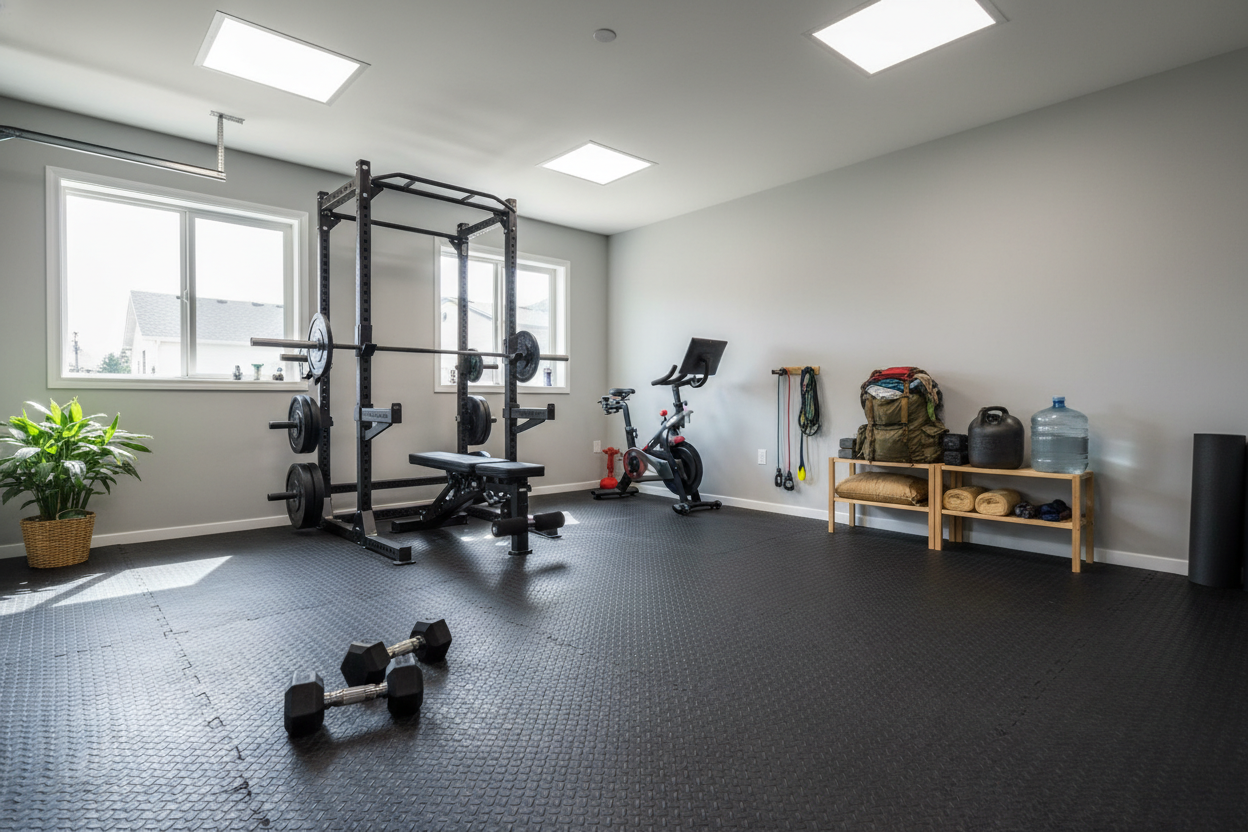
To learn how to workout your shoulders at home effectively, you need to prep your 'implement' correctly. Find a backpack with reinforced stitching—something like a GORUCK or a heavy-duty hiking pack. A cheap school bag will rip the moment you hit 30 pounds. Fill it with a mix of dense objects (books or bricks) and 'fluid' objects (partially filled 1.5L water bottles).
The water is the magic ingredient. As you move the bag, the water sloshes, creating an unpredictable center of gravity. This forces your rotator cuff and deltoids to micro-adjust throughout the entire range of motion. Aim for a total weight that allows you to complete 8-12 reps with effort. For most guys, starting around 25-35 lbs is the sweet spot. If it feels too easy, don't just add weight; slow down the tempo.
The 3-Move full shoulder workout at home
This full shoulder workout at home relies on three specific movements designed to hit all three heads of the deltoid using the bag's unique handles and weight distribution.
1. The Uneven Overhead Press: Grip the bag by the side handle rather than the top straps. This forces the bulk of the weight to hang to one side. Press it overhead while fighting the urge for your wrist to tilt. This is a brutal test for the lateral delts. Do 4 sets of 10 per arm.
2. The Chaotic High-Pull: Stand on the bag's straps and grab the top handle. Pull the bag toward your chin, leading with your elbows. Because the water inside is sloshing, the bag will want to wobble. Control that wobble. This hits the traps and side delts simultaneously. Do 3 sets of 15.
3. The Front-to-Lateral Sweep: Hold the bag by the top handle in front of you. Raise it to eye level, then, without dropping it, 'sweep' it out to the side before lowering it. It’s a hybrid front and lateral raise that keeps the muscle under tension for twice as long as a standard rep. Do 3 sets of 8 sweeps.
Anchor Your Base for Heavier Presses
One thing I learned the hard way: you cannot press heavy, awkward objects if your feet are sliding on a slick hardwood floor. I’ve seen guys try to do an overhead press in socks and nearly end up in the ER because their base slipped out from under them. Power starts at the floor. If you're serious about this, get a Large Exercise Mat For Home Gym to provide the necessary friction.
A solid 6mm or 7mm rubber mat allows you to dig your heels in and create 'rooting' tension through your glutes and core. This stability allows you to transfer more force into the bag. Without a grippy surface, your brain will subconsciously 'cut' your power output to prevent you from falling over. It’s the easiest way to instantly add five pounds to your home press.
When It's Time to Graduate from the Backpack
The backpack method is a fantastic bridge, but eventually, you’ll hit a ceiling. You can only stuff so many encyclopedias into a bag before the straps give out. You’ll know it’s time to upgrade when you’re hitting 20+ reps on the uneven press without breaking a sweat. At that point, you need to look into actual equipment like adjustable dumbbells or a dedicated rack. You can Discover The Best At Home Exercise Machines For A Full Body Workout to see what fits your space and budget when you're ready to move past the DIY phase.
Personal Experience: The Zipper Incident
I once tried to load an old Jansport with about 45 pounds of old weights and magazines. Halfway through a set of high-pulls, the main zipper exploded. I had 10-lb plates rolling across my kitchen and a very angry wife. Lesson learned: the quality of the bag matters. If you're going to use an odd object, make sure it’s built to handle the stress. I now use a sandbag specifically designed for training, but a high-end tactical backpack works just as well for most people starting out.
FAQ
Can I use a duffel bag instead of a backpack?
Yes, but the weight distribution is harder to control. A backpack stays closer to your center of mass, making it safer for overhead movements. If you use a duffel, keep the load centered.
How many times a week should I do this?
Twice a week is plenty. Shoulder tissue is relatively small and recovers quickly, but the 'odd object' nature of this workout taxes your nervous system more than you'd expect.
Is this safe for my rotator cuffs?
Actually, it's often better. Because you're using lighter, unstable weights, you're strengthening the small stabilizing muscles that are often neglected with heavy, stable barbell work. Just don't ego-lift; keep the form tight.