Why the Best Machines at the Gym Look 30 Years Old
You walk into a new 'luxury' club and it looks more like a Silicon Valley lobby than a place to get strong. There are neon lights, touchscreens on every treadmill, and machines that look like they were designed by an architect who has never actually broken a sweat. It is incredibly frustrating to see your membership dues go toward iPads bolted to frames while the real iron gets sold off to some warehouse gym across town.
I have spent fifteen years hunting for the best machines at the gym, and I have learned one painful lesson: the shinier the machine, the worse the workout. If a unit has more software updates than grease points, walk away. You want the stuff that is built like a tank and follows the way your body actually moves, not the stuff that looks good in a promotional brochure.
- Old-school plate-loaded machines offer a 'feel' that modern selectorized units rarely match.
- Converging and diverging paths of motion are superior for joint health and muscle isolation.
- Modern tech-heavy machines often prioritize aesthetics over proper biomechanics.
- The best gym equipment is usually found in the back corner, covered in chipped paint but featuring 7-gauge steel.
The Flashing Lights Trap on the Modern Gym Floor
Modern commercial gyms are in an arms race to look 'high-tech.' They think that by filling the floor with units that have integrated Netflix apps and cloud-based tracking, they are providing value. In reality, they are often buying the best equipment to use at gym for marketing, not for muscle. These machines are frequently over-engineered, using complex pulley systems that add unnecessary friction and kill the strength curve.
When you use a machine with a digital interface, you are often stuck in a fixed, linear path that does not account for how a human shoulder or hip actually rotates. I have sat on $6,000 chest press machines that felt like I was pushing against a brick wall at the wrong angle. Usually, finding the right gear means looking past the rows of brand-new arrivals and finding the stuff that has been there since the 90s. Those machines survived because they work, not because they have a USB-C charging port.
Why Classic Biomechanics Always Win
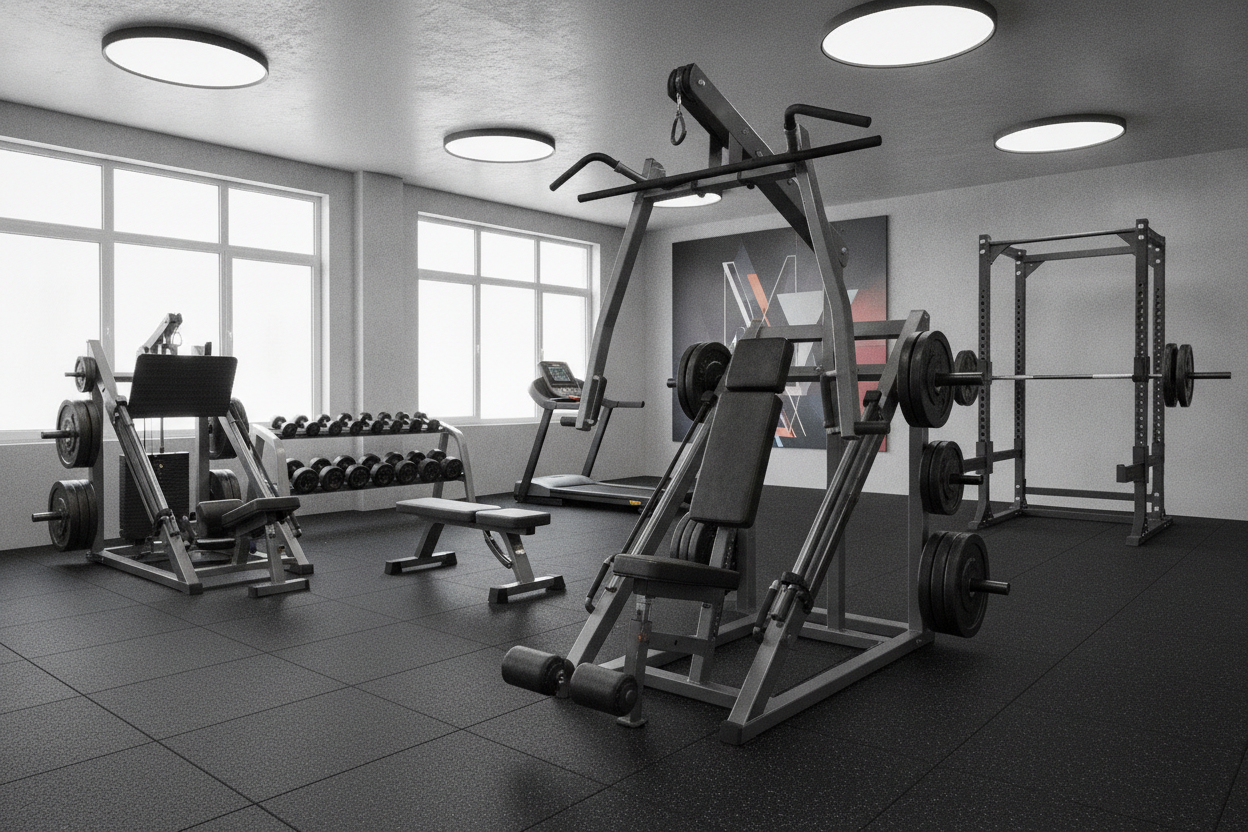
The magic of older, heavy-duty units—think vintage Hammer Strength, Cybex, or Bodymasters—is in the cam profile and the pivot points. These designers spent years perfecting the 'arc.' When you press a classic plate-loaded machine, the weight feels lighter at your weakest point (the bottom) and heavier where you are strongest (the lockout). This is called matching the human strength curve, and it is something many modern, cable-driven units fail to do correctly.
Simple selectorized units from thirty years ago often used larger pulleys and thicker cables, which resulted in less 'drag.' When you are trying to isolate a muscle like the lateral deltoid, any extra friction in the machine ruins the mind-muscle connection. You end up fighting the machine rather than the weight. The best machines to use at gym are the ones that disappear under your hands, leaving you with nothing but the tension on the muscle tissue.
The 4 Heavy-Duty Units You Should Not Ignore
If you want to maximize hypertrophy without spending four hours in the gym, you need to be selective. These are the absolute best machines to use at gym for consistent growth. They offer stability that free weights can't match, allowing you to take sets to absolute failure without needing a spotter or worrying about your balance failing before your muscles do.
1. The Converging Chest Press
A proper converging chest press is a masterpiece of engineering. Unlike a flat barbell bench press, where your hands stay in a fixed width, a converging machine allows your hands to move toward each other as you press. This mimics the natural function of the pectorals—bringing the arm across the body. It gives you a squeeze at the top that a barbell simply cannot provide, and because the path is fixed, your rotator cuffs aren't screaming for mercy trying to stabilize a shaky bar.
2. The Lying Hamstring Curl
You cannot build world-class hamstrings with RDLs alone. The lying hamstring curl provides a level of isolated tension at the shortened position that is nearly impossible to replicate with free weights. The best versions of this machine have a slight 'V' shape in the bench to pre-stretch the hamstrings and protect the lower back. When you lock yourself in and curl, you are hitting the knee flexion function of the hamstrings with zero momentum and 100% mechanical advantage.
3. The Chest-Supported T-Bar Row
The biggest limiting factor in a standard barbell row is your lower back and your grip. By the time your lats are tired, your spinal erectors are usually fried. A chest-supported T-bar row removes the lower back from the equation entirely. This allows you to load up significantly more weight and focus entirely on driving your elbows back. It is the fastest way to build a thick mid-back without the risk of a disc herniation.
4. The Traditional Hack Squat
The hack squat is the king of quad builders. By placing you on a fixed, angled track, it removes the balance requirement of a barbell squat. This means you can place your feet lower on the platform to emphasize the quads and push until your legs literally give out. The rigid path and the shoulder pads allow you to grind out those 'ugly' reps that actually trigger growth, all without the fear of getting crushed under a heavy bar.
Joint Health and the Aging Lifter
As I have gotten older, my relationship with the barbell has changed. I still love the big lifts, but my joints don't always agree. Relying on stable, fixed-path units has become my secret weapon for longevity. These machines provide the external stability your nervous system needs to push to failure. When you don't have to worry about balancing the load, your brain 'allows' you to recruit more motor units in the target muscle.
This isn't just for bodybuilders looking for a pump. Many effective exercises for seniors actually use machines because they offer a safe environment to maintain muscle mass and bone density. Whether you are twenty or sixty, the goal is the same: high tension with low joint stress. A classic, well-maintained machine does that better than almost anything else in the building.
Should You Bring Commercial Power Home?
After years of using these units at the local powerhouse, I started looking into buying them for my garage. It is a tempting thought—having a commercial-grade hack squat in your own home. However, you have to be realistic about the footprint. These things are massive. A single commercial leg press can weigh 800 pounds and take up a 4x8 foot area. It is a serious commitment to your floor plan.
Before you hunt down a vintage unit on an auction site, ask yourself if it is worth the floor space. For most people, a high-quality functional trainer or a power rack with attachments is a better use of a 10x10 room. But if you have a massive shop or a three-car garage, nothing beats the feeling of a real commercial unit. Just be prepared to hire movers; your buddies will stop answering your texts if you ask them to help move a 400-pound weight stack.
FAQ
Are gym machines better than free weights for building muscle?
Neither is 'better' in a vacuum, but machines are superior for hypertrophy (muscle growth) because they provide more stability. This allows you to focus 100% of your effort on the target muscle without being limited by balance or stabilizer fatigue.
Why do older machines often feel smoother than new ones?
Older high-end machines often used heavy steel frames and high-quality industrial bearings that were built to last decades. Many new machines use thinner steel and plastic bushings to save on shipping and manufacturing costs, which creates a 'jerky' feeling during the lift.
What should I look for in a good gym machine?
Look for 'converging' paths on presses and 'diverging' paths on pulls. Check for adjustable seats that allow you to align your joints with the machine's pivot point. If the machine feels like it is pulling your joint in a weird direction, it is a bad design—no matter how many screens it has.