Why the Best Exercise for Muscle Mass Happens Below the Waist
I remember my first year training in a cramped garage. I spent forty-five minutes every Monday chasing a chest pump, wondering why my t-shirts still felt loose around the shoulders despite all the flyes and presses. I was searching for the best exercise for muscle mass in all the wrong places—mostly the ones that involved a mirror and a pair of light dumbbells.
The hard truth I learned after hitting a massive plateau is that your body isn't a collection of isolated parts; it's a single biological system. If you want a bigger back, thicker shoulders, and a chest that actually fills out a hoodie, you have to stop ignoring the largest muscle groups you own. Real growth starts from the ground up.
- Systemic Signal: Heavy leg training triggers a massive hormonal response that benefits the whole body.
- Efficiency: You can move more weight with your legs than any other body part, creating more total tension.
- Stability: A strong lower body provides the foundation for every heavy overhead press and row.
- Mental Grit: If you can survive a 20-rep set of squats, a set of curls feels like a vacation.
The Upper-Body Lie We All Fell For
Most home gym owners start their journey with a bench, a bar, and dreams of big arms. We’ve been conditioned to think that building muscle is about hitting the 'mirror muscles' until they burn. It’s a comfortable lie because training arms is fun and, frankly, it doesn't leave you gasping for air on the floor.
The problem is that small muscles have small growth potential. You can only do so much for your systemic adaptation with a 35-pound hammer curl. When you ignore your legs, you’re leaving your most powerful anabolic tools on the table. Beginners often waste their first six months doing 'best exercises to gain muscle' that only target 10% of their total mass. If you want to force your body to change, you have to give it a reason to adapt on a massive scale.
Why the Best Exercise for Muscle Mass Is Always a Leg Movement
The science of the 'systemic trigger' is simple: the more muscle fibers you recruit, the more stress you place on your central nervous system (CNS). When you put a heavy barbell on your back, your body doesn't just think, 'My quads are under load.' It thinks, 'I am being crushed.' To survive that stress, your body releases a cocktail of growth-promoting hormones that circulate through your entire system.
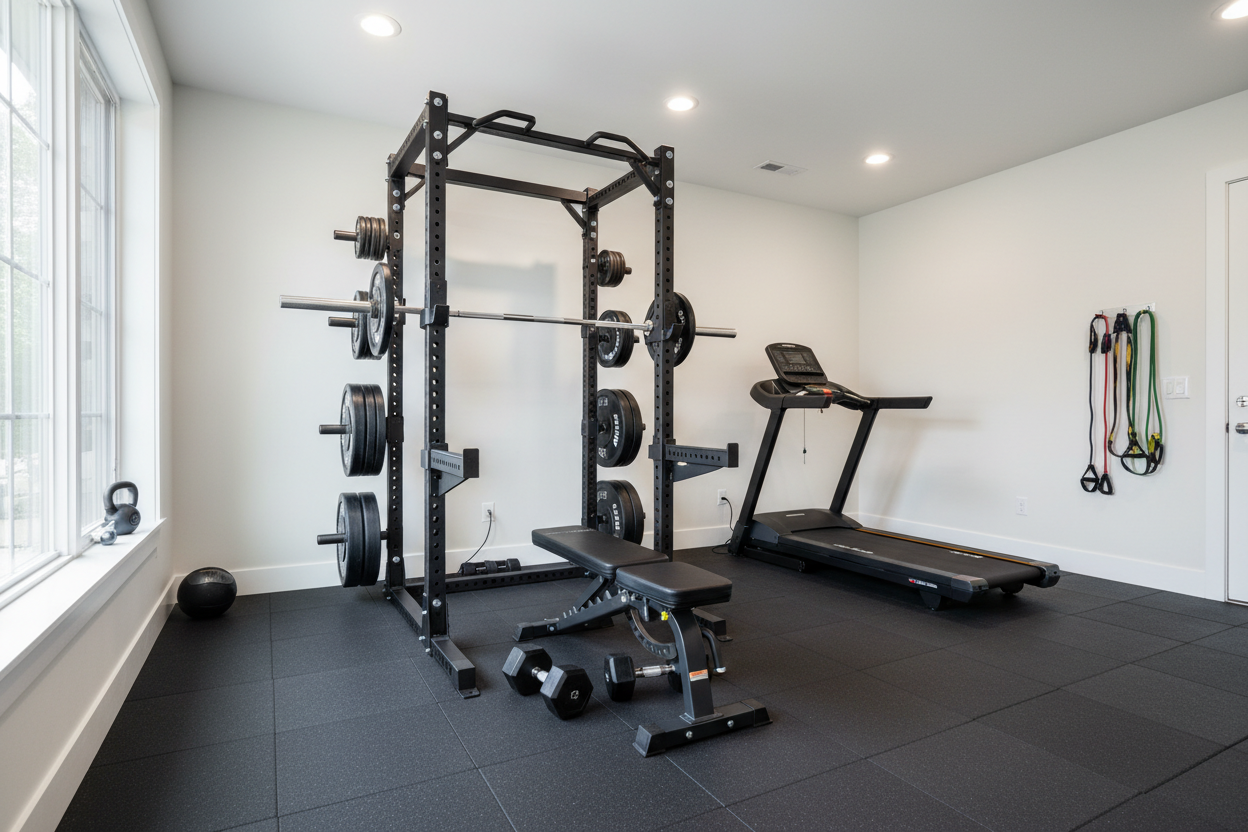
This is why the best exercises for building muscle mass are almost always lower-body compounds. Moving 300 pounds through a full range of motion on a squat rack requires every muscle from your traps to your calves to fire in unison. That massive mechanical tension creates an anabolic environment where your upper body can finally grow. If you're struggling to add size to your frame, stop looking for a new tricep extension and start looking at your squat numbers.
The Squat vs. Deadlift Hypertrophy Debate
If we’re talking about the best muscle building moves, the conversation always starts with the Big Two. The deadlift is the king of raw strength and posterior chain thickness, but for pure hypertrophy, I’m putting my money on the squat. Squats allow for a greater range of motion at the knee and hip, and they are generally easier to recover from if you're training for volume.
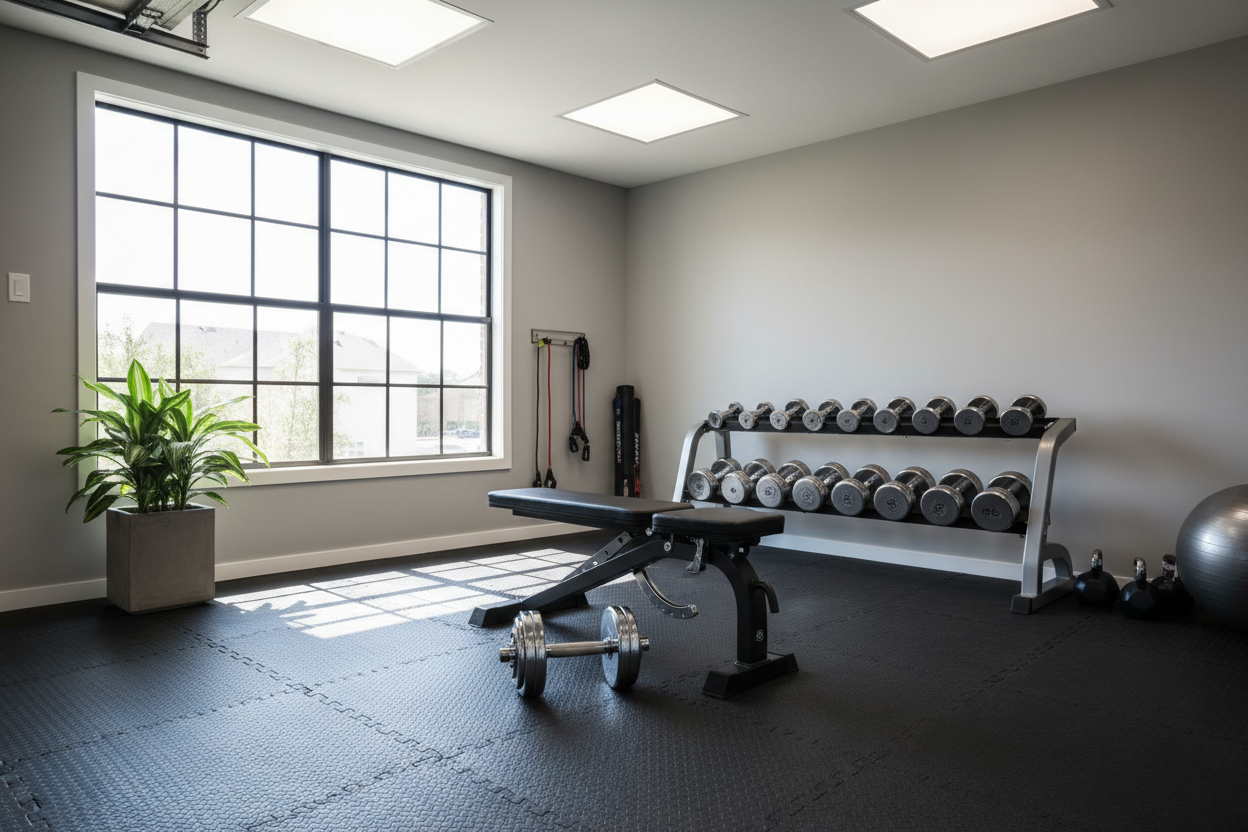
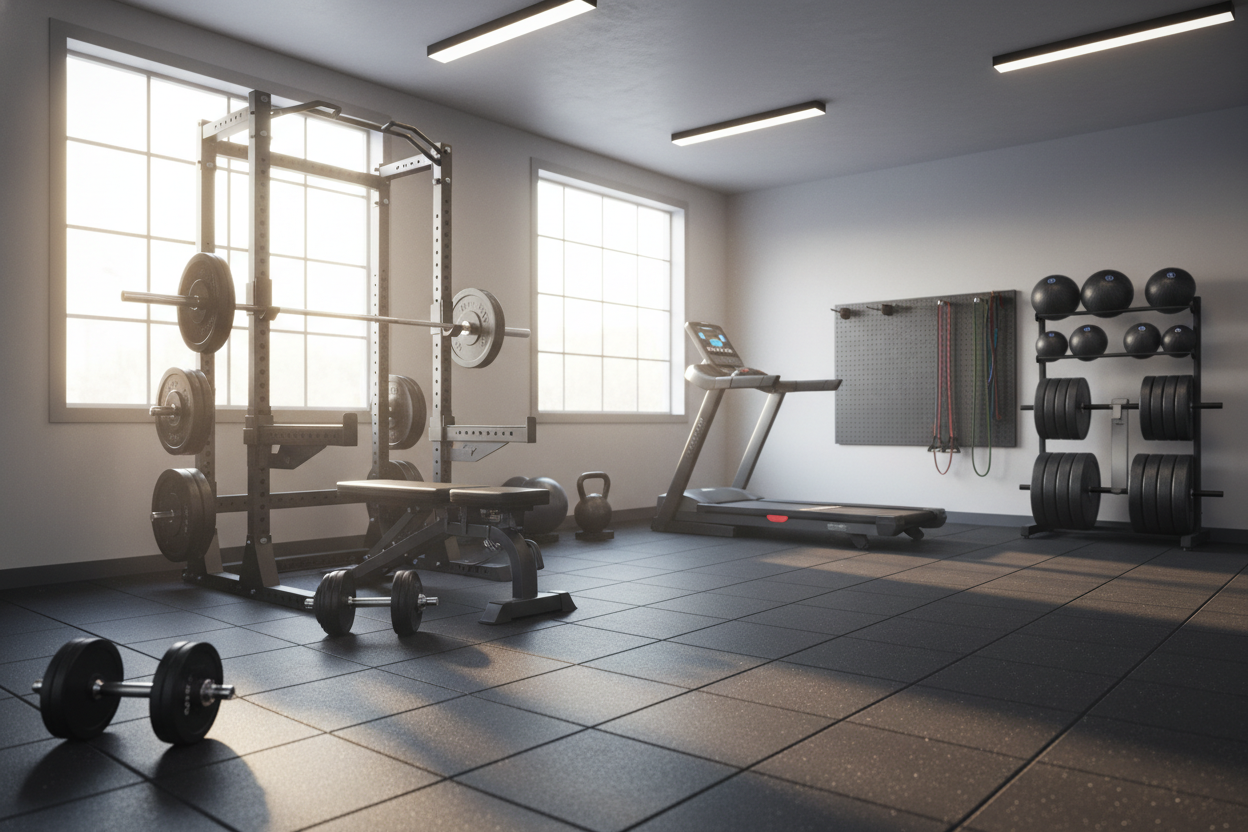
In a garage gym, you have to be smart about your equipment. You don't necessarily need a $3,000 leg press machine, but you do need the best leg exercise equipment for home to stay safe. A solid power rack with safety pins is non-negotiable once you start chasing real mass. Deadlifts are great, but for most people, heavy squats are the best workouts for muscle gain because they provide more consistent tension without the same level of lower-back fatigue that a max-effort pull creates.
Building Your Base Safely on a Garage Floor
You can’t build a skyscraper on a swamp. One of the biggest mistakes I see in home gyms is guys trying to hit a new PR while wearing squishy running shoes on a slippery concrete floor. If your feet are sliding or your ankles are rolling, your brain will literally shut down your muscle output to prevent injury. You lose the 'foot drive' necessary for maximum hypertrophy.
You need a surface that bites back. I always recommend a high-density, non-slip best large exercise mat to root your feet during heavy sets. When you feel 'bolted' to the floor, you can actually drive through your midfoot and engage your glutes properly. This stability is the unspoken prerequisite to using the best gym exercises for muscle gain effectively. If you're wobbling, you're not growing.
My Go-To Lower Body Routine for Total Mass
If you want to stop spinning your wheels and start seeing real changes in your physique, you need a routine that prioritizes intensity over fluff. I don't believe in 15 different isolation moves. I believe in four or five movements done with enough intensity to make you question your life choices. This is the core of mastering the best leg muscle building exercises for mass.
Start with a heavy compound like the Back Squat or Front Squat for 3 sets of 6-8 reps. Follow that with a hinge movement—think Romanian Deadlifts (RDLs)—to hammer the hamstrings. Then, move into high-rep unilateral work like Bulgarian Split Squats. Yes, they suck. Yes, they are the best exercise to build muscles in the lower body while fixing imbalances. Finish with some calf raises because nobody wants 'chicken legs' under a massive torso. This simple, brutal approach is how to build muscle exercises were meant to be programmed.
Stop Skipping the Heavy, Uncomfortable Stuff
The reason most people never find the best exercise for mass gain is that they aren't looking for results; they're looking for comfort. Leg day is uncomfortable. It makes your heart rate spike, it makes you sweat through your shirt in three minutes, and it makes the stairs look like Mount Everest the next morning. But that discomfort is exactly where the growth lives.
If you want to increase muscle mass, you have to embrace the movements you want to do the least. The best muscle gain exercise isn't the one with the fanciest name or the most views on TikTok—it's the one that challenges your entire system to adapt or fail. Put the weight on the bar, get under it, and stop worrying about your bicep peak until your squat is at least 1.5 times your body weight.
My Personal Experience: The Squat Breakthrough
For two years, I avoided heavy squats because I told everyone I had a 'bad back.' The reality? I just had bad form and a bruised ego because I couldn't lift much. My bench press stalled at 225 pounds for over a year. I finally got fed up, stripped the weight back, and spent six months obsessed with squatting three times a week.
The weirdest thing happened: my bench press jumped 20 pounds in two months without me changing a single thing in my chest routine. My body finally had the systemic foundation and hormonal baseline to support more muscle. I also realized that cheap 1/2-inch foam tiles from the big-box store are useless for heavy lifting—I almost rolled an ankle on a 315-lb attempt. I switched to a proper 8mm rubber surface, and the stability difference was night and day. Don't make my mistakes.
FAQ
What is the absolute best exercise for mass?
If you could only do one, it's the Barbell Back Squat. It hits the most muscle mass through a large range of motion and creates the strongest systemic response for total-body growth.
Can I build muscle without heavy weights?
You can build muscle with higher reps, but you still need mechanical tension. If you're doing 30 reps and not struggling by the end, you aren't providing enough stimulus to grow.
How many times a week should I train legs for mass?
Twice a week is the sweet spot for most. It allows for enough volume to trigger growth but gives your CNS enough time to recover between heavy sessions.
Do I need a squat rack to build muscle?
While you can do goblet squats with dumbbells, you will eventually outgrow them. To keep seeing progress, you'll eventually need a rack and a barbell to move the kind of weight that forces systemic adaptation.