Why the Best Exercise for Legs for Women Requires Heavy Iron
I spent years scrolling past 'glute activation' videos featuring neon resistance bands and 3-pound ankle weights while my own progress stalled. I was doing the 'influencer' leg days—fifty reps of this, a hundred reps of that—and wondering why my legs didn't look like I actually trained. The truth is, finding the actual exercise for legs for women that works isn't about more reps; it's about more weight. If you're not sweating through a heavy set of five to eight reps, you're just doing cardio with extra steps.
Quick Takeaways
- Stop chasing the 'burn' and start chasing the load; muscle growth requires mechanical tension.
- The Bulgarian Split Squat is the undisputed king of unilateral lower body training.
- Home gym setups need high-friction flooring to safely handle heavy dumbbell drops.
- Progressive overload is the only way to see visible changes in leg composition.
Why Most Female Leg Day Routines Set You Up to Fail
The fitness industry loves to treat female leg training like a fragile science project. They'll tell you to do endless kickbacks or 'tone' your legs with pink dumbbells that weigh less than your handbag. Muscle tissue doesn't care about your gender—it cares about tension, stretch, and mechanical load. When you stick to high-rep, low-weight movements, you're building endurance, not the dense muscle that creates a powerful, athletic look.
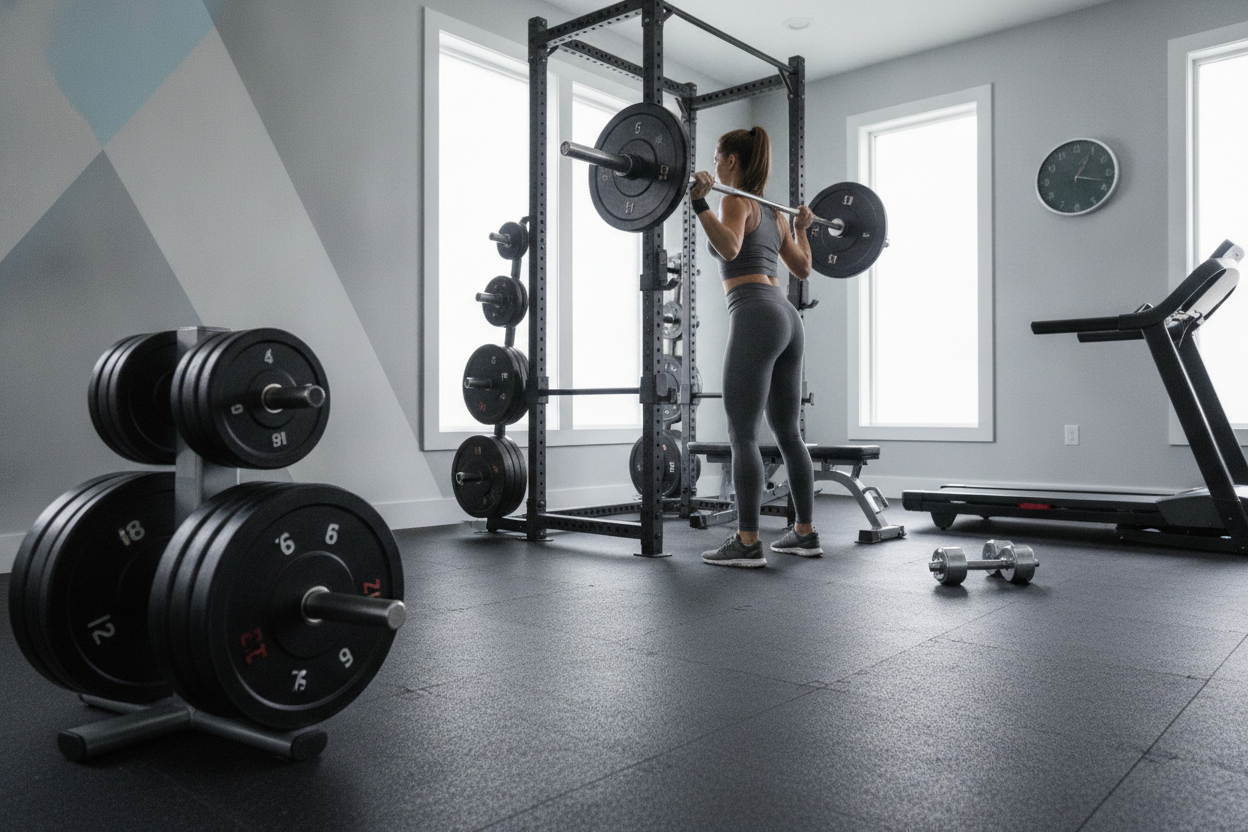
If you aren't adding weight to the bar or picking up a heavier pair of dumbbells every few weeks, you aren't training; you're just exercising. The Best Strength Training Workouts for Women Are Surprisingly Simple, yet we’ve been conditioned to think we need twenty different movements to see results. In reality, your body responds best to a handful of compound lifts performed with high intensity. Leg training for women should look remarkably similar to leg training for men: heavy, hard, and focused on the basics.
The 'pink dumbbell' myth persists because it's easier to sell a 30-day 'booty blast' than it is to teach someone how to grind through a heavy set of squats. But if you want real results, you have to embrace the iron. Stop worrying about 'bulking up'—most women don't have the hormonal profile to build massive slabs of muscle by accident. What you call 'toned' is actually just muscle that has been built through resistance and revealed by a lower body fat percentage. You can't reveal what isn't there.
The Undisputed Champion: The Bulgarian Split Squat
If I could only pick one movement for the rest of my life, it wouldn't be the back squat. It would be the Bulgarian Split Squat. This is the best women's leg workouts staple for a reason. By elevating your rear foot on a bench or a dedicated split squat stand, you force the front leg to handle about 80% of the load. This eliminates the 'cheating' that often happens in a standard squat where your dominant side takes over.
Biomechanically, the split squat is a masterpiece. It targets the quads through a deep range of motion while simultaneously hammering the glute-hamstring tie-in. Unlike a leg press machine that locks you into a fixed path, the split squat requires massive stability from your core and hip abductors. This functional stability is what makes great exercises for women's legs actually transfer to real-world strength. You aren't just pushing a platform; you're learning to control your own body mass under load.
I've found that for most home gym owners, the split squat is safer than a max-effort back squat. If you hit failure, you simply drop the dumbbells to your sides. There’s no fear of getting pinned under a barbell in a rack without spotter arms. It’s a brutal, effective, and honest movement that leaves nowhere to hide.
How to Actually Load It Heavy at Home
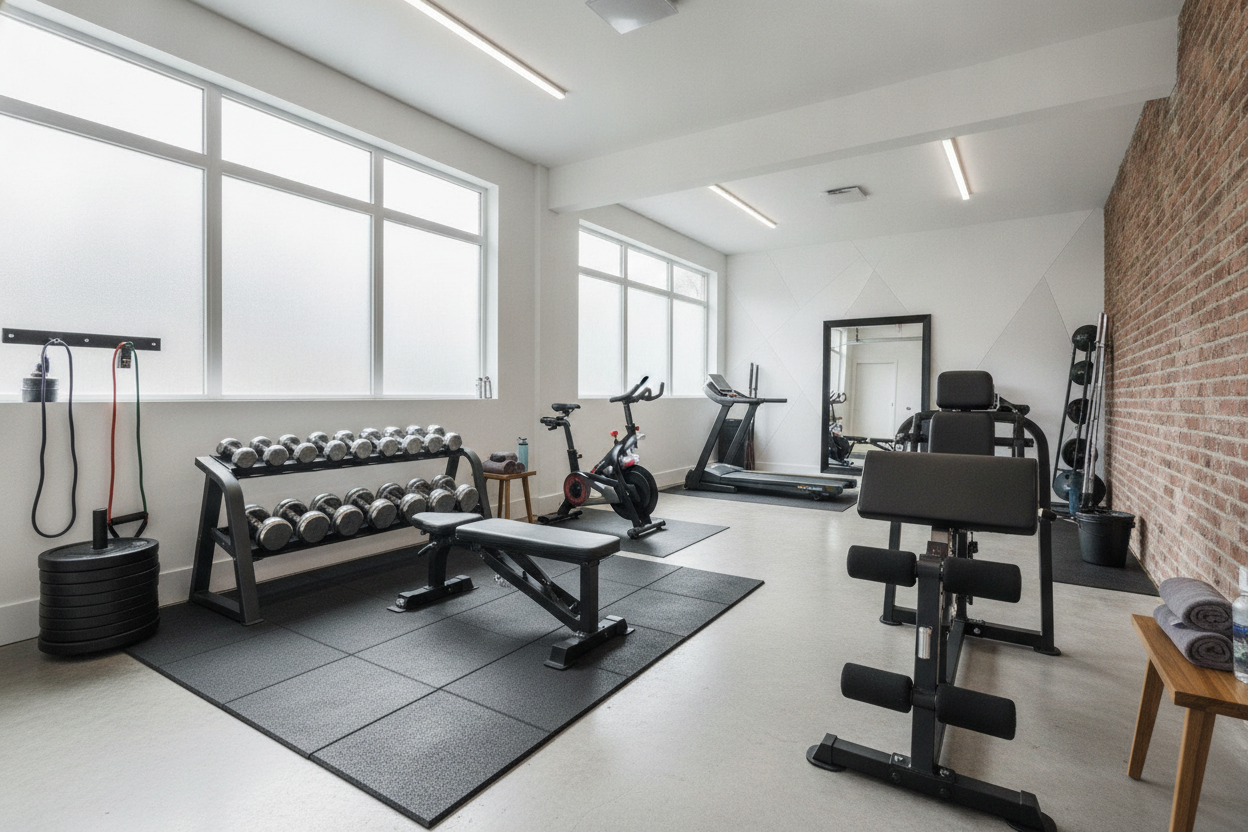
To get the most out of this, you have to move past the 15-lb dumbbells. I personally use a pair of adjustable dumbbells that go up to 50 lbs each. Once you outgrow those, you need to look at a safety squat bar (SSB). An SSB allows you to hold onto the rack for balance (the 'Hatfield' style) while you absolutely punish your quads with 100+ lbs. If you're training in a tight 8x10 space, using a dedicated split squat roller attachment on your power rack is a huge space-saver compared to a bulky weight bench.
Don't Forget the Neglected Muscles: Adductors and Hamstrings
Most female leg training focuses way too much on the 'mirror muscles'—the quads and the glutes. But if you want stability and that 'wraparound' leg development, you have to hit the adductors (inner thighs) and hamstrings. Romanian Deadlifts (RDLs) are non-negotiable here. They build the posterior chain strength that protects your knees and improves your posture.
Furthermore, strong adductors are the secret to a stable squat. If your knees cave in when things get heavy, it's usually because your inner thighs are weak. Incorporating the best exercises for inner thighs women need, like Cossack squats or wide-stance goblet squats, will fix those imbalances. A well-rounded program for legs workouts for women must address the leg from every angle, not just the front and back.
Your Squat Stance Needs a Solid Foundation
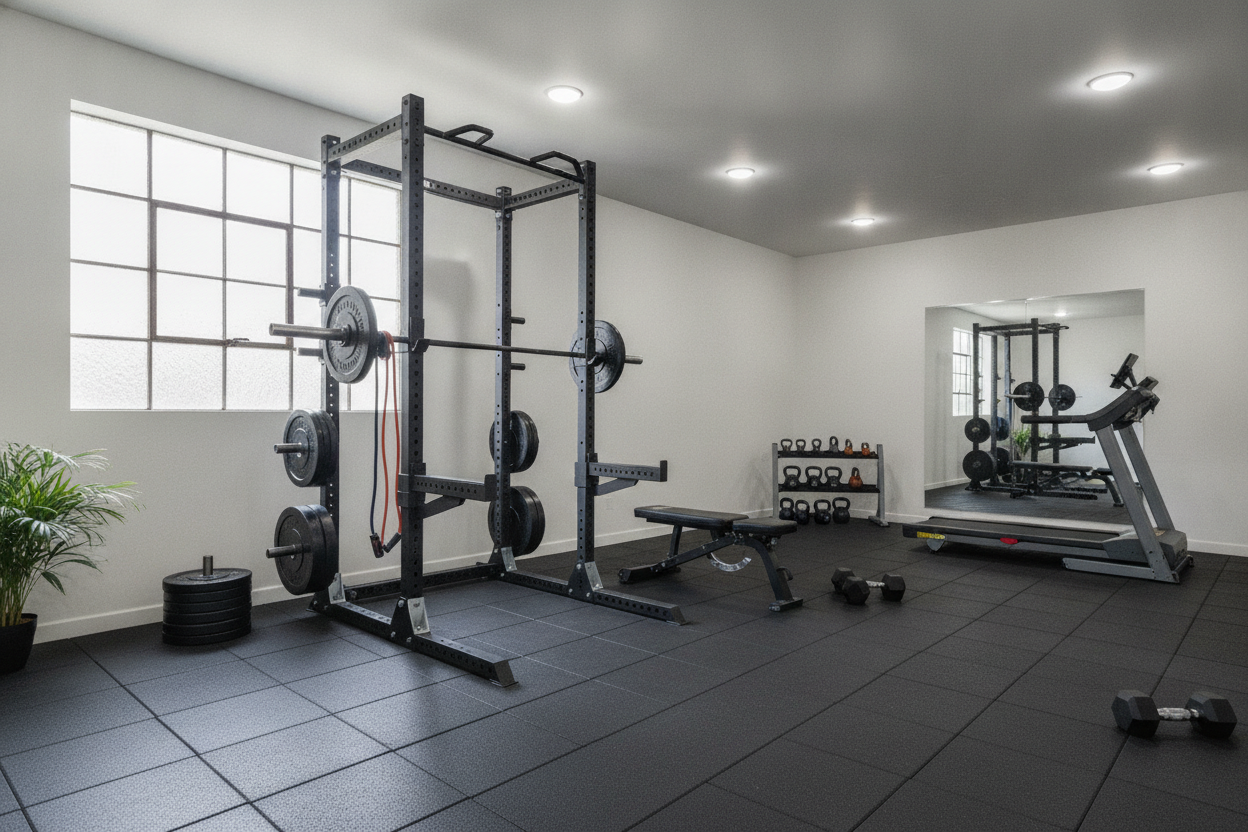
You can have the best programming in the world, but if you're trying to do weighted lunges on a slippery yoga mat or a hardwood floor, you're asking for a twisted ankle. A heavy leg day requires a floor that grips. When I moved from a commercial gym to my garage, I realized quickly that my old setup didn't cut it. I needed something that could handle 100-lb dumbbell drops without cracking the concrete or sliding out from under me.
Investing in a Large Exercise Mat For Home Gym was the best move I made. You want something at least 1/4 inch thick with a high-density rubber surface. This provides the 'bite' your shoes need during a heavy Bulgarian split squat. If your foundation is shaky, your brain will literally 'brake' your strength output to keep you from falling. Solid flooring equals more weight lifted, which equals better results.
Putting It Together: A Leg Routine That Actually Works
Forget the 20-exercise circuits. A real great workouts for women's legs blueprint looks like this: Start with your most taxing movement (the Bulgarian Split Squat) for 3 sets of 8 reps. Follow that with a hip-hinge movement like the RDL for 3 sets of 10. Finish with a lateral movement like a side lunge to hit the adductors, and maybe some calf raises if you have the energy. That’s it. If you do those three things with genuine intensity and heavy weight, you won't need anything else.
Personal Experience: My 'Lightweight' Mistake
I used to be terrified of the 40-lb dumbbells. I thought they were for 'the guys.' I spent two years doing high-rep bodyweight lunges and saw zero change in my leg definition. It wasn't until I forced myself to pick up the heavy iron—and actually failed a rep for the first time—that my legs started to change. I also learned the hard way that training in running shoes with 'cloud' soles is a recipe for disaster. Get some flat-soled shoes or lift barefoot on a good mat. The stability difference is night and day.
FAQ
Will heavy leg training make my legs too big?
No. Most women lack the testosterone levels to build 'huge' legs without years of dedicated caloric surpluses and specific hypertrophy training. You'll likely find your legs get firmer and more compact.
How often should I train legs?
Twice a week is the sweet spot for most. It allows for enough volume to grow but gives your central nervous system time to recover between heavy sessions.
Can I get the same results with just resistance bands?
Honestly? No. Bands are great for warm-ups or travel, but they don't provide the consistent mechanical tension or the eccentric loading that a heavy dumbbell or barbell provides.