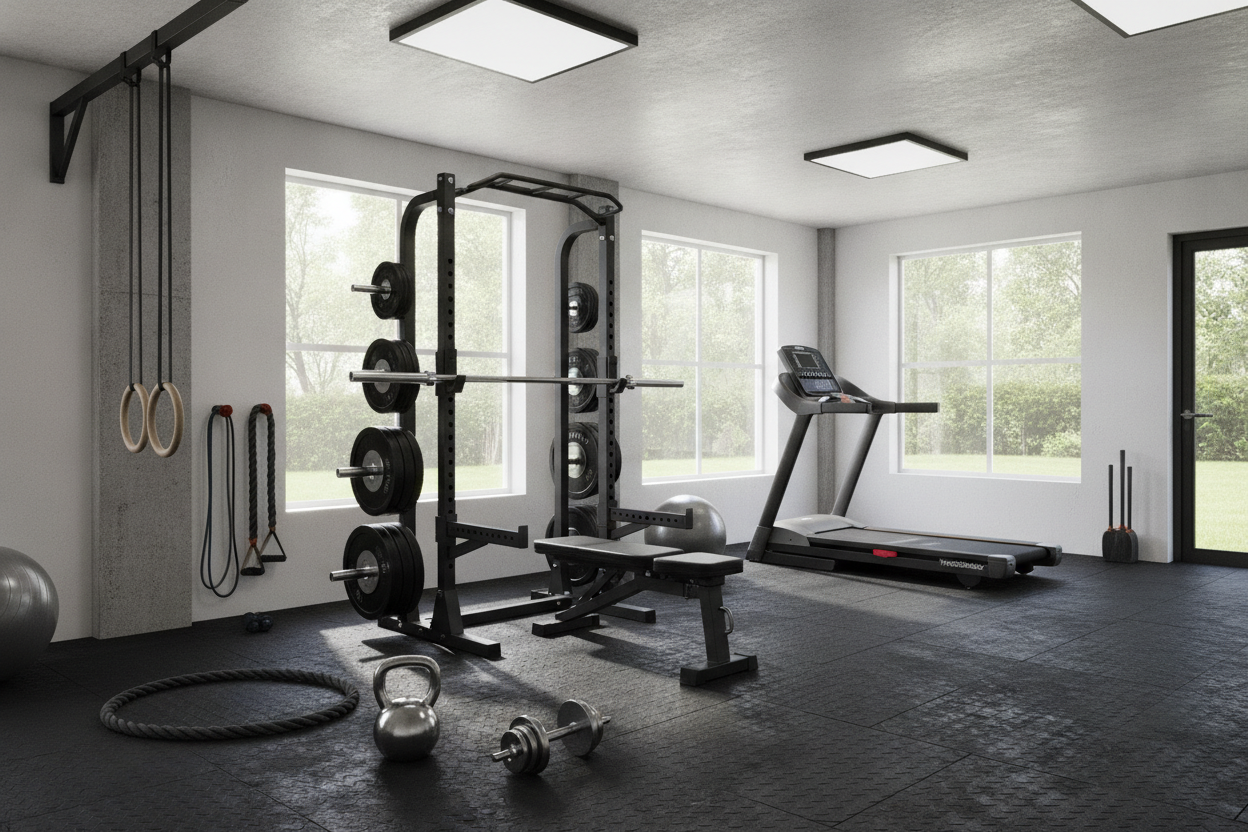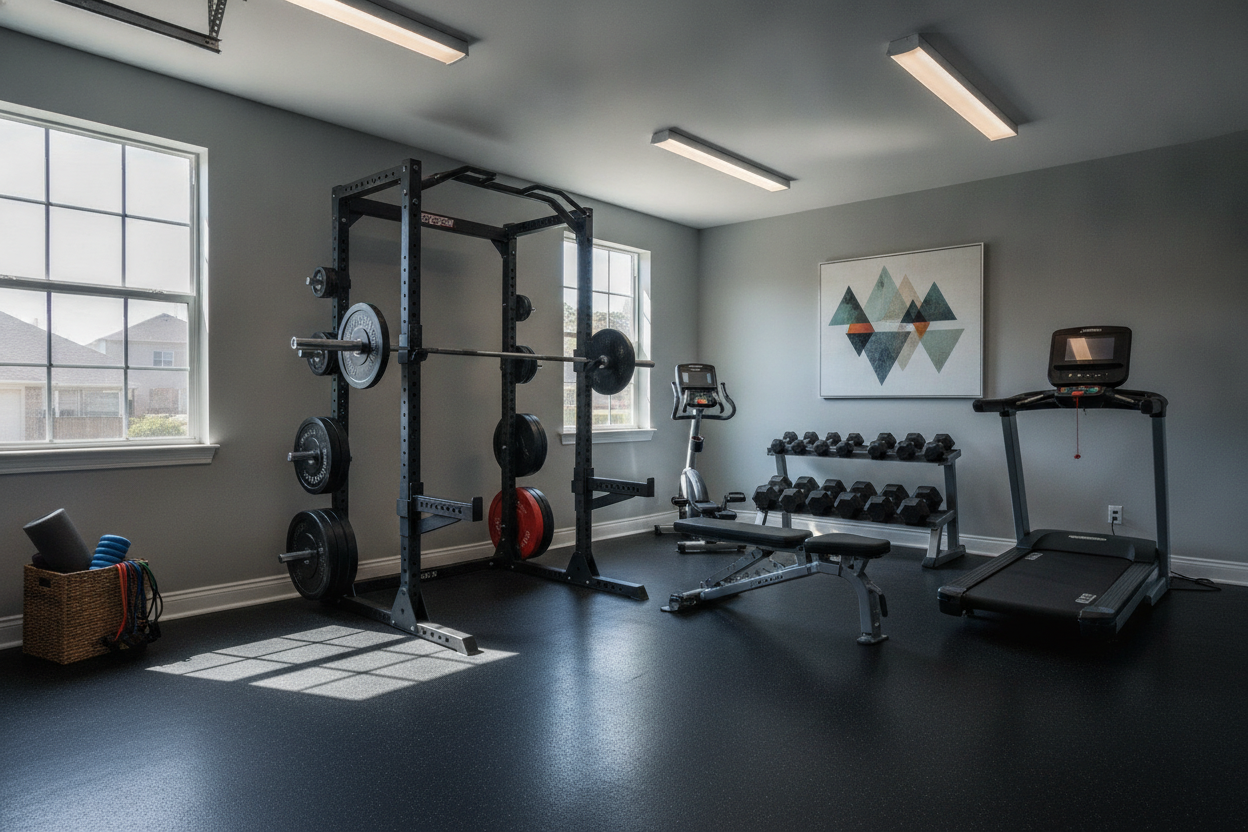
Why the Best Equipment Gym Setups Ditch Brand Loyalty
I remember the first time I sat in my empty garage with a tape measure and a dream. I almost spent my entire budget on a single brand just because I wanted the powder coating to match. But after five years of dropping 400-pound deadlifts and feeling the literal flex in sub-par racks, I realized the best equipment gym isn't built from a single catalog. It is a Frankenstein’s monster of high-spec gear.
- Mixing brands ensures you get the specialist for every category.
- Shipping bundles are often a trap to hide mediocre secondary products.
- Prioritize 11-gauge steel for your rack, regardless of the logo.
- Cardio machines should rarely come from strength-focused companies.
The Expensive Trap of the Single-Brand Catalog
Marketing departments are brilliant. They know that if they offer you a 10% discount on a total package, you’ll ignore the fact that their barbells have terrible knurling or their benches use thin, slippery vinyl. They want you to buy into an ecosystem. I have seen guys spend thousands to ensure their rack, plates, and dumbbells all have the same red logo, only to realize the dumbbells are clunky and the plates have a 5% weight variance.
When you buy everything from one of the massive home fitness brands, you are paying for convenience, not necessarily quality. These companies usually have one 'hero' product—maybe it is their power rack or their bumper plates—and the rest of the catalog is just filler to increase the average order value. Do not let a 'free shipping' threshold trick you into buying a $300 adjustable bench that wobbles when you try to hit a heavy incline press.
Who Actually Makes the Best Home Gym Equipment Brands?
To build a setup that lasts, you have to look at these companies as specialists. Some are masters of steel fabrication, while others are basically just logistics companies that white-label generic Chinese designs. You need to discover the best fitness equipment brands based on what they actually manufacture in-house versus what they just slap a sticker on.
I categorize my gear into three buckets: structural steel, rotating parts (bars and pulleys), and 'dumb' iron (plates). A company that makes a world-class power rack might have zero experience engineering a functional trainer with smooth cable travel. I have tested 'all-in-one' units from top-tier brands where the rack was solid as a rock, but the integrated cables felt like dragging a sled through sand. It is better to have three shipments from three different companies than one giant pallet of disappointment.
The Heavy Lifters: Top Garage Gym Brands for Steel
When it comes to the bones of your gym, you want 3x3-inch, 11-gauge steel. This is the industry standard for a reason—it doesn't move. Some of the best home gym equipment brands specialize specifically in this heavy-duty fabrication. They use robotic welders and high-end powder coating that won't flake off the first time you miss a J-cup during a squat set.
Look at the hole spacing. A brand that offers 'Westside' spacing (1-inch gaps through the bench zone) cares about your lifting. A brand that uses 2-inch or 3-inch spacing everywhere is just cutting costs on laser-cutting time. I’ve owned racks where the safety pins were so poorly machined I had to use a rubber mallet to get them out. Stick to companies that treat steel like an art form, not a commodity.
The Conditioning Kings: Best Gym Products for Cardio
If a company makes a great squat rack, do not buy their treadmill. It is a rule I live by. Cardio equipment—air bikes, rowers, and skiers—requires precise engineering of fans, chains, and monitors. Most home fitness companies just buy a generic design from a factory in Asia and change the color. The result is a bike that screams like a jet engine and a monitor that tracks calories about as accurately as a mood ring.
For conditioning, look to the brands that have been in the CrossFit or commercial space for decades. Their chains don't snap, and their monitors actually sync with your heart rate strap. I once tested a 'strength brand' air bike that felt like the pedals were going to fly off during a 30-second sprint. Stick to the specialists for anything with a moving belt or a fan.
How to Mix Top Home Gym Companies Without Getting Crushed by Shipping
The biggest hurdle to mixing brands is freight. Shipping a 400-lb rack from one place and 500 lbs of plates from another can easily add $600 to your bill. To beat this, you have to be tactical. I recommend keeping an eye on home gym equipment deals during major holidays when 'flat-rate shipping' or 'free freight' is common across the industry.
Another trick is the 'hub' method. Buy your heavy, oversized items (like the rack) from a company with a warehouse near you. Then, source your high-precision items (like a high-end barbell) from the specialist brand, since shipping a 20kg bar is significantly cheaper than shipping a pallet of iron. I once saved $400 just by driving two hours to pick up my plates from a local distributor instead of having them shipped from a brand-name warehouse across the country.
The Foundation Every Brand Forgets: Your Floor
You can buy the most expensive calibrated plates on the market, but if you drop them on bare concrete, you are going to have a bad time. Most brands treat flooring as an afterthought, selling thin, smelly foam tiles that offer zero protection. You need a dedicated gym flooring for home workout setup that can actually absorb the impact of a dropped deadlift.
I personally use 3/4-inch rubber. Anything thinner is just for aesthetics. A good mat protects your subfloor and significantly dampens the noise, which your neighbors (and your spouse) will appreciate. I made the mistake of using those interlocking foam puzzle pieces in my first setup. Within a month, they were compressed flat and my concrete was already starting to spider-crack. Do not skip the foundation.
Personal Experience: My $1,000 Mistake
I once bought a 'complete' garage gym package from a well-known mid-tier brand. It looked great in the photos. But when it arrived, the barbell had the most passive knurling I’ve ever felt—it was like holding a wet pool noodle. The 'heavy duty' bench had a 2-inch gap between the seat and the backrest that hit right in my lower back. I ended up selling the bar and the bench on Craigslist for half what I paid and buying replacements from actual specialists. I lost $1,000 in the process. Learn from me: buy the best version of each tool, not the most convenient package.
FAQ
Do I need to buy the same brand of plates for my rack?
Absolutely not. As long as the plates have a 2-inch Olympic hole, they will fit on any standard barbell and work with any rack. Focus on weight accuracy and durability over the brand name.
Is 11-gauge steel really necessary for a home gym?
If you plan on lifting heavy (over 300 lbs) or using attachments like dip bars or lever arms, yes. 14-gauge steel is fine for beginners, but it will wobble as you get stronger.
How can I tell if a brand is high quality?
Look at the details. Do they use UHMW plastic to protect your bar? Is the powder coat textured or glossy? Are the welds clean or do they look like 'piles of dimes'? High-quality brands don't hide their welds.