Is 'Old Man Strength Training' Just an Excuse to Lift Light?
I remember watching a guy in his late sixties at a local commercial gym spending forty minutes on a vibrating platform and then doing 'curls' with three-pound neoprene weights. He looked bored, and more importantly, he looked frail. Old man strength training has been hijacked by a 'don't hurt yourself' industry that prioritizes comfort over actual physiological results.
- Heavy lifting is the only way to stop age-related muscle loss (sarcopenia).
- Safety comes from proper equipment like power racks, not from avoiding weight.
- Recovery is slower, so three intense sessions beat six mediocre ones.
- Free weights are generally better for joint health than fixed machines.
The 'Take It Easy' Trap
The fitness media loves to push older guys into a high-rep purgatory. They tell you to use light bands, go for long walks, and 'stay active.' While walking is great for your heart, it does exactly zero for your bone density or your ability to get out of a chair when you're eighty. Treating weight training for older men like a delicate rehab program actually accelerates muscle loss because the stimulus isn't high enough to trigger growth.
When you lift light weights for twenty reps, you're mostly training endurance. If you want to maintain the 'old man strength' that actually matters—the kind that lets you carry a heavy cooler or move furniture—you have to move heavy iron. Low-effort training is a slow slide into frailty. You aren't fragile; you're just undertrained.
Why Old Man Strength Training Requires Actual Iron
To fight sarcopenia, you need mechanical tension. This means lifting weights that are heavy enough that the last rep of a set of five or eight is actually difficult. Even when we are talking about weight training for men over 70, the principles of progressive overload still apply. You can't just do the same thing every week and expect your body to keep its muscle.
Heavy compound movements like squats, deadlifts, and presses are the gold standard. These movements build a foundation that affects everything else you do. For instance, building foundational strength with heavy iron directly translates to explosive power in hobbies like weight training for golf. If you can't hinge your hips with a barbell, you aren't going to have much power behind your driver.
Free Weights vs. Fixed Paths
A lot of people think weight lifting machines are the safer bet for aging joints. I disagree. Most machines lock you into a rigid, predetermined path. If that path doesn't perfectly match your shoulder or hip anatomy, you're grinding your joints for thirty reps. Free weights allow your body to find its own natural bar path, which is much kinder to your tendons in the long run.
How Often Should Seniors Lift Weights (Without Burning Out)?
The biggest mistake I see weight training senior men make is trying to follow a high-volume bodybuilding split. Your muscles might be able to handle it, but your central nervous system and your joints won't. When people ask how often should seniors lift weights, my answer is usually three days a week. Full-body sessions with at least one day of rest in between allow your body to actually recover and build the tissue you just broke down.
Junk volume—doing six different variations of a tricep extension—is a waste of your limited recovery capacity. Stick to the big movements. If you can't recover from your session within 48 hours, you're doing too much fluff. Focus on intensity over duration. A forty-minute session where you actually push yourself is worth more than two hours of social hour at the gym.
Building a Safe, Heavy Setup in Your Garage
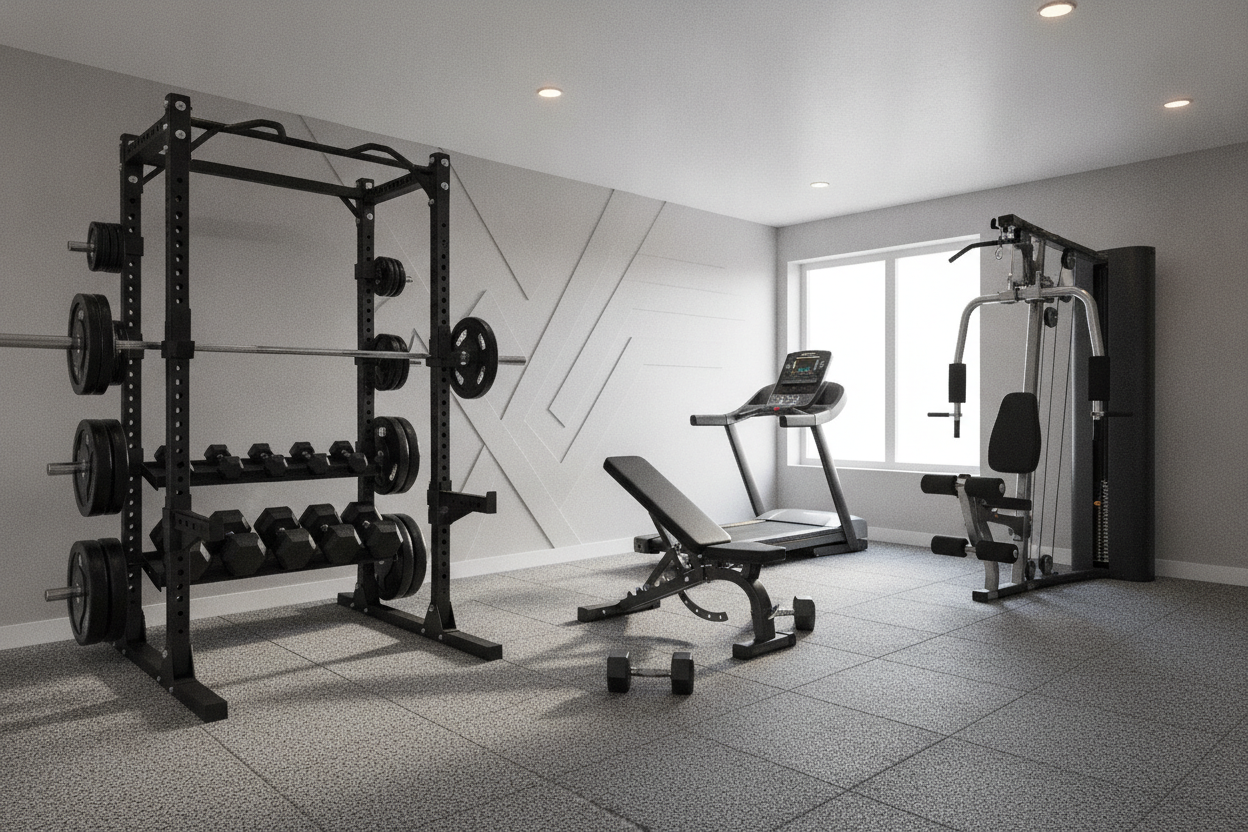
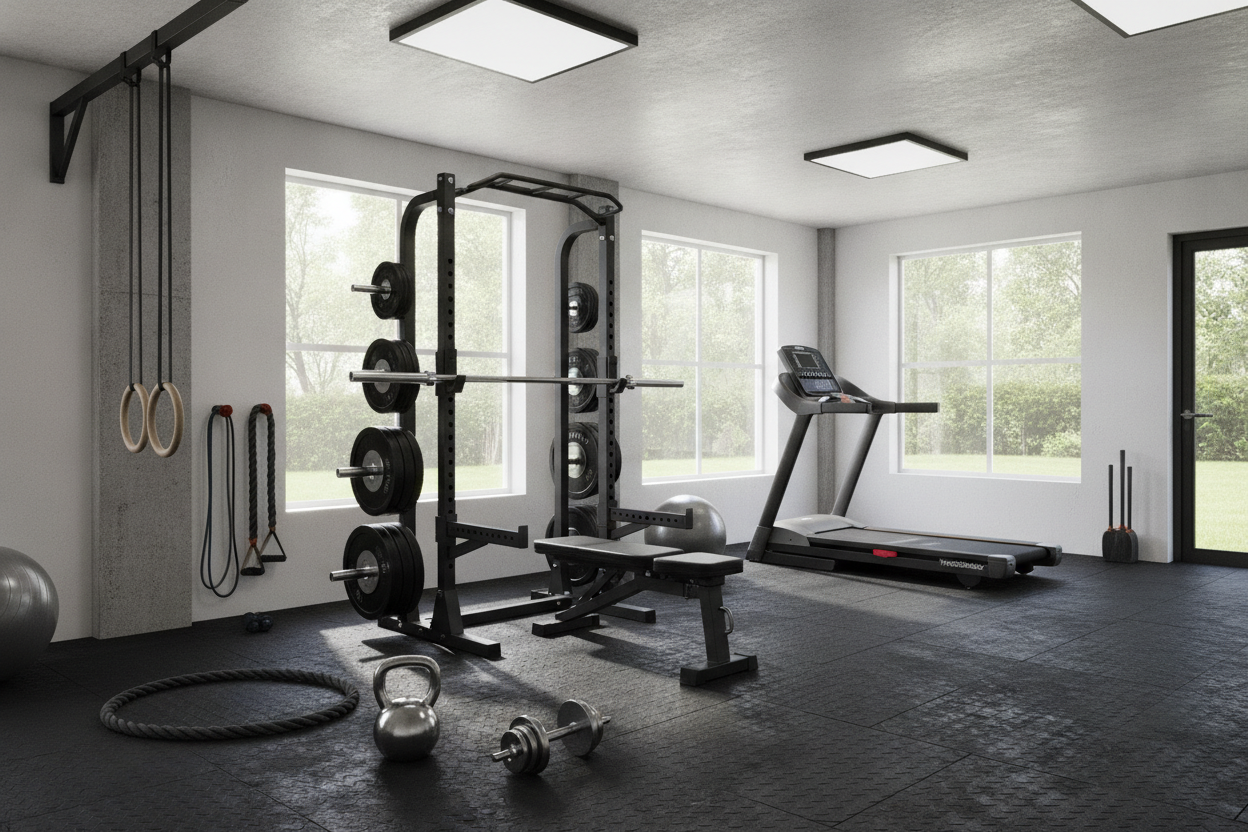
If you're training alone, safety is the only thing that matters. You don't need a commercial membership; you need a space where you can fail a lift without ending up in the ER. When you are looking for the best strength and weight training equipment, look at the steel gauge. A 14-gauge steel rack might be fine for a teenager, but for a serious home gym, you want 11-gauge steel and 5/8-inch or 1-inch hardware.
I always recommend a full cage over a half-rack for older lifters. Having those four steel posts around you with heavy-duty safety pins means you can squat or bench to failure with zero fear. A power rack weight bench package is the most efficient way to get everything you need in a single footprint. It gives you the spotter you don't have, allowing you to actually push your limits safely.
A Rock-Solid Foundation is Non-Negotiable
Nothing kills confidence like a wobbly bench. If you're trying to focus on a heavy chest press and the bench is shifting under your shoulder blades, your brain will subconsciously cut your power output to keep you from falling. It's a safety mechanism. A high-quality adjustable weight bench with a wide rear stabilizer and grippy vinyl is essential. Look for a bench with a high weight capacity—at least 600 lbs—to ensure it stays planted when you're working hard.
My Honest Take
I learned this the hard way. About five years ago, I thought I’d 'save my joints' by switching to light dumbbells and high reps. Within three months, my back started hurting more than ever and my overhead press strength cratered. I felt old for the first time in my life. I went back to heavy triples and fives on the barbell, and the 'aches' disappeared. The 'old man strength training' myth that we should avoid heavy loads is exactly what makes us feel old in the first place.
FAQ
Is weight training for older men safe for the heart?
Yes, but check with your doctor if you have existing issues. Lifting actually improves vascular health and helps manage blood pressure over time.
Can I start weight training for men over 70 if I've never lifted?
Absolutely. You start with the empty bar or even a PVC pipe to learn the movement, then you add weight slowly. Your body is still capable of adapting at seventy.
Do I need to take protein powder?
You need protein, period. Older bodies are less efficient at processing it, so aiming for about 0.8g to 1g of protein per pound of body weight is a good target for maintaining muscle.