Why The Best Activities for Muscle Strength Are Actually Awkward
I remember the first time I tried to move a 150-pound sleeper sofa. I had just hit a 405-pound deadlift on a calibrated Rogue bar, so I figured it would be a breeze. I was wrong. My back felt like it was being twisted into a pretzel, and my grip failed before I even got to the stairs. It turns out that most activities for muscle strength do not involve a knurled steel bar with a perfect center of gravity and needle bearings that spin like a dream.
We spend thousands of dollars on precision-engineered equipment, yet we often overlook the fact that life is messy. If you can only lift something when it is perfectly balanced, you are not actually strong—you are just good at physics. To build real, transferable power, you need to get comfortable with the uncomfortable.
Quick Takeaways
- Barbells are designed for efficiency; awkward loads are designed for resilience.
- Odd objects force your core to stabilize in 360 degrees, not just a linear path.
- Sandbags and slosh pipes reveal 'strength leaks' that traditional weights hide.
- Protecting your floor is non-negotiable when training with unpredictable weights.
The Problem With Perfectly Balanced Barbells
Barbells are masterpieces of engineering. Whether you are using a 28mm Olympic bar or a 29mm power bar, they are built to make lifting as smooth as possible. The weight is distributed evenly, the knurling gives you a predictable grip, and the sleeves rotate to prevent the inertia of the plates from ripping your wrists off. This is great for hitting a new PR in a controlled environment, but it creates a false sense of security.
When you rely solely on machines or barbells, you are training in a vacuum. Your brain learns exactly where the center of mass is every single time. In the real world—whether you are lugging a 50-lb bag of salt or wrestling a stubborn tree root—that center of mass is constantly shifting. Barbells allow you to bypass the 'stabilizer' taxes that life demands you pay. If you want to be truly capable, you have to stop avoiding the wobble.
Why 'Ugly' Lifts Are Better Activities for Muscle Strengthening
There is a specific kind of 'old man strength' that comes from manual labor, and it is almost entirely due to awkward loads. When you lift a shifting weight, like a half-full sandbag, your biomechanics have to adapt on the fly. Your internal obliques, transverse abdominis, and even the tiny muscles in your feet have to fire in a chaotic sequence to keep you from toppling over. This is why these are the superior activities for muscle strengthening for anyone who wants to be functional outside the rack.
Traditional isolation exercises have their place, but they often neglect the connective tissue and smaller muscle groups that handle torque. Moving toward a full body workout for muscle and strength means introducing variables that the body cannot predict. Instead of a perfectly vertical bar path, you are fighting lateral forces and rotational pull. It is exhausting, it is humbling, and it builds a level of 'armor' that a Smith machine never will.
Three Unbalanced Loads You Can Use Right Now
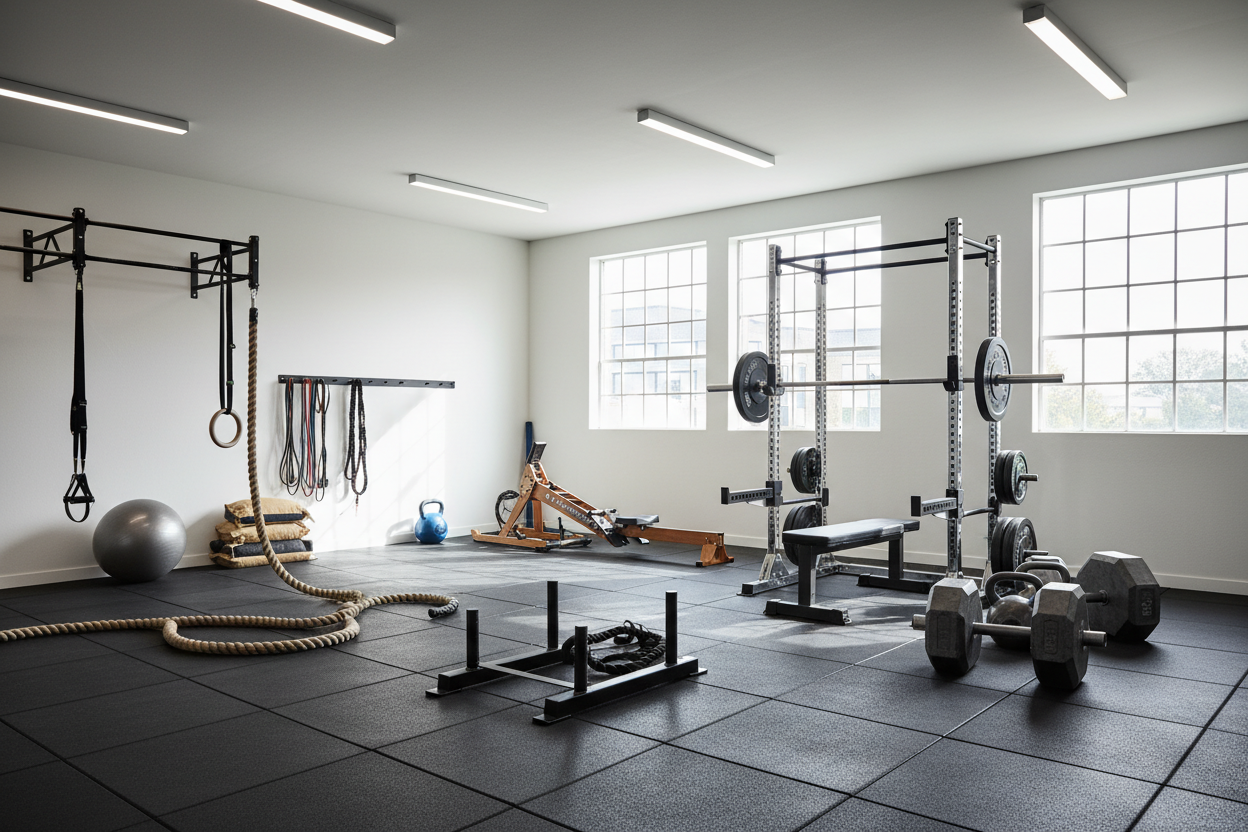
You do not need a specialized strongman gym to start this. You can integrate these into your current setup with minimal investment. I usually mix these in at the end of my primary heavy sessions to ensure I am not just 'gym strong.'
- The Heavy Sandbag: Unlike a barbell, a sandbag has no fixed shape. If you try to clean a 150-lb bag, it will sag, pull you forward, and try to escape your grip. It is the ultimate tool for 'brute' strength.
- The Slosh Pipe: Take a 10-foot piece of PVC pipe, fill it halfway with water, and cap the ends. Trying to overhead press this is a nightmare. The water sloshes from side to side, forcing your core to react instantly to the shifting weight.
- Single-Arm Farmer's Carries: Grab the heaviest kettlebell or dumbbell you have in only one hand and walk. Your body will want to lean; your job is to stay perfectly upright.
Mixing these odd objects with your standard strength equipment creates a hybrid athlete. You get the raw hypertrophy benefits of the big lifts and the stabilization of the weird stuff.
Protecting Your Home Gym When Dropping Odd Objects
Here is the reality: odd objects are hard to hold, and you will drop them. A 100-lb sandbag hitting a concrete garage floor sounds like a gunshot and vibrates through the entire foundation. If you are training to failure—which you should be—you need to plan for the impact. I have seen guys crack their concrete or ruin their subfloors because they thought a 1/2-inch stall mat was enough. It is not.
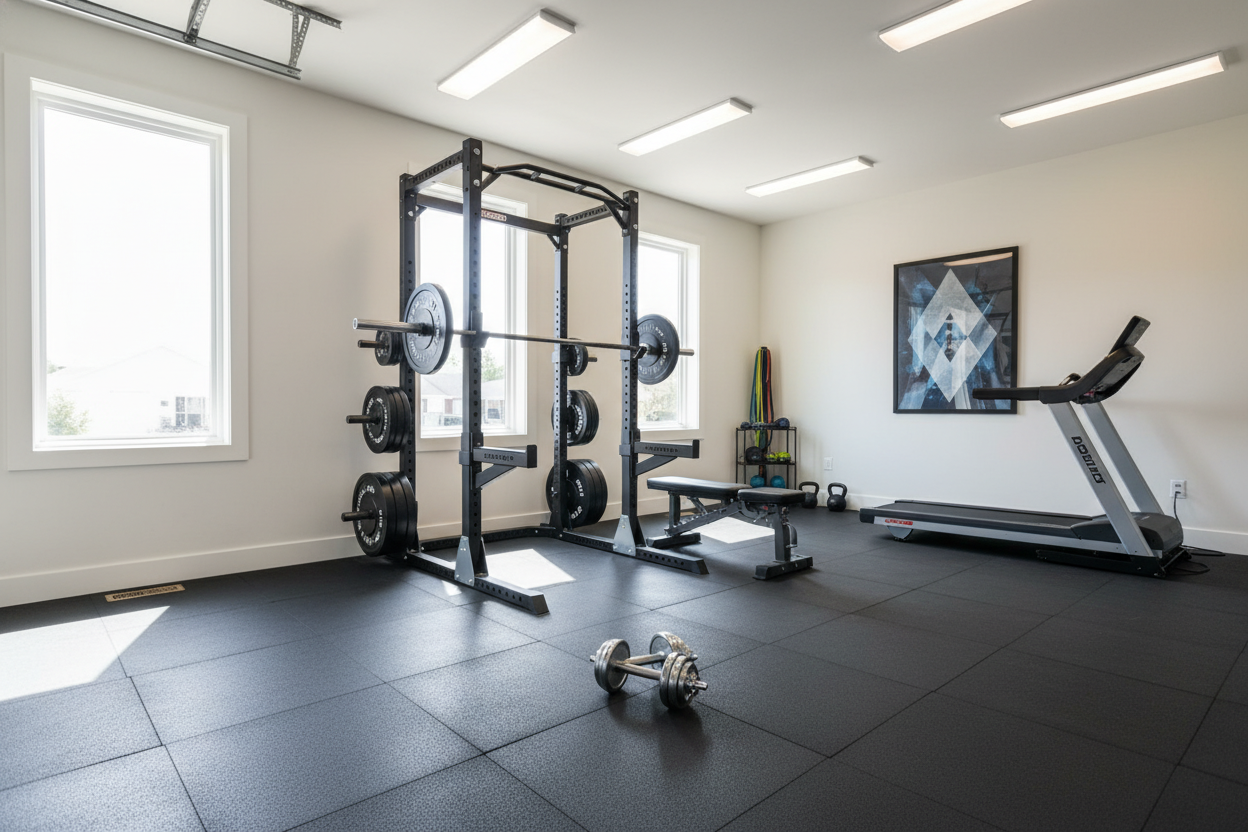
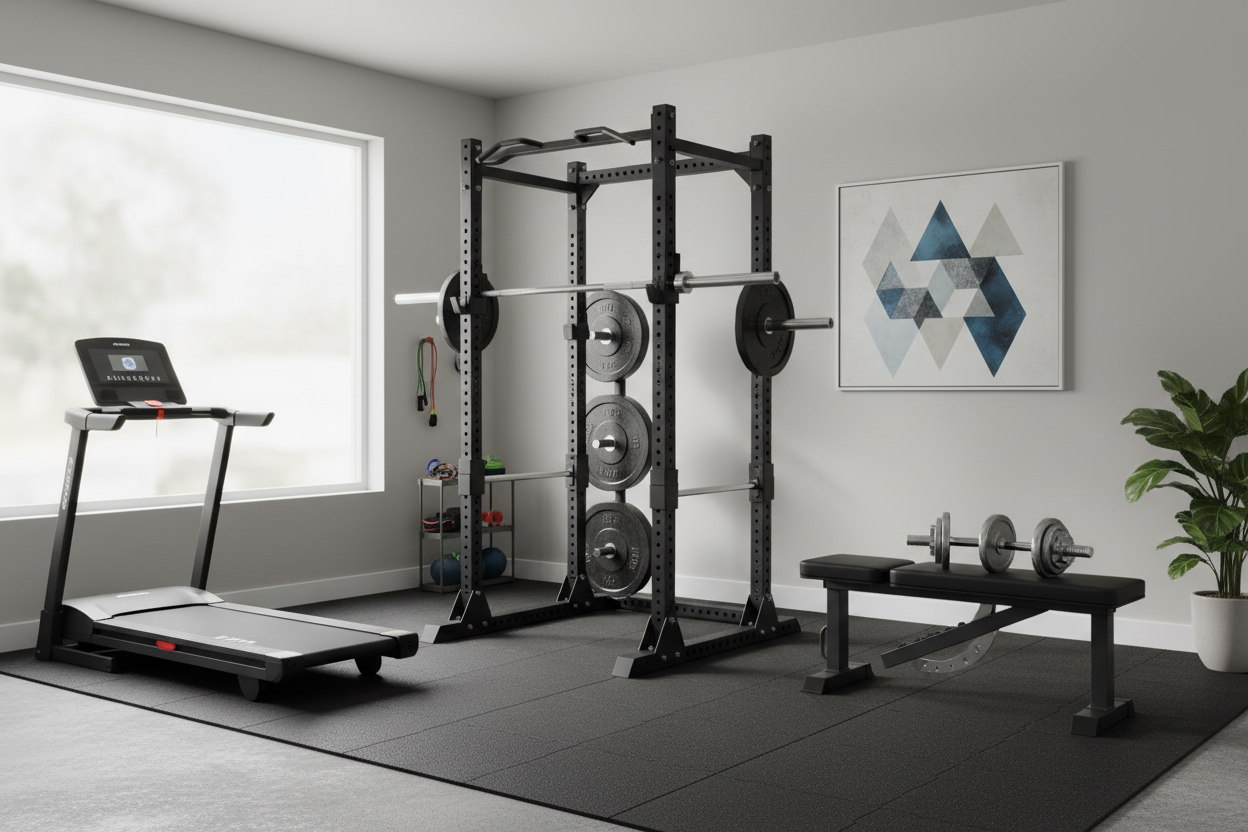
For this kind of training, you need high-density gym flooring for home workout spaces that can actually absorb shock rather than just transferring it to the ground. I personally use a 6x8 ft mat that is thick enough to deaden the sound of a dropped kettlebell. It also provides the necessary traction; the last thing you want when wrestling a slosh pipe is for your feet to slide out from under you on a dusty garage floor. A large, dedicated mat also defines your 'chaos zone,' keeping the rest of your gym clean and safe.
Programming the Chaos: How Often Should You Do This?
Do not go out and replace your entire 5/3/1 program with sandbags tomorrow. Awkward loads are significantly more taxing on the central nervous system (CNS) than standard lifts. Because your body is constantly 'searching' for stability, you will fatigue much faster than you expect. Start by swapping one accessory movement per session with an odd object lift.
If you are doing rows, try a single-arm sandbag row. If you are doing lunges, hold a water jug on one shoulder. You can still use your favorite strength training accessories like belts or chalk to keep your grip secure, but try to rely on your natural stability as much as possible during the awkward sets. Limit these high-chaos movements to twice a week initially to avoid burnout.
Personal Experience: The Slosh Pipe Disaster
I once built a DIY slosh pipe using cheap PVC and didn't use enough industrial-grade cement on the end caps. Halfway through a set of overhead carries, the cap blew off. I dumped about five gallons of stagnant water all over my lifting platform and my power rack. Not only did it smell like a swamp for a week, but it warped my plywood base. The lesson? If you are going to use DIY odd objects, over-engineer them. And if you are using sandbags, buy the ones with double-stitched liners. Cleaning up 50 pounds of spilled play sand is a mistake you only want to make once.
Frequently Asked Questions
How heavy should my sandbag be compared to my barbell lift?
Start with about 50% of what you can lift on a barbell. If you can deadlift 300 lbs, a 150-lb sandbag will feel surprisingly heavy and will likely kick your ass for the first few weeks.
Are awkward lifts dangerous for your back?
They are only dangerous if you use 'ego weight.' Because the weight is unpredictable, you have to stay tighter and more focused than you do with a barbell. Start light, prioritize form, and the 'awkwardness' will actually make your back more resilient over time.
Can I just use a backpack filled with books?
You can, but most backpacks aren't designed for the sheer force of being dropped or swung. You will likely rip the straps. Investing in a dedicated sandbag or a heavy kettlebell is a better move for long-term durability.