Why That Smart Electric Exercise Machine Will Break in a Year
I get it. You are scrolling Instagram at 11 PM and see a sleek, wall-mounted electric exercise machine that promises the world. It looks like it belongs in a sci-fi movie, not your dusty garage next to the lawnmower. The marketing is seductive: no plates, no clutter, just a screen and a subscription.
But as someone who has spent the last decade building out home gyms and watching 'next-gen' tech turn into landfill fodder, I am here to tell you to put your credit card back in your wallet. Digital resistance is a blast until the motherboard fries or the company decides to brick your hardware behind a paywall.
Quick Takeaways
- Electric resistance is smooth but introduces high-stakes failure points.
- Electronics and sweat-filled garage environments are a recipe for short-circuiting.
- Subscription models mean you never truly own your equipment.
- Analog cable systems provide 95% of the feel with 0% of the tech headaches.
The Honeymoon Phase of Digital Resistance
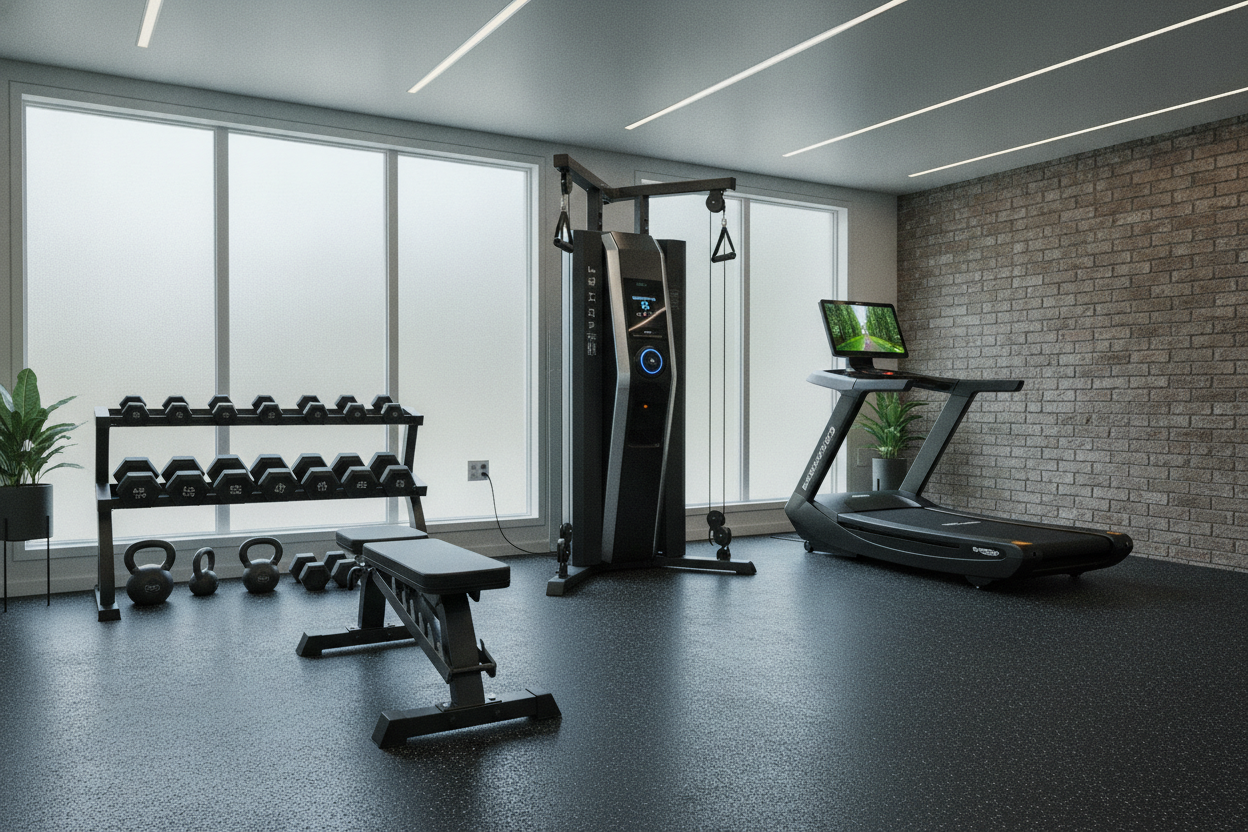
The first 30 days with a high-end electric exercise machine feel like magic. You tap a glass screen, and suddenly you have 200 lbs of tension without moving a single iron plate. The footprint is tiny—often no more than a few square feet—making it the ultimate solution for apartment dwellers or people with zero space for a full rack.
The eccentric loading is the real hook. These machines can actually pull harder on the 'down' phase of a lift than the 'up' phase, which is incredibly difficult to do with traditional weights without a training partner. It feels sophisticated, silent, and incredibly smooth. You start thinking you will never touch a rusty dumbbell again.
Why Motors, Circuit Boards, and Sweat Do Not Mix
Here is the cold, hard reality: electronics hate salt, moisture, and vibration. When you are training hard, you are producing all three in abundance. Most electric exercise equipment relies on thin circuit boards, delicate sensors, and small cooling fans that were never meant to live in a non-climate-controlled garage or a humid basement.
Too many lifters end up falling into the machine trap, choosing a flashy screen over gear that actually facilitates long-term progressive overload. A motor-driven system has a finite number of cycles before the magnetic coils or the internal friction drive simply gives up. When a pulley on a standard power rack breaks, you spend $15 at a hardware store; when a digital motor fries, you are looking at an $800 proprietary repair bill and a three-week wait for a technician.
When Your Workout Requires a Software Update
Imagine walking into your gym, grabbing a barbell, and seeing a 'Please Wait: Downloading Update 2.4.1' message. That is the reality of modern smart gear. If your Wi-Fi drops, your workout stops. Even worse is the 'planned obsolescence' baked into the business model. Many of these companies lock the best features behind a $40-a-month subscription paywall.
If that company goes bankrupt—and in the fitness tech world, they often do—your expensive electric exercise machine becomes a very heavy, very expensive wall ornament. You are tethered to their servers. When the server goes dark, your resistance goes with it. I prefer my gym equipment to work during a power outage or a stock market crash.
How to Get Smooth Resistance Without the Plug
You do not need a motherboard to get constant tension and a smooth pull. A high-quality functional trainer with a 2:1 ratio provides that buttery, cable-driven feel that will outlive your house. If you are tight on space, a set of heavy-duty resistance bands and a solid wall anchor can mimic digital resistance for about 5% of the cost of a smart machine.
I have spent years translating gym exercises for home setups, and I always come back to the same conclusion: mechanical leverage beats digital simulation every time. A selectorized weight stack is the gold standard for a reason. It is predictable, it is tactile, and it does not need a firmware patch to work on a Tuesday morning. If you want that 'smart' feel, invest in a high-end cable tower with aluminum pulleys. It will still be smooth ten years from now.
Personal Experience: The Day the Screen Died
I once tested a high-end smart rower that cost more than my first car. Three months in, a firmware glitch caused the resistance to 'spike' mid-stroke, nearly blowing out my lower back. The company went bankrupt six months later, and now that $2,500 machine is a very expensive clothes rack because the servers are offline. I went back to my Concept2, which has a basic LCD and hasn't failed me since 2012. Simple is always better when your health is on the line.
FAQ
Do electric exercise machines provide enough weight for heavy lifting?
Most max out around 200-300 lbs of total resistance. For accessory work, that is plenty, but for heavy squats or deadlifts, you will outgrow the machine's motor capacity quickly.
Is the subscription mandatory for these machines?
Usually, yes. While some have a 'basic' mode, you often lose the tracking, the programs, and sometimes even the ability to adjust weight in small increments without an active monthly fee.
Are there any electric machines that are actually durable?
Commercial-grade units found in physical therapy clinics are built better, but they often cost $10,000 or more. Consumer-grade 'smart' gyms are generally not built for the long haul.