Why Squats Aren't Enough: Finding the Ultimate Glute Builder for Real Results
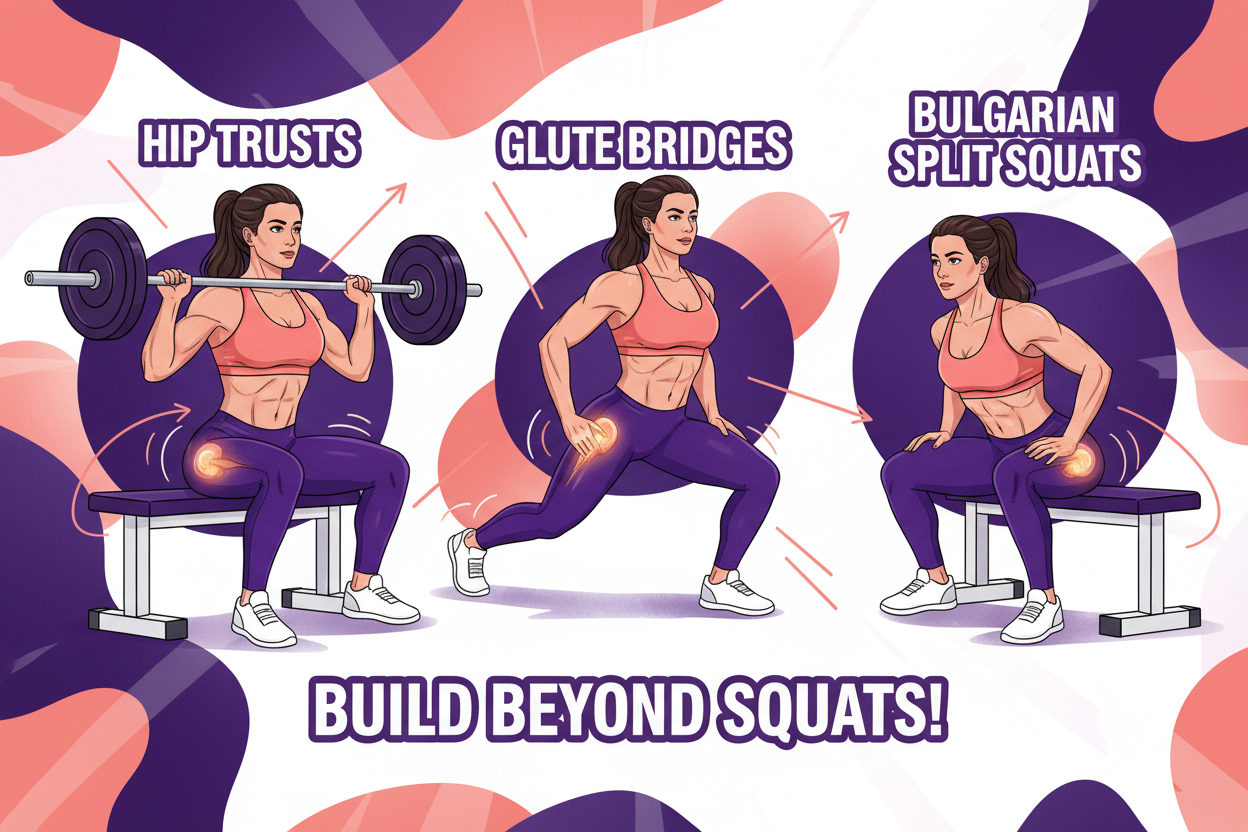
For years, the squat rack has been treated as the holy altar of lower body training. Walk into any gym, and you will see people loading up barbells under the impression that deep squats are the only path to a stronger posterior chain. While squats are undeniably effective for overall leg development, they often fall short when the specific goal is maximum glute hypertrophy. If you are looking for the absolute gold standard—the single movement that isolates and activates the gluteus maximus more than any other—the answer is the Barbell Hip Thrust.
Identifying what's the best exercise for glutes requires looking at biomechanics rather than tradition. Squats and lunges place significant tension on the quads and lower back. The hip thrust, however, operates on a horizontal vector, placing the glutes in a position of mechanical disadvantage where they must work the hardest against gravity at full contraction. This direct loading profile is why the hip thrust reigns supreme for backside development.
My Journey Beyond the Squat Rack
I spent the early years of my lifting career obsessed with the idea that "squats are king." I squatted three times a week, focusing on increasing my one-rep max and perfecting my depth. My quads grew, and my lower back certainly got stronger, but my glutes remained stubbornly stagnant. I was dealing with constant lumbar fatigue, yet I wasn't seeing the aesthetic or strength changes in my hips that I wanted. It was frustrating to put in that much volume and miss the target completely.
The turning point came when I swallowed my pride and dragged a bench to the wall to try heavy hip thrusts. The sensation was completely different. For the first time, I felt a deep, cramping tension specifically in the glute muscles without my lower back taking over. Within three months of prioritizing thrusts over squats, my hip measurement increased, and my lockout strength on deadlifts improved significantly. That experience taught me that compound vertical movements are great, but they aren't always the specific tool needed for the job.
Why the Hip Thrust Wins
To understand why this movement is the best exercise to work glutes, you have to look at the concept of "peak tension." In a squat, the hardest part of the lift is at the bottom (the hole), where the glutes are stretched. However, the glutes are not maximally activated in this stretched position compared to the quads and adductors. As you stand up and the glutes shorten, the tension on them actually decreases because the skeletal structure of the legs begins to support the weight.
The hip thrust flips this resistance profile. The hardest part of a hip thrust is at the very top, where the hips are fully extended and the glutes are fully shortened. This is the position where the gluteus maximus is capable of its highest contraction. By maintaining tension throughout the entire range of motion and peaking at the lockout, you create a massive stimulus for growth that vertical movements simply cannot match.
Proper Form: It’s Not Just Humping the Bar
Executing the hip thrust correctly is crucial. A sloppy thrust allows the lower back to take over, which defeats the purpose. You want to set up with your upper back against a stable bench, the bar resting in the crease of your hips (use a pad), and your feet planted shoulder-width apart.
The visual cue that changed everything for me was "chin down, ribs down." Many lifters throw their head back and arch their spine as they lift. This disengages the abs and puts the lumbar spine in a dangerous position. Keep your chin tucked against your chest and your eyes looking forward. As you drive the weight up, think about scooping your tailbone under. You should feel a distinct posterior pelvic tilt at the top. If you feel it in your lower back, you are likely going too heavy or hyperextending.
The Supporting Cast: You Need More Than One Move
While the hip thrust answers the question of what's the best exercise for glutes, a well-rounded physique requires addressing the muscle from multiple angles. The glutes are composed of three main muscles: the maximus, medius, and minimus. The thrust hammers the maximus, but neglecting the others will leave gaps in your stability and shape.
Romanian Deadlifts (RDLs) are the perfect companion to hip thrusts. Since the thrust works the muscle in the shortened position, you need an exercise that loads the glutes in the lengthened (stretched) position. The RDL does exactly that. It creates muscle damage through stretching under load, which is a powerful driver for hypertrophy. Combining the pump of the thrust with the stretch of the RDL creates a comprehensive stimulus.
Don’t Forget Unilateral Work
Bilateral movements hide imbalances. You might have a dominant right side taking 60% of the load during your heavy lifts. To fix this and ensure the glute medius (the upper/side glute) is firing, the Bulgarian Split Squat is non-negotiable. It is painful, grueling, and universally hated, but it is arguably the best exercise to work glutes unilaterally. It forces deep hip flexion and demands immense stability, lighting up the smaller stabilizers that heavy barbells miss.
Structuring Your Routine
You do not need to live in the gym to build an impressive posterior chain. Frequency and quality usually beat sheer volume. A smart approach involves hitting the glutes 2 to 3 times per week. One day can focus on heavy tension with the hip thrust as your primary lift. Another day can focus on the stretch with heavy RDLs. A third day could be higher repetition work focusing on metabolic stress (the "burn").
Progressive overload remains the law of the land. You must add weight, reps, or improve your technique over time. If you are thrusting 135lbs today, and you are still thrusting 135lbs six months from now, your glutes will look exactly the same. Track your numbers. The glutes are the largest muscle group in the body; they can handle heavy loads and recover relatively quickly compared to the lower back.
Building a strong posterior chain isn't just about aesthetics. Strong glutes protect the lower back, improve posture, and enhance athletic performance in running and jumping. By shifting your focus from just squatting to incorporating horizontal loading through hip thrusts and deep stretching through RDLs, you stop guessing and start growing.
Frequently Asked Questions
How often should I train glutes for maximum growth?
Most people see the best results training glutes 2 to 3 times per week. This frequency allows you to stimulate the muscle often while still providing 48 hours of recovery between sessions, which is vital for muscle repair and growth.
Can I build glutes without heavy weights?
You can build glutes with bodyweight or light bands initially, but progress will eventually plateau. To continue growing the gluteus maximus, you eventually need to introduce external resistance (weights) to provide the necessary mechanical tension for hypertrophy.
Why do I feel leg exercises in my lower back instead of my glutes?
This usually indicates a weak core or poor pelvic positioning (anterior pelvic tilt). Focus on tucking your pelvis, keeping your ribs down, and engaging your core before initiating the movement to ensure the glutes, not the spine, take the load.