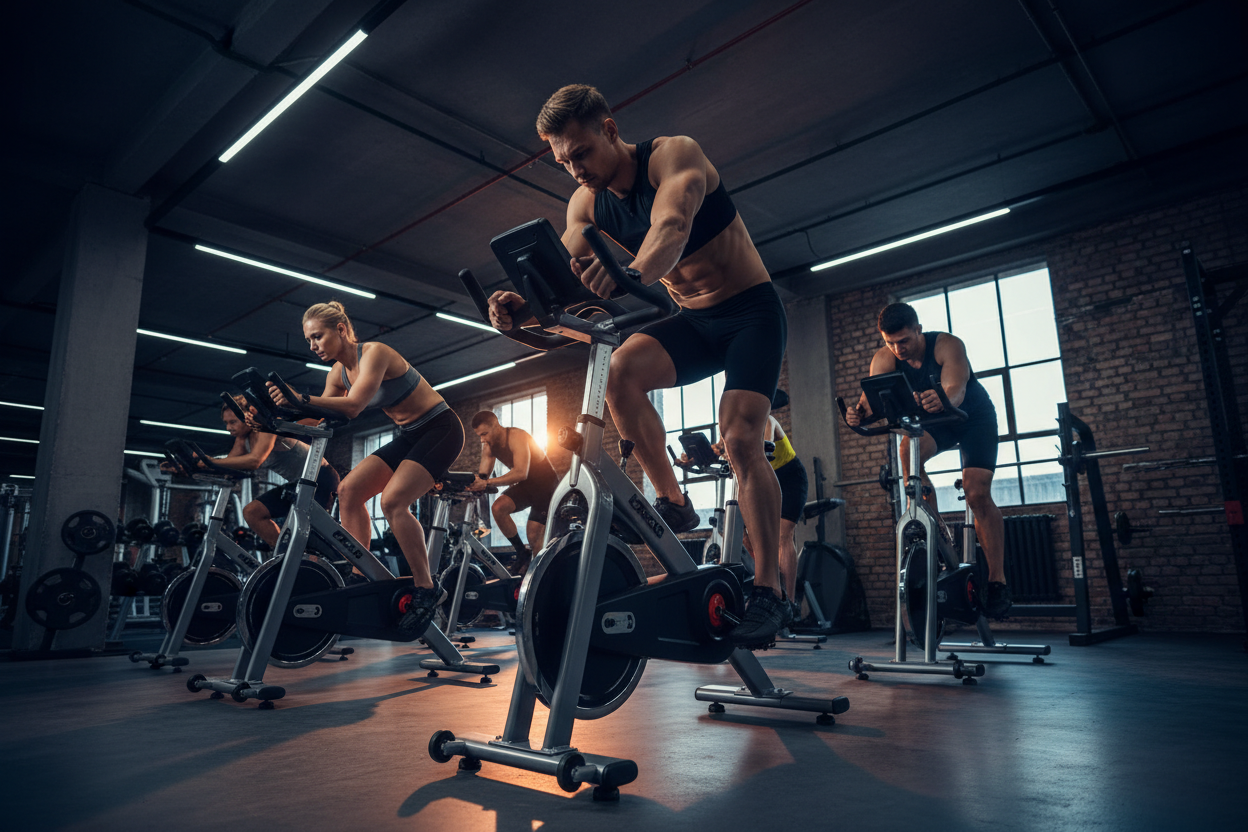
We've all been there: you walk into the cardio section, stare at the endless rows of equipment, and wonder how to get a decent sweat without boring yourself to tears. For many, the stationary bike is just a place to sit and scroll through social media while pedaling aimlessly. But if you treat it right, cycling in gym environments can be one of the most efficient, low-impact ways to build cardiovascular endurance and lower-body power.
Whether you're recovering from a knee injury, looking to supplement your heavy squat days, or just want a high-intensity finisher, mastering the indoor ride changes everything. This guide will break down exactly how to set up your equipment, choose the right machine, and program your rides for maximum results.
Key Takeaways
- Setup is crucial: Riding with the wrong seat height drastically reduces power output and strains your knees.
- Know your machine: Not all bikes at the gym are created equal; spin bikes, uprights, and recumbents serve different goals.
- Resistance equals results: Pedaling fast with zero resistance minimizes calorie burn and muscle engagement.
- Versatility: An exercise bike in gym routines can be used for both low-intensity steady state (LISS) recovery and brutal HIIT intervals.
Choosing Your Weapon: Bikes at the Gym Explained
Before you start pedaling, you need to pick the right tool for the job. Walk into any commercial or well-equipped home facility, and you'll likely see three main variations of the bike in the gym. Knowing which one to choose dictates your entire workout.
The Spin Bike (Indoor Cycling Bike)
This is the closest you'll get to a real road bike feel. Characterized by a heavy front flywheel and a forward-leaning riding posture, spin bikes are built for high-intensity intervals, standing climbs, and serious sweat sessions. If your goal is maximum calorie expenditure and athletic conditioning, this is your go-to.
Upright and Recumbent Bikes
Upright bikes have a wider seat and position you vertically, making them great for moderate steady-state cardio. Recumbent bikes put you in a reclined position with a backrest. While often dismissed by hardcore lifters, the recumbent exercise bike in gym settings is an incredible tool for active recovery days or for athletes dealing with lower back fatigue from heavy deadlifts.
Dialing in Your Ride: Form and Setup
The biggest mistake people make with cycling in gym settings is hopping on and hitting 'Quick Start' without adjusting the geometry of the bike. Poor setup leads to hip flexor pain, knee strain, and a highly inefficient stroke.
The Hip-Height Rule
Stand next to the saddle. The top of the seat should align exactly with your hip bone. When you clip in or strap your feet to the pedals, your leg should have a slight 5-to-10-degree bend at the absolute bottom of the pedal stroke. If your hips are rocking side to side while you ride, your seat is too high. If your knees are coming up to your chest, it's too low.
Programming Your Indoor Ride
Mindless pedaling won't move the needle on your fitness goals. To get the most out of your time, you need to apply progressive overload and structured programming to your rides.
HIIT vs. Steady-State Endurance
For fat loss and metabolic conditioning, try the classic Tabata protocol on a spin bike: 20 seconds of all-out sprinting against heavy resistance, followed by 10 seconds of slow recovery, repeated for 8 rounds. If you are using the bike for Zone 2 cardio (building your aerobic base), aim for 30 to 45 minutes at a conversational pace where your heart rate hovers around 65-75% of your maximum.
From Our Gym: Honest Take
I've spent hundreds of hours testing various cardio machines for our home gym builds, and I'll be honest: I used to hate indoor cycling. It wasn't until I invested in a commercial-grade spin bike for my garage gym that it clicked. The heavy 40-pound flywheel provided a smooth, aggressive resistance that my cheap, entry-level bike completely lacked.
One specific detail that changed the game for me was swapping standard cage pedals for SPD clip-ins. Being able to pull up on the pedal stroke—not just push down—engaged my hamstrings intensely and saved my quads from early burnout during 45-minute endurance rides. The only caveat? Stock saddles on almost all exercise bikes are notoriously uncomfortable. Do yourself a favor and buy a quality pair of padded cycling shorts if you plan to ride for more than 20 minutes a day.
Frequently Asked Questions
Is cycling in gym good for weight loss?
Yes, when combined with a caloric deficit. High-intensity cycling can burn a significant amount of calories in a short period, while also elevating your metabolic rate post-workout. It's a highly efficient fat-loss tool that minimizes impact on your joints.
How long should I ride a bike in the gym?
It depends on your intensity. For high-intensity interval training (HIIT), 15 to 25 minutes is usually plenty. For low-intensity steady state (LISS) or Zone 2 cardio, aim for 30 to 60 minutes to properly train your aerobic energy system.
Does the exercise bike build muscle?
While it won't build mass like heavy barbell squats, cycling against heavy resistance will absolutely develop muscular endurance and tone in your quads, hamstrings, calves, and glutes. To maximize leg strength, incorporate heavy, standing climbs into your routine.