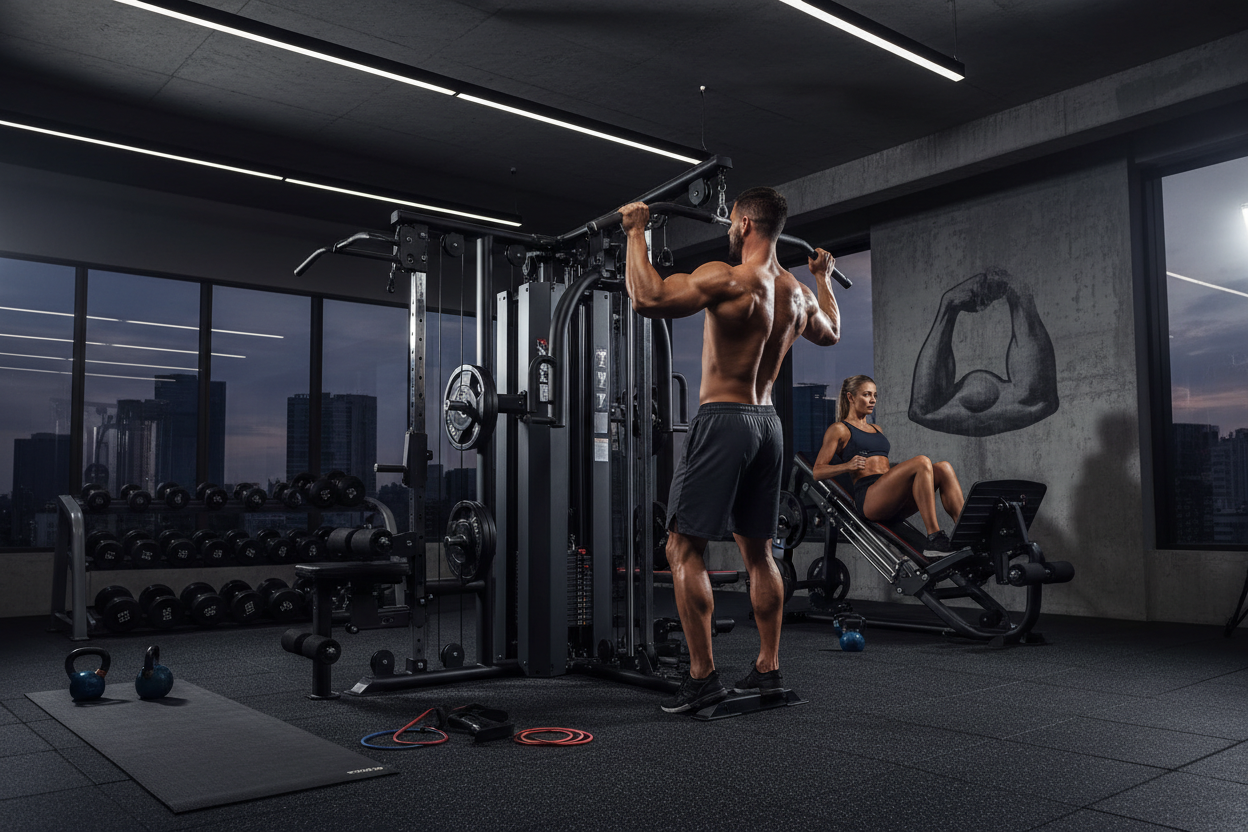
Multi Gyms: Are They Actually Worth the Investment?
Building a complete workout space in a garage or spare basement usually means sacrificing either your budget or your square footage. It is the classic fitness dilemma: you want the variety of a commercial facility, but you only have a 10x10 room to work with. Enter multi gyms.
Whether you are trying to overcome a workout plateau or just want to cancel that expensive monthly membership, finding the right multi gym at home can completely transform how you train. In this guide, we will break down exactly what to look for, how to measure your space, and whether this type of multi fitness equipment is actually the right fit for your specific goals.
Key Takeaways
- Space Efficiency: A quality multi gym replaces up to a dozen standalone machines, saving massive amounts of floor space.
- Resistance Types: Choose between selectorized weight stacks for speed or plate-loaded systems for higher weight capacities.
- Biomechanics Matter: Entry-level models often compromise on the natural range of motion; prioritize adjustable pivot points.
- Ceiling Clearance: Always account for an extra 6 to 8 inches above the machine's stated height for assembly and proper cable travel.
Maximizing Your Floor Plan
When planning a multi station gym home setup, the biggest mistake buyers make is only measuring the physical footprint of the machine itself. You have to account for the functional footprint.
How Much Room Do You Actually Need?
Most standard multi gym equipment requires a minimum footprint of roughly 4 feet by 6 feet. However, you need at least two feet of clearance on all sides for loading plates, adjusting pins, and performing exercises that extend outside the frame, like cable crossovers or leg extensions. If you are investing in multi gym equipment for home use, always map out the dimensions on your floor with painter's tape before clicking buy.
Decoding the Specs: What Matters Most
Not all multiple exercise machine setups are created equal. The difference between a wobbly, frustrating workout and a smooth, commercial-grade experience comes down to a few critical specifications.
Weight Stacks vs. Plate-Loaded Systems
If you want seamless transitions between sets, a selectorized gym machine multi with a built-in weight stack is ideal. It is cleaner and faster. However, if you already own Olympic plates, a plate-loaded multi home gym equipment setup will save you hundreds of dollars and generally offer a much higher total weight capacity for heavy lifting.
Pulleys and Cable Quality
Look for fiberglass-reinforced nylon pulleys and aircraft-grade steel cables. Cheap plastic pulleys will degrade quickly, adding a jerky, uneven friction to your multi gym fitness equipment that ruins the mind-muscle connection during isolation exercises.
Building a Complete Routine
The true value of multi exercise equipment lies in its versatility. You can seamlessly transition from upper body compound movements to lower body isolation work in seconds.
Targeting Every Muscle Group
A well-designed multi gym machine for home allows you to hit chest presses, lat pulldowns, leg curls, and triceps pushdowns without ever leaving the seat. By utilizing supersets and circuit training on a single footprint, you can dramatically reduce your total workout time while keeping your heart rate elevated.
From Our Gym: Honest Take
After testing several leading models over the past year, I have a love-hate relationship with compact multi gyms. The convenience is unbeatable. Having a dedicated multi gym for home in my garage meant I never skipped a pull day, even when it was freezing outside.
However, here is the honest caveat: at 6'2", I found that the lat pulldown bar on many entry-level models consistently bottomed out the weight stack before I got a full stretch at the top of the movement. If you are over six feet tall, you absolutely must check the maximum cable travel distance. I highly recommend spending a bit more on a machine with adjustable seat heights and longer cable routing to ensure you get a full, deep range of motion.
Frequently Asked Questions
Are home multi gyms good for building muscle?
Yes. Because they utilize cables and pulleys, they provide constant tension on the muscle throughout the entire range of motion, which is excellent for hypertrophy. Just ensure the weight stack is heavy enough to challenge you as you get stronger.
How much does a multi gym for home cost?
Entry-level models start around $300 to $500, but these often lack stability. For a durable, smooth-operating machine that mimics a commercial feel, expect to invest between $1,000 and $2,500.
Can I assemble home multi gyms by myself?
While it is technically possible, it is highly recommended to have a second person. Routing the cables correctly and lifting the heavy central frame pieces can be incredibly frustrating and potentially dangerous to tackle solo.