Why Most Good At Home Workouts Are Just Bad Cardio
I remember the day I finally quit my local big-box gym. They had just raised the monthly fee to eighty bucks, and three of the four squat racks were perpetually out of commission. I went home, cleared a small corner of my living room, and realized that finding good at home workouts wasn't as simple as a quick YouTube search. Most of what I found was just people flailing around in front of a camera.
Quick Takeaways
- Sweating and being out of breath doesn't guarantee muscle growth.
- Stability is the foundation of force—don't lift on slippery floors.
- Tempo manipulation can make light weights feel incredibly heavy.
- Prioritize unilateral movements to extend the life of your equipment.
The 'Sweat Equals Progress' Trap
We’ve been conditioned to believe that if we aren't a puddle on the floor by the end of a session, it didn't count. This is why most 'good home workouts' you see online are actually just poorly designed cardio circuits. They stack burpees, mountain climbers, and air squats with zero rest. Sure, your heart rate is 170, but your muscles aren't actually being challenged to grow.
To build muscle at home, you need mechanical tension. That means moving a weight—or your body—through a range of motion that eventually nears failure. Doing 500 jumping jacks might burn some calories, but it won't give you the stimulus needed for a stronger physique. Stop chasing the 'burn' and start chasing the 'tension.'
What Actually Makes Good At Home Workouts Effective?
Physics doesn't care that you're in your living room. To move heavy things safely, you need a stable base. I learned this the hard way when I tried to do heavy goblet squats on a cheap rug over hardwood. My feet started drifting apart like a slow-motion car crash. It was a recipe for a groin strain and a hole in the floor.
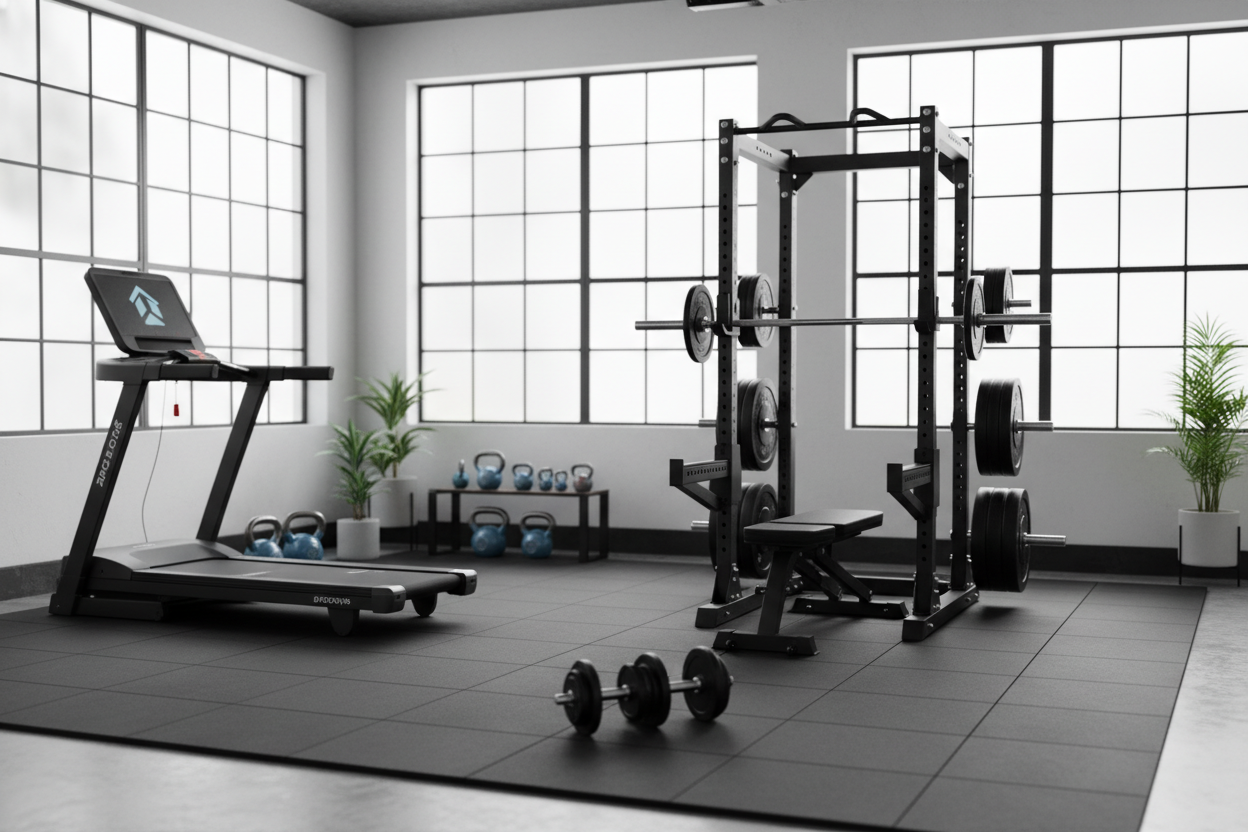
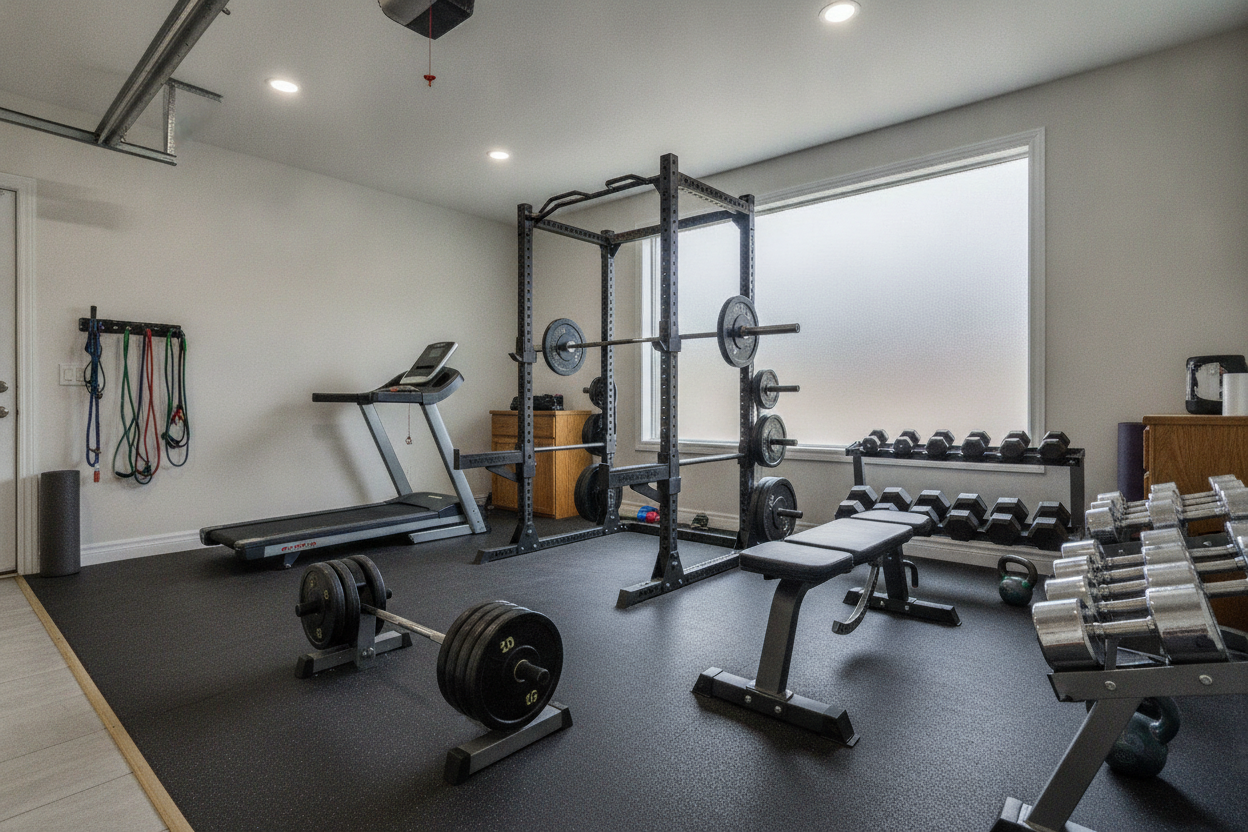
If you want to produce maximum force, you need friction. I eventually invested in a large exercise mat for home gym use because it transformed my space from a 'room with weights' into a legitimate training area. When your feet are locked into a non-slip surface, you can actually drive through the floor during a press or a lunge without worrying about your foundation crumbling under you.
Slow It Down: The Secret to Minimal Equipment
Most people think they need a full rack of dumbbells to get results. I disagree. If you have a single 25-pound weight, you can make it feel like 50 pounds just by changing the tempo. Instead of mindlessly pumping out reps, try a 4-second eccentric (the lowering phase) followed by a 2-second pause at the bottom. It’s brutal, and it works.
I’ve written extensively about how to structure these timing prescriptions in my guide on good workouts to do at home. By controlling the weight rather than letting gravity do the work, you increase the time under tension. This is the 'secret sauce' for home trainees who don't have space for a 300-pound Olympic set but still want to see real progress in the mirror.
The 4-Day Living Room Split That Actually Builds Muscle
Stop doing random 'workout of the day' videos. You need a repeatable program. I recommend a 4-day split: two lower-body days and two upper-body days. Focus on high-value movements like Bulgarian split squats, deficit push-ups (using books or handles for extra range), and rows. These are the most effective exercises at home because they are easy to load and hard to outgrow.
When I set up my space, I used a 6x8ft exercise mat to define the 'dead zone.' This footprint is the sweet spot. It’s large enough for full-body movements and sprawling out for core work, but it doesn't take over the entire room. Having a dedicated 48-square-foot territory makes it much easier to stay focused on the heavy, controlled movements that actually move the needle.
How to Keep Progressing When You Max Out Your Weights
Eventually, that 20-pound dumbbell or that bodyweight pull-up will get easy. Don't fall back into the trap of just doing 50 reps. Instead, use 'one-and-a-half' reps. Go all the way down, come halfway up, go back down, and then come all the way up. That’s one rep. It doubles the time spent in the hardest part of the lift.
You can also move to unilateral variations. If you can do 20 standard squats, try doing 5 single-leg 'pistol' squats to a chair. The demand on your nervous system and your balance will skyrocket, providing a fresh stimulus without needing to buy more gear. It's about being an engineer of your own resistance.
My Honest Take
I once bought a set of ultra-cheap adjustable dumbbells from a brand I’d never heard of because they were $50 less than the name brand. Big mistake. The locking mechanism rattled so loudly I couldn't hear my own music, and I was constantly terrified a 10-pound plate was going to slide off and crush my skull during overhead presses. I ended up selling them for a loss two weeks later. Buy gear that makes you feel safe, or you'll never train hard enough to see results.
FAQ
Do I need a bench for home workouts?
Not necessarily. You can do floor presses for chest and use a sturdy chair or the edge of a couch for split squats and rows. A bench is nice, but it’s a luxury, not a requirement.
How long should a home workout last?
If you're training with high intensity and proper rest, 45 to 60 minutes is plenty. If your workout lasts two hours, you're likely spending too much time on your phone or doing too much 'junk volume' cardio.
Can I really build muscle with just bodyweight?
Yes, but you have to make the movements harder over time. Transitioning from regular push-ups to archer push-ups or handstand push-ups is the bodyweight equivalent of adding plates to a barbell.