Why Most Combo Gym Equipment Turns Into an Expensive Coat Rack
I remember scrolling through Craigslist at midnight, convinced that a $2,500 all-in-one station was the answer to my cramped one-car garage. It promised thirty exercises in a single footprint. I bought it, spent six hours assembling it, and realized within a week that I hated it. Most combo gym equipment looks great in a glossy catalog, but the reality of training on one is often a lesson in frustration.
Quick Takeaways
- Friction kills flow: If it takes three minutes to switch exercises, you will eventually stop doing them.
- Pulley ratios matter: A 200-lb stack on a cheap combo machine often feels like 80 lbs of actual resistance.
- Modular is king: Standalone pieces allow you to upgrade or sell parts of your gym as you progress.
- Footprint lies: Massive multi-stations often require 3 feet of clearance on every side, eating more space than individual tools.
The Trap of the 'Do-It-All' Multi-Station
The allure is simple: one purchase, one delivery, and every muscle group is covered. Manufacturers love selling these because they look impressive. You see a chest press, a lat pulldown, and a leg developer all mashed into a single frame. But here is the problem—to make all those gym combos fit, the engineers usually compromise the range of motion. I have tested machines where the 'chest press' handles start so far back they practically dislocate your shoulders before the first rep.
These units are often built with 14-gauge steel and plastic pulleys that develop 'drag' over time. In a real-world garage gym, dust and humidity turn that smooth factory feel into a gritty, jerky mess. If you are serious about moving 200+ lbs, these machines often feel like they are going to tip or flex under the load. You want equipment that feels like an extension of your body, not a puzzle you have to solve every Monday morning.
Why Setup Friction Ruins Your Workout Flow
Training is about momentum. When you finish a heavy set of presses and need to move to rows, you want to be there in thirty seconds. On many combo units, you have to unhook a carabiner, move a seat to the third hole, adjust a footplate, and re-route a cable. This is 'setup friction,' and it is the primary reason these machines end up holding laundry instead of building muscle.
I have spent enough time looking at the universal gym weight machine guide to know that while those old-school beasts were built like tanks, they required a massive floor plan to avoid this very issue. In a modern home gym, you usually do not have that luxury. If your heart rate drops to resting levels because you are fiddling with a selectorized pin that is stuck, you are not training—you are doing chores. You want to spend your energy on the lift, not the logistics.
When a Combo Weight Machine Actually Makes Sense
I am not a total hater. There are specific instances where a combo weight machine is actually a genius move. The key is finding 'dual-function' pieces that share a single pivot point without requiring a total teardown. A perfect example is a high-quality plate-loaded leg extension curl machine. You sit in it for extensions, flip a lever or adjust the shin pad, and you are immediately doing lying or seated curls.
This works because the mechanical line of pull stays consistent. You are not trying to make a cable do three different jobs at once. For a home lifter, this saves about 15 square feet of floor space without sacrificing the quality of the contraction. That is the sweet spot: efficiency without the 'Frankenstein' engineering of larger multi-stations.
Building a Modular Setup That Saves Space
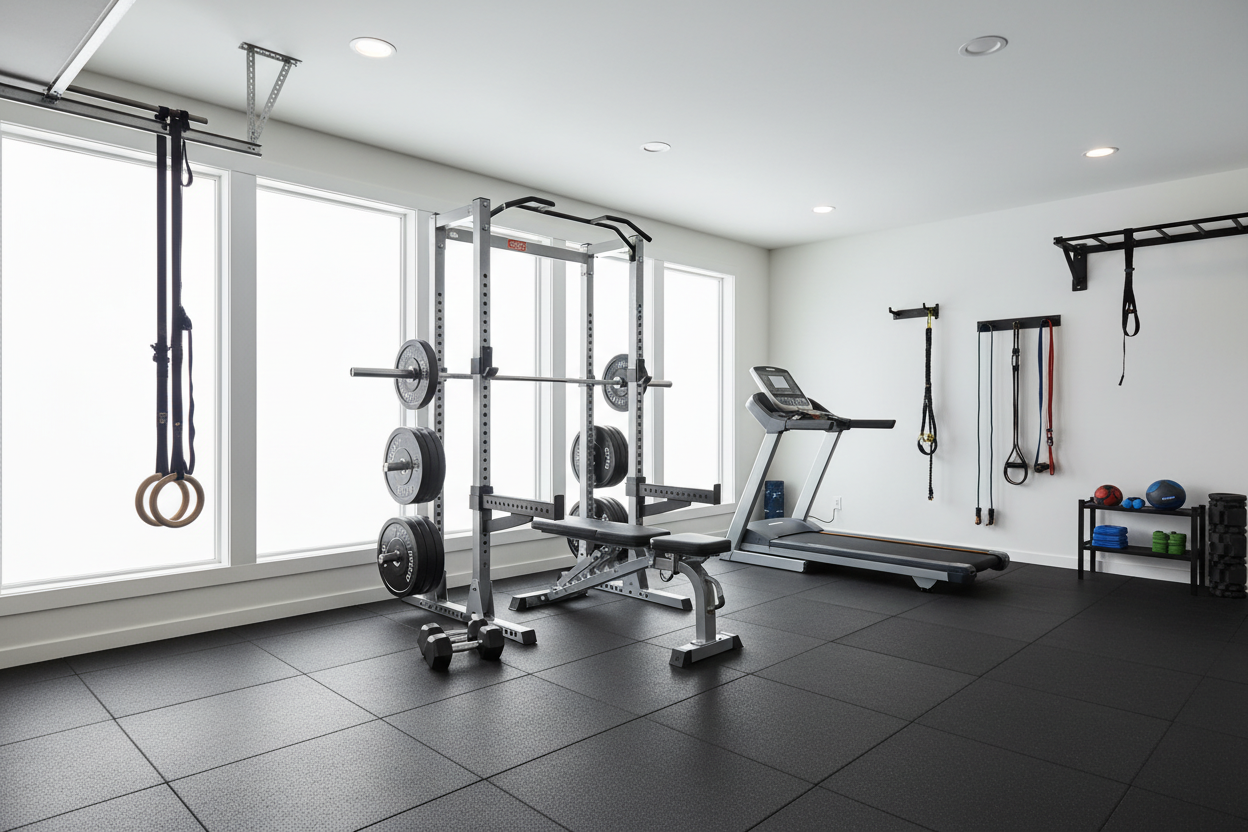
If you want a gym that actually grows with you, go modular. Start with a solid 3x3 inch 11-gauge steel rack. That is your foundation. Instead of a fixed machine, buy a heavy duty adjustable weight bench that can handle 1,000 lbs. A bench like that becomes your hub for everything from incline presses to seated curls. It is mobile; you can wheel it out of the way when you need to do deadlifts.
When you add pieces one by one, you ensure that every item in your gym is something you actually enjoy using. If you buy a standalone lat pulldown and realize you prefer pull-ups, you can sell it. If you buy a 500-lb all-in-one machine, you are stuck with it until you find someone with a trailer and a lot of patience. Modular setups allow you to optimize your specific 'work zones'—one for the barbell, one for cables, and one for recovery.
The Verdict: Should You Pull the Trigger?
Most people should skip the massive all-in-one units. Unless you are buying commercial-grade selectorized equipment (which will cost you $5,000+), the experience is rarely worth the price. You are better off looking at modular weight lifting machines that focus on doing one or two things perfectly. Your workout will be faster, your equipment will last longer, and you won't feel like you're fighting the machine every time you try to get a pump.
My personal mistake was thinking 'more features' meant 'more results.' It doesn't. Better movement means more results. Buy the gear that gets out of your way and lets you work.
FAQ
Do combo machines save money in the long run?
Usually no. While the upfront cost is lower than buying five separate machines, the resale value on combo units is terrible. Plus, when one part breaks, the whole unit is often compromised. Individual pieces hold their value much better.
Are plate-loaded combos better than weight stacks?
For home gyms, yes. Plate-loaded machines are easier to move, cheaper to ship, and you can use the plates you already own. Weight stacks are convenient but add massive shipping costs and are a nightmare to move if you ever change houses.
How much space do I really need for a multi-station?
Don't trust the 'footprint' on the box. If a machine is 4x4 feet, you actually need an 8x8 foot area to account for your body position, plate loading, and the range of motion of the cables. Always measure twice before buying a monolith.