Why Most Bodybuilding for Men Advice Wrecks Your Joints
I remember scrolling through those glossy muscle mags in my early twenties, convinced that if I just did more sets, I’d eventually look like the guys on the cover. Instead, my elbows started screaming before my chest ever grew. If you are chasing bodybuilding for men in your 30s or 40s from a garage gym, you have likely realized that the 'pro' routines are a fast track to the physical therapist.
- Prioritize frequency over single-day volume to save your connective tissue.
- High-density flooring is a non-negotiable for joint longevity.
- Machines aren't 'cheating'—they are precision tools for hypertrophy.
- Recovery is a performance metric, not a sign of weakness.
The Problem With Magazine Muscle Routines
Most 'bodybuilding builder' advice assumes you have the recovery capacity of a 19-year-old on a pharmacy-grade supplement stack. For the natural guy, doing 20 sets of chest on a Monday leaves you wrecked for a week. The inflammation spike is massive, and your tendons usually pay the price before your muscles even reach failure.
The massive recovery gap between an enhanced pro and a natural lifter is the elephant in the room. When you see a 'fit bodybuilder' doing high-frequency, high-volume splits, they often have chemical help to repair that damage. For us, that same volume leads to chronic tendonitis. I’ve spent years testing these methods, and the 'scorched earth' approach to training usually ends with a bottle of ibuprofen rather than a bigger physique.
Rethinking the 'Body Building Body' for Everyday Guys
A real 'body building body' isn't just about mass; it is about being able to move without wincing. In a garage gym, you have the freedom to prioritize longevity over ego. You don't need a 500-pound squat if your knees are too swollen to walk the next day. A realistic, aesthetic physique is built on the back of exercises you can perform pain-free for decades.
Protecting joint health is a strict prerequisite for long-term muscle growth. If you are constantly nursing a rotator cuff injury, you can't train with the intensity required to actually grow. I’ve found that staying away from 'ego weights' and focusing on the mind-muscle connection is what actually fills out a t-shirt.
Stop Lifting Heavy on Bare Concrete
Concrete is the enemy of your lumbar spine and ankles. I spent years deadlifting on a thin strip of carpet before I realized why my knees felt like they were filled with glass every morning. The micro-shocks from heavy compound lifts on a hard surface add up fast.
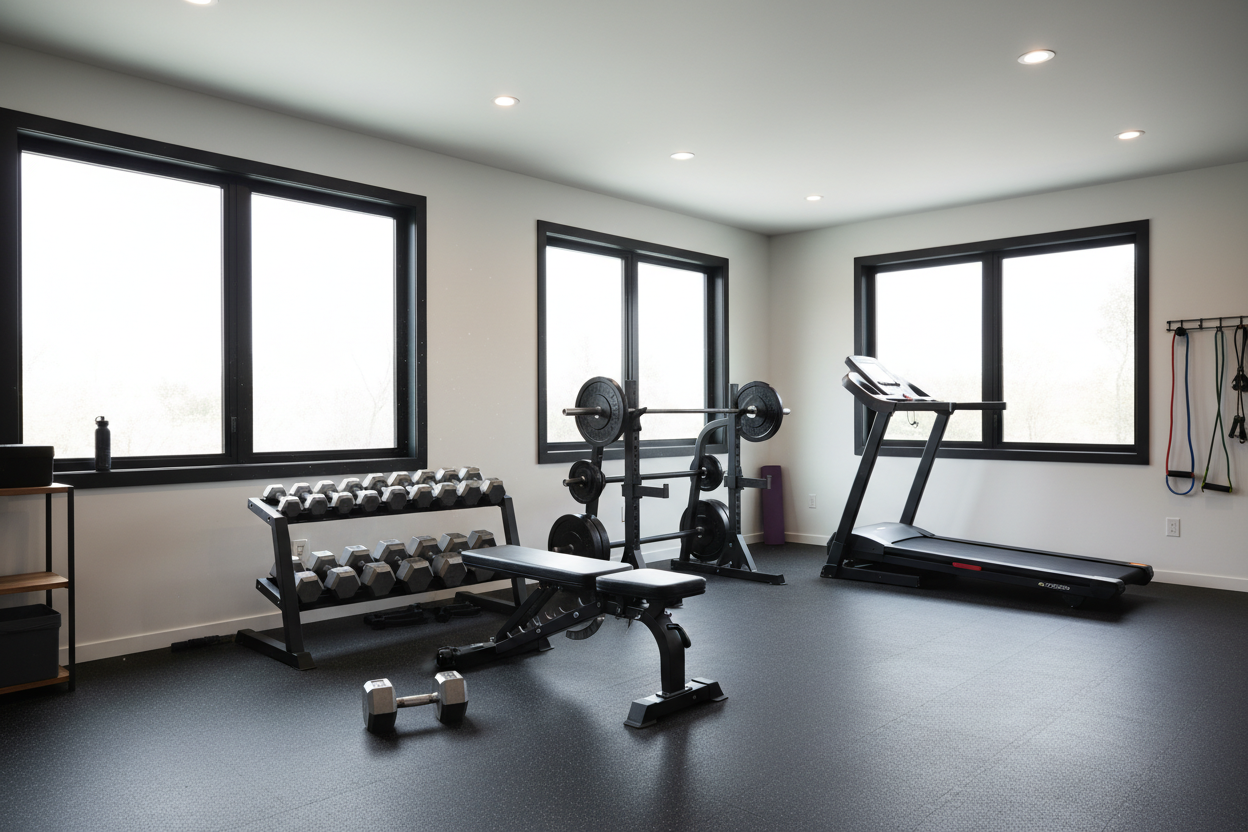
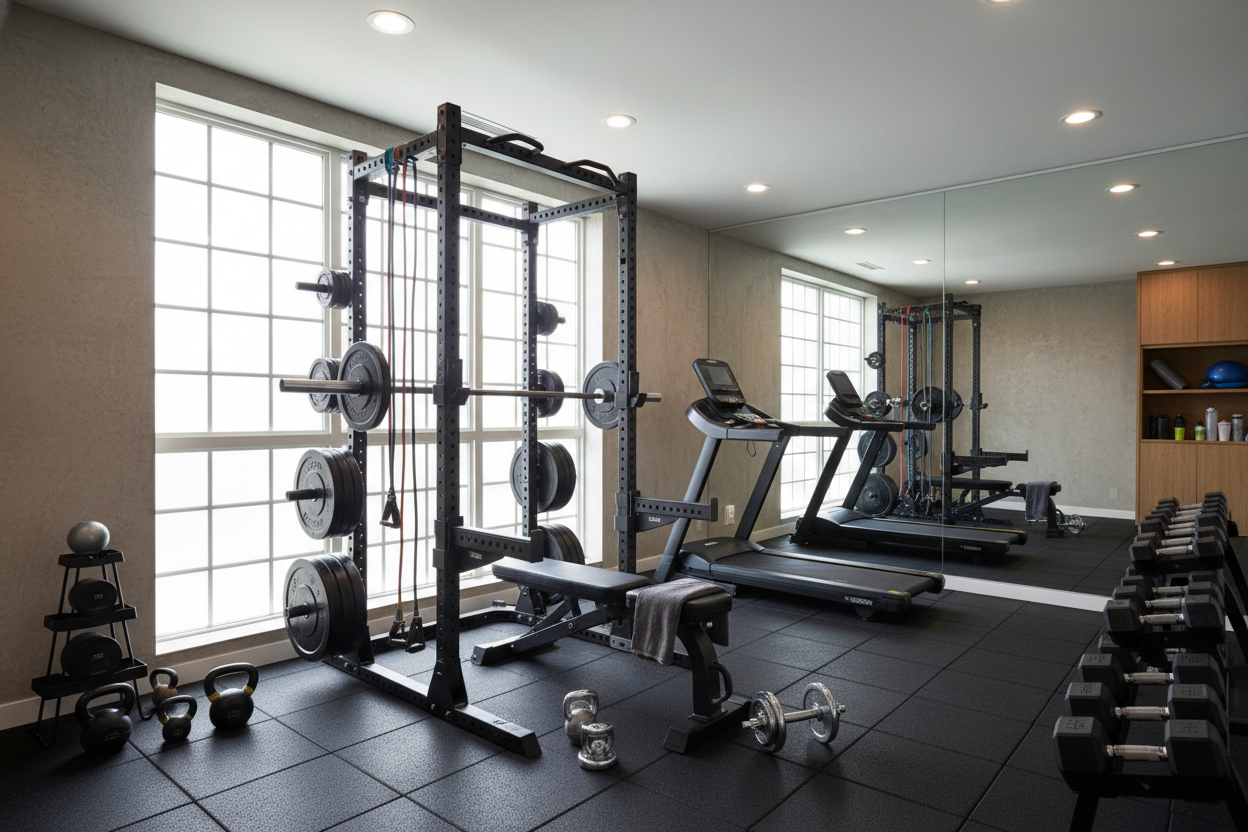
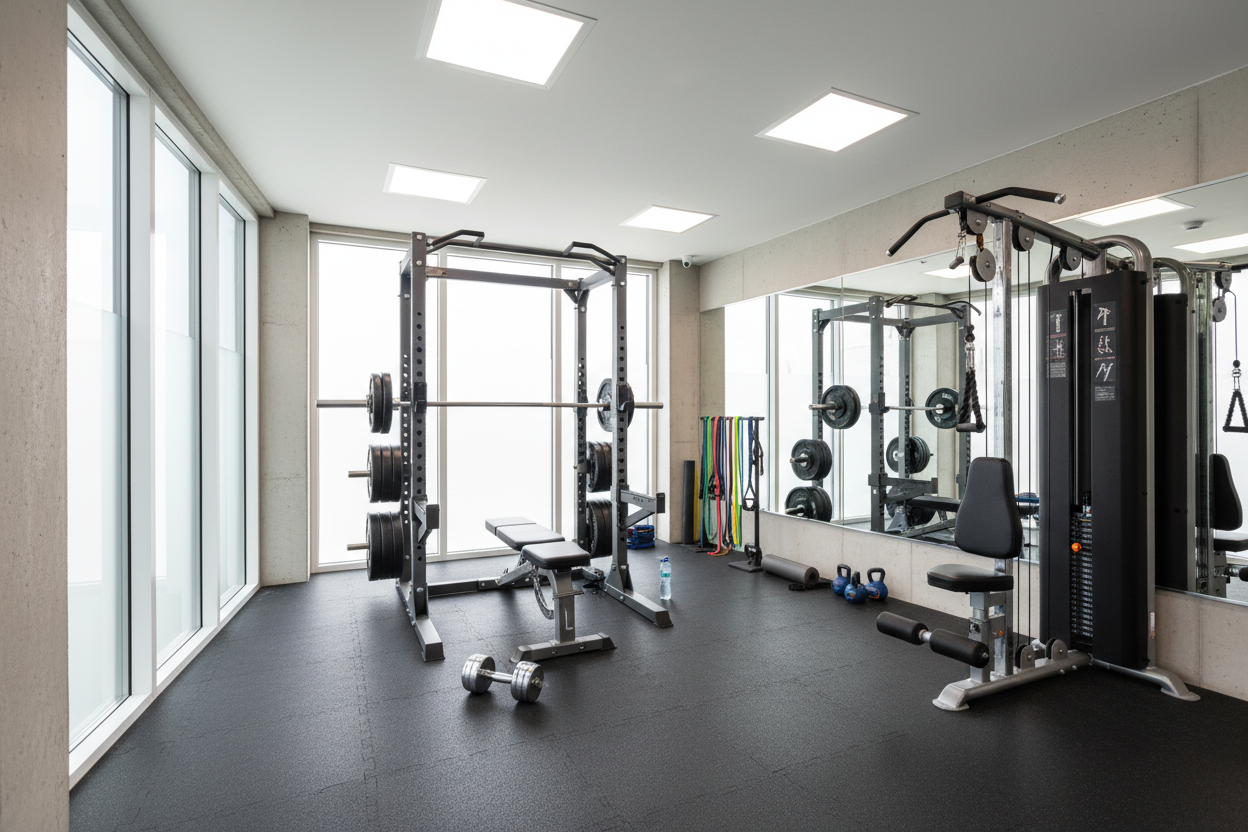
You need high-quality gym flooring for home workout setups to actually absorb the impact. Even if you aren't dropping weights, the compression on your joints during a heavy set of overhead presses is significantly mitigated by a dense rubber surface. My 6x8ft mat was the single best investment I made for my lower back health.
Smarter Equipment Choices for Aging Lifters
The 'barbell or bust' dogma is a great way to end up in a back brace. While the big three lifts are foundational, they aren't the only way to build a 'bodybuilder fitness' look. As I’ve gotten older, I’ve swapped some heavy barbell work for more stable alternatives that isolate the muscle without the massive spinal loading.
If your lower back is toasted, using a lower body strength machine like a belt squat or a dedicated leg press can be a savior. These machines allow you to push your quads to absolute failure without your lumbar spine being the limiting factor. I personally use a plate-loaded leg press that fits in a 5x4 ft footprint; it’s more effective for my hypertrophy goals than back squats ever were.
Structuring a Joint-Friendly Week in the Garage
I shifted from a 'Bro Split' to an Upper/Lower split three years ago and never looked back. By mastering all body workouts or frequent, lower-volume sessions, you stimulate the muscle more often without the joint-crushing volume of a single 'Leg Day.' This keeps the protein synthesis elevated without leaving you unable to climb stairs.
Hitting a muscle group twice or three times a week with 6-8 sets per session is almost always superior for the natural 'fitness body builder' than hitting it once with 20 sets. My elbows stopped clicking almost immediately once I stopped doing 15 sets of triceps in a single afternoon.
The Boring Reality of Real Recovery
To succeed as a natural 'fit bodybuilder,' you have to treat recovery as part of your program. This means 7-8 hours of sleep and actually eating enough protein to repair the tissue you just broke down. It isn't flashy, and it doesn't make for a great Instagram story, but it is what works.
Mobility work is the other half of the equation. I spend at least 10 minutes before every session using a foam roller and dynamic stretches. It’s boring, but it’s the reason I can still deep squat at 40 without my hips feeling like they’re made of rusted hinges.
My Biggest Mistake
I once ignored a nagging 'click' in my shoulder during heavy overhead presses. I was obsessed with hitting a specific number on the bar and wouldn't back down. That ego cost me four months of training and a lot of money in physical therapy. I learned the hard way that a 10% deload today is infinitely better than a 100% layoff for three months. Now, if something feels 'off,' I swap the movement immediately. There is no such thing as a mandatory exercise.
FAQ
How many days a week should a natural bodybuilder train?
For most guys, 3 to 4 days is the sweet spot. This allows for maximum intensity during the session and 48-72 hours of recovery between hitting the same muscle groups again.
Are machines better than free weights for hypertrophy?
They aren't 'better,' but they are more stable. Stability allows you to focus purely on the target muscle. For joint health, incorporating machines for 40-50% of your volume is a smart move.
Do I really need gym flooring?
Yes. Concrete has zero give. If you're doing any standing movements or heavy pulls, the lack of shock absorption will eventually manifest as knee, hip, or back pain.