Why Mixing Too Many Types of Exercise Equipment Ruins Home Gyms
I spent three hours last Tuesday scrolling through local classifieds, looking at a commercial-grade leg press that was priced so low it felt like a heist. My garage was already packed, but I convinced myself I could squeeze it between the water heater and my squat rack. By the time I got home and realized it had a 7-foot footprint and required another 3 feet of clearance for plate loading, the reality set in. We often get blinded by the variety of types of exercise equipment available and forget that our floor space is a finite resource.
Quick Takeaways
- Prioritize 'Anchors' like power racks before buying specialized machines.
- A 7-foot barbell requires at least 9 feet of lateral clearance to change plates safely.
- Don't mix high-intensity zones (lifting) with static zones (cardio) if you value your shins.
- Flooring is the most overlooked piece of gear that dictates your gym's layout.
The Big Box Gym Illusion
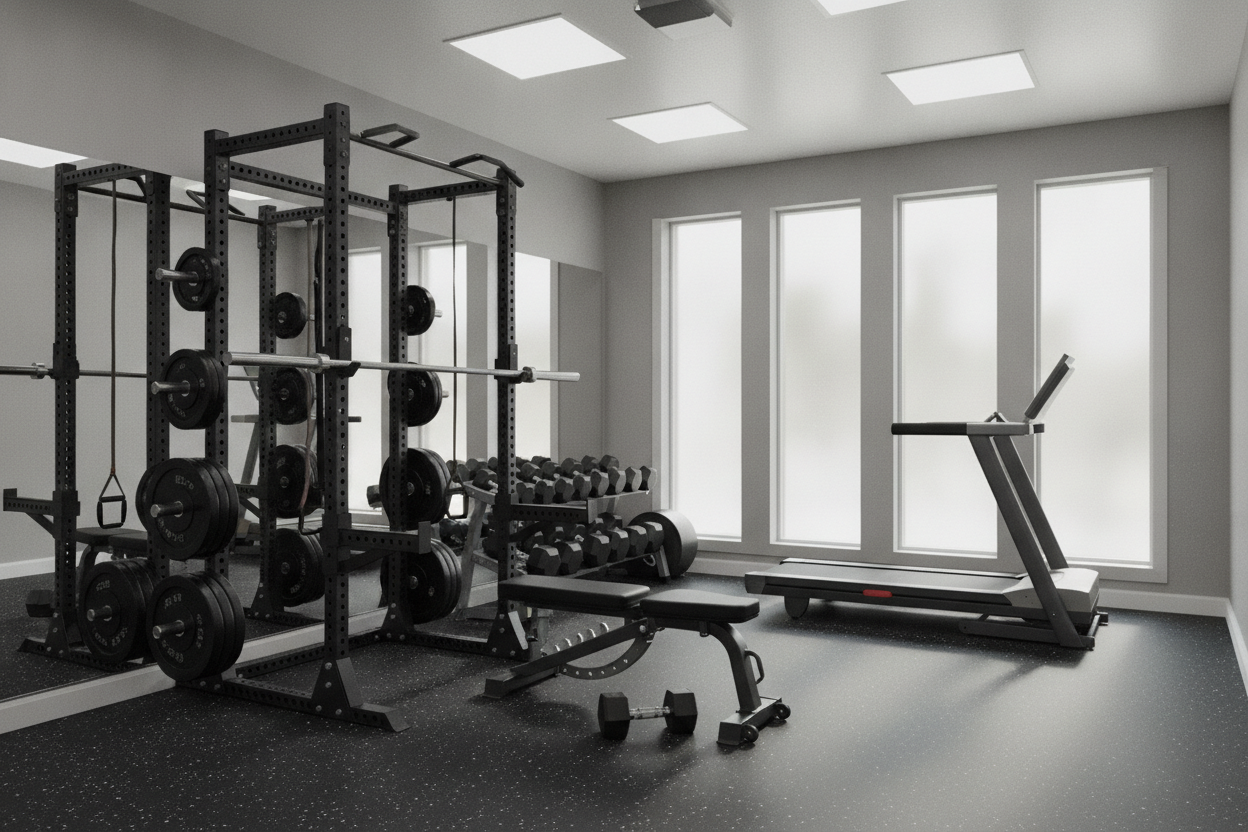
Commercial gyms have tens of thousands of square feet. They can afford to have a dedicated section for every possible movement. When you try to replicate that by cramming different kinds of exercise equipment—a treadmill, a cable crossover, a power rack, and a row of dumbbells—into a 200-square-foot spare room, you create a logistical nightmare. You aren't building a gym; you're building an obstacle course.
The biggest mistake is ignoring 'working space.' It’s not just about where the machine sits; it’s about where your body moves while using it. If you have to move your bench every time you want to do a pull-up, you’ll eventually stop doing pull-ups. I’ve seen beautiful setups become expensive storage units because the owner couldn't perform a simple deadlift without hitting the treadmill console. Flow is the difference between a 45-minute efficient blast and a 90-minute frustration session.
The Different Kinds of Exercise Equipment (Ranked by Priority)
Stop thinking about gear in terms of 'chest day' or 'leg day.' Start thinking about it in terms of footprint and versatility. If a piece of gear only does one thing, it better be the most important thing you do. I categorize equipment into three buckets: Anchors, Accessories, and Space Eaters. Anchors are the pieces that stay put and define the room. Everything else should be mobile or wall-mounted to keep your floor plan flexible.
The 'Anchors' (Racks, Benches, and Heavy Iron)
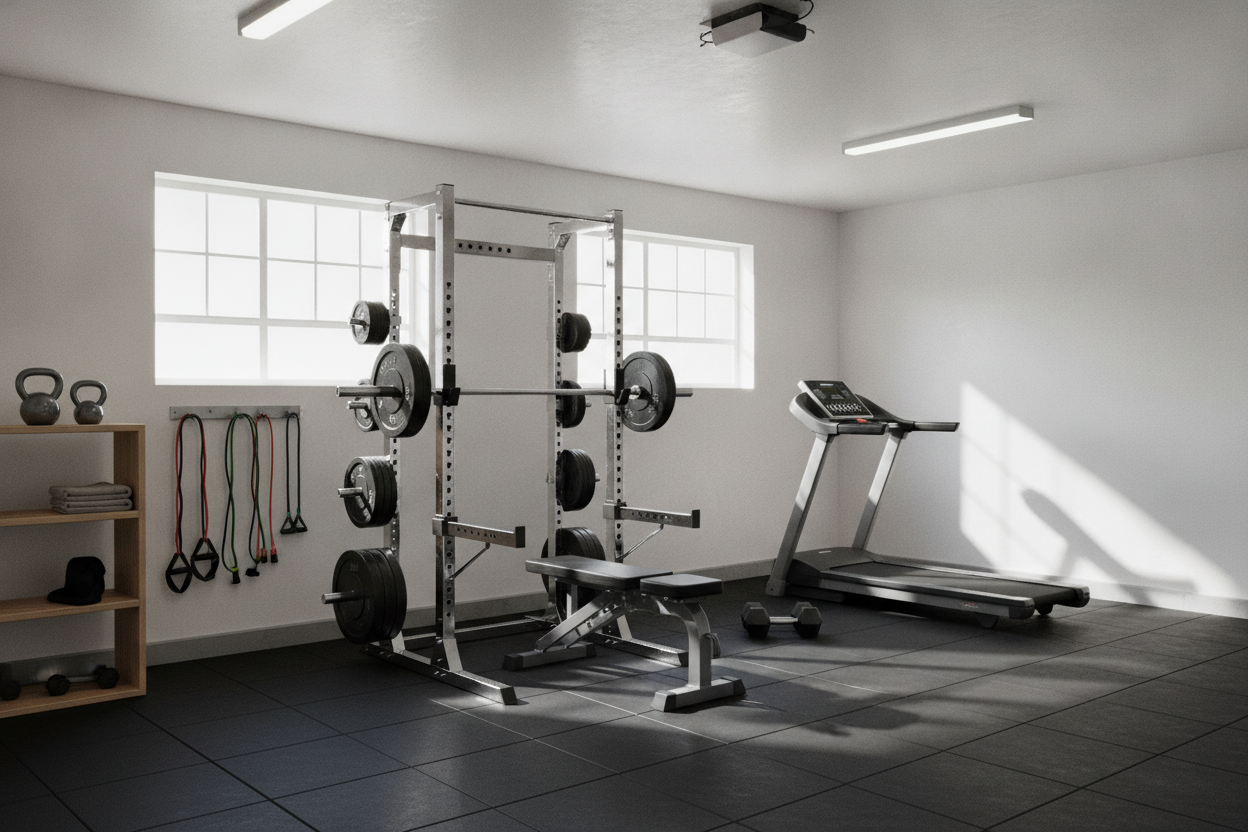
Your power rack is the sun that your gym's planetary system revolves around. A standard rack is usually 48 inches wide, but that is a deceptive number. You have to account for the 84-inch Olympic barbell. If you don't have at least a foot of clearance on either side of the bar, you'll be performing a delicate dance every time you want to slide a 45-lb plate on. I once set my rack too close to a wall and spent six months bruising my knuckles every time I loaded the bar.
Heavy iron doesn't move easily. Once you bolt a rack down or stack 500 lbs of plates in a corner, that’s where they live. Plan your 'Anchor' zones first. If you're serious about strength, your rack needs to be in a spot where you can overhead press without hitting a ceiling fan and where the floor can handle the vibration of a heavy squat walk-out. This is the foundation that dictates whether your gym feels like a pro facility or a cluttered basement.
The Unsexy Foundation (Flooring and Space Eaters)
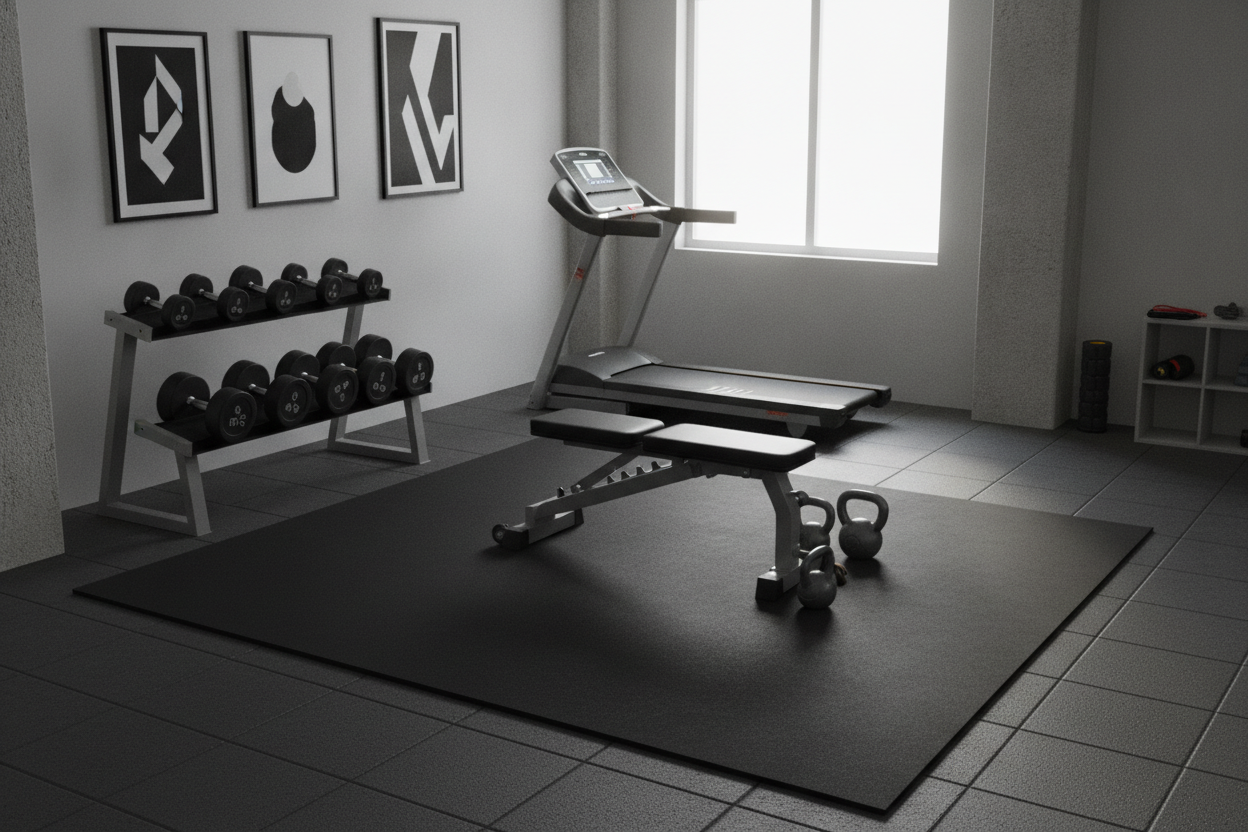
You can have the best rack in the world, but if it’s sitting on bare concrete or thin carpet, you’re asking for cracked slabs and noise complaints. Real gym flooring is thick, heavy, and smells like a tire shop for the first week. It’s non-negotiable. If you are setting up a dedicated lifting station, a 6x8ft exercise mat is the bare minimum to protect your subfloor and provide a stable, non-slip surface for your feet.
For those covering a larger garage area, investing in large exercise mats allows you to bridge the gap between your heavy lifting zone and your floor work area. High-density rubber absorbs the impact that would otherwise rattle your house. I’ve seen guys spend $3,000 on a fancy barbell only to bend it because they dropped it on a thin piece of foam. Don't be that guy. Floor first, iron second.
Why Most Types of Exercise Equipment Fight for the Same Space
The conflict usually happens between 'dynamic' and 'static' gear. A treadmill is static—it sits there and takes up a 3x6 foot rectangle forever. A power rack is dynamic because the 'work zone' extends three feet in every direction. When you try to put these different kinds of exercise equipment side-by-side, you lose your ability to move safely. I’ve seen people trip over dumbbell racks while trying to step off a rower because they tried to fit too much into one corner.
The reality is that many types of exercise equipment for the home end up as expensive laundry hangers because they weren't planned for. If you have to spend ten minutes moving gear just to start your first set, your motivation will vanish within a month. Safety is also a massive factor. If you're bailng on a heavy squat, you need clear space behind you. If a stationary bike is parked two feet behind your rack, you're looking at a trip to the ER.
Pick a Primary Modality Before You Buy
You cannot be a competitive powerlifter, a CrossFit athlete, and a high-end bodybuilder in a single-car garage. You have to choose a primary modality. If you love the big three (squat, bench, deadlift), your money and space should go toward a heavy-duty rack and calibrated plates. If you're into functional fitness, you need open floor space for burpees and wall balls. Trying to do both usually results in having mediocre gear for both.
When you decide on your focus, look for the best brand of exercise equipment that specializes in that specific niche. Don't buy a generic 'all-in-one' machine from a brand that makes everything from blenders to treadmills. Specialized brands understand the geometry of a home gym. They make short-profile racks for low ceilings and folding benches for tight spaces. Buy gear that solves your space problems, don't buy gear that creates them.
Personal Experience: The Smith Machine Mistake
A few years ago, I found a deal on a selectorized Smith machine. I thought it would be a great way to add hypertrophy work. It was massive. It took up 40% of my usable floor space. Within a month, I realized I hated using it because I had to shimmy sideways just to get to my pull-up bar. I eventually sold it for half what I paid just to get my floor space back. The 'empty' space in your gym is just as valuable as the equipment itself.
Frequently Asked Questions
How much space do I really need for a home gym?
For a basic barbell setup, you need at least an 8x10 foot area. This gives you room for a 7-foot bar and enough space to move around it without hitting walls. If you want cardio equipment too, double that square footage.
Can I put heavy weights on a second-floor room?
It depends on your home's construction, but generally, I advise against it. 500 lbs of deadlifted weight hitting the floor creates thousands of pounds of momentary force. If you must, use extra-thick 1.5-inch rubber tiling and avoid dropping weights.
Are 'all-in-one' trainers worth it?
They are great for saving space, but they often have lower weight capacities and proprietary parts. If you are a serious lifter, you'll likely outgrow the 150-lb weight stack on most home units within a year.