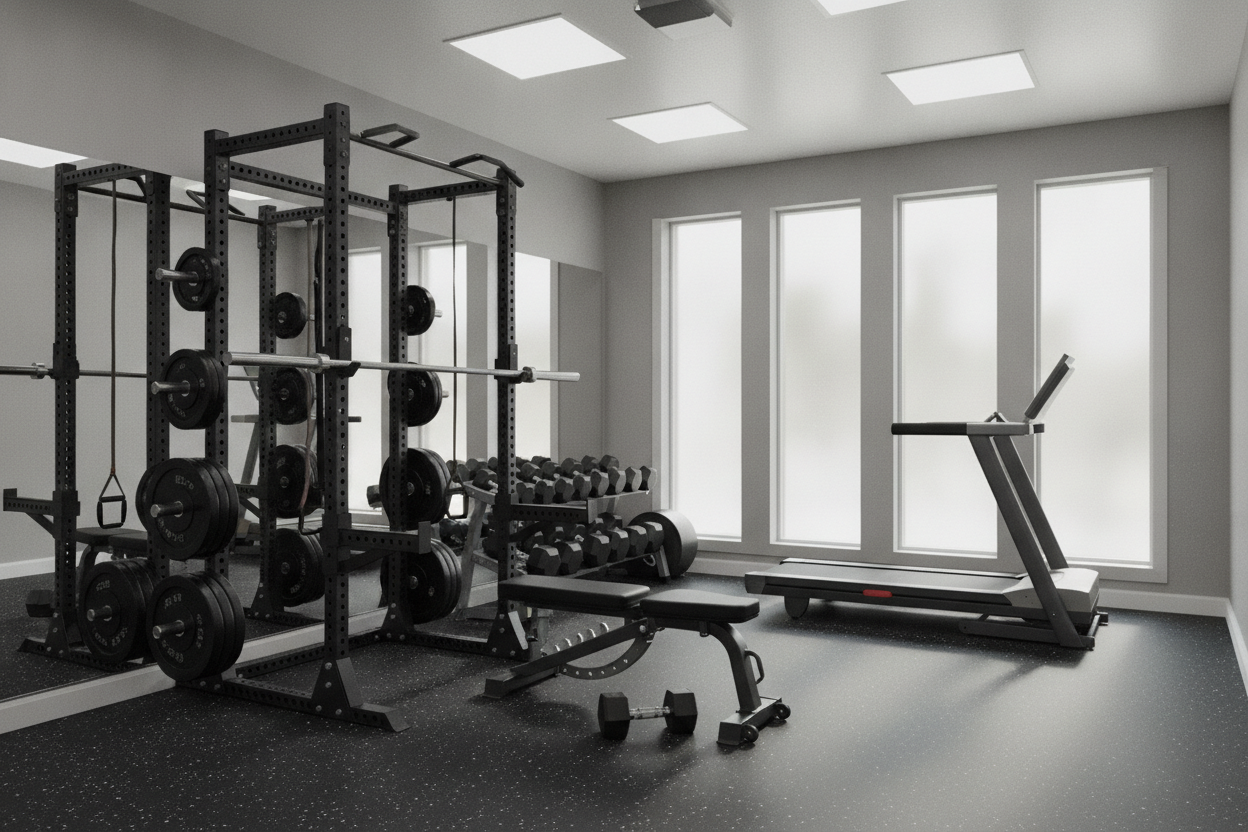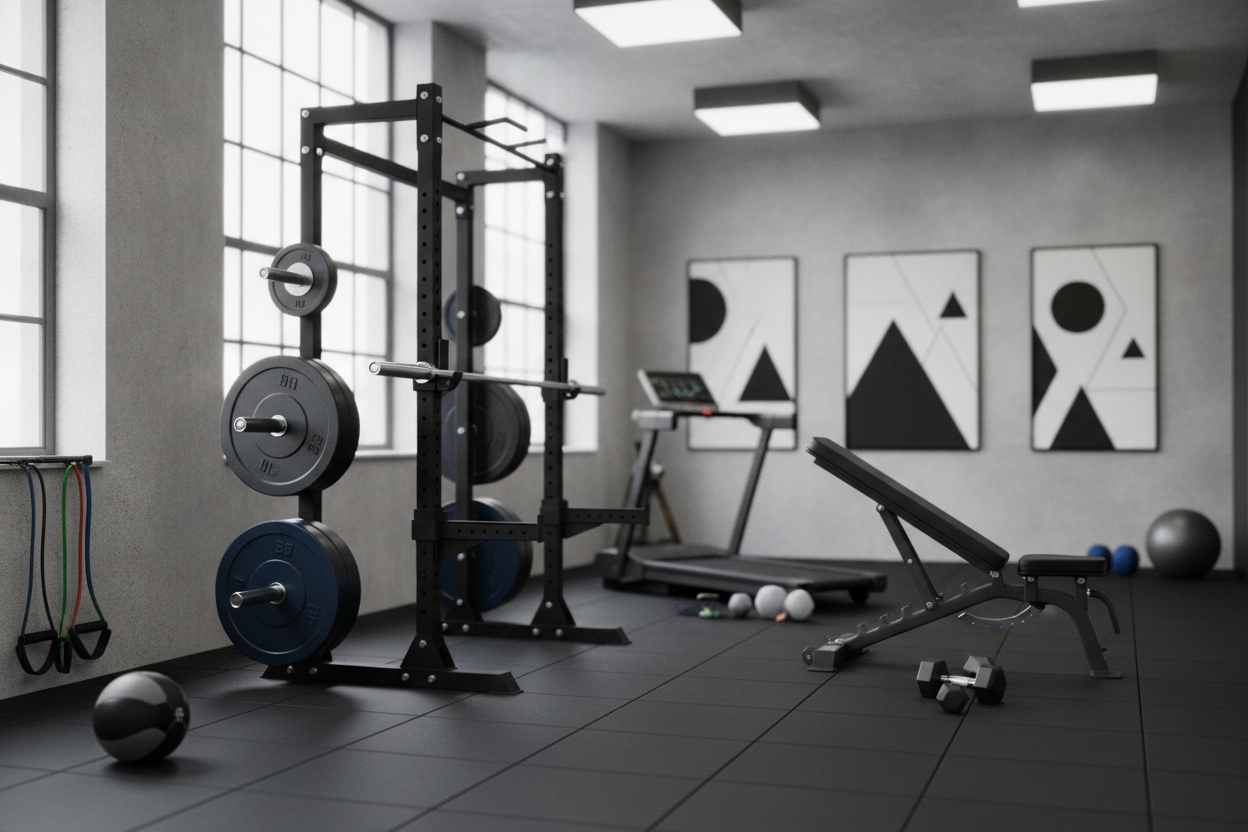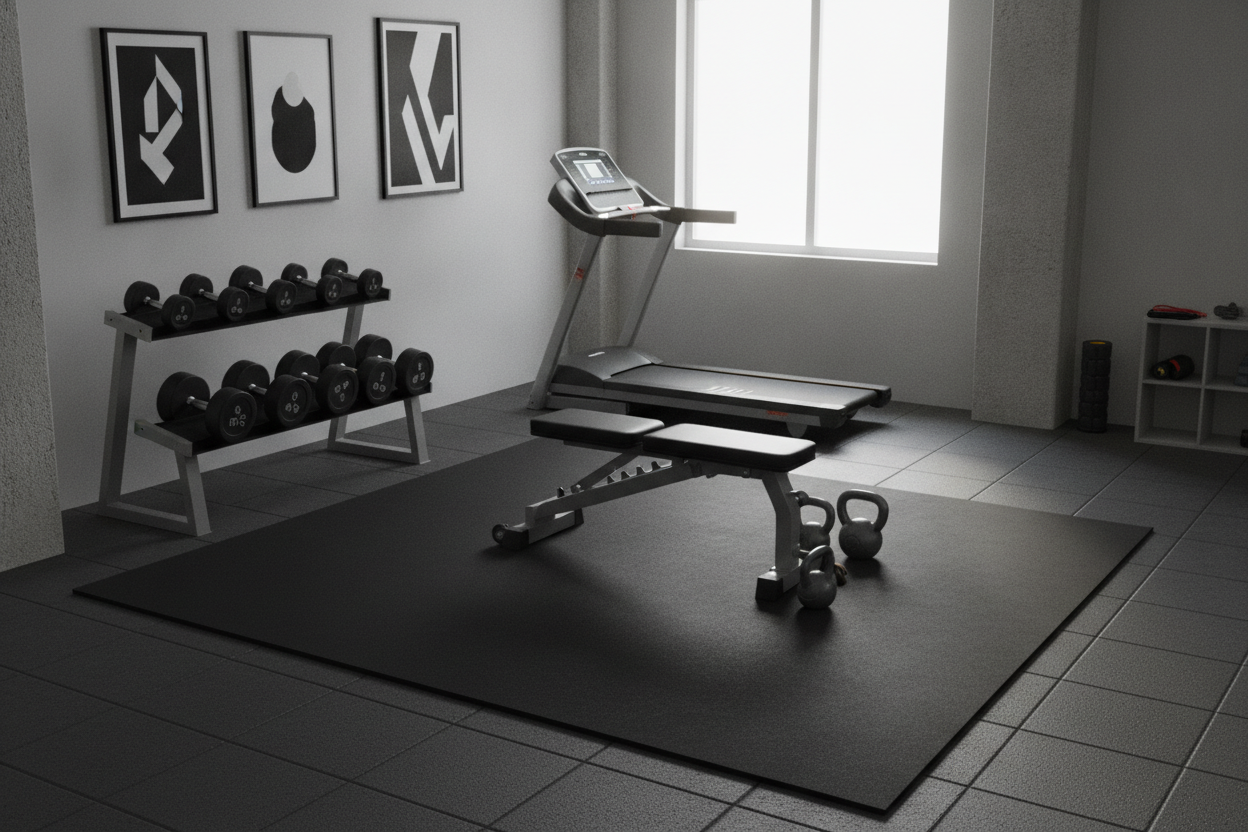
The 6x8 Mat That Saved My Home Gym and Training Routine
I spent three months researching the perfect power rack. I obsessed over hole spacing, pull-up bar diameters, and whether I needed a lat pulldown attachment. But the night I finally set it all up, I made a rookie mistake. I was testing out a new set of 50-pound dumbbells on a bare hardwood floor in my guest room while planning my gym and training schedule. One sweaty palm later, I watched a dumbbell bounce off the wood, leaving a crater that cost me $800 of my security deposit.
Quick Takeaways
- Your floor is the most important piece of safety equipment you own.
- Commercial-grade rubber is essential for vibration dampening in residential spaces.
- Standard yoga mats are too small and dangerous for dynamic movements.
- High-density 6x8 mats protect your joints from micro-trauma and impact.
The Day I Dropped a Dumbbell Through My Hardwood
The sound of oak splintering is something you never forget. It sounds like a gunshot in a quiet house. I was three sets into a heavy dumbbell lunge when the weight slipped. It didn't just scratch the floor; it compressed the wood and left a permanent reminder of my poor planning. I realized then that I had spent thousands on iron and zero on the foundation. For the next month, I babied every single rep. I was terrified of dropping a plate or even setting a kettlebell down too hard. My intensity plummeted because I was fighting the environment instead of the weights.
When you're afraid of your floor, your training suffers. You stop going to failure because you're worried about a missed lift damaging the subfloor. You stop doing plyometrics because the house rattles every time you land. The shame of explaining that crater to a flooring contractor was the wake-up call I needed. I had to stop treating my workout space like a bedroom and start treating it like a performance environment. That meant getting real rubber under my feet before I touched another piece of iron.
Why Your Commercial Routine Fails in the Living Room
Commercial gyms are built on massive concrete slabs, usually topped with 3/4-inch high-density rolled rubber. When you try to port that same gym fitness training intensity into a spare room or a garage, the physics change completely. Most home floors are designed for static furniture, not for 200-pound humans dropping heavy loads or performing explosive movements. A thin mat won't cut it for deadlifts or even high-impact cardio. You need a foundation-first gym setup that mimics the shock absorption of a professional facility.
Without a heavy-duty barrier, you aren't just fighting gravity; you're fighting the structural integrity of your home. High-density rubber acts as a shock absorber for your home’s skeleton, dissipating force laterally rather than sending it straight down into the floor joists. It also provides the acoustic dampening that prevents your family or neighbors from hearing every single rep. If you’re serious about replicating a pro environment, you have to treat the floor as an active component of your gear, not just a passive surface. The 'thud' of a weight hitting a proper mat is a sign of a safe setup; a 'crack' is a sign of an expensive mistake.
Stop Buying Shiny Gear (Buy This First)
It’s a classic mistake: you have a $2,000 budget, and you spend $1,800 of it on a multi-grip power rack and a boutique barbell. You’re left with a hundred bucks for flooring, so you buy some thin foam puzzle pieces from a big-box store. Six months later, those pieces are stretched, the seams are full of dried sweat, and they’re sliding across the floor every time you try to do a burpee. If you want to select the best fitness training equipment, you have to prioritize the interface between you and the ground.
I’ve tested racks that cost more than my first car, but if they’re sitting on a slippery, unstable surface, they feel like junk. A heavy, high-density mat anchors your gear. It creates a zone where you know you have 100% traction. This allows you to focus on your bracing and your form rather than wondering if your feet are going to slide out during a heavy squat. I’ve seen athletes buy high-end bumper plates only to realize they can’t drop them because their floor is too thin. That’s a waste of money. Spend the money upfront on a professional-grade mat. It’s a one-time purchase that outlasts almost every other piece of gear in your rack. My primary mat has survived three moves and thousands of dropped kettlebells, and it still looks brand new. Don't buy the shiny stuff until you've secured the ground you stand on.
Sizing Your Space: Why Tiny Yoga Mats Are a Trap
Most people start with a standard yoga mat. It’s a trap. Try doing a weighted lunge or a lateral bound on a 24-inch wide strip of foam. You’ll spend more energy trying not to slip off the edge than you will on the actual movement. For a real home setup, a 6x8ft exercise mat is the gold standard. It gives you enough runway for dynamic movements and enough width to drop a barbell safely without hitting the bare floor.
The problem with small mats isn't just the size; it's the weight. A standard mat weighs three pounds and relies on a 'sticky' bottom that fails the moment a little dust or sweat gets under it. A 6x8 mat, especially one made from 7mm high-density rubber, weighs enough to stay put through sheer friction and mass. You can sprint in place, do burpees, or perform aggressive agility drills without the mat bunching up. I’ve seen people try to tape down smaller mats, which just ruins the floor and looks like a disaster. Do yourself a favor and get a single, massive piece of rubber. It turns a corner of your room into a dedicated facility instantly, creating a psychological boundary that helps you get into the right headspace for training.
The Hidden Joint-Saving Benefit of Good Flooring
The most overlooked benefit of high-quality flooring is what it does for your body. We talk a lot about protecting the house, but your joints are much harder to repair than hardwood. When you train on a hard, unforgiving surface, your body has to work overtime to stabilize. Every time your foot hits a slippery floor, your stabilizer muscles fire in a panicked way to prevent a fall. Over time, this leads to tendonitis, shin splints, and general joint fatigue.
Investing in a large exercise mat for home gym use provides just enough 'give' to protect your joints without being so squishy that it ruins your balance. You don’t want to lift on a mattress, but you don't want to lift on a rock either. A 7mm or 8mm rubber mat is the sweet spot. It offers a non-slip surface that actually gets grippier as you sweat, allowing you to plant your feet with total confidence. I noticed a massive difference in my recovery once I stopped doing HIIT sessions on my garage floor. My knees stopped aching, and I could actually focus on the movement instead of the impact. It’s the invisible insurance policy for your ankles and lower back.
FAQ
Will it damage my laminate floors?
No, as long as you get a mat with a non-bleeding backing. High-quality rubber is inert and won't react with your floor's finish. Avoid cheap PVC mats that use plasticizers which can yellow your floors over time.
Is 7mm thick enough for deadlifts?
For most people, yes. If you're pulling 500+ lbs, you might want a dedicated plywood and rubber platform, but for 95% of home workouts, 7mm high-density rubber is the sweet spot between stability and protection.
How do I clean it?
Skip the harsh chemicals. A drop of dish soap in a bucket of warm water and a microfiber mop is all you need to keep it grippy. Avoid oil-based cleaners, which will make the surface dangerously slippery.