Why I Stopped 'Pouring the Pitcher' on db shoulder raises
I remember staring at my 50-lb PowerBlocks, wondering why my right shoulder felt like someone was driving a flathead screwdriver into the joint. I'd been doing db shoulder raises the way every 90s bodybuilding mag taught: 'pour the pitcher' at the top. It felt like work, sure, but it also felt like my rotator cuff was being ground into dust.
- Stop Internal Rotation: Avoid the 'pinkies up' cue to save your rotator cuffs.
- The 30-Degree Rule: Lift in the scapular plane, not directly out to the sides.
- Grip Tweak: Shift your hands toward the pinky side of the handle for better leverage.
- High Reps Win: Focus on 12-20 reps with zero momentum for actual growth.
The Day My Shoulders Finally Had Enough
It happened on a Tuesday. I was midway through a high-volume shoulder day in my garage, chasing that 3D look with a pair of 25-pounders. On the twelfth rep of my third set, a sharp, electric zing shot through my AC joint. I dropped the weights—luckily onto rubber flooring—and realized that my quest for wider shoulders was actually just destroying my ability to reach for the milk in the fridge.
I’d been following the 'pinkies up' rule for years. It’s the classic advice: act like you’re pouring a pitcher of water at the top of the movement. But after that session, I spent a week icing my shoulder and digging into biomechanics journals. I realized I wasn't just lifting weights; I was grinding my humerus into my acromion with every single rep.
Why the Most Popular Lifting Cue is Complete Garbage
The 'pour the pitcher' cue is a relic of 1970s gym lore that refuses to die. When you internally rotate your wrist during a dumbbell raise shoulder, you’re forcing the head of your humerus to rotate into a position where it has almost zero clearance. You’re essentially pinching your supraspinatus tendon—one of the four main rotator cuff muscles—between two bones.
Doing this once won't kill you. Doing it for 500 reps a month will eventually lead to a fraying tendon or a full-blown tear. If you want to build a massive upper body, you need Effective Dumbbell Exercises For Neck And Shoulder Strength that respect your anatomy. A dumbbell raises shoulder movement should feel like a smooth arc, not a grinding struggle. By keeping your thumbs slightly higher than your pinkies, you open up that subacromial space and let the side delt do its job without the bone-on-bone friction.
The Scapular Plane Fix for db shoulder raises
The biggest mistake people make with db shoulder raises is trying to move perfectly out to the side. Your shoulder blades don’t sit flat on your back like pieces of plywood; they sit at about a 30-degree angle. This is called the scapular plane. If you want to isolate the lateral delt without irritating the joint, you need to lift in this plane.
Instead of standing like a 'T', bring your arms forward about 20 to 30 degrees. This aligns the movement with the natural orientation of your shoulder socket. I’ve found that using a slight forward lean—about 10 degrees at the hips—further helps get the side delts into the line of pull. You’ll notice the tension stays on the muscle throughout the entire range of motion, rather than dropping off at the bottom or pinching at the top.
Stop Gripping the Dumbbell Like a Hammer
Most lifters grab the handle right in the middle. Try this instead: shift your hand so your pinky is pressed right up against the inside of the weight plate. This slight off-center grip changes the balance of the dumbbell. It creates a natural leverage advantage that makes it easier to lead with the elbow rather than the wrist.
When you lead with the elbow, you stop your traps from taking over the lift. I used to catch myself shrugging the weight up when the sets got heavy. Shifting the grip forces the lateral head to stay under tension. It’s a small tweak, but when you’re using 15s or 20s for high reps, you’ll feel the difference in the burn almost immediately.
How to Program dumbbell raises for shoulders Without Burning Out
Stop trying to ego-lift on lateral raises. I’ve seen guys swinging 50-lb dumbbells like they’re trying to take flight, and their delts are no bigger for it. For dumbbell raises for shoulders, the magic happens in the 12-20 rep range. You want constant tension and a controlled eccentric (the way down).
I usually slot these in after my heavy presses. If you're following The Dumbbell Shoulder Complex Strategy For 3D Delts, you know that sequencing matters. Hit your heavy overhead work first, then move into these raises to polish off the lateral head. I recommend two to three times a week. The side delts recover quickly, but only if you aren't shredding the connective tissue with bad form.
Don't Let Slippery Floors Ruin Your Stance
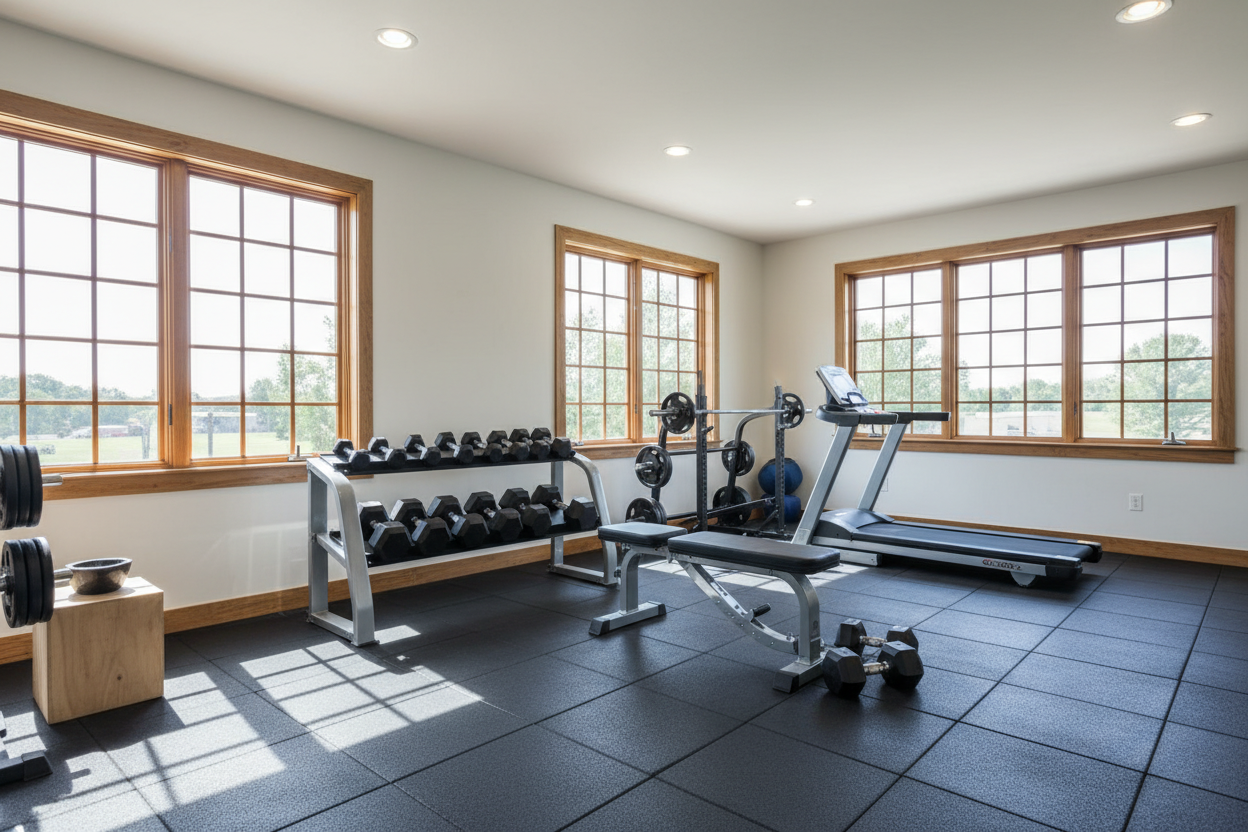
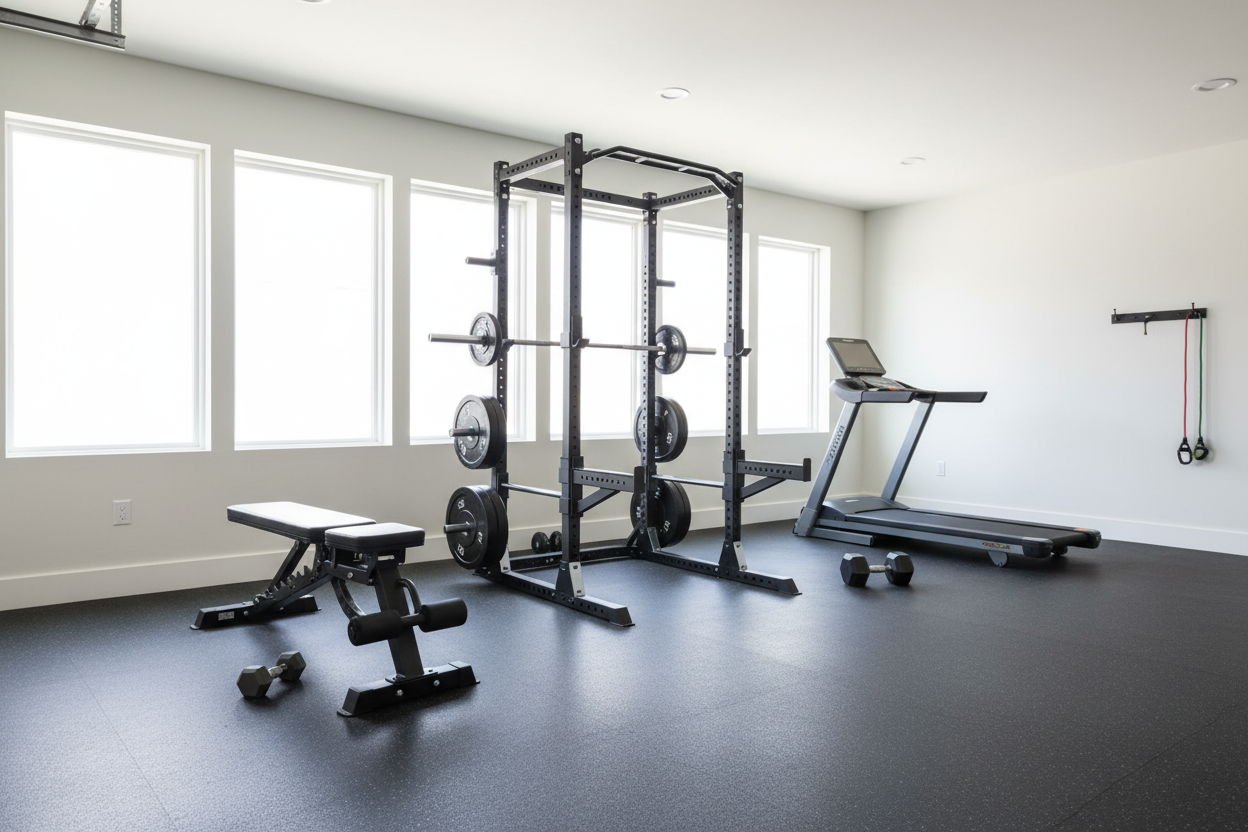
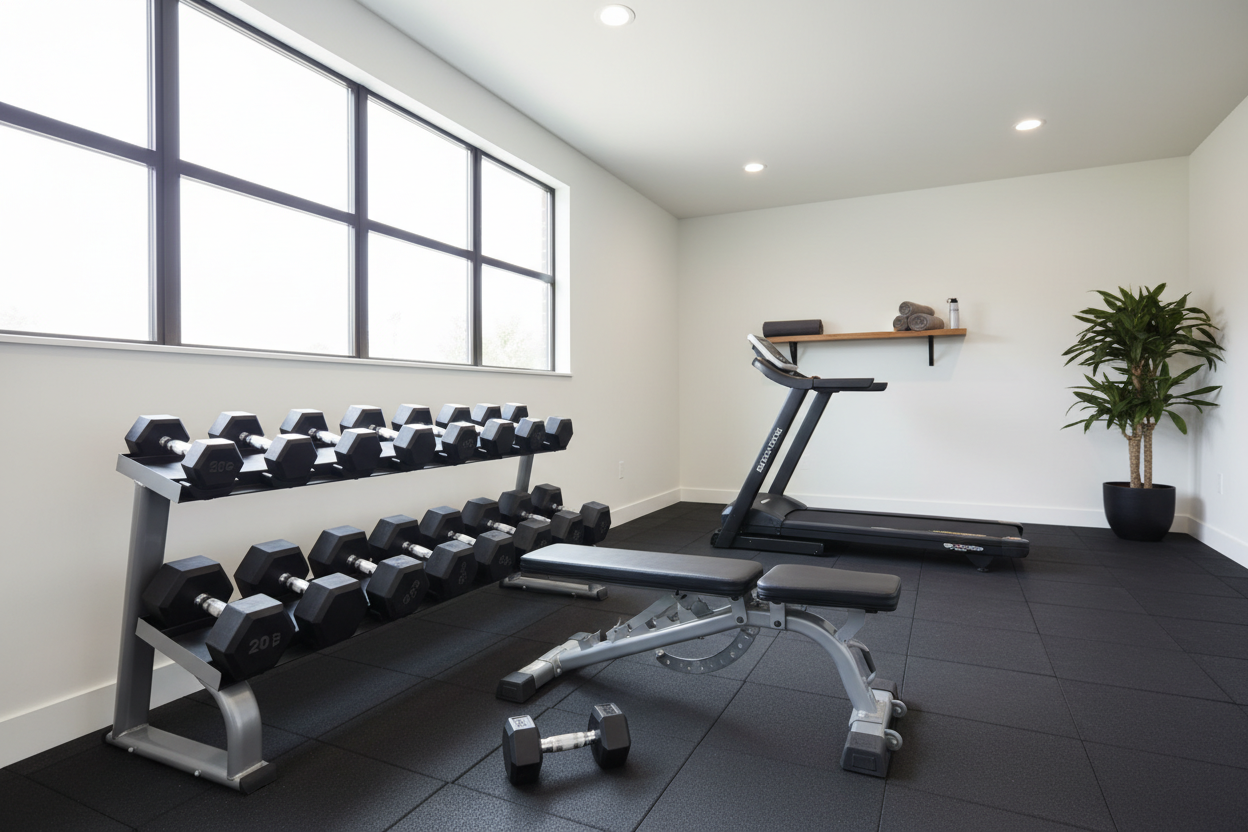
If you're training in a garage, you've probably dealt with dusty concrete. Trying to do standing dumbbell raises shoulder movements on a slick surface is a nightmare. Your feet micro-slip, your core disengages to compensate, and you lose that rock-solid base needed to drive the weight up. I spent months lifting on bare concrete before I realized my form was breaking down because I was subconsciously worried about my feet sliding out.
Investing in a 6X8Ft Exercise Mat Yoga Mat Gym Flooring For Home Workout was one of the best upgrades I made. It’s not just about protecting the floor; it’s about that high-friction grip. When your feet are glued to the floor, you can actually drive through the ground and keep your torso dead-still. That stability translates directly to better isolation in the delts.
FAQ
Can I do these seated?
Absolutely. Seated raises actually remove the ability to cheat with your legs. If you find yourself 'humping' the air to get the weights up, sit down on a bench and keep your back flat.
Should I go all the way to the top?
Stop just below shoulder height. Going higher usually just brings in the traps and increases the risk of impingement. Keep the tension where it belongs.
What if my shoulders still click?
Try a neutral grip (palms facing each other) and stay strictly in the scapular plane. If it still clicks and hurts, swap to face pulls for a while and focus on rear delt health before coming back to lateral work.