Why I Stopped Doing Bro Splits Every Time I Hit the Gym
I remember standing in a crowded commercial gym on a Monday afternoon, waiting for a bench to open up. The air smelled like cheap strawberry pre-workout and stale humidity. A guy in a stringer tank walked up, checked my progress, and asked the inevitable question: 'Hey man, what are you hitting today?' It was International Chest Day, of course. For years, every time I would hit the gym, I followed that same rigid script. If it was Tuesday, I hit back. Wednesday was shoulders. Thursday was legs (maybe). Friday was arms. It was the law of the 'bro split.'
- Frequency Wins: Training a muscle group twice a week beats hitting it once with 20 sets.
- Movement over Muscle: Focus on patterns like hinges and squats rather than just 'biceps.'
- Equipment Efficiency: A home setup lets you superset movements that are impossible in a public gym.
- Recovery is Key: Total body sessions allow for more strategic rest days.
Decoding the Classic 'What Are You Hitting Today?' Lingo
In the lexicon of meatheads and casual lifters alike, the hit the gym meaning has become synonymous with the body-part split. When someone asks what are you hitting at the gym, they aren't asking about your goals, your power output, or your mobility. They are asking which specific, isolated muscle group you plan to annihilate for the next sixty minutes. It is a culture built on the 'pump'—that temporary swelling of the muscle that feels great in the mirror but doesn't always correlate to raw strength or athletic performance.
This lingo assumes a very specific way of training. It assumes you have five days a week to dedicate to single-joint movements and that you have the recovery capacity of a professional bodybuilder on a 'supplement' protocol. For the rest of us—the guys with jobs, kids, and garage gyms—this approach is often the least efficient way to spend our limited time. We’ve been conditioned to think that if we aren't 'hitting' a specific body part until it’s too sore to move, the workout didn't count. We need to move past the idea that a workout is only successful if you can't lift your arms to brush your teeth the next morning.
Why Body-Part Splits Belong in the 1990s
Unless you are stepping onto a stage in a spray tan and silk trunks, the five-day split is probably holding you back. When you answer the question 'what did you hit at the gym' with 'just arms,' you’re likely admitting you spent an hour doing curls and press-downs. While those are fun, they don't move the needle on total body strength. For a natural lifter, muscle protein synthesis typically drops back to baseline after 36 to 48 hours. If you only hit chest on Monday, you’re waiting an entire week to stimulate growth again. That’s five days of missed opportunity.
I’ve spent years testing this. I used to spend two hours every Monday hitting every possible angle of the pectoral muscle. By the time I got to the fourth exercise—usually some redundant cable fly—my intensity was trash. I was just going through the motions. What did you hit at the gym meaning to be productive? Usually, it just meant I was tired. Shifting that volume across three full-body days allowed me to hit the bench press while fresh, three times a week. My numbers skyrocketed, and my joints actually felt better because I wasn't overloading the same movement pattern for twenty sets in a single session.
Swapping Isolation for Everyday Essentials
The biggest hurdle to leaving the bro split behind is the ego. It feels 'wrong' to leave the gym without a localized pump. But when you transition to a garage gym, you realize that your time is the most valuable piece of equipment you own. You stop caring about 'hitting' a muscle and start caring about mastering a movement. I stopped waiting for the pec deck and started focusing on setting up your everyday essentials home gym so I could train whenever I wanted, however I wanted.
A full-body approach in a home setting is a revelation. Instead of a 'back day,' you have a 'pull day' or a 'total body day' where you pair a heavy deadlift with an overhead press. This functional training translates to the real world. When you’re carrying a 50-lb bag of mulch or moving a couch, your body doesn't ask 'what did you hit at the gym today?' It uses everything at once. By focusing on multi-joint compound lifts, you get more bang for your buck. You burn more calories, trigger a larger hormonal response, and build a physique that actually moves as well as it looks. Plus, you never have to deal with the guy doing bicep curls in the power rack again.
Creating a Space Where You Can Train It All
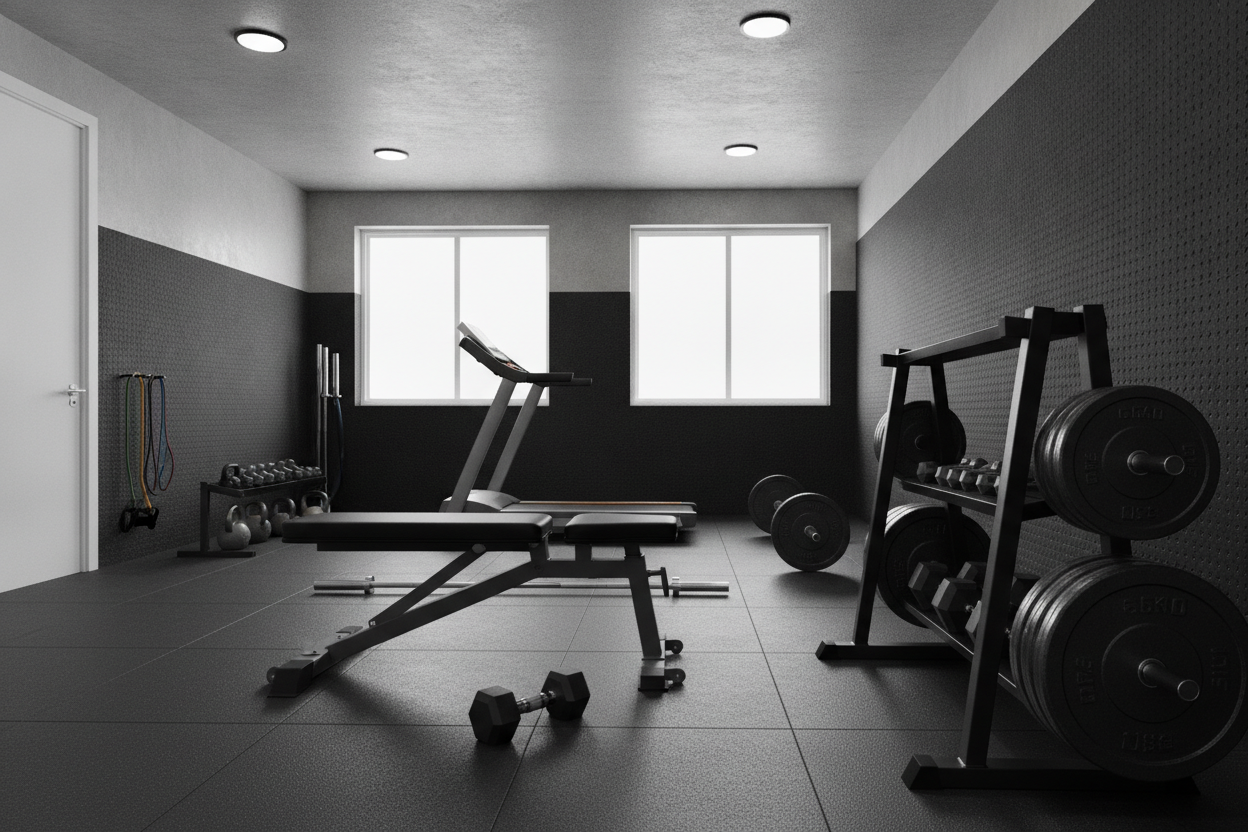
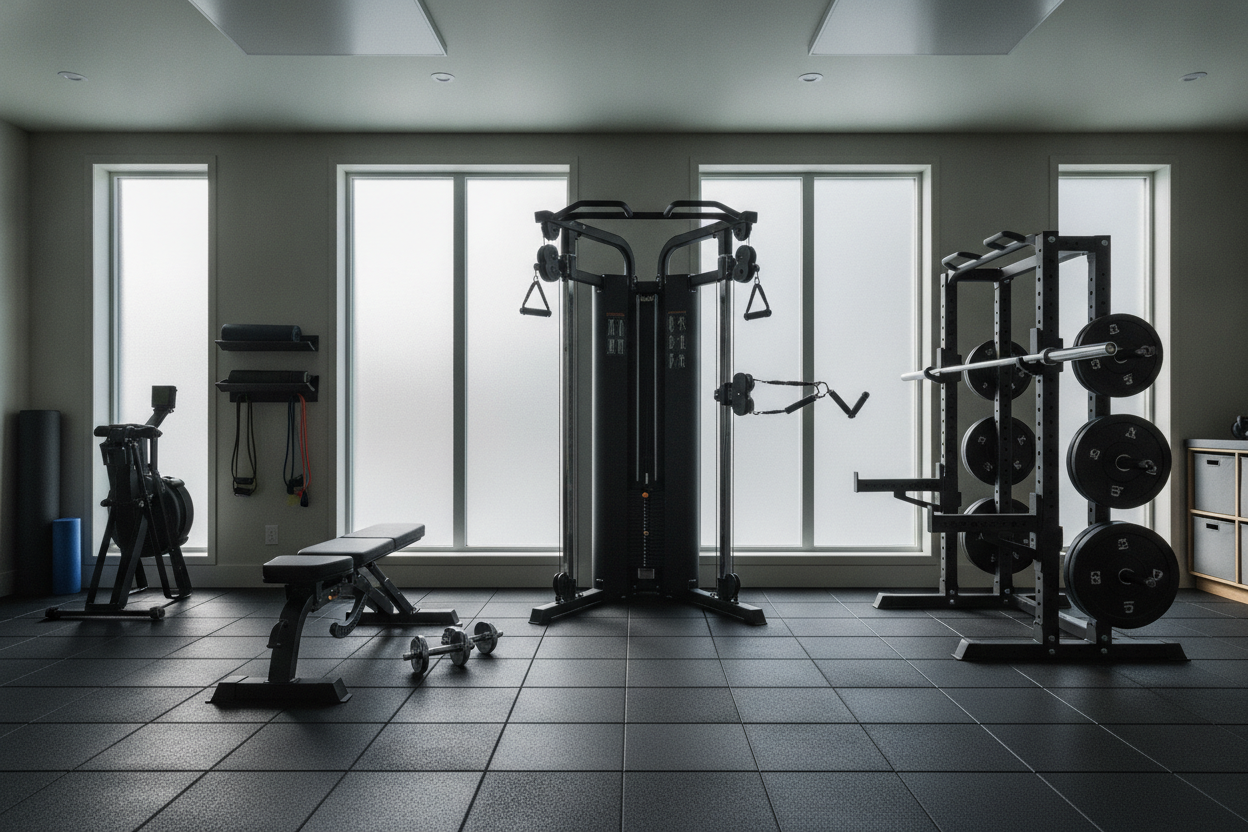
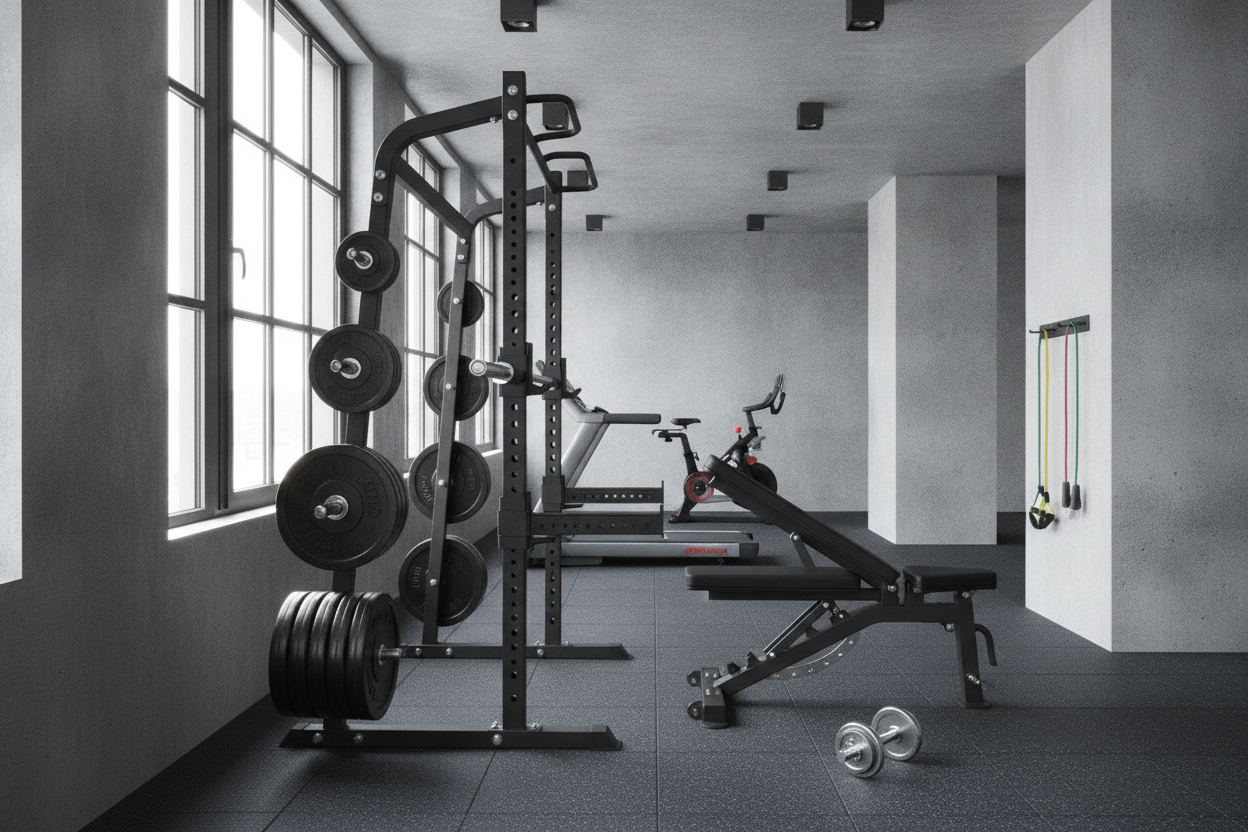
You don't need a 5,000-square-foot commercial facility to ditch the bro split. In fact, full-body training is easier in a compact space because you aren't sprinting across a gym to get from the leg press to the pull-up bar. For my money, the most effective layout is a 3 station home gym. This setup usually involves a solid power rack for your primary lifts, a bench, and a dedicated area for accessory work like kettlebells or dumbbells. This footprint allows you to cycle through a squat, a pull-up, and a floor press without ever leaving your ten-by-ten square.
Foundation is everything. Don't just throw your rack on bare concrete and hope for the best. I learned the hard way that dropping a 405-lb deadlift on a thin stall mat will eventually crack your subfloor. Investing in a large exercise mat for home gym use provides the vibration dampening and grip you need for heavy triples. Once you have that solid base, you can focus on the big movements. A rack with a 3x3-inch 11-gauge steel frame is the gold standard—it won't wobble when you're racking a heavy bar, and it gives you the peace of mind to push your limits without a spotter. When your gym is built for performance rather than aesthetics, your training naturally follows suit.
A Better Way to Define 'Hitting the Gym'
We need to change the hit gym meaning from 'isolating parts' to 'improving the whole.' The next time you walk into your garage or head to the local club, don't feel pressured by the 'what are you hitting today' question. If you’re training for longevity, strength, and a body that doesn't break down, the answer should be 'everything.' Total body training isn't just for beginners; it’s for anyone who wants to maximize their time and results.
I spent a decade chasing the pump and wondering why my squat was stalled. The moment I stopped worrying about what did you hit at the gym meaning to satisfy some outdated bodybuilding manual, I started actually getting strong. I traded the bicep curls for weighted chin-ups and the leg extensions for front squats. My workouts got shorter, my recovery got better, and my shirts started fitting tighter in the right places. So, the next time someone asks what you're hitting, just smile and tell them you're hitting it all. Then go back to your rack and prove it.
Personal Experience: The 'Leg Day' Disaster
I used to be the king of skipping legs. I'd 'hit' chest twice a week but only 'hit' legs once every fourteen days. When I finally decided to get serious, I tried a high-volume leg day I found in a magazine. I did six sets of squats, four sets of leg presses, and three sets of lunges. I was so sore I couldn't drive my manual transmission car home safely. I had to sit in the parking lot for twenty minutes because my left leg kept cramping on the clutch. That was the 'aha' moment. I realized that smashing a body part into oblivion once a week was stupid. Now, I squat three times a week for three sets. I’m never that crippled, and my legs are twice the size they used to be. Consistency over intensity-porn, every single time.
FAQ
Is full body better than a split for muscle growth?
For most people, yes. It allows you to hit each muscle group more frequently (2-3 times per week) which keeps muscle protein synthesis elevated longer than a once-a-week split.
Can I still get a 'pump' with full body workouts?
Absolutely. You’ll just get a 'whole body' pump instead of just your arms. If you really miss it, add two sets of 'vanity' work like curls or lateral raises at the very end of your session.
How many days a week should I train if I'm not doing a split?
Three days a week is the sweet spot for most. It gives you 48 hours of recovery between heavy sessions, which is perfect for maintaining high intensity on your big compound lifts.