The 3 Station Home Gym: What You Must Know First
If you have ever stared at a crowded commercial gym floor and wished you could cram all those machines into your basement, you are not alone. The leap from adjustable dumbbells to a fully integrated functional setup is a big one, but it is often the best way to shatter a workout plateau. Enter the 3 station home gym—a beast of a machine designed to offer commercial-grade variety without requiring a commercial-grade facility.
But before you clear out the garage and drop a few thousand dollars, you need to know exactly what you are getting into. These multi-faceted machines are incredible for full-body training, but they come with unique space, assembly, and maintenance challenges.
Key Takeaways
- Versatility: Replaces dozens of single-use machines, covering chest presses, lat pulldowns, and leg developments in a unified footprint.
- Space Requirements: You need a minimum of a 10x10 foot area, plus adequate overhead clearance for lat towers.
- Multi-User Capability: Most premium setups allow two to three people to train simultaneously due to independent weight stacks.
- Investment: High upfront cost, but offers significant long-term savings compared to buying individual selectorized machines for each muscle group.
Decoding the Three Station Home Gym
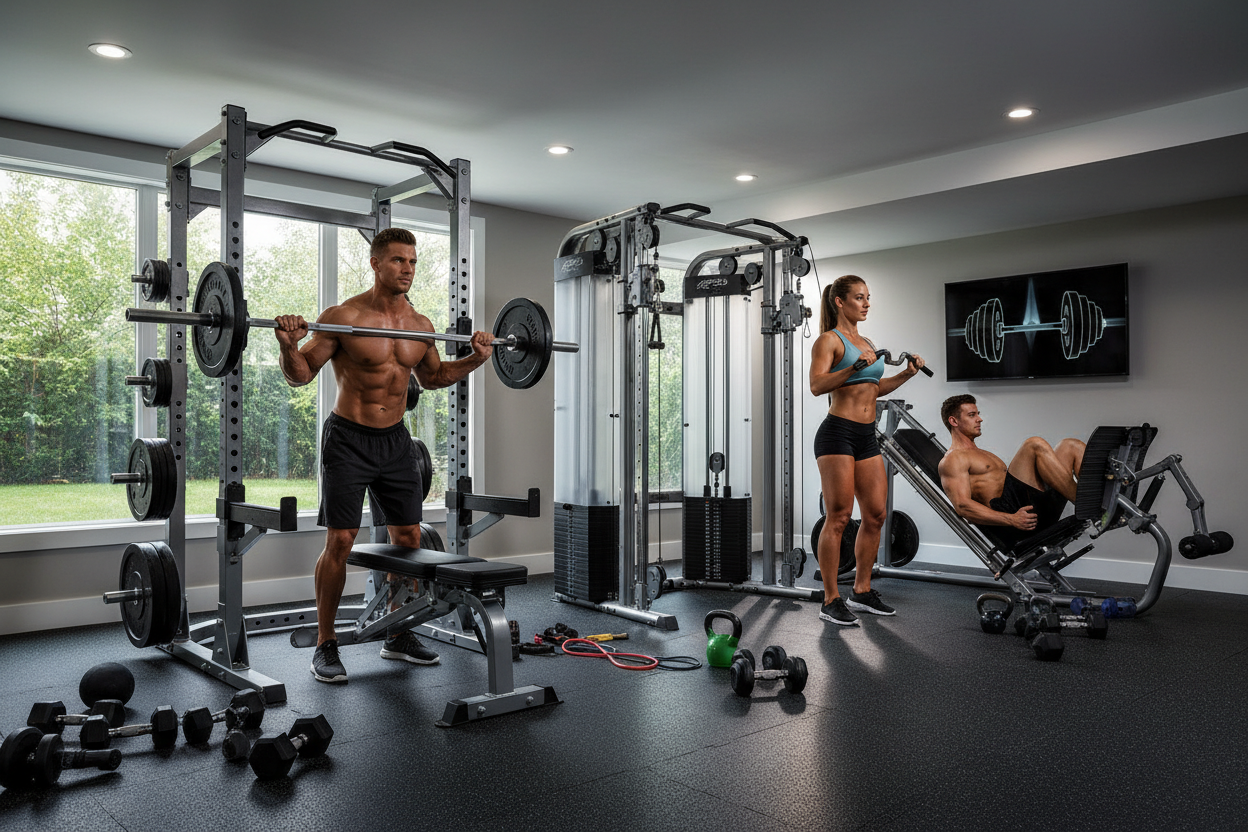
When we talk about a three station home gym, we are referring to a multi-gym system that features three distinct, dedicated workout zones. Unlike a standard functional trainer with two adjustable pulleys, these units usually feature dedicated seating and specialized mechanics for different muscle groups.
What Are the Three Zones?
While configurations vary by brand, the standard layout typically includes a multi-press station (for chest, shoulders, and seated rows), a high/low pulley station (for lat pulldowns and triceps), and a dedicated leg station (often a leg press or leg extension/curl combo). This specific triad ensures you can hit every major muscle group with heavy, selectorized resistance.
Space Planning for Massive Equipment
The biggest mistake buyers make is measuring the physical footprint of the machine and forgetting about the 'active' footprint required to actually use it.
Footprint vs. Clear Space Requirements
A standard unit might measure 7 feet long by 7 feet wide. However, you need at least 2 to 3 feet of clearance around the perimeter to load attachments, fully extend your legs on the press, or pull cables outward for chest flyes. If you are putting this in a basement, pay close attention to the height. Lat pulldown towers frequently exceed 82 inches, meaning a standard 7-foot basement ceiling will be an uncomfortably tight squeeze.
From Our Gym: Honest Take
We recently set up a commercial-grade 3 station home gym in our primary testing garage, and the training experience has been phenomenal. The transition between exercises is seamless—I can jump from a heavy seated chest press directly to a leg press without changing plates, which is a massive time-saver for fast-paced circuit training.
However, I have to be brutally honest about the assembly. Moving 400 pounds of selectorized weight stacks and aligning the guide rods took two of us over six hours. Furthermore, the nylon pulleys took about two weeks of regular use to fully 'break in' and deliver that buttery-smooth commercial feel. If you buy one of these, pay for the professional assembly. Your lower back will thank you.
Frequently Asked Questions
How much space do I really need for a 3 station home gym?
Plan for an absolute minimum of 10 feet by 10 feet. Even if the machine's footprint is smaller, you need the surrounding clearance to perform cable exercises safely and access the weight stacks for basic maintenance.
Can multiple people use a three station home gym at once?
Yes, provided the machine has independent weight stacks. If the gym only has one central weight stack that all cables route to, only one person can train at a time. Always check the specs for 'dual' or 'triple' weight stacks if you plan to train with a partner.
Is it better than buying a power rack and functional trainer?
It depends entirely on your training style. A power rack is superior for heavy free-weight barbell lifts like squats and deadlifts. A multi-station gym is better for bodybuilders or general fitness enthusiasts who prefer the safety, speed, and isolation of selectorized machine training.