Why I Ripped Out My Treadmill to Build a Resistance Training Gym
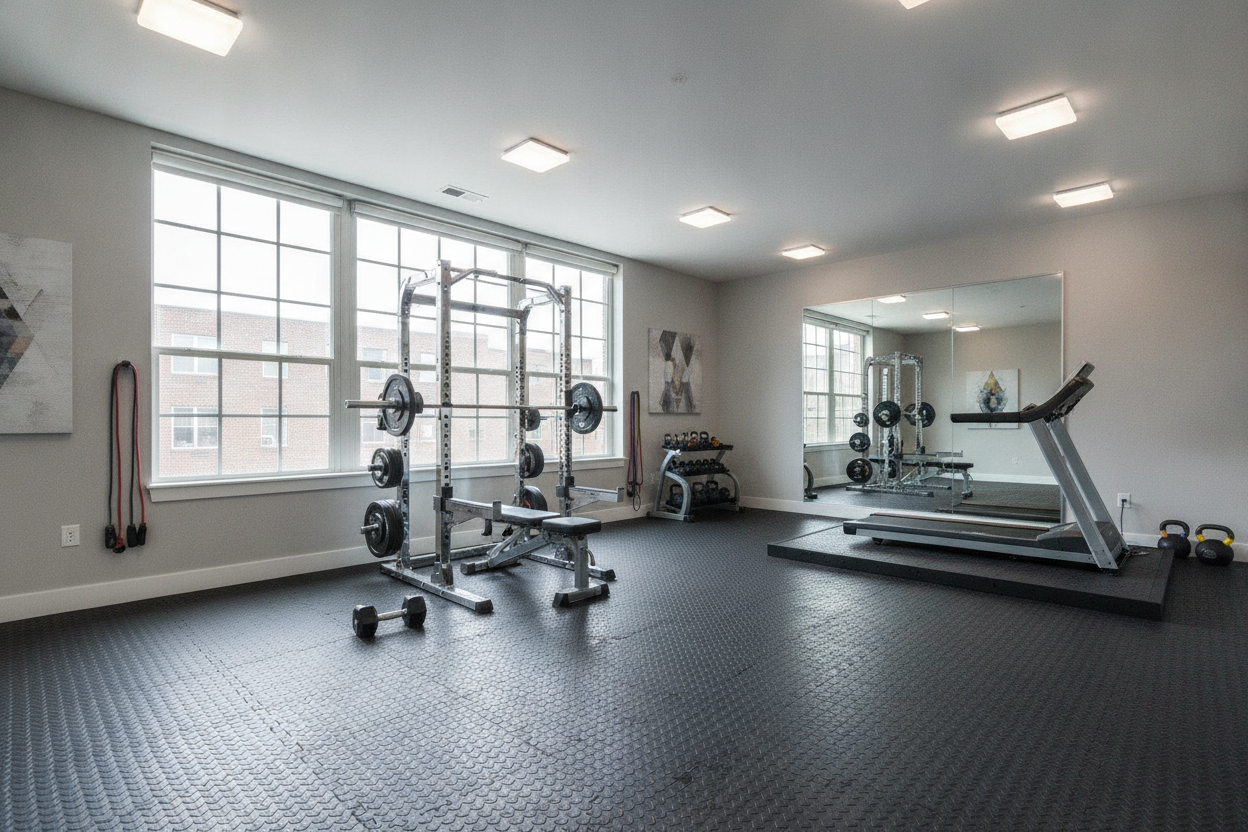
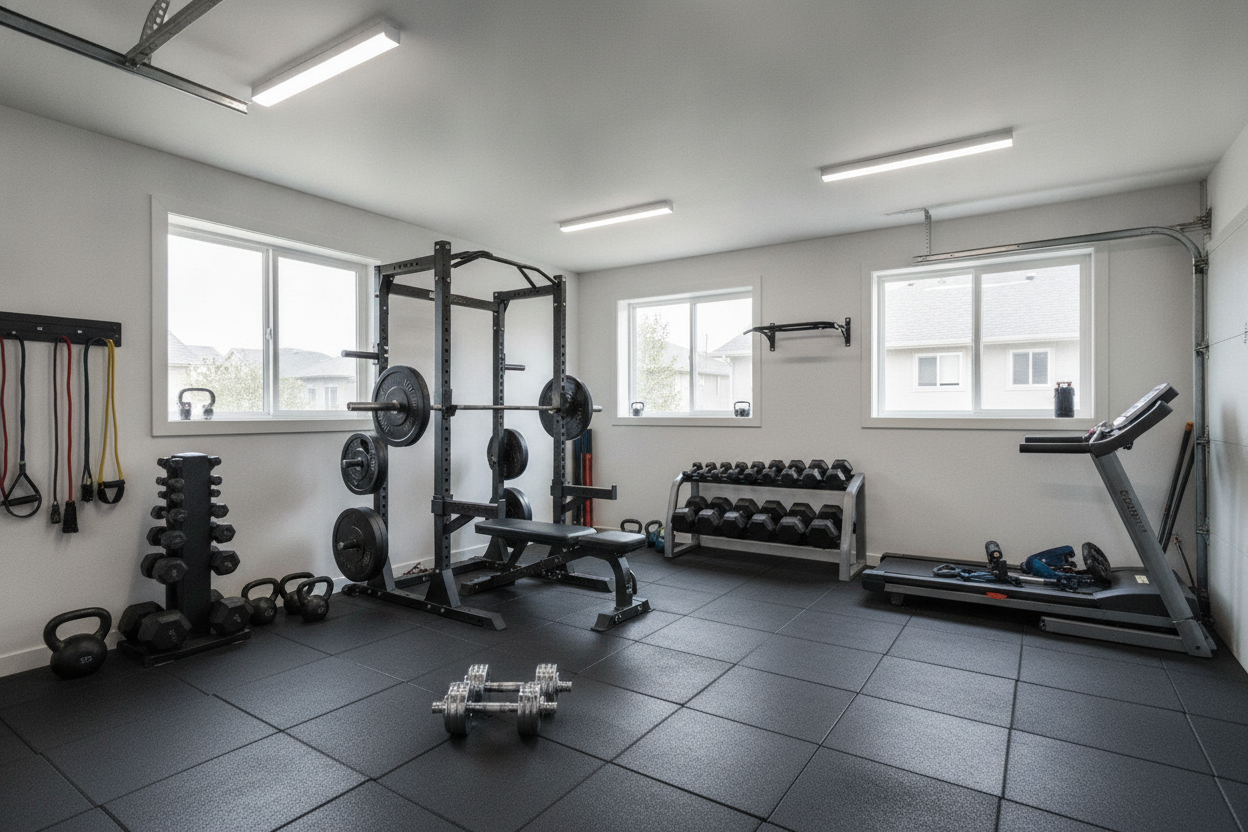
I spent three years dodging the corner of my treadmill every time I tried to reach for a pair of 25-lb dumbbells. It was a 200-pound paperweight that I used maybe once a month for a 'recovery walk' while watching Netflix. The day I sold it on Marketplace for half what I paid was the day my garage finally became a real resistance training gym.
- Space is the most valuable asset in a home gym; use it for iron, not electronics.
- A rack and a barbell will always out-perform a treadmill for body composition.
- High-quality flooring is non-negotiable for protecting your concrete and your joints.
- Compound movements are the most efficient way to spend your training time.
The Day I Realized Cardio Machines Were Stealing My Space
My garage is a standard two-car setup, but between the lawnmower and the kids' bikes, space is at a premium. That treadmill took up nearly 18 square feet. That is enough room for a full power rack and a stack of plates. I realized I was prioritizing a machine that burned calories inefficiently over a setup that builds actual muscle and bone density.
I wanted to move heavy weight, not run in place like a hamster. The shift was not just about the equipment; it was about the mindset. Once the belt and motor were gone, I had the floor space to actually drop a barbell without worrying about cracking a plastic console or tripping over a power cord.
What Actually Makes a Good Resistance Training Gym?
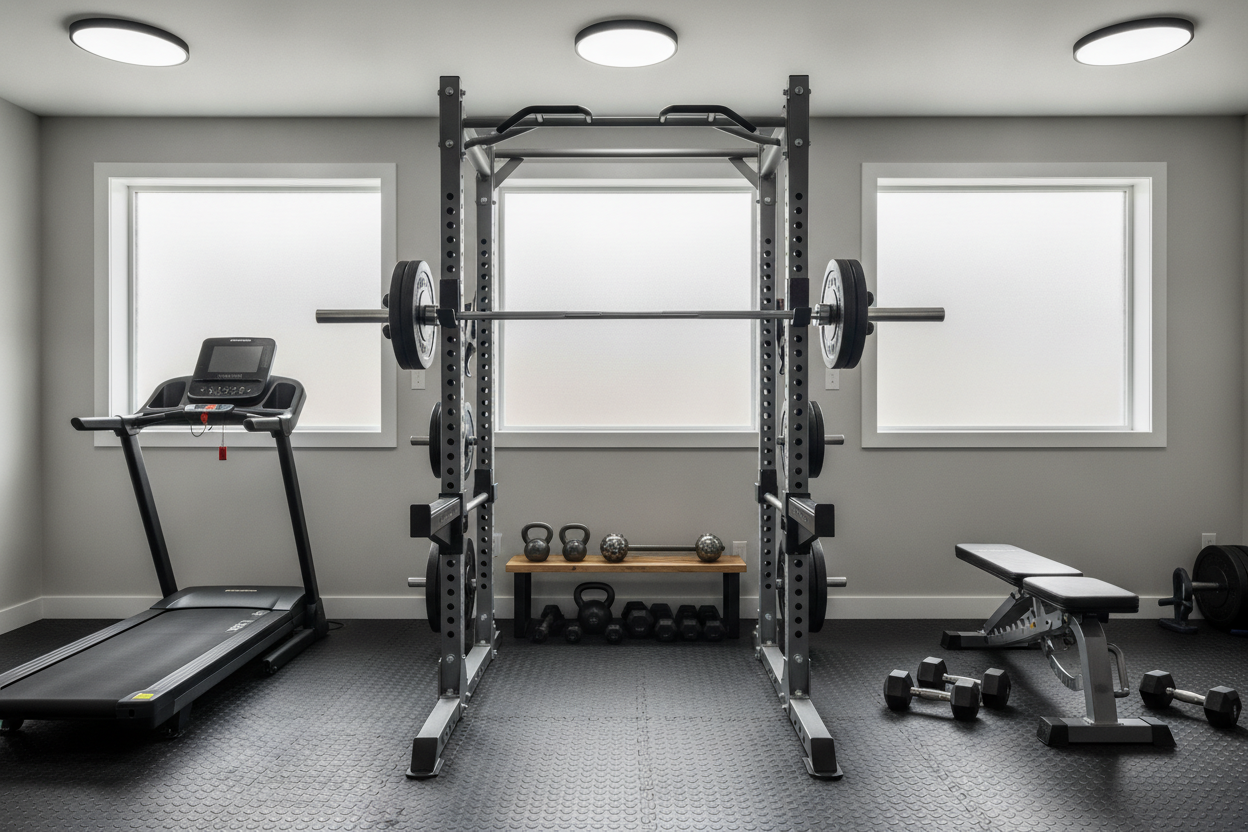
You do not need a 12-station cable crossover. A solid resistance training gym workout relies on the 'Big Three' plus some overhead work. I started with a squat stand, a flat bench, and about 300 lbs of iron. That is it. If the equipment does not help you move more weight safely, it is just clutter.
When you are finding the best home resistance gym setup for your own house, focus on the footprint of your rack. If you have got low ceilings, look for a 72-inch shorty rack. If you are tight on width, a wall-mounted folding rack is your best friend. The goal is to maximize the utility of every square inch.
The Hidden Foundation: Why Flooring Is Your First Buy
Do not—I repeat, do not—start lifting on bare concrete. I made that mistake and ended up with a spiderweb crack under my deadlift spot within a month. You need a large exercise mat for home gym use that can handle the impact of a 405-lb pull without transferring that shock directly into the slab.
I eventually upgraded to a dedicated 7mm thick gym flooring for home workout mat. It deadens the noise so I do not wake up the family, and more importantly, it saves my ankles. Concrete has zero give; a high-density rubber mat provides just enough shock absorption to keep your joints from screaming after a heavy squat session.
My Go-To Resistance Training Exercises Gym Vets Swear By
If you are not doing compound movements, you are wasting time. My routine is built around full body resistance exercises that hit multiple groups at once. Squats, deadlifts, overhead presses, and rows. These are the movements that actually change your physique and build real-world strength.
A typical resistance training exercises gym session for me starts with a heavy primary lift, followed by two accessory moves like lunges or pull-ups. You do not need a leg extension machine when you can do Bulgarian split squats with a pair of dumbbells. It is harder, it is more effective, and it takes up zero extra space in your setup.
Programming Your Resistance Training At Gym (Home vs Commercial)
The biggest perk of doing resistance training at gym environments you own is the clock. At the local commercial spot, I would spend twenty minutes just waiting for a rack to open up. At home, my rest periods are exactly 90 seconds because I am the only one there. No one is using my squat rack as a curl station.
Your resistance training gym workout becomes much more efficient when you can superset without worrying about someone 'working in' on your bench. I have cut my total workout time by 30% while actually increasing my total volume. It is pure efficiency without the distractions of gym culture.
Don't Overcomplicate Your Resistance Workout Gym Setup
You will see guys on YouTube with $20k setups and custom neon lights. Ignore them. A resistance workout gym is a tool, not a showroom. Buy a used barbell, get some decent mats, and add weight as you get stronger. My first rack was a pair of independent stands I bought off a guy for fifty bucks. It was not pretty, but it held the weight until I could afford something better.
How much space do I really need?
You can fit a killer setup in an 8x8 area. That is enough for a rack, a bench, and a standard 7-foot Olympic bar with room to load plates on the sides without hitting the walls.
Is flooring really that important?
Yes. Unless you want to pay a contractor to resurface your garage floor in two years. Get at least 1/2 inch of rubber between your iron and your foundation to prevent cracking and dampen vibration.
Can I build muscle without machines?
Absolutely. Free weights require more stabilization and hit more muscle fibers than fixed-path machines. Machines are fine for isolation at the end of a workout, but iron builds the engine.