Why I Refuse to Train Strength and Fitness on Different Days
I spent years staring at a color-coded Google Calendar like it was some sacred text. Monday was for the big three, Tuesday was for the treadmill, and Wednesday was for wishing I had more hours in the day. It was a chore. If I missed a \"fitness\" day, I felt like a slug; if I missed a \"strength\" day, I felt small. It felt like I was trying to serve two masters who hated each other.
The truth is, trying to train strength and fitness as separate entities is a trap that keeps most home gym owners from ever seeing real progress. You don’t need a dedicated cardio day to get fit, and you don’t need to move like a sloth to get strong. You can do both in the same hour, and honestly, your body will thank you for the efficiency.
Quick Takeaways
- Stop separating lifting and conditioning; they work better as a team.
- Use EMOMs (Every Minute On the Minute) to keep your heart rate up while moving heavy loads.
- Invest in a solid barbell and a rack that can handle being treated like a rental car.
- Auto-regulate your intensity so you don't burn out your nervous system by the end of the month.
The Lie of the 'Cardio Day' vs 'Lifting Day'
We’ve all heard the meathead gospel: if you run more than a mile, your biceps will magically evaporate. It’s a myth that’s been recycled through bodybuilding forums for decades, and it’s total nonsense. The idea that conditioning kills gains only applies if you’re running marathons while starving yourself. For the rest of us, better conditioning actually means better lifting. If you aren’t gassing out after a set of five squats, you can handle more volume and recover faster between sets.
The real danger isn't interference between modalities—it's the mental friction of having too many training days. When you designate a specific day just for fitness, it becomes the easiest day to skip. It’s the \"I’ll do it tomorrow\" day. By the time Friday rolls around, you’ve hit your bench press, but your heart hasn't beaten faster than a brisk walk all week. That’s not being a strength athlete; that’s just being lazy with your lungs.
When you train strength & fitness simultaneously, you force your body to adapt to a higher work capacity. You stop being the person who can pull 500 lbs but gets winded walking up a flight of stairs. You start becoming a functional human being who can actually use the strength they’ve built in the real world. Plus, it saves you about three hours a week of driving to the gym or staring at a wall while on a stationary bike.
How I Actually Train Strength & Fitness Together
The secret isn't adding more work; it's changing how you do the work you’re already doing. I’m a huge fan of the EMOM structure. Instead of doing five sets of five with five minutes of rest while scrolling through your phone, try taking 75% of your max and hitting two reps every minute for ten minutes. By the end, you’ve moved 20 heavy reps in a fraction of the time, and your heart is hammering against your ribs.
Another tactic is the \"Strength Aerobic\" method. You pair a heavy compound movement—think front squats or overhead press—with a low-intensity \"filler\" move like a 200-meter carry or a minute on the bike. The goal isn't to redline immediately, but to keep your heart rate in that 130-150 BPM zone while still handling meaningful weight. This requires heavy-duty strength equipment because when you’re 40 minutes into a hybrid session and your sweat is making the floor a slip-and-slide, you need a rack and bar that won’t wobble when you re-rack with shaky hands.
I also love using finishers. If I’m doing a traditional strength block, I’ll cap the session with 10 minutes of high-intensity intervals. It’s not about burning calories; it’s about metabolic conditioning. It keeps the engine primed. The key is to avoid junk volume. Don't just do burpees until you puke. Do movements that reinforce your strength, like heavy sandbag carries or sled pushes. These movements build a type of brute force fitness that a treadmill can never replicate.
If you're worried about your numbers dropping, don't be. Your top-end strength might take a 5% hit in the first two weeks as your body adjusts, but once your work capacity catches up, you’ll find you can train harder, more often, and with less downtime. That's how you actually build a physique that looks like it can actually do something besides look good in a mirror.
The Bare Minimum Gear You Need to Pull This Off
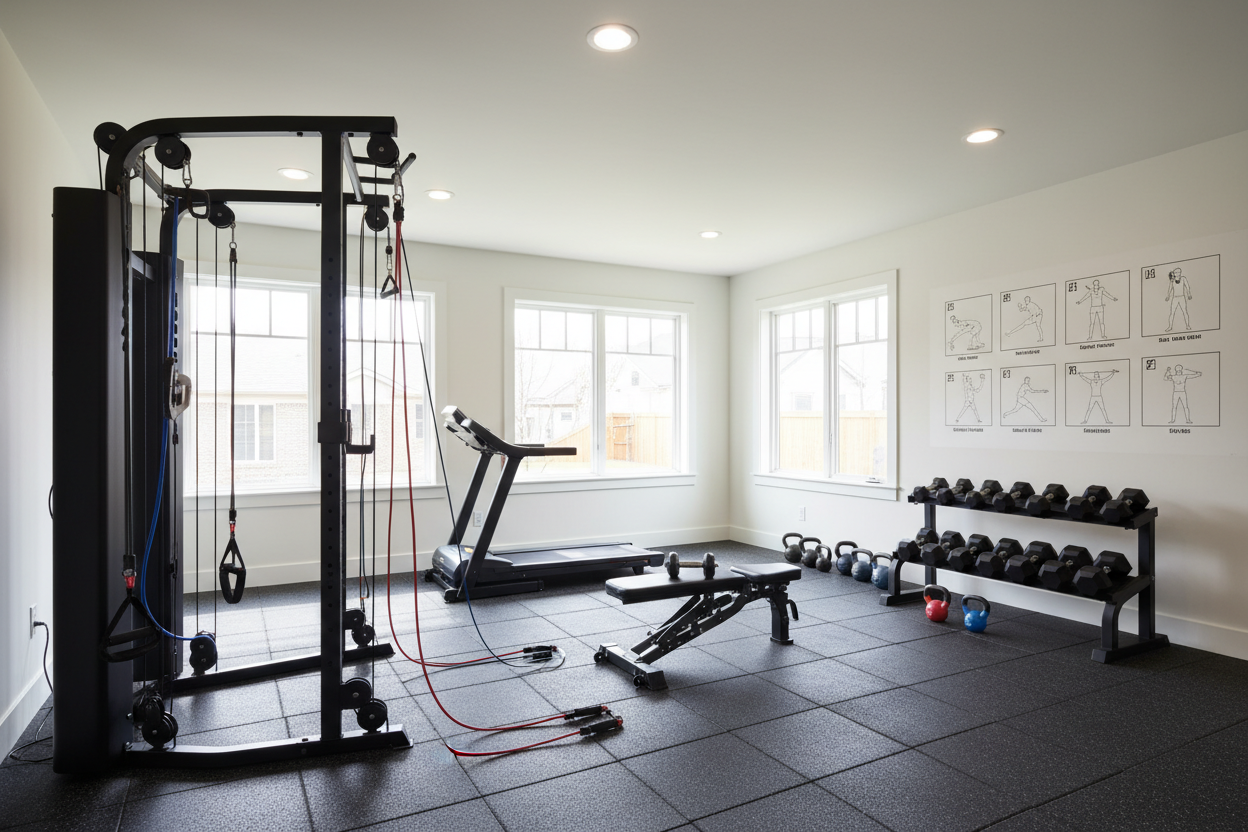
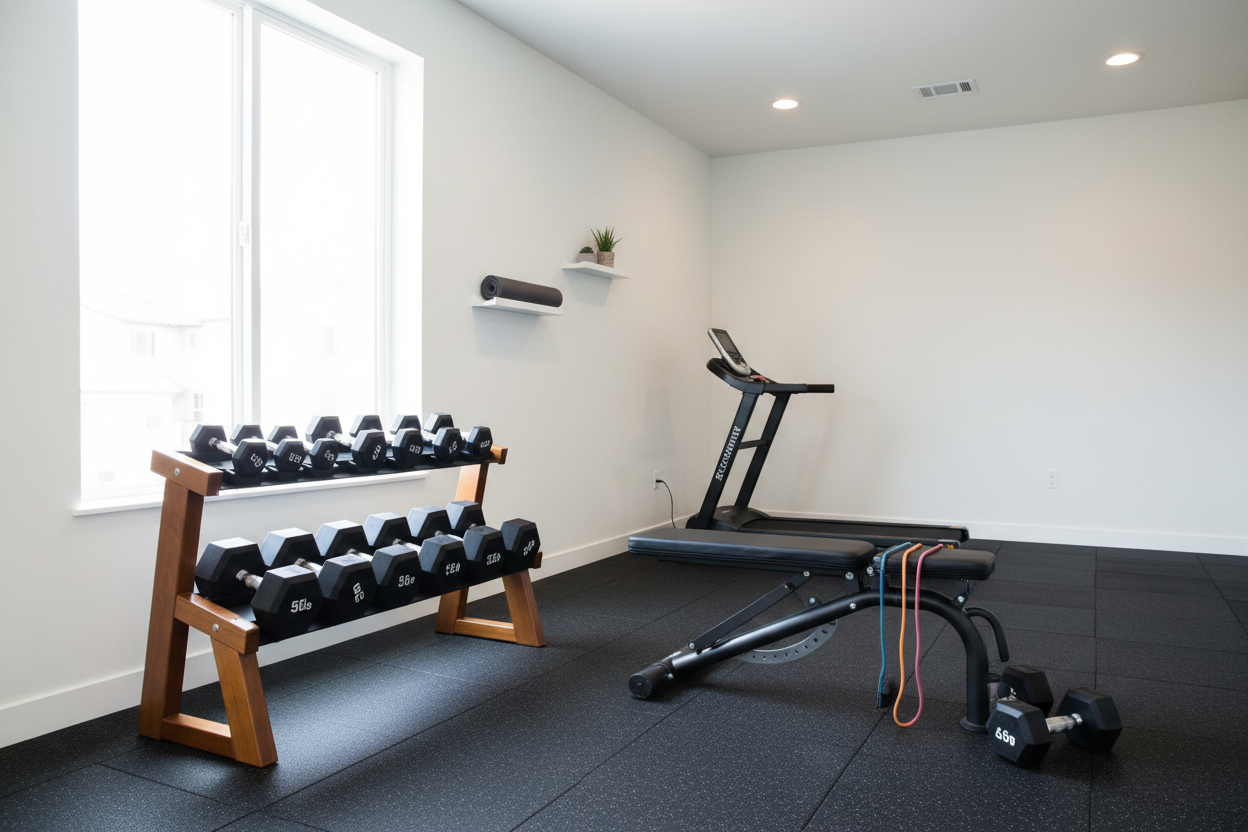
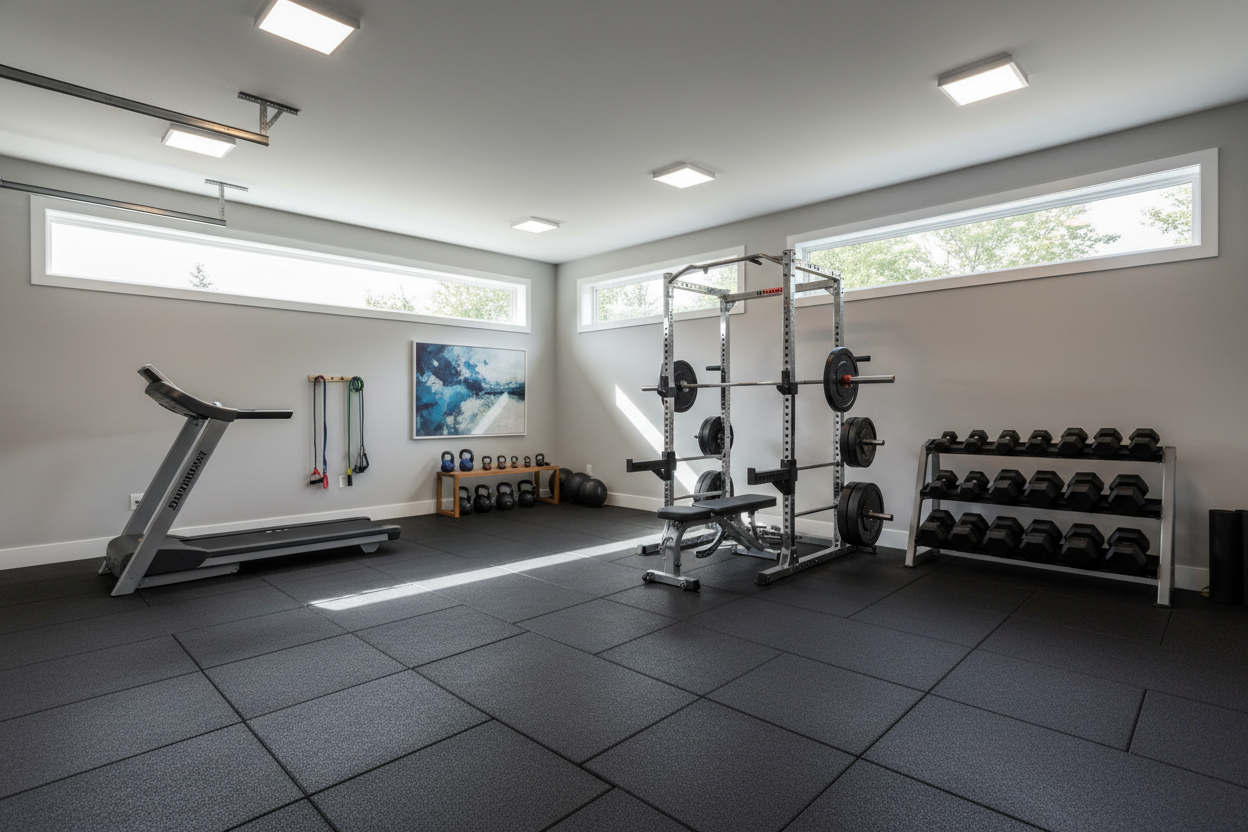
You don't need a 2,000-square-foot commercial facility to pull this off. My own home gym setup for strength and fitness started in a single-car garage with a decent barbell and about 300 lbs of plates. If you're tight on space, focus on the big three of hybrid gear: a power rack, a versatile barbell, and at least two heavy kettlebells. A 28.5mm multi-purpose bar is your best friend here—it has enough whip for cleans but is stiff enough for heavy pulls.
Don't overlook the small stuff either. When you're combining heavy sets with conditioning, your grip is usually the first thing to go. I keep a bucket of chalk and a few key strength training accessories like wrist wraps and a quick-release belt nearby. You want gear that you can throw on and off in seconds. If a belt takes two minutes to buckle, it ruins the flow of a high-intensity circuit. I’ve found that the cheaper velcro belts are actually better for this style of training than the heavy 13mm lever belts because of the mobility they allow.
A sled is another piece of bare minimum gear in my book. It’s the ultimate bridge between strength and conditioning. You can load it with 400 lbs for a slow, agonizing drag that builds leg drive, or keep it light for a sprint that leaves your lungs burning. It’s low impact, meaning it won't beat up your joints the way running might, allowing you to stay fresh for your heavy lifting days. Check out a home gym setup for strength and fitness guide to see how to fit these pieces into a small footprint without tripping over your own feet.
Managing the Burnout When Workouts Get Mean
Let’s be real: this style of training is exhausting. You aren't just taxing your muscles; you're hitting your central nervous system (CNS) and your cardiovascular system at the same time. If you try to go 100% every single day, you’ll be a shell of a human by week three. I’ve been there—waking up with that gym hangover where even your hair hurts and you're reaching for the ibuprofen before your coffee.
The fix is auto-regulation. Some days, the weights need to feel heavy, and the breathing needs to be easy. Other days, you go light on the bar and push the pace on the conditioning. It’s a dance. You have to listen to your body. If your grip strength feels weak during your warm-ups, that’s a sign your CNS is fried. Back off the intensity that day. staying motivated in fitness is a lot easier when you aren't constantly dreading a workout that feels like a death march.
Focus on recovery as much as the work. Sleep eight hours, eat your protein, and don't be afraid to take a de-load week every month. Hybrid training is a marathon, not a sprint. You're building a body that can do everything, and that takes time. Respect the process, and don't let your ego dictate the load on the bar when your lungs are already on fire. If you can't maintain form, the set is over.
Personal Experience: The Day I Learned My Lesson
I remember trying to do a high-rep kettlebell snatch workout right after a heavy 5x5 deadlift session. I thought I was invincible. About halfway through the snatches, my lower back rounded, and I felt a pop that sidelined me for a month. My mistake wasn't doing both; it was trying to do both at maximum intensity in the same window without building the foundation first. Now, I prioritize movement quality over the clock. If my form breaks down because I'm breathing too hard, I stop. Period. No rep is worth a month on the couch.
FAQ
Will I lose my strength if I do cardio?
Only if you stop lifting heavy. Keep the intensity high on your main lifts, and use conditioning to supplement your recovery and work capacity. You’ll likely find you get stronger because you can handle more volume without crashing.
How many days a week should I train?
Three to four days of hybrid training is plenty for most people. If you’re doing it right, these sessions are intense. Quality always beats quantity when you’re mixing modalities.
What’s the best piece of equipment for this?
A heavy kettlebell or a sandbag. You can use them for strength (presses, squats) and conditioning (swings, carries) with zero transition time. They are the ultimate tools for the strength and fitness minimalist.