Why I Refuse to Buy 'Smart' Home Workouts Equipment
I remember the moment I almost pulled the trigger on a $2,500 smart mirror. I was scrolling through social media at 11 PM, frustrated with my local commercial gym's broken cable machines and the constant crowds. But then I looked at the fine print: a $40 monthly membership just to turn the screen on. Why would I buy home workouts equipment that effectively becomes a giant paperweight the moment I stop paying a subscription fee?
The allure of high-tech gear is strong, especially when you're looking for at home workout tools that promise to keep you motivated. But after a decade of lifting in garages and spare bedrooms, I've learned that the flashiest gear is usually the first to fail. If you want a setup that lasts, you need to ignore the LEDs and focus on equipment for home workout that can survive a drop and a decade of sweat.
- Analog gear like iron plates and kettlebells has a resale value of 70-80% for decades; digital gear depreciates like a laptop.
- Subscription-based equipment home workout models are a hidden tax that can cost you over $500 a year just for the right to use your own machine.
- The newest fitness equipment often prioritizes sleek aesthetics over raw durability and load capacity.
- Investing in a solid foundation, like heavy-duty gym flooring, is more important than any touchscreen feature.
The Subscription Trap of Modern Fitness Tech
We are living through an era where the newest fitness equipment is designed more like a smartphone than a training tool. Companies want to lock you into a recurring revenue stream. It starts with a sleek piece of sport at home equipment that looks great in a living room, but the functionality is hidden behind a paywall. If you don't pay the $39 or $49 monthly fee, you lose access to the leaderboard, the metrics, and sometimes even the basic resistance settings.
This is a terrible long-term strategy for anyone serious about training at home equipment. Imagine if your hammer required a monthly fee to hit nails. That’s essentially what these digital mirrors and connected rowers are doing. When the company inevitably changes its terms of service or, worse, goes out of business, your exercise instrument at home becomes an expensive mirror or a very heavy clothes rack. I’ve seen it happen with multiple brands already—perfectly good hardware rendered useless because the servers were shut down.
Renting your workout is a trap. When you buy tools for exercising at home, you should own them outright. No Wi-Fi required, no firmware updates at 6 AM when you only have twenty minutes to train, and no credit card on file just to do a set of squats. Real workout with equipment at home should be about your effort, not your data plan.
Why Analog Iron Outlasts Digital Screens
A cast-iron kettlebell doesn't care if your router is acting up. A 45-lb plate from 1980 still weighs 45 lbs today. When you compare the lifespan of these body exercise tools to a touchscreen device, there is no contest. Most digital fitness screens have a hardware lifecycle of maybe five years before the processor becomes too sluggish for the new software. Meanwhile, my favorite barbell has been through three house moves and thousands of reps, and it still spins as smoothly as the day I bought it.
The best fitness training equipment is the stuff that gets out of your way. I've found that the more tech is involved, the more excuses I have to skip a session. 'The app is glitching' or 'I need to update the OS' are obstacles between you and your goals. If you're looking for the top home workout equipment, look for things made of steel, iron, and high-density rubber. These are the tools for workout that will be passed down to your kids.
There is a tactile satisfaction in exercises at home equipment that doesn't involve a screen. The knurling of a bar, the clang of plates, and the physical feedback of a heavy sandbag provide a training stimulus that a digital slider simply can't replicate. You don't need a virtual coach to tell you that 300 lbs is heavy; the iron tells you that the second you pull it off the floor.
The Real Cost of 'Cool' High-Tech Gear
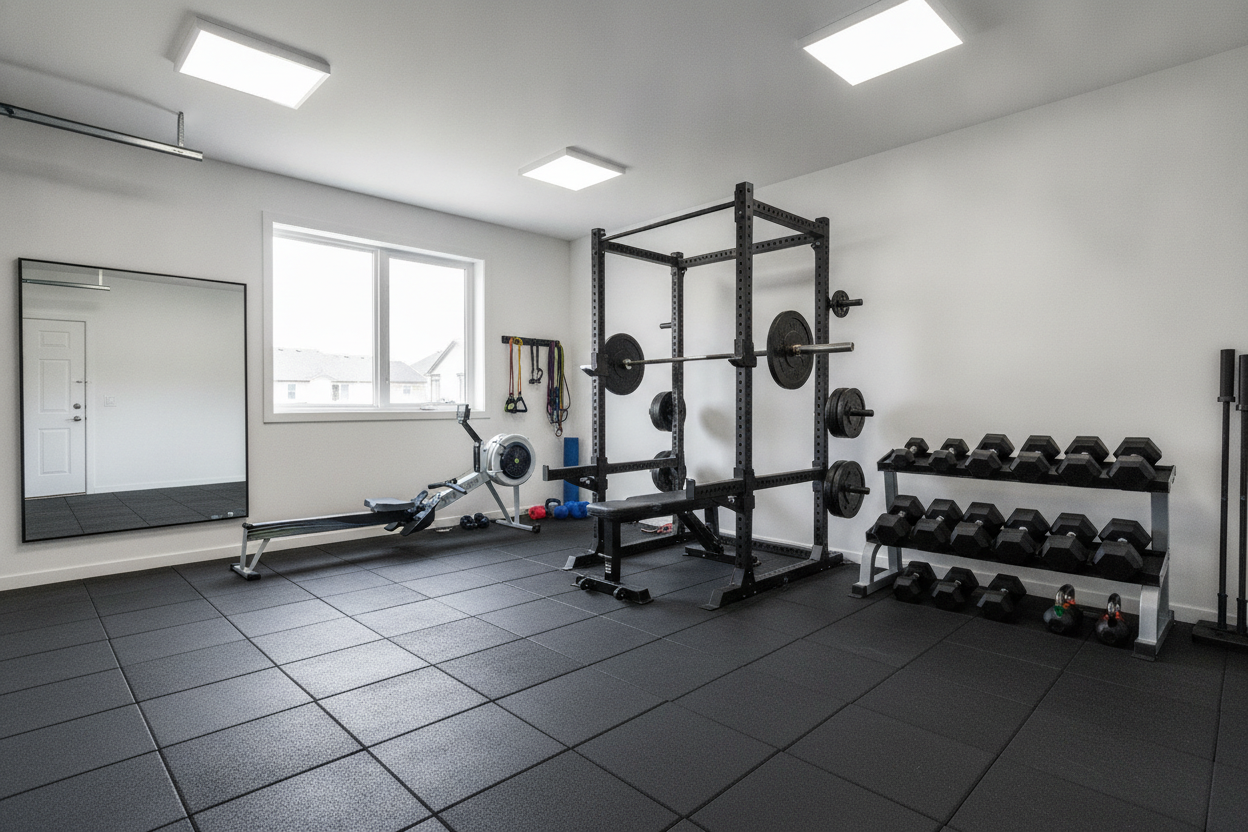
Let’s do the brutal math. A high-end digital resistance machine usually starts around $2,500. Add in the mandatory $40/month subscription over five years, and you’ve spent $4,900. For that same amount, you could outfit a world-class garage gym with the best home workout equipment for men. We’re talking an 11-gauge steel power rack, a 1,000-lb capacity barbell, 400 lbs of bumper plates, a multi-angle bench, and a full set of dumbbells.
When you buy cool home gym equipment with a screen, you're paying for marketing and software development. When you buy analog equipment for training at home, you're paying for material and engineering. I would much rather have a $600 barbell with perfect needle bearings than a $600 tablet glued to a pulley system. The workout items for home gym that actually build muscle are the ones that allow for progressive overload without a ceiling.
Most new at home workout equipment maxes out at a certain resistance—often around 200 lbs of 'digital weight.' For many lifters, they'll outgrow that in a year of consistent deadlifting. Then what? You're stuck with a machine that can't challenge you. Traditional exercise stuff for home has no ceiling. If you get stronger, you just buy two more plates. It's a scalable, honest investment in your physical potential.
Protecting Your Floors from Heavy, Dumb Iron
If you choose the path of 'dumb' iron—which you should—you have to respect your house. You can't just drop 100-lb resistance equipment for home onto your hardwood floors or thin carpet. This is where most people mess up their work out equipment home setup. They spend all their money on the weights and zero on the foundation. Analog gear is superior, but it's also destructive if you're not careful.
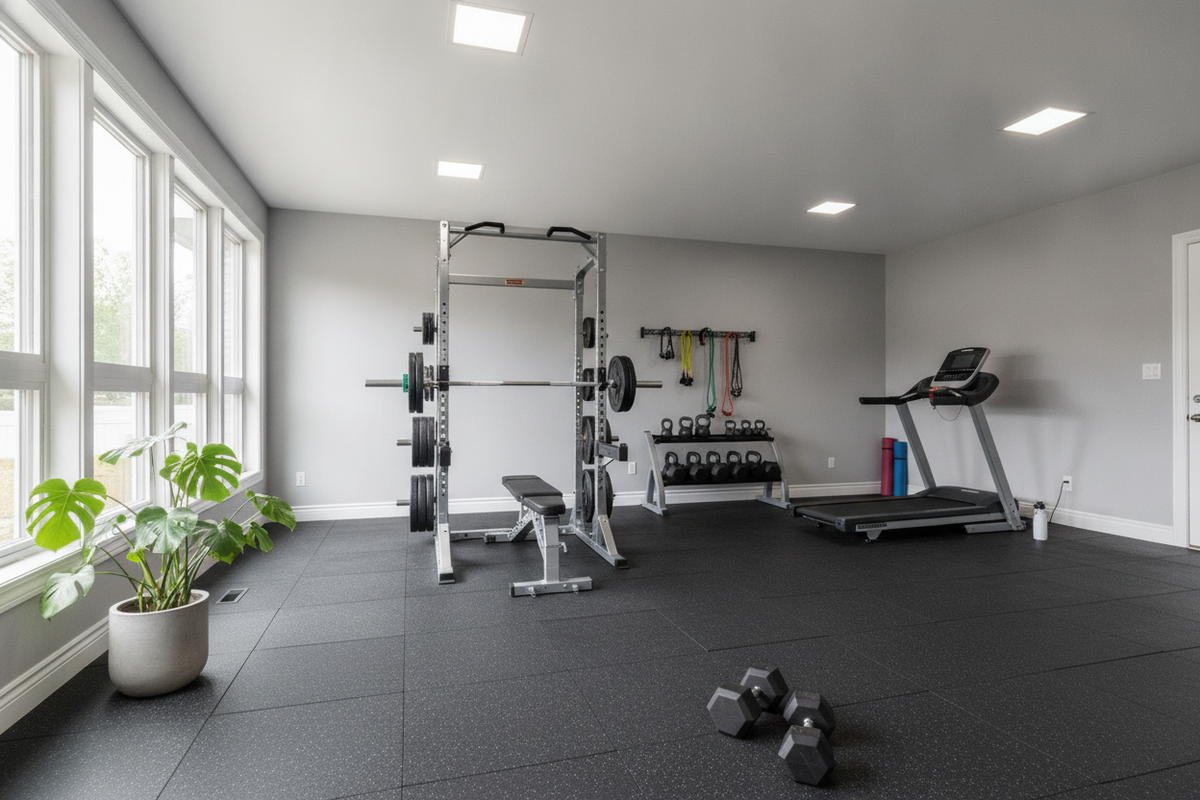
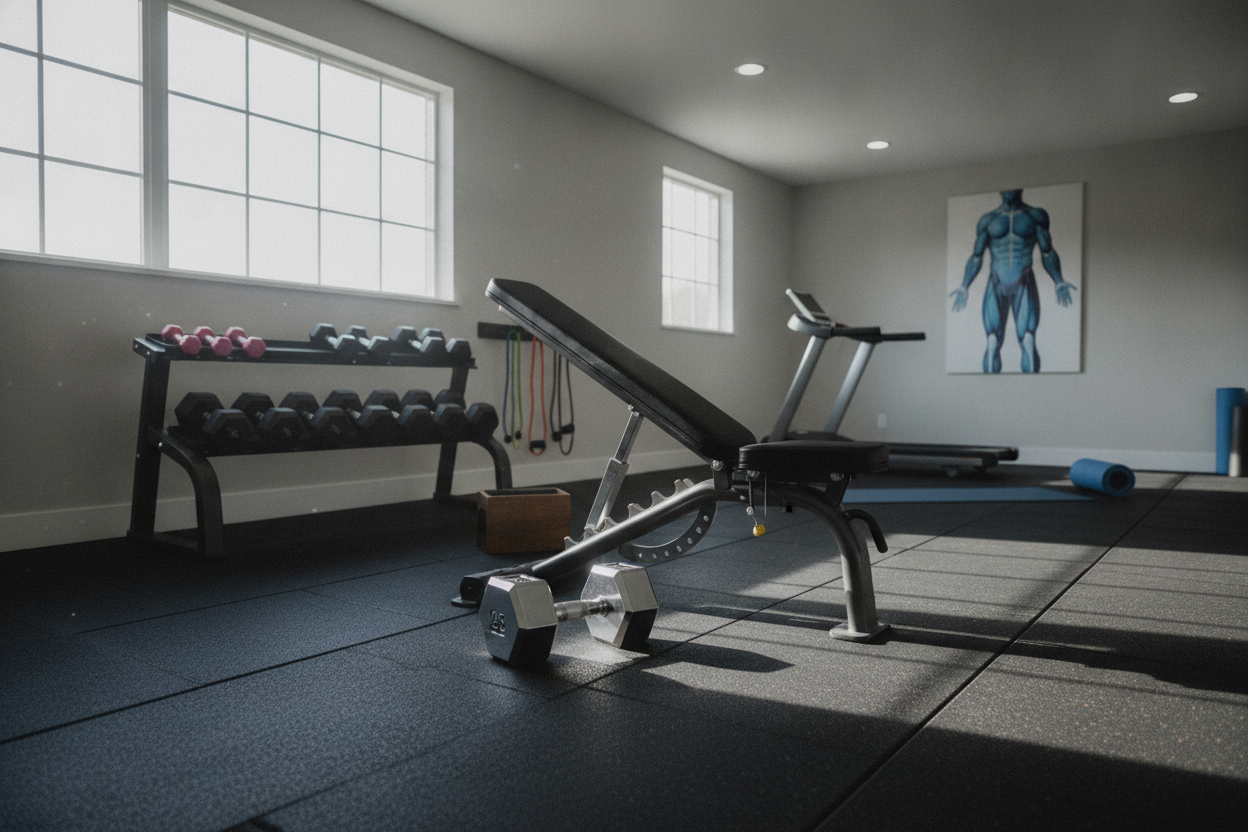
I always tell people that a large exercise mat for home gym is the most underrated piece of exercise accessories for home you can buy. It’s not just about comfort; it’s about sound dampening and structural protection. If you're planning on doing any Olympic lifts or heavy deadlifts, you need a dedicated space. I personally use heavy-duty gym flooring that is at least 7mm to 10mm thick. This creates a 6x8 ft 'safe zone' where I can drop my exercise items for home without worrying about cracking the concrete slab underneath.
Proper flooring also makes your at home workout supplies feel more professional. There's a psychological shift that happens when you step onto a high-density mat. It defines the space. It says, 'this is the gym, not the spare bedroom.' Plus, it keeps your exercise equipment for home workouts from sliding around when you're doing high-intensity movements or burpees.
Building a Setup That Actually Works (Without a Screen)
If you're starting from scratch, don't get distracted by get fit equipment infomercials. You need a list of exercise equipment for home that focuses on the big movements: squat, hinge, push, pull. This is how you get results. Start with a pair of adjustable dumbbells or a few key kettlebells. These exercise equipment to have at home allow for hundreds of variations and take up almost no space.
For those just building foundational strength, I suggest mastering your bodyweight first. You don't need workout at home gear to learn how to squat correctly or do a perfect push-up. Once you have the mechanics down, then you can start adding the good at home gym equipment. A pull-up bar, a set of rings, or a simple flat bench are far more effective work from home workout equipment than a vibrating platform or a motorized abdominal roller.
My top at home gym equipment picks always include a high-quality jump rope for cardio and a set of resistance bands for accessory work. These are exercise with equipment at home staples because they are portable and indestructible. You can throw them in a bag and train at the park or in a hotel room. Try doing that with a 200-lb digital mirror. Build your gym around versatility and durability, and you'll never have to worry about a 'server down' message ruining your Monday morning leg day.
What is the most essential piece of home workout equipment?
If I could only pick one, it's a high-quality set of adjustable dumbbells. They replace an entire rack of fixed weights, allowing you to perform everything from goblet squats to overhead presses in a 2-foot footprint. Look for a set with a 50-lb or 80-lb max per handle.
Is digital 'smart' equipment better for beginners?
It can be helpful for motivation, but it often creates a dependency. Beginners are better off learning the feel of real weight and mastering their own body mechanics. A screen can't fix your form the way a physical mirror and a basic understanding of movement can.
How much space do I really need for a home gym?
You can get a brutal workout in a 6x8 ft area. That is enough space for a heavy-duty gym flooring mat, which will accommodate a bench and a set of weights. You don't need a 3-car garage to get elite-level fitness results.