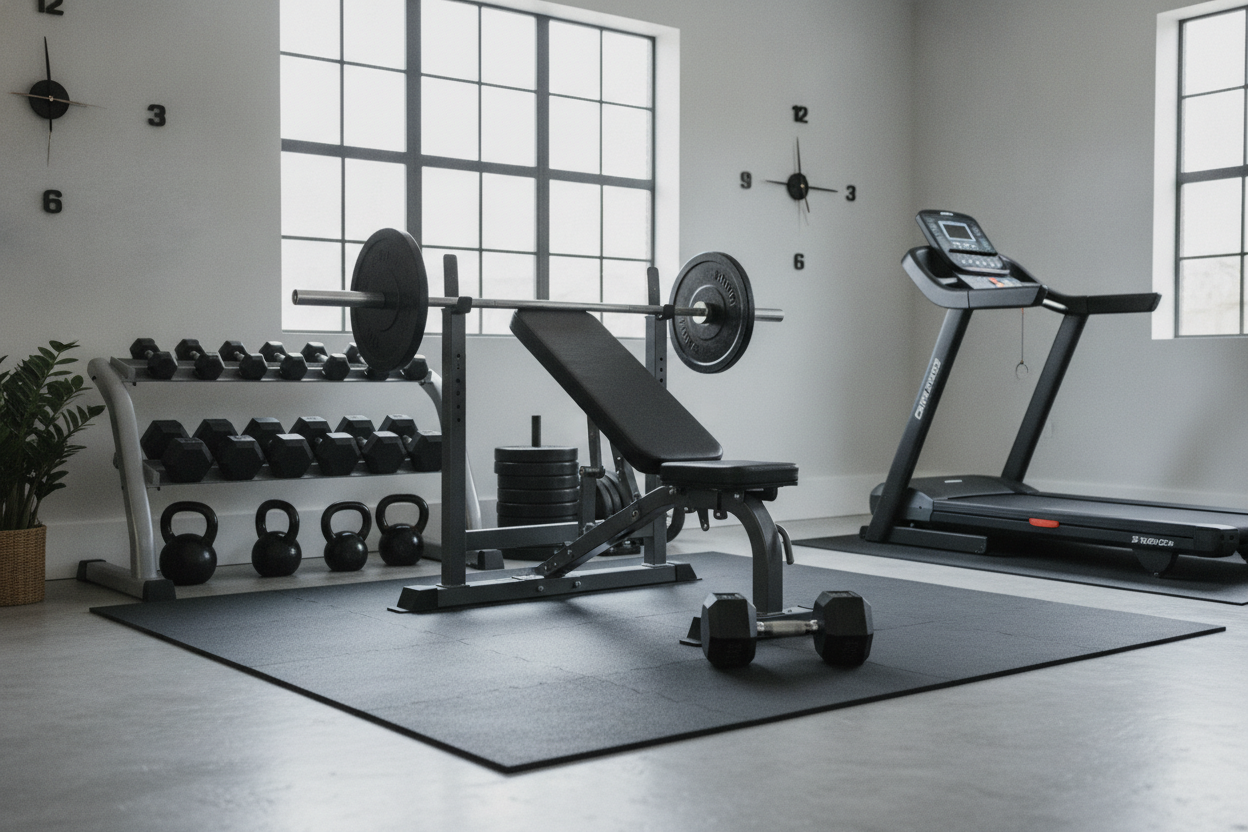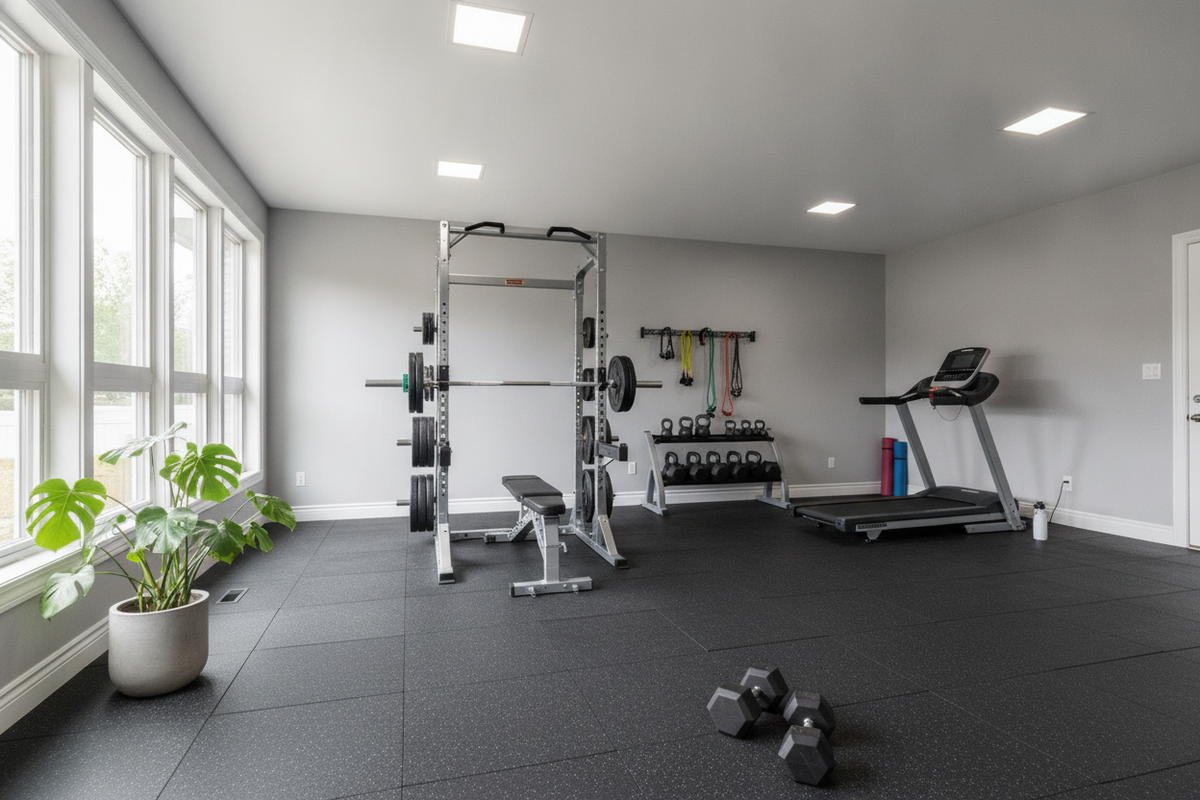
How to Build a Commercial-Grade Weights Gym in Your Basement
I remember the day I finally quit my commercial gym. The rates had spiked again, and I was tired of waiting twenty minutes for a squat rack while some kid filmed TikToks. I decided to build a weights gym in my basement, but I refused to settle for the flimsy, rattling equipment found in most big-box stores. If you are going to lift heavy, you need gear that doesn't flinch when you re-rack a heavy set.
- Prioritize 11-gauge steel for your power rack to ensure absolute stability.
- Never skimp on the bench—look for a 1,000-lb capacity to protect your spine.
- Use 3/4-inch rubber horse stall mats to protect your concrete slab from cracks.
- Pick your plates based on your lifting style: iron for density, bumpers for safety.
The Difference Between a 'Workout Room' and a True Weights Gym
Most people clear a corner of their basement, throw down a thin yoga mat, and buy a pair of 5-lb dumbbells. That is a workout room. It is fine for a light sweat, but it is not where you build real strength. A true gym is built for progressive overload—the process of adding weight to the bar every week until you are moving numbers that would snap a cheap rack in half.
Transitioning to a home setup requires a mindset shift. You are no longer just 'exercising'; you are building the perfect home gym with weights that can handle your max effort. You need a space that demands respect. When I walk into my basement, the smell of rubber and the sight of a loaded barbell tell my brain it is time to work, not scroll on my phone. If the gear feels commercial-grade, you will train like a professional.
The Core Foundation: You Only Need Three Things First
You do not need a dozen fancy machines to get strong. In fact, most of those 'all-in-one' home gyms are just expensive clothes hangers. Start with a rack, a bench, and a barbell with plates. If you buy high-quality versions of these three things, you can perform 95% of the most effective strength movements. I always tell people to spend 80% of their budget on these 'Big Three' items. Everything else is just a luxury you can add later once your strength outgrows the basics.
Finding a Rack That Doesn't Sway Like a Tree
Your rack is your lifeline. If you are squatting alone in a basement, those safety bars are the only thing between you and a very bad day. Avoid racks made with thin 2x2 tubing. You want at least 2x3 or 3x3 11-gauge steel. This provides the mass needed to keep the rack from sliding when you re-rack a heavy bench press. You want something that feels like it is part of the foundation.
If you are looking for a complete solution that fits a standard basement footprint, the X6 power rack weight bench package is a solid example of a stable foundation. It offers the structural integrity of a commercial unit without requiring you to bolt it into your foundation—though I still recommend bolting it down if you're hitting triple-digit squats regularly. The 11-gauge steel ensures it won't wobble when you're doing pull-ups or heavy rack pulls.
The Bench: Where People Make Their Biggest Mistake
I have seen guys spend $1,000 on a barbell and then try to bench press on a $50 folding bench. It is a disaster waiting to happen. A quality adjustable weight bench needs to have a wide tripod base and zero 'wobble' in the hinge. When you have 200 lbs over your chest, the last thing you want is the seat shifting an inch to the left because of a loose bolt or thin steel.
Look for a bench with high-density foam. If you can feel the plywood through the padding with your thumb, your shoulders will feel it during your set. A good bench should be firm enough to drive your upper back into for maximum stability. It should also offer multiple incline angles so you can target the upper chest and shoulders without needing three different pieces of equipment.
Choosing Iron: Bumpers vs. Steel Fitness Weight Plates
This comes down to your floor and your lifting style. If you are doing cleans and snatches, you need bumper plates. They are made of dense rubber and can be dropped without cracking your basement floor. However, they are thick. If you are a heavy deadlifter, you might run out of room on the barbell sleeve before you hit your max. Bumper plates also tend to have a bit of 'bounce' which can be annoying in tight spaces.
Steel fitness weight plates are thinner and have that classic 'clank' that many of us love. They are generally cheaper than bumpers, but you cannot drop them directly onto concrete. I use a mix: bumpers for the first 45 lbs to dampen noise and protect the floor, and steel plates for the rest of the load to keep the center of gravity tight to the bar. This hybrid approach is the best way to maximize your barbell's capacity without destroying your house.
Recreating the Vibe of a Commercial Gym With Weights
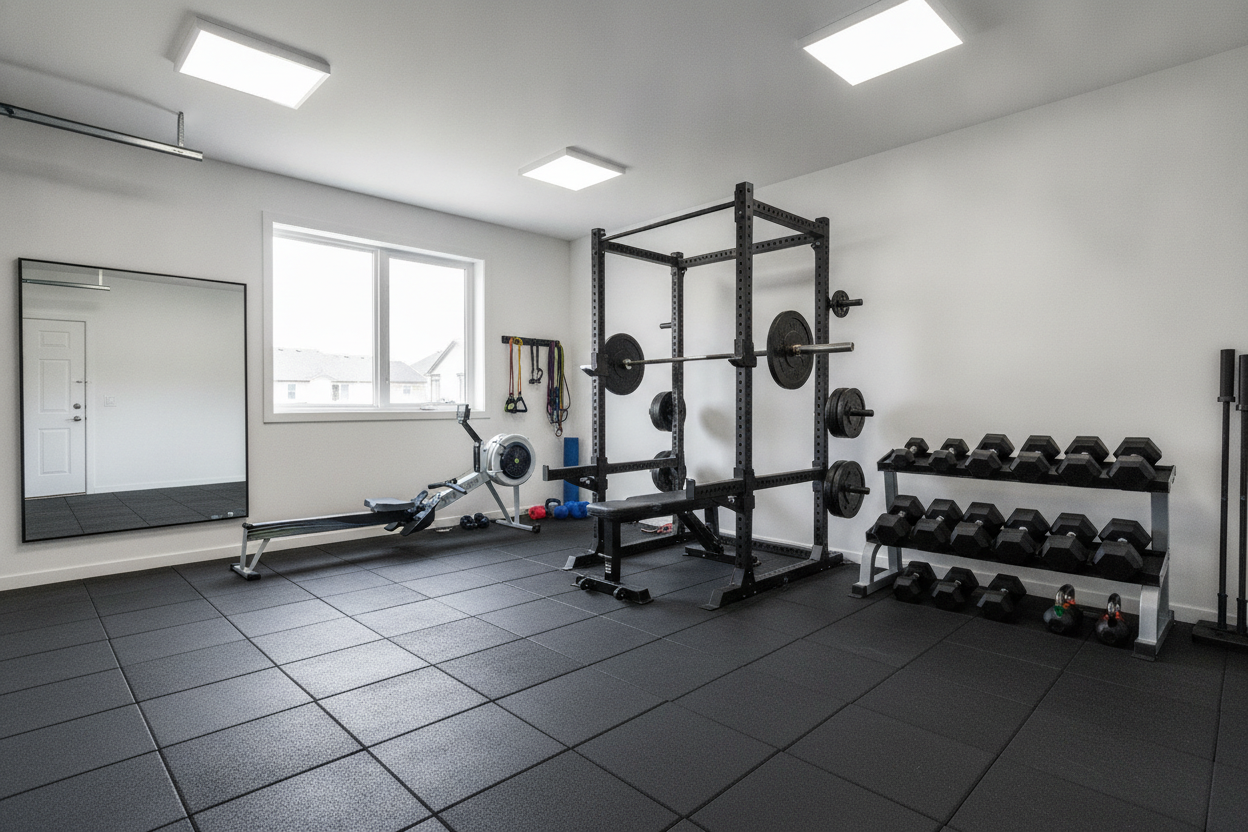
Basements are naturally dark and damp, which can kill your motivation. To make your gym with weights feel like a pro facility, start with the floor. Forget those interlocking foam tiles; they compress and slip under heavy loads. Go to a farm supply store and buy 3/4-inch rubber horse stall mats. They are heavy as lead, smell like a tire shop for a week, but they will last forever and provide a rock-solid lifting surface.
Next, upgrade your lighting. Replace that single yellow bulb with bright LED shop lights. It sounds minor, but being able to see your form in a mirror clearly changes how you lift. I also suggest a large wall-mounted mirror. It is not about ego—it is about keeping your spine neutral during a deadlift and making sure your hips aren't shifting during a squat. If the room looks like a dungeon, you will treat your workouts like a chore.
Adding The Machines You Actually Have Space For
Once your free weight foundation is solid, you can start looking at specialized equipment. The mistake most people make is buying single-use machines like a leg curl station that takes up 15 square feet. In a basement, square footage is gold. You want compact, multi-functional weight lifting machines like a plate-loaded cable tower or a functional trainer.
A cable system allows you to do face pulls, tricep extensions, and lat pulldowns in a tiny footprint. Look for units that use high-quality aircraft cables and aluminum pulleys. Plastic pulleys will eventually fray the cable and start to 'catch,' which ruins the smooth eccentric motion you need for muscle growth. If a machine feels jerky when it is empty, it will feel like a nightmare when it is loaded with 100 lbs.
Personal Experience: The 'Budget' Lesson
When I first started, I bought a cheap '300-lb weight set' from a local sporting goods store. The bar was thin, the knurling felt like wet soap, and the plates were significantly off their advertised weight—one '45-lb' plate actually weighed 41 lbs. It threw off my balance and led to a minor shoulder tweak. I ended up selling the whole set for a loss and buying a proper barbell. Save yourself the headache and buy the good stuff first. It is cheaper to buy one $300 bar than a $100 bar that you have to replace in six months.
FAQ
Is my basement ceiling high enough for a power rack?
Most standard racks are 82 to 90 inches tall. Measure your lowest joist, not the ceiling height. If you have low ceilings, look for 'shorty' racks designed specifically for basements, which usually sit around 72 inches. Just remember you won't be able to do standing overhead presses inside the rack.
How do I stop my weights from rusting in a damp basement?
Get a dehumidifier and keep it running at 50% humidity. Also, look for plates with a powder coat or urethane finish rather than raw iron. Wipe your barbell down with a light coat of 3-in-1 oil once a month to prevent sweat from eating into the steel.
Do I really need to bolt my rack to the floor?
If you are doing kipping pull-ups or heavy band work, yes. If you are just doing slow, controlled lifts and the rack has a wide, heavy base, you can often get away without it. However, bolting to the concrete is the only way to get that 'commercial' feel where the rack doesn't budge an inch when you re-rack a heavy bar.